Upper body exercises at the gym: chest, back, shoulders and arms

The best upper body exercises at the gym are the barbell bench press and incline dumbbell press for your chest, the lat pulldown, pull-up and seated cable row for your back, the overhead press and cable lateral raise for your shoulders, and the cable pressdown and EZ-bar curl for your arms. A good upper session takes one press and one pull from each direction, horizontal and vertical, then spends what time is left on the cables and machines that a home setup lacks: lateral raises, face pulls, flies and pressdowns, where constant tension lets you push sets close to failure.

  1. Barbell Bench Press Chest
  2. Lat Pulldown Lats
  3. Seated Cable Row Upper Back, Lats
  4. Incline Dumbbell Press Chest
  5. Barbell Overhead Press Shoulders
  6. Cable Lateral Raise Shoulders
  7. Face Pull Shoulders, Upper Back
  8. Cable Triceps Pressdown Triceps
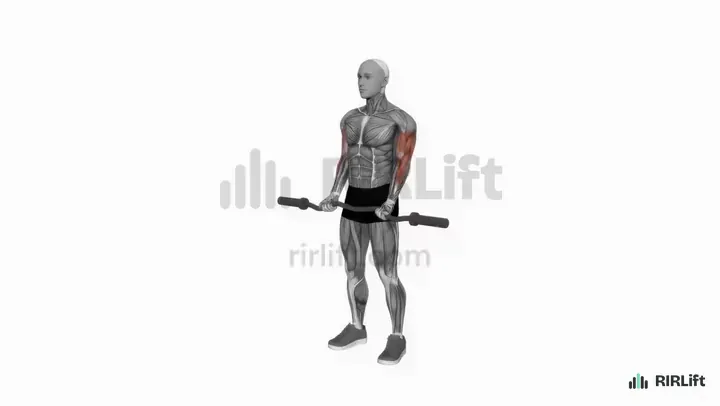
  9. EZ-Bar Curl Biceps

Gym exercises for your chest

Start the chest work with a free-weight press, because that is where you can load heaviest while you are fresh, then move to a machine or pec deck where you can push the last sets right to failure without a spotter. The flat bench press covers the middle of the chest, the incline press shifts work up toward the collarbones, and the machine and fly finish what the presses leave.

Chest, heavy horizontal press

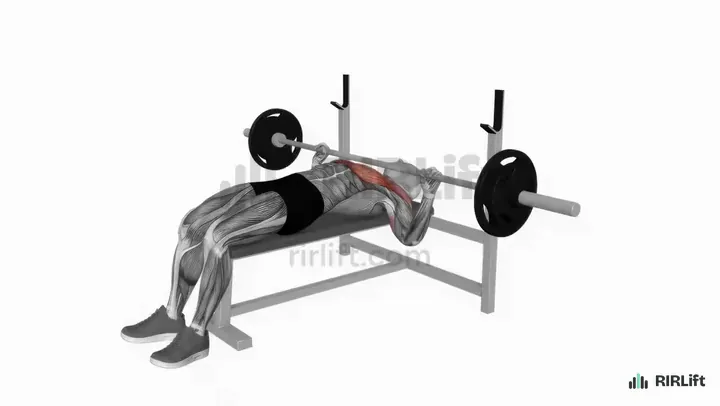
Barbell Bench Press

Chest

The bench press lets you put more weight through your chest, front delts and triceps than any other upper body lift, and the rack and safety pins at the gym make it safe to push hard. It is the press to put first when strength is part of the goal.

How to do it

  1. Lie on the bench with your eyes under the bar, feet planted, and pinch your shoulder blades and down so your upper back is tight on the pad.
  2. Grip the bar a little outside shoulder width, unrack it, and hold it over your shoulders with straight arms.
  3. Lower the bar to your lower chest with your elbows angled about 45 degrees from your sides, touching lightly without bouncing.
  4. Press back up and slightly toward your face until your arms are straight again, keeping your shoulder blades pinned.

Cues

  • Shoulder blades in your back pockets
  • Bar to the lower chest
  • Feet drive into the floor

Common mistakes

  • Flaring your elbows straight out to the sides: tuck them to about 45 degrees to keep the shoulders comfortable.
  • Lifting your hips off the bench to finish a rep: that shortens the press. Keep your glutes down and stop the set there.

Swap for: Smith Machine Bench Press, Flat Dumbbell Press, Machine Chest Press

Upper chest, incline press

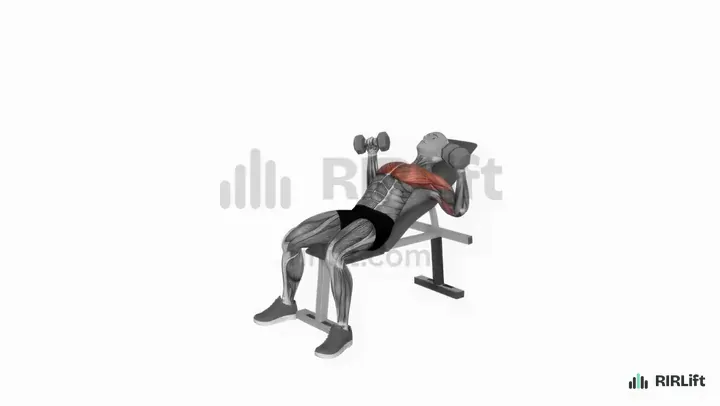
Incline Dumbbell Press

Chest

Tilting the bench moves the work toward the upper chest, and dumbbells let each arm find its own path and lower deeper than a bar allows. It pairs well with the flat barbell press, so the two together cover the whole chest.

How to do it

  1. Set an adjustable bench to about 30 degrees and sit back with a dumbbell resting on each thigh.
  2. Kick the dumbbells up one at a time as you lie back, and hold them beside your upper chest with your forearms vertical.
  3. Press both dumbbells up and slightly in until your arms are straight above your shoulders.
  4. Lower them slowly until you feel a stretch across your chest, with the dumbbells level with the sides of your chest, then press again.

Cues

  • Low incline, not a shoulder press
  • Forearms vertical at the bottom
  • Deep stretch, then drive

Common mistakes

  • Setting the bench at 45 degrees or more: past about 30 degrees your front delts take over. Lower it a notch.
  • Clanging the dumbbells together at the top: stop just short of touching so the chest stays loaded.

Swap for: Incline Barbell Bench Press, Smith Machine Incline Press, Machine Incline Press

Chest, guided press

Machine Chest Press

Chest

The machine fixes the path of the press, so you can take the last set to failure on your own and not worry about balance. It works as a main press on a sore-shoulder day or as a second chest exercise after the barbell.

How to do it

  1. Set the seat so the handles line up with the middle of your chest, then sit with your back flat on the pad.
  2. Grip the handles, set your shoulder blades back, and press them forward until your arms are almost straight.
  3. Let the handles come back slowly until you feel a stretch across your chest, without the weight stack touching down.
  4. Press out again and keep the reps smooth from the first to the last.

Cues

  • Handles at mid-chest height
  • Back stays on the pad
  • Stack never rests between reps

Common mistakes

  • Seat too low, which turns it into an incline press and loads the shoulders: raise it until the handles meet the middle of your chest.
  • Cutting the range short as you tire: let the handles come back to the stretch on every rep.

Swap for: Machine Incline Press, Smith Machine Bench Press, Flat Dumbbell Press

Chest, machine fly

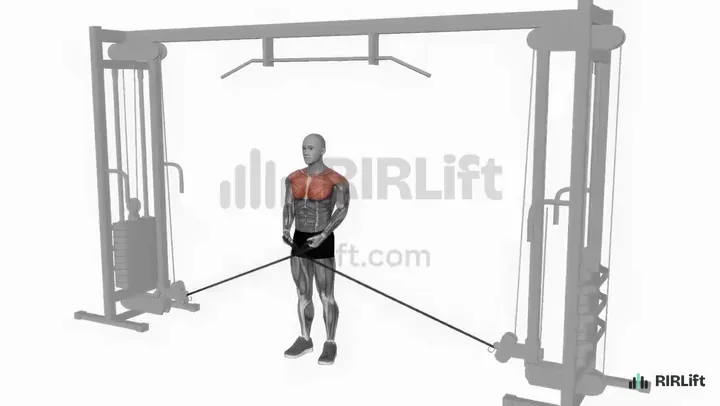
Pec Deck Fly

Chest

A fly works the chest without the triceps, so it trains the muscle once your presses have tired your arms. The pec deck holds tension across the whole arc and never lets you lose the weight at the bottom, which makes it easier to push hard than a dumbbell fly.

How to do it

  1. Set the seat so the handles sit at chest height when your arms are out to the sides.
  2. Sit tall with your back against the pad and take the handles with your elbows softly bent.
  3. Sweep the handles inward until they meet ahead of your chest in a wide arc, squeezing your chest for a second when they meet.
  4. Open your arms back slowly until you feel a stretch across your chest, then bring them together again.

Cues

  • Hug a big tree
  • Elbow bend stays fixed
  • Squeeze, then a slow return

Common mistakes

  • Bending and straightening your elbows to push the handles: keep the angle fixed so it stays a fly, not a press.
  • Letting the handles travel far behind your body: stop at a strong stretch, not where your shoulders start to pinch.

Swap for: High-to-Low Cable Fly, Cable Fly, Dumbbell Chest Fly

Gym exercises for your back

Your back needs two kinds of pull: one from overhead, which builds width through the lats, and one toward your torso, which builds thickness through the middle of your back. The gym gives you a cable stack for both, so even if you cannot do a pull-up yet you can load the pattern with a pulldown. Take one vertical and one horizontal pull every upper session.

Lats, vertical pull

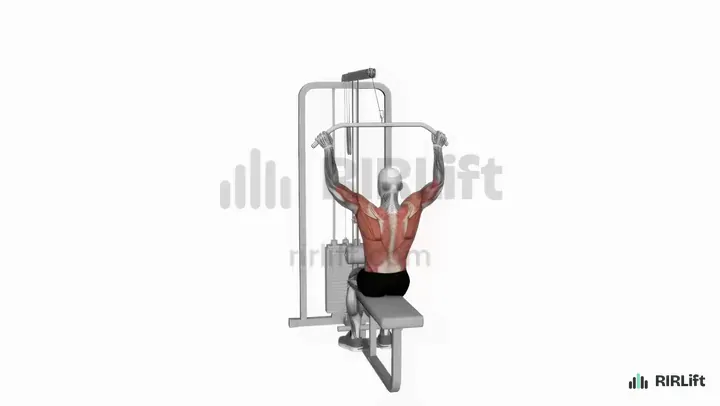
Lat Pulldown

Lats

The pulldown trains the same pattern as a pull-up, but you choose the load, so it works whether you can do zero pull-ups or fifteen. It is the main way to build back width at the gym and the easiest vertical pull to progress in small steps.

How to do it

  1. Set the thigh pad so your legs are locked in, then stand up and grip the bar a little wider than your shoulders.
  2. Sit down with your arms straight overhead and lean back very slightly, chest up.
  3. Pull the bar down to your upper chest by driving your elbows toward your hips.
  4. Let the bar rise slowly until your arms are straight and your shoulders stretch up, then pull again.

Cues

  • Elbows to your back pockets
  • Chest up to meet the bar
  • Full stretch at the top

Common mistakes

  • Leaning far back and rowing the bar to your stomach: stay nearly upright so the pull comes from overhead.
  • Yanking the weight down with your body: if you have to swing, the load is too heavy.

Swap for: Neutral-Grip Lat Pulldown, Single-Arm Lat Pulldown, Assisted Pull-Up

Lats and upper back, bodyweight vertical pull

Pull-Up

Lats

Once you can do several clean reps, the pull-up is one of the hardest back exercises you can do, and every gym has a bar. It also trains your grip and core, because nothing holds your body still except you.

How to do it

  1. Hang from the bar with an overhand grip a little wider than your shoulders and your arms fully straight.
  2. Pull your shoulder blades down first, then drive your elbows down toward your ribs.
  3. Keep pulling until your chin passes the bar, legs still under you.
  4. Lower all the way to a dead hang under control before the next rep.

Cues

  • Shoulders down before elbows bend
  • Chest to the bar
  • Full hang every rep

Common mistakes

  • Half reps that stop with the arms bent: return to a straight-arm hang each time.
  • Kicking your legs to get over the bar: if you need momentum, use the assisted machine or a pulldown for the rest of the set.

Swap for: Assisted Pull-Up, Lat Pulldown, Chin-Up

Build a session with Pull-Up

Mid-back and lats, horizontal pull

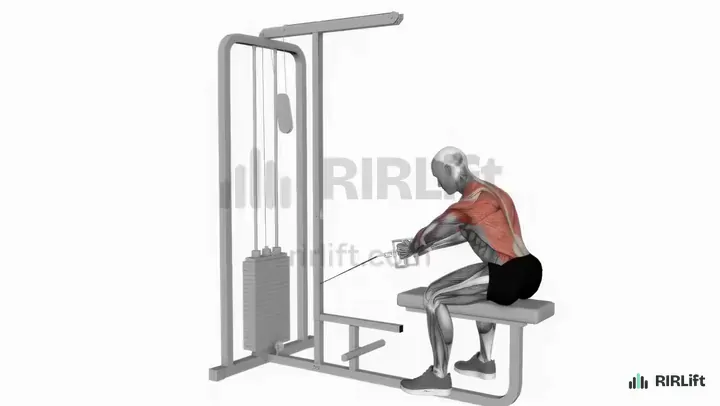
Seated Cable Row

Upper Back, Lats

The cable row keeps tension on your back through the whole rep and puts no load on your lower back the way a bent-over row does. It is the row to use when you want plenty of sets without tiring your spine.

How to do it

  1. Sit at the row station with your feet on the platform and knees slightly bent, and grip the close-grip handle.
  2. Sit tall with your arms straight and your shoulder blades pulled forward by the weight.
  3. Row the handle to your lower ribs, driving your elbows back past your torso, and pinch your shoulder blades.
  4. Let the handle travel forward slowly until your arms are straight and your back stretches, without rocking your torso.

Cues

  • Tall chest, still torso
  • Handle to the belly button
  • Reach forward between reps

Common mistakes

  • Rocking back and forth to move the weight: your torso stays upright and only the arms and shoulder blades move.
  • Shrugging your shoulders up as you pull: keep them low and away from your ears.

Swap for: Wide-Grip Cable Row, Machine Row, Single-Arm Cable Row

Upper back, machine row with chest pad

Chest-Supported Row

Upper Back, Lats

With your chest against the pad, your lower back cannot help, so the only thing that ends the set is your upper back. That makes it the safest row to take all the way to failure, and the plate-loaded or selectorized versions are in most gyms.

How to do it

  1. Set the seat so the pad meets your chest and the handles are just within reach with straight arms.
  2. Sit with your chest on the pad and take the handles.
  3. Row the handles back by driving your elbows past your body, and squeeze your shoulder blades for a second at the end.
  4. Let the handles go forward slowly until your arms are straight and your shoulder blades spread, then row again.

Cues

  • Chest never leaves the pad
  • Elbows back, not hands
  • Pause one second at the back

Common mistakes

  • Pulling your chest off the pad to finish reps: that brings the lower back in. Stop the set there.
  • Short reps with heavy plates: a full stretch forward is worth more than the extra weight.

Swap for: Seated Cable Row, Machine Row, T-Bar Row

Whole back, heavy bent-over row

Barbell Row

Upper Back, Lats

The barbell row loads more weight than any other row and trains your back, rear delts and the muscles that hold your hinge. It suits a strength-focused upper day, as long as your lower back is fresh.

How to do it

  1. Stand with your feet hip-width apart and grip the bar just outside your thighs.
  2. Push your hips back and lean your torso forward to about 45 degrees or lower, back flat and knees soft.
  3. Pull the bar to your lower ribs, elbows traveling back past your torso.
  4. Lower it until your arms are straight, keeping the same torso angle, then pull again.

Cues

  • Torso angle stays fixed
  • Bar to the belly
  • Brace before each pull

Common mistakes

  • Standing up taller with every rep: the angle you start at is the angle you finish at.
  • Jerking the bar with your hips: if you need a hip drive, the weight is too heavy.

Swap for: Pendlay Row, T-Bar Row, Chest-Supported Row

Gym exercises for your shoulders

Presses already hit the front of your shoulders hard, so the shoulder slots that pay off most are the side delts, which give your upper body its width, and the rear delts, which balance all the pressing. Cables suit both, since the tension stays on at the bottom of each rep where a dumbbell goes slack. Keep one overhead press for pressing strength.

Shoulders and triceps, standing press

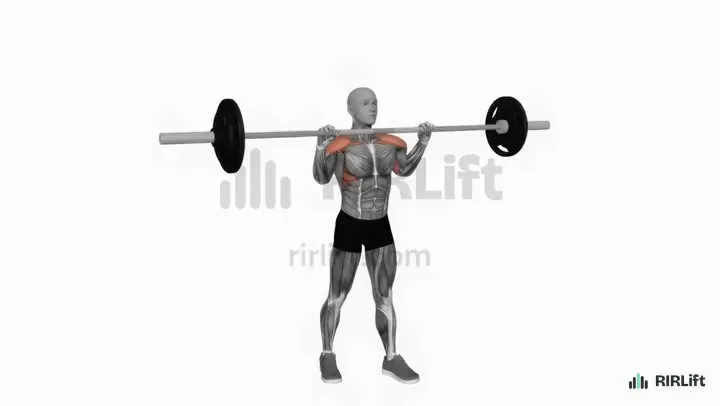
Barbell Overhead Press

Shoulders

Pressing a bar overhead while standing trains your shoulders, triceps and upper chest, and makes your whole trunk work to stay stiff. It is the shoulder press to pick when building pressing strength matters to you.

How to do it

  1. Set the bar in the rack at upper-chest height, grip it just outside your shoulders and unrack it to rest on the front of your shoulders.
  2. Stand with your feet hip-width apart, squeeze your glutes and brace your abs.
  3. Press the bar straight up, moving your head back slightly to let it pass, then bring your head through once the bar clears your forehead.
  4. Lock out with the bar over your mid-foot, then lower it back to your shoulders under control.

Cues

  • Glutes tight, ribs down
  • Head through at the top
  • Bar over the middle of your foot

Common mistakes

  • Leaning far back to finish the rep: that turns it into an incline press. Brace harder or lower the load.
  • Pressing the bar out in front of your face: keep it close and move your head instead.

Swap for: Seated Barbell Overhead Press, Smith Machine Shoulder Press, Dumbbell Shoulder Press

Shoulders, guided overhead press

Machine Shoulder Press

Shoulders

A shoulder press machine guides the path so you can press to failure without balancing a bar, and the iso-lateral kind lets each arm work on its own. It is the overhead press for anyone who is still learning to press a barbell or wants to push the last set without a spotter.

How to do it

  1. Set the seat so the handles start just above your shoulders, and sit with your back flat against the pad.
  2. Grip the handles and press them up until your arms are almost straight overhead.
  3. Lower them slowly until your hands are about level with your chin.
  4. Press up again without letting the weight rest at the bottom.

Cues

  • Back stays on the pad
  • Smooth up, slow down
  • Stop at chin height

Common mistakes

  • Arching your back off the pad to finish a rep: that turns it into a chest press. Keep your back flat.
  • Dropping the handles too low and bouncing out of the bottom: control the turnaround.

Swap for: Smith Machine Shoulder Press, Dumbbell Shoulder Press, Landmine Press

Side delts, cable raise

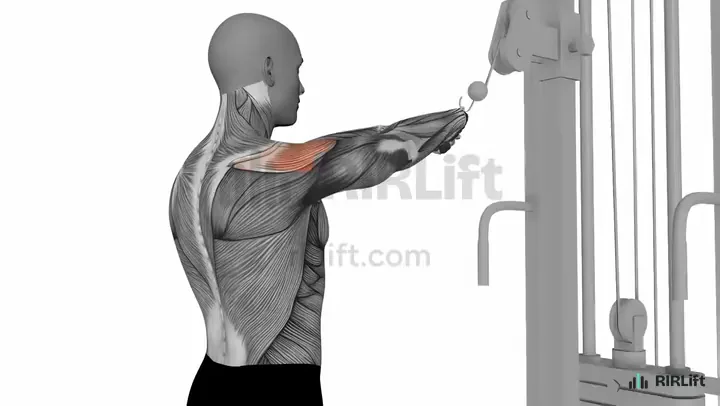
Cable Lateral Raise

Shoulders

The side delts give your shoulders their width, and a cable keeps them loaded in the bottom part of the rep, where a dumbbell raise has almost no tension. Doing one arm at a time also lets you focus on each side.

How to do it

  1. Set a pulley at its lowest point, attach a handle, and stand side-on to the stack with the handle in your far hand.
  2. Let the cable run across your body with your arm hanging and your elbow slightly bent.
  3. Raise your arm out to the side until your hand reaches shoulder height, leading with your elbow.
  4. Lower slowly to the start without letting the plates touch, then repeat. Do all reps, then switch arms.

Cues

  • Lead with the elbow
  • Stop at shoulder height
  • Slow on the way down

Common mistakes

  • Shrugging to get the handle higher: that moves the work to your traps. Keep your shoulder low.
  • Swinging your torso to start the rep: stand still and use a lighter plate.

Swap for: Machine Lateral Raise, Dumbbell Lateral Raise, Leaning Cable Lateral Raise

Rear delts and upper back, cable pull

Face Pull

Shoulders, Upper Back

Face pulls train the rear delts and the muscles that turn your shoulders out, which every press in this list ignores. A few sets each upper day balance the pressing and keep your shoulders comfortable as the loads go up.

How to do it

  1. Set a cable with a rope attachment at about forehead height and grip the rope ends with your thumbs toward you.
  2. Step back until your arms are straight and the weight is off the stack, standing tall.
  3. Pull the rope toward your face, separating the ends and driving your elbows out and back until your hands are beside your ears.
  4. Hold for a second, then let the rope go forward slowly until your arms are straight.

Cues

  • Pull the rope apart
  • Hands finish by your ears
  • Elbows high and wide

Common mistakes

  • Leaning back and rowing it to your chest: keep the rope at face height and stand tall.
  • Going heavy and losing the squeeze: this is a high-rep exercise, so pick a load you can control for 12 to 20 reps.

Swap for: Reverse Pec Deck, Rear Delt Cable Fly, Band Face Pull

Build a session with Face Pull

Gym exercises for your arms

Biceps and triceps get trained by every pull and press above, so one direct exercise each is enough for most people. A cable pressdown and an EZ-bar curl are easy to load in small steps and easy on the wrists, and they make good closers when you are already tired.

Triceps, cable pressdown

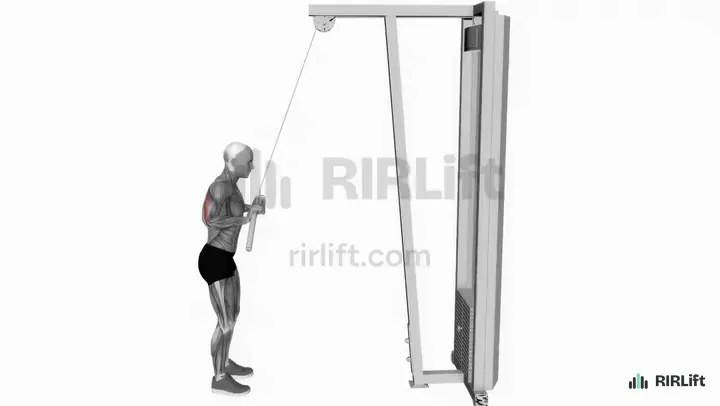
Cable Triceps Pressdown

Triceps

The pressdown isolates your triceps with no stress on the shoulder, and the stack lets you add load in small jumps. After a day of pressing it finishes the triceps without needing much recovery.

How to do it

  1. Attach a straight bar or rope to a high pulley and stand facing it with your feet hip-width apart.
  2. Grip the attachment and pull it down until your upper arms are at your sides and your elbows bent about 90 degrees.
  3. Press down until your arms are straight, keeping your elbows pinned to your sides.
  4. Let the attachment rise slowly until your forearms are just above parallel with the floor, then press again.

Cues

  • Elbows glued to your ribs
  • Only the forearms move
  • Lock out and squeeze

Common mistakes

  • Letting your elbows drift forward and up, which brings in the shoulders: keep your upper arms still.
  • Leaning over the bar to push with your bodyweight: stand tall and lighten the load.

Swap for: Cable Cross Pushdown, Overhead Cable Triceps Extension, Machine Triceps Extension

Biceps, bar curl

EZ-Bar Curl

Biceps

The angled handles of the EZ bar put your wrists at a more natural angle than a straight bar, so you can load the curl without wrist pain. It is the simplest way to train both biceps at once with a weight you can raise in small steps.

How to do it

  1. Stand tall and hold the EZ bar on the inner angled grips, arms straight and the bar against your thighs.
  2. Pin your elbows to your sides.
  3. Curl the bar up toward your shoulders until your forearms are close to vertical.
  4. Lower it slowly until your arms go fully straight, then curl again.

Cues

  • Elbows stay at your sides
  • Full straight arm at the bottom
  • Two seconds down

Common mistakes

  • Rocking your hips to swing the bar up: stand still and drop the weight.
  • Letting your elbows move forward at the top: that shifts the work to the front delts.

Swap for: Barbell Curl, Cable Curl, Preacher Curl

Put them together: example sessions

Each session below picks from the exercises above for one situation, with the sets, reps, rest and RIR filled in. Open one in the session builder to change a pick, price it from a recent set, and add it to RIRLift.

Session 1

Upper/lower split, two upper days a week, full gym

Open in the session builder
  • Workouts2× a week
  • Working sets37 a week
  • Per workout~50 min
  • EquipmentBarbells, Flat Bench, Pull-Up Bar, Adjustable Cable +6

You train four days a week on an upper/lower split, have a full commercial gym, and want both strength and size from your upper days.

Upper A leads with the barbell bench press, barbell row and overhead press at 6 to 8 reps and 2 reps in reserve, because heavy barbell lifts are where form breaks down first when you go closer to failure. Upper B swaps to dumbbells, cables and machines at 8 to 15 reps and 1 rep in reserve, since guided and cable work is safe to push harder. Each day has one horizontal press, one horizontal pull, one vertical press or pull and the side delts or arms, for 18 working sets in A and 19 in B.

Upper A (heavy)
ExerciseSets × repsRIRRest
Barbell Bench Press2 warm-up sets firstTouch the lower chest. No bounce. 4 × 6–8 2 3 min
Barbell Row1 warm-up set firstFixed torso angle. 4 × 6–8 2 2:30 min
Barbell Overhead Press1 warm-up set firstGlutes tight. Head through. 3 × 6–8 2 2:30 min
Pull-UpFull hang every rep. Pulldown if under 6. 3 × 6–10 1 2 min
A1 Cable Lateral RaisePer arm. 2 × 12–20 1 1 min
A2 Face PullHands finish by the ears. 2 × 12–20 1 1 min

Open Upper A (heavy) in the session builder

Upper B (volume)
ExerciseSets × repsRIRRest
Incline Dumbbell Press1 warm-up set firstBench at 30 degrees. 4 × 8–12 1 2 min
Lat PulldownElbows to the hips. 4 × 10–12 1 90 s
Chest-Supported RowPause 1 s at the back. 3 × 10–12 1 90 s
Pec Deck Fly 2 × 12–15 0 1 min
A1 Cable Triceps Pressdown 3 × 10–15 1 1 min
A2 EZ-Bar Curl 3 × 10–15 1 1 min

Open Upper B (volume) in the session builder

How to run it
Do Upper A and Upper B once each per week, with your two lower body days between them, for example Monday and Thursday.
How to progress
On the barbell lifts, add the smallest plates once every set reaches 8 reps at 2 in reserve. On the cable and machine work, add reps first and move up one pin when every set hits the top of the range at the target reps in reserve.

Session 2

One 45-minute upper session a week

Open in the session builder
  • Workouts1× a week
  • Working sets17 a week
  • Per workout~35 min
  • EquipmentChest Press, Lat Pulldown, Cable Row, Shoulder Press +2

You lift once a week for your upper body, alongside sport, running or a separate leg day, and you have about 45 minutes in the gym.

With one session, every slot has to cover a lot, so it uses the machine chest press, lat pulldown and seated cable row, which you can take to 1 rep in reserve without a warm-up pyramid or a spotter. The machine shoulder press and two short supersets fit shoulders and arms in without adding time. It is 17 working sets, roughly the minimum that still makes measurable progress on one day.

Upper (45 min)
ExerciseSets × repsRIRRest
Machine Chest Press1 warm-up set firstHandles at mid-chest. 3 × 8–12 1 90 s
Lat Pulldown 3 × 8–12 1 90 s
Seated Cable RowTorso still. 3 × 10–12 1 90 s
Machine Shoulder Press 2 × 10–12 1 90 s
A1 Cable Lateral RaisePer arm. 2 × 12–20 0 45 s
A2 Face Pull 2 × 12–20 1 45 s
B1 Cable Triceps Pressdown 1 × 10–15 0 45 s
B2 EZ-Bar Curl 1 × 10–15 0 45 s
How to run it
Do it once a week with at least two days before your next hard pushing or pulling in sport. Supersets mean you move straight between the paired exercises and rest after the second.
How to progress
Add one rep per set each week. When every set reaches the top of the range at 1 rep in reserve, move the pin down one plate and start again in the bottom part of the range.

Session 3

Strength block, barbell lifts at lower reps

Open in the session builder
  • Workouts2× a week
  • Working sets30 a week
  • Per workout~50 min
  • EquipmentBarbells, Flat Bench, Pull-Up Bar, Dumbbells +3

You have a year or more of training, you want a bigger bench, row and overhead press, and you are happy to give up some cable work to get it.

The three barbell lifts move to the front of each day at 4 to 6 reps with 2 in reserve, because strength comes from heavy, repeated practice that stays technically clean, and reps at 0 or 1 in reserve on a heavy bench make form slip. The bench press and overhead press show up on both days, heavy on one and lighter on the other, so each gets practiced twice a week. The pull-up and chest-supported row keep back volume up, and only face pulls remain from the cable work to protect your shoulders under the extra pressing. Push day has 15 working sets and pull day has 15.

Push-focused upper
ExerciseSets × repsRIRRest
Barbell Bench Press2 warm-up sets firstHeavy. Pause on the chest. 5 × 4–6 2 3:30 min
Barbell Overhead Press1 warm-up set firstLighter than the bench. 3 × 6–8 2 2:30 min
Pull-UpAdd weight once 8 are easy. 3 × 5–8 2 2 min
Incline Dumbbell Press 2 × 8–10 1 90 s
Face Pull 2 × 15–20 1 1 min

Open Push-focused upper in the session builder

Pull-focused upper
ExerciseSets × repsRIRRest
Barbell Row2 warm-up sets firstFixed torso angle. 5 × 4–6 2 3 min
Barbell Overhead Press1 warm-up set firstHeavy day. 3 × 4–6 2 3 min
Barbell Bench PressLight day. Same groove. 3 × 6–8 2 2:30 min
Chest-Supported Row 2 × 8–12 1 90 s
Face Pull 2 × 15–20 1 1 min

Open Pull-focused upper in the session builder

How to run it
Do each day once a week, two or three days apart, with your lower body days in between. Use a spotter or safety pins on the bench.
How to progress
Add the smallest increment to each barbell lift when you get all sets at 6 reps with 2 in reserve. When a lift stalls for two weeks, drop the load 10 percent and build back up.

Make it fit you

Questions

What is the best upper body workout at the gym?

One that pairs a horizontal press and a horizontal pull with a vertical press and a vertical pull, then adds side delts and arms. For example: bench press, seated cable row, overhead press and lat pulldown, followed by cable lateral raises, face pulls, pressdowns and curls. That covers every upper body muscle in one session.

How many upper body exercises should I do in one session?

Five to eight is the usual range. Four compound lifts give you the base, and two to four isolation exercises fill in the side delts, rear delts and arms. Past eight, the last exercises tend to be done too tired to be worth much.

How many sets per muscle should an upper body day have?

Around 6 to 10 hard sets per major muscle across the week is a good start, so with two upper days that is 3 to 5 sets per muscle each session. The plans above land at 15 to 19 working sets per day, which covers that without running past an hour.

Should I train upper body two days in a row?

It is better to leave at least one day between upper sessions. Train your legs or rest in between, so your chest, back and shoulders have had about 48 hours to recover before you press and pull hard again.

Do I need free weights, or are machines enough for the upper body?

Machines and cables are enough to build muscle, since your muscles respond to effort and tension, not to the kind of equipment. Free weights matter more if you want to get strong at the barbell lifts themselves, or if your gym's machines do not fit your body.

Which order should upper body exercises go in?

Put the heaviest compound lifts first while you are fresh, then the lighter compound work, then isolation exercises. Alternating a press with a pull, or pairing biceps with triceps, saves time without one exercise tiring the next.

How hard should each set be?

Stop most sets 1 to 2 reps before failure, and leave 2 in reserve on heavy barbell presses and rows where form can slip. Cable and machine isolation work is safe to take to 0 or 1 in reserve.