Upper body exercises at home: chest, shoulders, back and arms

The best upper body exercises at home are the push-up and dumbbell floor press for your chest, the pike push-up and dumbbell shoulder press for your shoulders, the pull-up, one-arm dumbbell row and band row for your back, and curls and chair dips for your arms. Pick one push, one pull, one shoulder move and one arm move per session. If you own no weights, a resistance band or a doorway pull-up bar is the one thing to add, because pulling is what home training lacks.

  1. Push-Up Chest
  2. One-Arm Dumbbell Row Lats, Upper Back
  3. Pike Push-Up Shoulders
  4. Dumbbell Floor Press Chest, Triceps
  5. Pull-Up Lats
  6. Alternating Dumbbell Shoulder Press Shoulders
  7. Band Pull-Apart Shoulders, Upper Back
  8. Dumbbell Lateral Raise Shoulders
Chest exercises at home

Push-ups and the floor press cover the chest, shoulders and triceps between them. Use push-ups when you have nothing else, and the floor press when you have dumbbells and no bench.

Chest, front delts and triceps, floor press

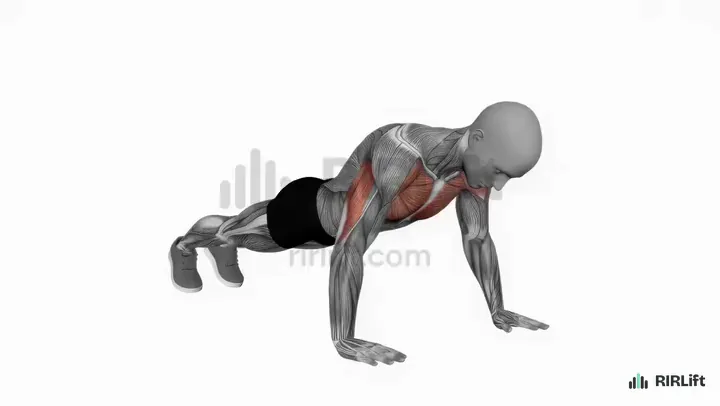
Push-Up

Chest

The push-up is the base of upper-body training at home: no gear, and it scales from hands on a counter to feet on a chair. It trains your chest, shoulders and triceps while your trunk holds you rigid.

How to do it

  1. Set your palms on the floor a little wider than your shoulders and walk your feet back into a straight plank.
  2. Brace your stomach and squeeze your glutes so your hips line up with your shoulders.
  3. Bend your elbows back at roughly 45 degrees and lower your chest to just above the floor.
  4. Press back up to straight arms in one piece, and repeat.

Cues

  • Body moves as one plank
  • Elbows angle toward your hips
  • Chest to a fist's height off the floor

Common mistakes

  • Dropping the head and letting the chin reach the floor first: look at a spot just ahead of your hands.
  • Hands set far ahead of the shoulders: they belong under or just outside the line of your chest.

Swap for: Incline Push-Up, Decline Push-Up, Dumbbell Floor Press

Build a session with Push-Up

Chest and triceps, lying press

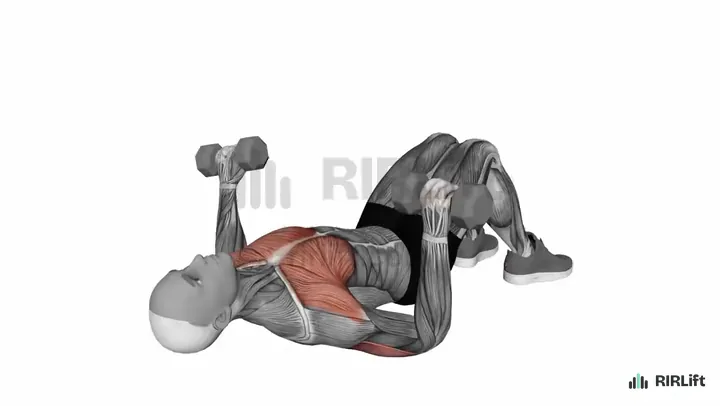
Dumbbell Floor Press

Chest, Triceps

Pressing dumbbells while lying on the floor gives you a loaded chest exercise without buying a bench. The floor stops your elbows at a safe depth, so it is gentle on the shoulders and easy to push hard.

How to do it

  1. Lie on your back with knees bent and feet flat, one dumbbell per hand.
  2. Hold the dumbbells over your chest with arms straight, palms facing your feet or each other.
  3. Lower them until the backs of your upper arms rest lightly on the floor, elbows about 45 degrees from your body.
  4. Pause for a moment, then press back up to straight arms.

Cues

  • Brief pause on the floor
  • Elbows at 45 degrees
  • Press straight up over the chest

Common mistakes

  • Bouncing your elbows off the floor: let them settle, then press.
  • Letting the dumbbells drift over your face: keep them over the middle of your chest.

Swap for: Push-Up, Single-Arm Dumbbell Floor Press, Flat Dumbbell Press

Shoulder exercises at home

Train your shoulders with one press over your head and one raise to the side. The pike push-up does the pressing with no weights; the dumbbell press and lateral raise take over once you have a pair.

Shoulders and triceps, bodyweight overhead press

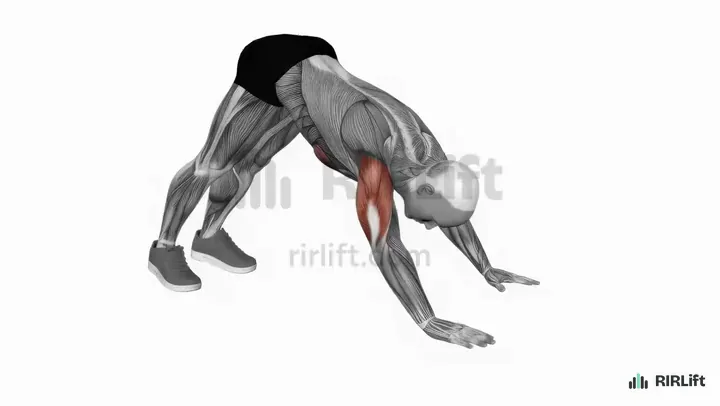
Pike Push-Up

Shoulders

With your hips raised high, a push-up turns into a press over your head, so it loads the shoulders the way an overhead press would. It is the best shoulder builder at home when you have no weights.

How to do it

  1. Start in a push-up position, then walk your feet in and lift your hips until your body makes an upside-down V.
  2. Set your hands about shoulder-width, head between your arms.
  3. Bend your elbows and lower the top of your head toward the floor just in front of your hands.
  4. Push back up to straight arms, keeping your hips high, and repeat.

Cues

  • Hips high
  • Head travels forward of the hands
  • Elbows point back

Common mistakes

  • Letting the hips drop so it turns into a normal push-up: keep your weight over your hands.
  • Flaring the elbows out to the sides: keep them pointing back toward your knees.

Swap for: Alternating Dumbbell Shoulder Press, Decline Push-Up, Band Overhead Press

Shoulders, standing alternating press

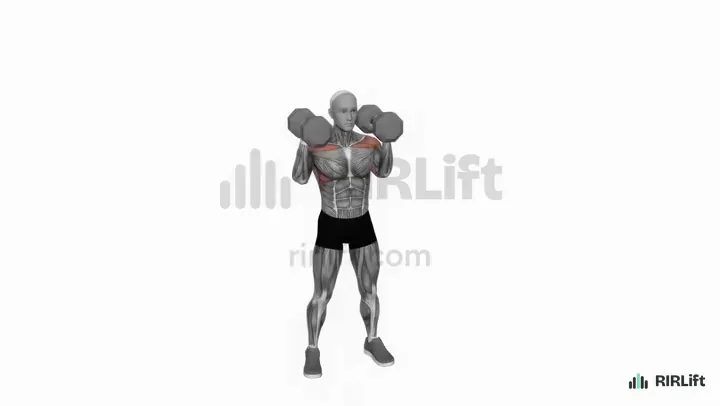
Alternating Dumbbell Shoulder Press

Shoulders

Pressing one dumbbell at a time while standing makes your trunk work to stay upright and lets you focus on each shoulder. It needs only a pair of dumbbells and a bit of ceiling height.

How to do it

  1. Stand with feet about hip-width, dumbbells at your shoulders, palms facing each other.
  2. Brace your abs and squeeze your glutes.
  3. Press the right dumbbell straight up to a straight arm, then lower it back to the shoulder.
  4. Press the left dumbbell the same way, and keep alternating.

Cues

  • Ribs down, glutes tight
  • No lean away from the pressing arm
  • Lower all the way to the shoulder

Common mistakes

  • Leaning sideways to finish the press: brace harder and drop to a lighter pair.
  • Arching back to press: if your lower back bends, the dumbbells are too heavy.

Swap for: Dumbbell Shoulder Press, Pike Push-Up, Arnold Press

Side delts, raise

Dumbbell Lateral Raise

Shoulders
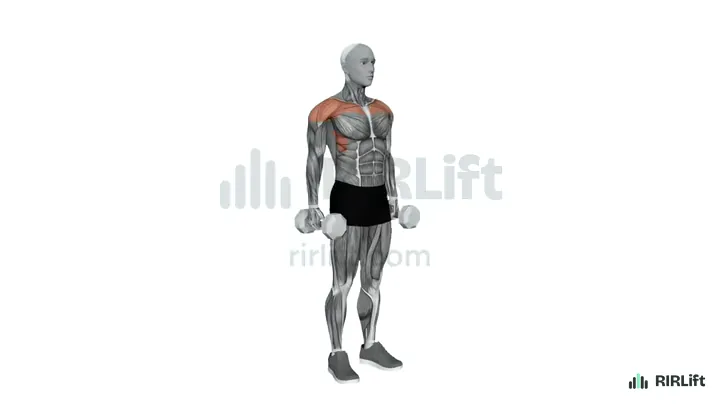
The side delts give your shoulders width, and presses barely reach them. Lateral raises do, with a light pair you probably already own.

How to do it

  1. Stand tall with a light dumbbell hanging at each side.
  2. Bend your elbows slightly and keep that bend fixed.
  3. Lift your arms sideways until your hands reach shoulder height, leading with your elbows.
  4. Lower them slowly to your sides and repeat.

Cues

  • Lead with the elbows
  • Stop at shoulder height
  • Slow on the way down

Common mistakes

  • Shrugging up as the arms rise: keep your shoulders low, well clear of your ears.
  • Swinging the body to get the weight up: a light pair, done strictly, works better.

Swap for: Band Lateral Raise, Seated Dumbbell Lateral Raise, Single-Arm Dumbbell Lateral Raise

Back exercises at home

Pulling is the hardest part of upper-body training at home, because your body weight is too heavy to row with and a floor gives you nothing to pull. A doorway bar, a dumbbell or a band fixes that, and you need at least one of them.

Lats and biceps, bar pull

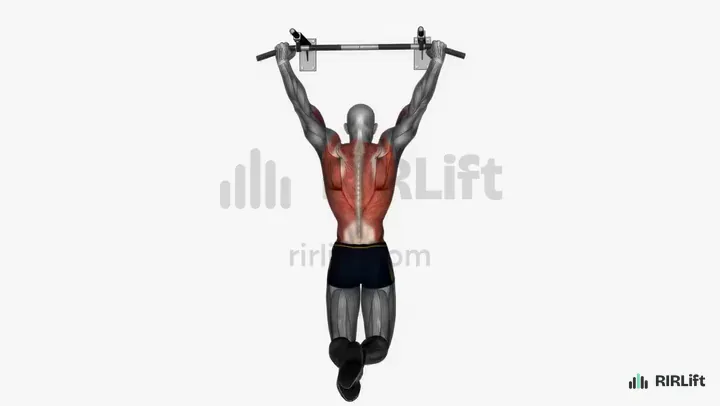
Pull-Up

Lats

A doorway pull-up bar is the best single piece of kit you can add for upper-body training at home: nothing else loads your back as heavily for the price.

How to do it

  1. Hang from the bar with your hands a little wider than your shoulders, palms facing away.
  2. Draw your shoulder blades down to start the pull.
  3. Pull yourself up until your chin clears the bar.
  4. Lower all the way to straight arms and repeat.

Cues

  • Shoulders down first
  • Chin over the bar
  • Full hang between reps

Common mistakes

  • Swinging and kicking to get up: keep your legs still.
  • Stopping halfway down: lower until your arms are straight every rep.

Swap for: Chin-Up, Band-Assisted Pull-Up, Band Bent-Over Row

Build a session with Pull-Up

Lats and biceps, underhand pull

Chin-Up

Lats

Turning your palms toward you brings the biceps in, so most people can do a few more chin-ups than pull-ups. It is a good first bar exercise, and doubles as arm work.

How to do it

  1. Hang from the bar with your palms facing you, hands about shoulder-width.
  2. Pull your shoulders down and brace your trunk.
  3. Pull up until your chin passes the bar, elbows driving down in front of you.
  4. Lower under control to a full hang and repeat.

Cues

  • Palms face you
  • Chest to the bar
  • Three-second lowering

Common mistakes

  • Craning your neck to get the chin over: pull your chest higher instead.
  • Dropping into the bottom: a controlled lowering builds strength for the next rep.

Swap for: Pull-Up, Band-Assisted Pull-Up, Dumbbell Curl

Build a session with Chin-Up

Lats and upper back, supported row

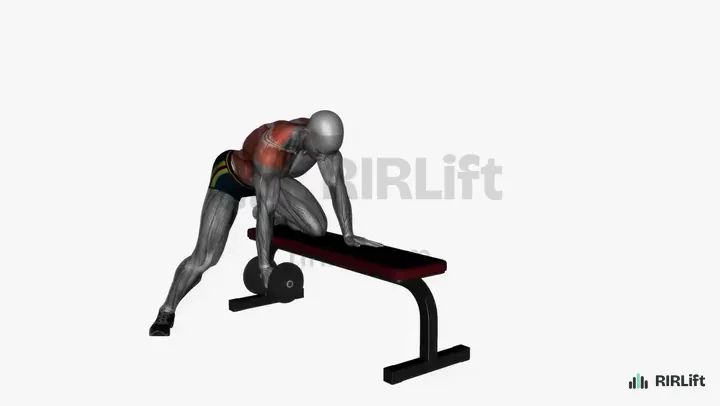
One-Arm Dumbbell Row

Lats, Upper Back

Bracing one hand on a chair or bench lets you row a single dumbbell with all your effort, and is the strongest row you can do at home without a pull-up bar.

How to do it

  1. Rest one hand on a chair seat or bench, feet staggered, back flat and roughly parallel to the floor.
  2. Let a dumbbell hang from the other hand, arm straight.
  3. Row it toward your hip until your elbow passes your torso.
  4. Lower it to a full stretch and repeat. Finish the set, then switch sides.

Cues

  • Elbow travels to the hip
  • Shoulders level
  • Stretch at the bottom

Common mistakes

  • Twisting to lift the dumbbell higher: keep both shoulders facing the floor.
  • Rushing the lowering: take two seconds down.

Swap for: Band Bent-Over Row, Dumbbell Bent-Over Row, Renegade Row

Back, band row

Band Bent-Over Row

Lats, Upper Back

Standing on a band and rowing it makes a back exercise out of a strip of rubber, so you can still train pulling on days with no bar and no dumbbells.

How to do it

  1. Stand on the middle of a band with feet hip-width, holding one end in each hand.
  2. Hinge forward until your torso is at about 45 degrees, back flat, arms straight.
  3. Row both hands toward your lower ribs, elbows close to your sides.
  4. Return slowly to straight arms and repeat.

Cues

  • Flat back
  • Elbows close
  • Squeeze one second

Common mistakes

  • Standing up as you row: hold the hinge.
  • Letting the band snap your arms back down: control the return.

Swap for: One-Arm Dumbbell Row, Band Pull-Apart, Pull-Up

Rear delts and upper back, band

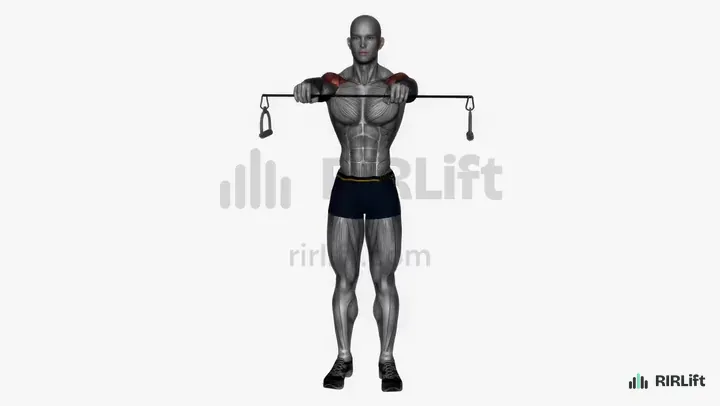
Band Pull-Apart

Shoulders, Upper Back

Pulling a band apart at chest height trains the rear delts and the muscles between your shoulder blades, which most home pushing work leaves behind. A band costs little and fits in a drawer.

How to do it

  1. Hold a light band in front of your chest with both hands, arms straight, hands about shoulder-width.
  2. Keep your shoulders down and your elbows straight.
  3. Pull the band apart until it touches your chest, squeezing your shoulder blades.
  4. Return slowly to the start and repeat.

Cues

  • Arms long
  • Band to the chest
  • Slow back

Common mistakes

  • Bending the elbows to make it easier: choose a lighter band instead.
  • Shrugging the shoulders up: keep them low.

Swap for: Dumbbell Rear Delt Fly, Band Bent-Over Row, Dumbbell Rear Delt Row

Arm exercises at home

Every press and pull above already trains your arms, so two direct exercises per session is plenty: a curl and a triceps move.

Biceps, alternating curl

Dumbbell Curl

Biceps

Curls are the simplest way to train your biceps directly, and alternating arms lets you focus on one at a time.

How to do it

  1. Stand with one dumbbell per hand at your sides, palms facing forward.
  2. Keep your elbows pinned to your ribs.
  3. Bring the right dumbbell up until your forearm is vertical, then lower it slowly.
  4. Curl the left dumbbell the same way, and keep alternating.

Cues

  • Elbows fixed
  • Squeeze at the top
  • Slow down

Common mistakes

  • Swinging the dumbbells up with your hips: lighten them.
  • Letting the elbows drift forward: they stay at your sides.

Swap for: Chin-Up, Hammer Curl, Band Hammer Curl

Triceps, chair dip

Bench Dip

Triceps

Dipping off the edge of a chair or bench works the triceps with your own body weight, so it is the triceps exercise to use when you have no weights.

How to do it

  1. Sit on the edge of a sturdy chair or bench with your hands next to your hips, fingers forward.
  2. Slide your hips off the edge and straighten your legs, heels on the floor.
  3. Bend your elbows and lower your hips until your upper arms are about parallel to the floor.
  4. Push back up to straight arms and repeat.

Cues

  • Hips close to the bench
  • Elbows point straight back
  • Stop at parallel

Common mistakes

  • Lowering too far, which strains the front of the shoulder: stop when the upper arms reach parallel.
  • Pushing with the legs: bend the knees only if you need the help.

Swap for: Close-Grip Push-Up, Seated Dumbbell Overhead Triceps Extension, Triceps Kickback

Build a session with Bench Dip

Triceps long head, overhead

Seated Dumbbell Overhead Triceps Extension

Triceps

Lowering one dumbbell behind your head stretches the long head of the triceps, the biggest part of the muscle. It is the triceps exercise that pairs best with dips and push-ups.

How to do it

  1. Sit tall on a chair and hold one dumbbell overhead with both hands under the top plate.
  2. Keep your upper arms pointing up beside your head.
  3. Bend your elbows and lower the weight behind your head until you feel a stretch in your triceps.
  4. Straighten your arms to lift it back up, and repeat.

Cues

  • Elbows point at the ceiling
  • Deep stretch at the bottom
  • Ribs down

Common mistakes

  • Elbows flaring out wide: keep them close to your head.
  • Arching your back to lift the weight: brace and choose a lighter dumbbell.

Swap for: Bench Dip, Triceps Kickback, Close-Grip Push-Up

Put them together: example sessions

Each session below picks from the exercises above for one situation, with the sets, reps, rest and RIR filled in. Open one in the session builder to change a pick, price it from a recent set, and add it to RIRLift.

Session 1

No weights: floor, a chair and a band

Open in the session builder
  • Workouts2× a week
  • Working sets27 a week
  • Per workout~25 min
  • EquipmentResistance Bands, Flat Bench

You have no dumbbells or bar at home, just floor space, a sturdy chair and a resistance band.

Without weights, the only way to make a set hard enough is to take it close to failure, so most sets here go to 0 or 1 rep in reserve and use higher reps. The band covers the pulling that body weight cannot, and the pike push-up and dips load the shoulders and triceps. Push and pull are balanced at about 9 sets each per session.

Upper A
ExerciseSets × repsRIRRest
Push-Up 3 × 8–20 1 90 s
Band Bent-Over Row 3 × 12–20 0 1 min
Pike Push-Up 3 × 6–12 1 90 s
Band Pull-Apart 3 × 15–25 0 45 s
Bench Dip 2 × 10–20 1 1 min

Open Upper A in the session builder

Upper B
ExerciseSets × repsRIRRest
Pike Push-Up 3 × 6–12 1 90 s
Band Bent-Over RowPause 1 s at the ribs. 3 × 12–20 0 1 min
Push-UpLast set to failure. 3 × 8–20 0 90 s
Band Pull-Apart 2 × 15–25 0 45 s
Bench Dip 2 × 10–20 0 1 min

Open Upper B in the session builder

How to run it
Do Upper A and Upper B, two or three times a week in total, with a day between.
How to progress
Add reps until you hit the top of the range, then make the move harder: feet on a step for push-ups and pike push-ups, a thicker band for rows, or a three-second lowering.

Session 2

A pair of dumbbells and a chair

Open in the session builder
  • Workouts2× a week
  • Working sets27 a week
  • Per workout~25 min
  • EquipmentDumbbells

You own one or two pairs of dumbbells and a chair, but no bench and no pull-up bar.

Dumbbells let you load the press, row and shoulder press directly, so rep ranges sit lower than in the bodyweight plan and most sets stop at 1 rep in reserve. The floor press stands in for the bench press, and the one-arm row on a chair does the pulling. Each session has a press, a row, a shoulder move and an arm move, about 14 sets.

Upper A
ExerciseSets × repsRIRRest
Dumbbell Floor PressPause on the floor. 3 × 8–15 1 90 s
One-Arm Dumbbell RowPer arm. 3 × 8–15 1 1 min
Alternating Dumbbell Shoulder Press 3 × 8–12 1 90 s
Dumbbell Lateral Raise 2 × 12–20 0 45 s
Dumbbell Curl 2 × 10–15 1 45 s

Open Upper A in the session builder

Upper B
ExerciseSets × repsRIRRest
One-Arm Dumbbell RowPer arm. Pause at the hip. 3 × 10–15 1 1 min
Push-Up 3 × 8–20 1 90 s
Dumbbell Lateral Raise 3 × 12–20 0 45 s
Seated Dumbbell Overhead Triceps Extension 3 × 10–15 1 1 min
Dumbbell Curl 2 × 10–15 1 45 s

Open Upper B in the session builder

How to run it
Do Upper A and Upper B on two days a week, at least two days apart. Pair them with a leg day or two if you train lower body too.
How to progress
When all sets reach the top of their range, move to the heavier pair. If you only have one pair, slow the lowering to three seconds or add a pause before going to the next rep range.

Session 3

Pull-up bar plus dumbbells

Open in the session builder
  • Workouts3× a week
  • Working sets42 a week
  • Per workout~30 min
  • EquipmentPull-Up Bar, Dumbbells, Resistance Bands, Flat Bench

You have a doorway pull-up bar and a pair of dumbbells, and you want to build a bigger back and arms.

The bar lets you train your back with your full body weight, so pull-ups and chin-ups lead each day with longer rest at 1 to 2 reps in reserve. The dumbbells cover pressing and shoulders, and the chin-up doubles as heavy biceps work. Upper A leans on pulling, Upper B on pressing, so a third session in the week can repeat A.

Upper A
ExerciseSets × repsRIRRest
Pull-Up 4 × 5–10 1 2:30 min
Dumbbell Floor Press 3 × 8–12 1 90 s
Chin-Up 3 × 5–10 2 2 min
Dumbbell Lateral Raise 3 × 12–20 0 45 s
Seated Dumbbell Overhead Triceps Extension 2 × 10–15 1 1 min

Open Upper A in the session builder

Upper B
ExerciseSets × repsRIRRest
Chin-Up 3 × 6–10 1 2 min
Push-Up 3 × 10–20 0 90 s
Alternating Dumbbell Shoulder Press 3 × 8–12 1 90 s
Band Pull-Apart 2 × 15–25 0 45 s
Bench Dip 2 × 10–20 1 1 min

Open Upper B in the session builder

How to run it
Do Upper A and Upper B, twice to three times a week in total, two days apart.
How to progress
Add a rep per set until you hit the top of the range. When pull-ups reach 12, hold a dumbbell between your feet or slow the lowering to four seconds.

Make it fit you

Questions

What are 5 upper body exercises?

The push-up, one-arm dumbbell row, pike push-up, pull-up and dumbbell lateral raise. They cover chest, back, shoulders and arms, and three of the five need nothing but a floor and a bar.

Can you build upper body muscle at home?

Yes, if your sets end close to failure. Push-ups, pike push-ups and pull-ups get hard fast, and dumbbells take over once body weight is too easy. The limit is load: when your heaviest exercise reaches 20 to 30 reps, you need a harder version or heavier gear.

Are 4 exercises enough for upper body day?

Yes, if they are a push, a pull, a shoulder move and an arm move, each done for 3 hard sets. The plans here use five so the back gets a second pull. What builds muscle is the number of hard sets per muscle per week, not the number of exercises.

Can flabby arms be toned after 60?

Yes. Muscle responds to training at any age, so curls, dips and presses taken close to failure firm up the arms. Start with push-ups against a counter and light dumbbells, train two or three times a week, and add reps steadily. How much fat covers the muscle depends mostly on diet.

How often should I train upper body at home?

Two or three times a week, with at least a day between sessions. Each muscle grows from about 10 hard sets a week, which two sessions of the plans above already provide.