
Upper body exercises for beginners: push, pull, shoulders and arms
Published October 19, 2026
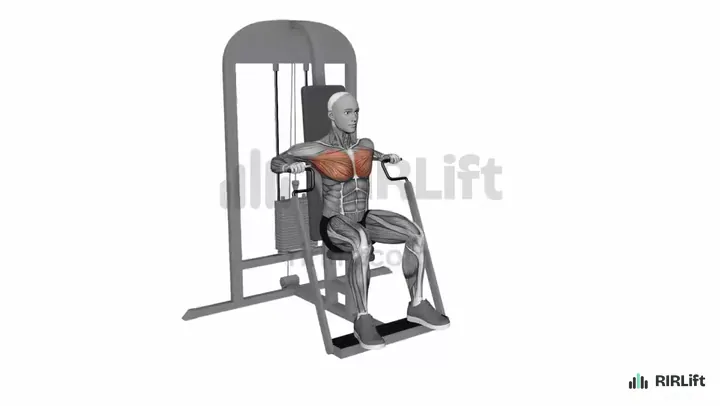
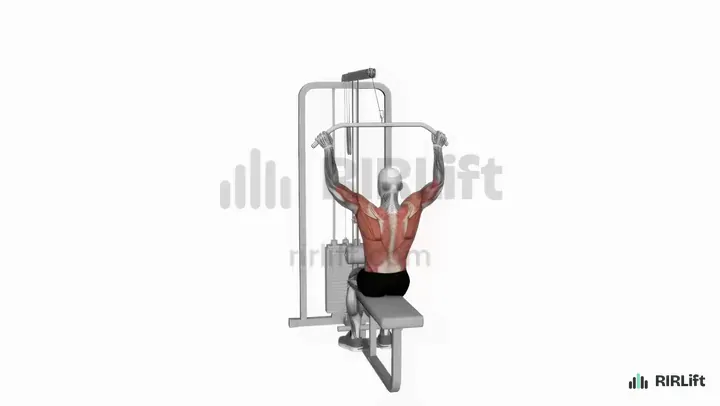
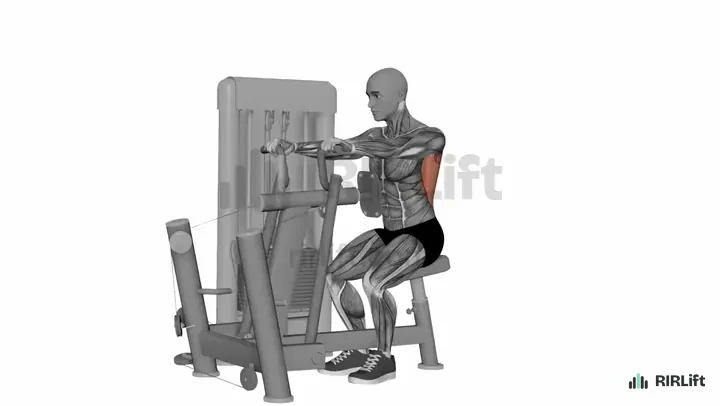
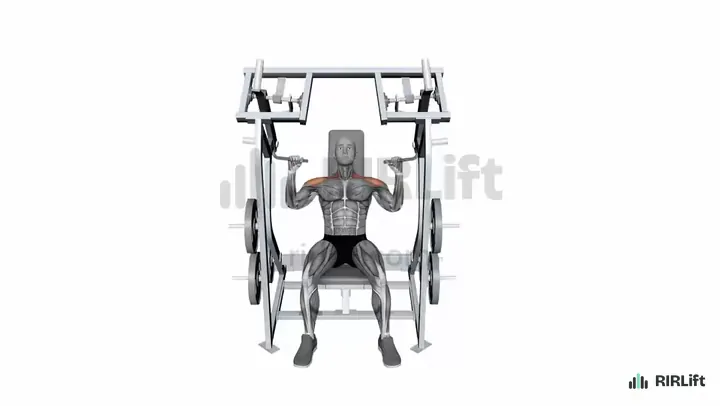
The best upper body exercises for beginners are the machine chest press, lat pulldown and seated row machine, because the machine guides the path and you only have to learn how hard to push. Add the machine shoulder press and a cable pressdown and curl, and you have trained every upper body muscle with six exercises. Once those feel familiar, usually after three to six weeks, bring in the dumbbell bench press and one-arm row. At home, incline push-ups and dumbbells cover the same ground.
- Machine Chest Press Chest
- Lat Pulldown Lats
- Machine Row Upper Back, Lats
- Machine Shoulder Press Shoulders
- Incline Push-Up Chest
- Cable Triceps Pressdown Triceps
- Cable Curl Biceps
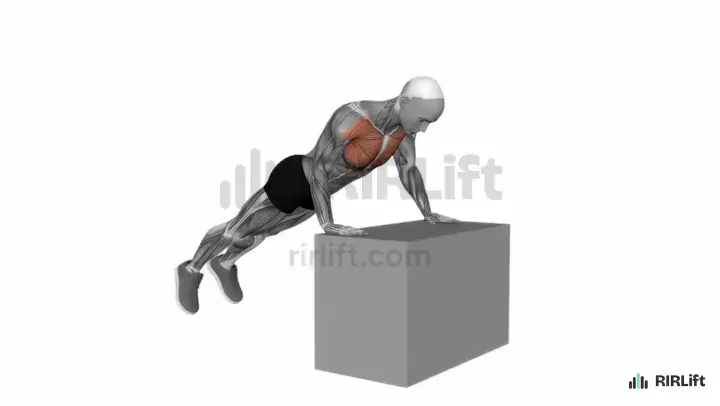
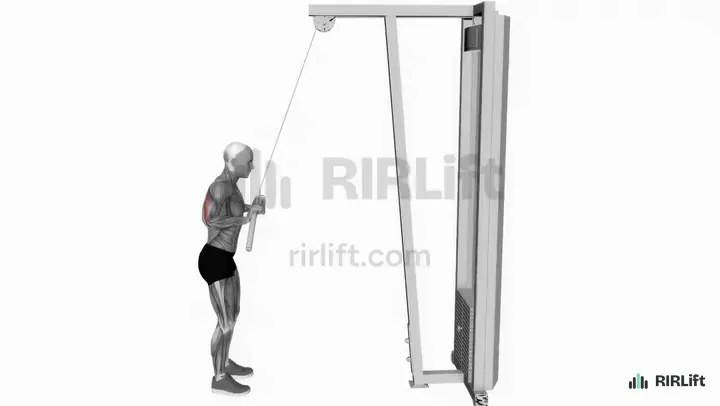
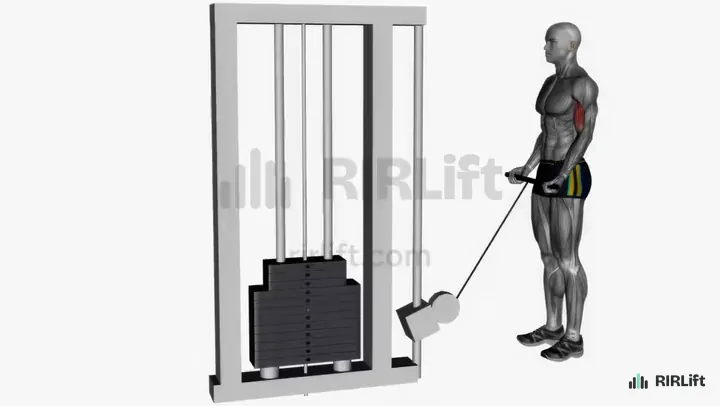
Put them together: example sessions
Each session below picks from the exercises above for one situation, with the sets, reps, rest and RIR filled in. Open one in the session builder to change a pick, price it from a recent set, and add it to RIRLift.
-
Session 1
First month at the gym, machines only
You are new to the gym, a bit unsure where to start, and want a short session you can do on your own without asking anyone how a bar works.
2× a week · 24 sets a week · ~30 min
-
Session 2
Starting at home with dumbbells and a bench
You would rather start at home, and you have a pair of dumbbells, a flat bench and something sturdy to put your hands on.
3× a week · 39 sets a week · ~30 min
-
Session 3
Months two and three, adding free weights
You have been on the machines for a month or more, the movements feel natural, and you want to start using dumbbells without dropping what is working.
2× a week · 30 sets a week · ~35 min
Session 1
First month at the gym, machines only
- Workouts2× a week
- Working sets24 a week
- Per workout~30 min
- EquipmentChest Press, Lat Pulldown, Seated Row Machine, Shoulder Press +1
You are new to the gym, a bit unsure where to start, and want a short session you can do on your own without asking anyone how a bar works.
Every exercise is a machine or cable, so each one has a fixed path and a pin you can move to change the weight. Sets stop at 3 reps in reserve, which is enough to grow muscle in your first months while you learn what a hard set feels like and let your joints adjust. Two sets of six exercises is 12 working sets, about 30 minutes, which you can recover from twice a week.
| Exercise | Sets × reps | RIR | Rest |
|---|---|---|---|
| Machine Chest Press1 warm-up set firstHandles at mid-chest. | 2 × 8–12 | 3 | 90 s |
| Lat Pulldown1 warm-up set firstBar to the top of the chest. | 2 × 8–12 | 3 | 90 s |
| Machine RowChest on the pad. | 2 × 8–12 | 3 | 90 s |
| Machine Shoulder Press | 2 × 8–12 | 3 | 90 s |
| Cable Triceps Pressdown | 2 × 10–15 | 3 | 1 min |
| Cable Curl | 2 × 10–15 | 3 | 1 min |
- How to run it
- Do the same session twice a week, for example Monday and Thursday, with lower body or rest on the days between. Before your first set of the chest press and pulldown, do one easy set of 10 to get used to the machine.
- How to progress
- When you can do 12 reps on both sets and still have 3 left in the tank, move the pin down one plate next time. After four weeks, change the target to 2 reps in reserve.
Session 2
Starting at home with dumbbells and a bench
- Workouts3× a week
- Working sets39 a week
- Per workout~30 min
- EquipmentDumbbells, Flat Bench
You would rather start at home, and you have a pair of dumbbells, a flat bench and something sturdy to put your hands on.
With no machines, the picks are the ones that stay safe with free weights: incline push-ups that you can scale by hand height, a dumbbell press and one-arm row with the bench supporting you, then lateral raises and hammer curls for the smaller muscles. Sets stop at 2 to 3 reps in reserve, since you have no spotter. Each session is 13 working sets.
| Exercise | Sets × reps | RIR | Rest |
|---|---|---|---|
| Flat Dumbbell PressElbows at 45 degrees. | 3 × 8–12 | 2 | 90 s |
| One-Arm Dumbbell RowPer arm. Hand and knee on the bench. | 3 × 10–12 | 2 | 90 s |
| Dumbbell Lateral Raise | 2 × 12–15 | 2 | 1 min |
| Hammer Curl | 2 × 10–12 | 2 | 1 min |
| Incline Push-UpHands on the bench. | 3 × 8–15 | 3 | 1 min |
Open Session A in the session builder
| Exercise | Sets × reps | RIR | Rest |
|---|---|---|---|
| Incline Push-UpHands lower than last time if you can. | 3 × 8–15 | 2 | 90 s |
| One-Arm Dumbbell RowPer arm. Pause at the hip. | 3 × 10–12 | 2 | 90 s |
| Flat Dumbbell Press | 2 × 10–12 | 3 | 90 s |
| Dumbbell Lateral Raise | 3 × 12–15 | 2 | 1 min |
| Hammer Curl | 2 × 10–12 | 2 | 1 min |
Open Session B in the session builder
- How to run it
- Do Session A and Session B on alternate training days, three times a week, so each comes up every five days or so. Rest at least a day between them.
- How to progress
- Add reps until you reach the top of every range. Then use heavier dumbbells for the presses and rows, and lower the surface for the push-ups by one step.
Session 3
Months two and three, adding free weights
- Workouts2× a week
- Working sets30 a week
- Per workout~35 min
- EquipmentDumbbells, Flat Bench, Lat Pulldown, Seated Row Machine +4
You have been on the machines for a month or more, the movements feel natural, and you want to start using dumbbells without dropping what is working.
Each day keeps the machines you already know and adds one free-weight exercise near the start, when you are fresh enough to learn it well: the dumbbell press on day A, the one-arm row on day B. The assisted pull-up begins your path to a real pull-up. Sets move to 2 reps in reserve because by now you can judge a hard set, and the volume rises to 15 working sets per day.
| Exercise | Sets × reps | RIR | Rest |
|---|---|---|---|
| Flat Dumbbell Press1 warm-up set firstElbows at 45 degrees. | 3 × 8–12 | 2 | 2 min |
| Lat Pulldown | 3 × 8–12 | 2 | 90 s |
| Machine Row | 3 × 10–12 | 2 | 90 s |
| Dumbbell Lateral Raise | 3 × 12–15 | 2 | 1 min |
| Cable Triceps Pressdown | 3 × 10–15 | 2 | 1 min |
Open Upper A in the session builder
| Exercise | Sets × reps | RIR | Rest |
|---|---|---|---|
| One-Arm Dumbbell Row1 warm-up set firstPer arm. | 3 × 8–12 | 2 | 90 s |
| Machine Chest Press | 3 × 8–12 | 2 | 90 s |
| Assisted Pull-UpLower slowly. | 3 × 6–10 | 2 | 2 min |
| Machine Shoulder Press | 3 × 8–12 | 2 | 90 s |
| Cable Curl | 3 × 10–15 | 2 | 1 min |
Open Upper B in the session builder
- How to run it
- Do Upper A and Upper B once each per week with at least two days between them. If you also train legs, put those on the days between.
- How to progress
- On the machines, move down one plate when both sets hit the top of the range at 2 in reserve. On the dumbbells, go up by the smallest step available. Drop the assisted pull-up's counterweight by one plate when you reach 10 reps.
Make it fit you
-
You are very sore after the first sessions
Soreness in the first two weeks is normal and fades as you repeat the same exercises. Drop to one set per exercise for a week if it lasts more than three days, then build back to two.
-
You do not know which weight to choose
Pick a weight you think you could lift 15 times and do 10. If you could clearly have done 5 more, go up next set. Within two or three sessions you will know your starting point on every machine.
-
The gym feels crowded or intimidating
Go at off-peak times for the first weeks, and do the session in the order the machines sit on the floor rather than the order listed. The sets and reps matter more than the order of the smaller exercises.
-
You cannot do a push-up from the floor yet
Use the incline push-up at whatever height lets you do 8 good reps, and lower it one step every week or two. Most people reach floor push-ups within a few months this way.
-
You want to train your whole body
Do one of these upper sessions and add a leg press, leg curl and plank at the end. Keep the upper part to two sets per exercise so the session stays under an hour.
-
Log the RIR, not just the weight
After each set, note how many more reps you think you could have done. RIRLift saves that number with the set and suggests your next weight from it, so you learn how hard to push without guessing from one session to the next.
Questions
What are good upper body exercises for a beginner?
The machine chest press, lat pulldown, seated row machine and machine shoulder press cover the big upper body muscles, and a cable pressdown and curl cover the arms. At home, incline push-ups, a dumbbell bench press, a one-arm dumbbell row and lateral raises do the same job.
What are some good arm workout machines for beginners?
The cable station is the most useful: a high pulley for triceps pressdowns and a low pulley for curls. Many gyms also have a preacher curl machine and a seated triceps extension machine, which guide the movement the same way. Your arms also work hard on the chest press, shoulder press, pulldown and row.
How do you work out your upper body as a beginner?
Pick one pushing and one pulling exercise for the chest and back, one shoulder press, and one exercise each for biceps and triceps. Do two sets of 8 to 12 reps, stopping each set when you think you have about 3 reps left, twice a week.
How many times a week should a beginner train upper body?
Twice a week is enough for most beginners. It gives each muscle two chances a week to grow and two or three days to recover between sessions.
How much weight should a beginner lift?
A weight you can lift for 8 to 12 reps with about 3 reps left in the tank. There is no standard number, because it depends on the machine and on you. Start lighter than you think and move up within the session if it was too easy.
Should beginners use machines or free weights?
Machines are the easier place to start, because they let you learn effort and range of motion without balancing a weight. Free weights are worth adding after a few weeks, and you can build plenty of muscle on either.
How long until I see results?
Most beginners get noticeably stronger in the first four to six weeks, mostly from learning the movements. Visible muscle takes a few months of steady training and eating enough protein.
Related templates
-
Upper body exercises at the gym: chest, back, shoulders and arms
The next step once the machines are familiar: barbells, cables and more exercises.
-
Upper body exercises at home: chest, shoulders, back and arms
More options if you are training at home with no machines.
-
Chest exercises for beginners: where to start and what to add next
A closer look at the chest machines and push-up progressions.
-
The best workout for beginners
A full-body plan that includes legs, ready to import.
-
How to use RIR
How to judge how many reps you have left in a set.