Upper body exercises for weight loss: chest, back, shoulders and a little cardio

The best upper body exercises for weight loss are push-ups and dumbbell bench and incline presses for your chest, lat pulldowns, one-arm dumbbell rows, seated cable rows and inverted rows for your back, the dumbbell shoulder press, lateral raise and face pull for your shoulders, the dumbbell pullover, and the ski erg for conditioning. Train upper body twice a week with a press and a pull in every session, 3 sets of 8 to 15 reps stopping 1 to 2 reps short of failure. Fat at your arms, back and sides comes off as your total body fat drops; a stronger back and shoulders change how your upper body looks as it does.

  1. Push-Up Chest
  2. Flat Dumbbell Press Chest
  3. Lat Pulldown Lats
  4. One-Arm Dumbbell Row Lats, Upper Back
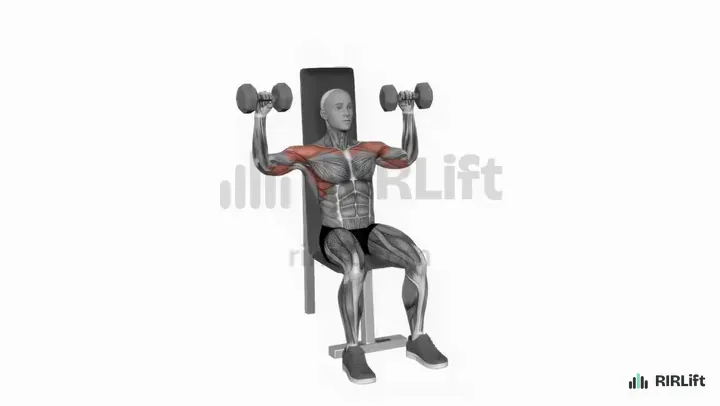
  5. Dumbbell Shoulder Press Shoulders
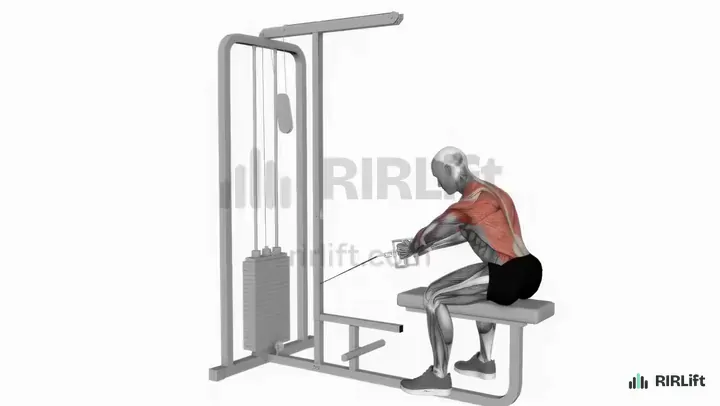
  6. Seated Cable Row Upper Back, Lats
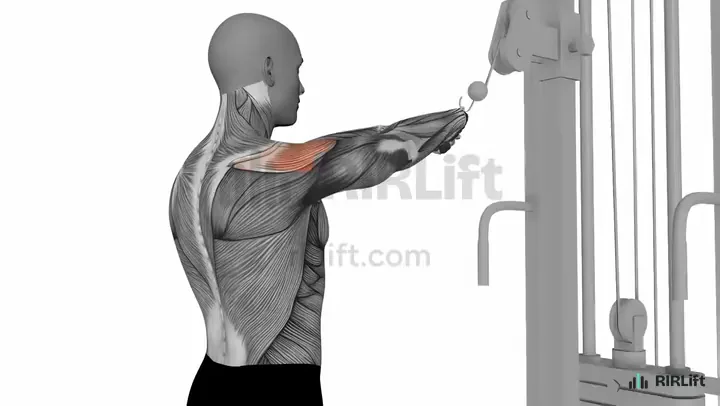
  7. Face Pull Shoulders, Upper Back

Chest presses

A press trains your chest, shoulders and triceps together, so it is the most efficient upper-body move. Use push-ups at home, the dumbbell bench press as the main gym press, and the incline press when you want more upper chest.

Chest, shoulders and triceps, floor push-up

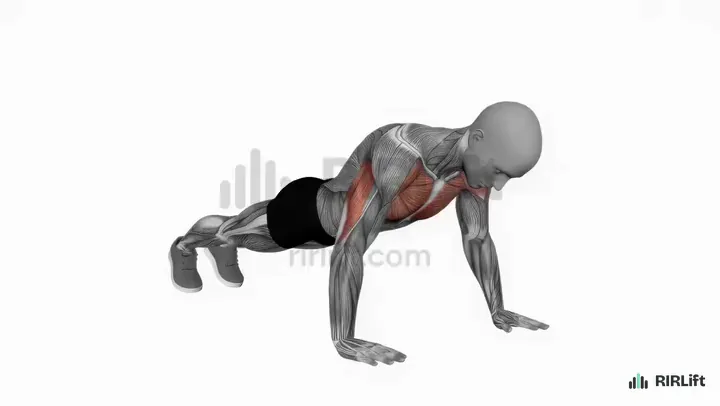
Push-Up

Chest

The press you can do anywhere, and a plank at the same time. Start with hands raised on a bench if the floor is too hard and lower them as you get stronger.

How to do it

  1. Set your hands slightly wider than your shoulders with your body straight from head to heels.
  2. Lower until your chest nearly touches the floor, elbows at about 45 degrees.
  3. Press back up to straight arms.

Cues

  • One straight line
  • Elbows angled back

Common mistakes

  • Flaring the elbows straight out: tuck them toward your ribs.

Swap for: Kneeling Push-Up, Incline Push-Up, Push-Up Plus

Chest and triceps, dumbbell bench press

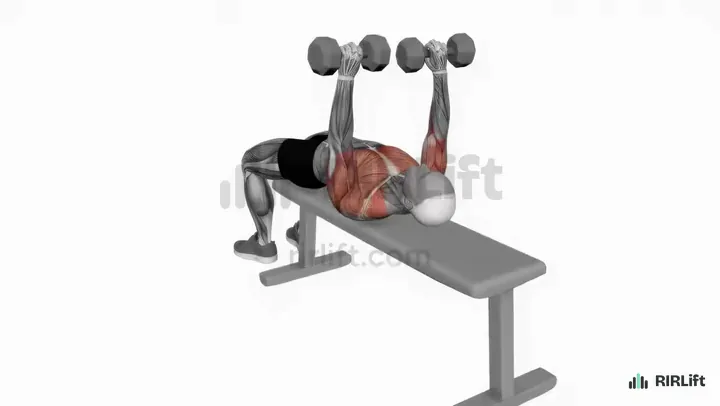
Flat Dumbbell Press

Chest

Dumbbells let each arm press on its own path, which most shoulders like better than a barbell. It is the main press in the gym plan.

How to do it

  1. Lying on a flat bench, hold two dumbbells above your chest.
  2. Lower the bells to the sides of your chest with elbows at about 45 degrees.
  3. Press them back up over your shoulders.

Cues

  • Shoulder blades pinched.
  • Control the lowering.

Common mistakes

  • Flaring the elbows straight out.

Swap for: Push-Up, Barbell Bench Press

Upper chest and shoulders, incline press

Incline Dumbbell Press

Chest

Tilting the bench to about 30 degrees trains the upper chest that sits under your collarbones. On Upper 2 it leads the session, so the week gets one flat and one incline press.

How to do it

  1. Set the backrest to about 30 to 45 degrees and sit with the dumbbells on your thighs.
  2. Lean back and bring the weights to the outside of your shoulders as your back meets the pad.
  3. Squeeze your shoulder blades back and keep your hips on the seat.
  4. Press up and slightly in until your arms are straight over your upper chest.
  5. Lower under control until your elbows are just below the bench line.

Cues

  • Low incline, not a shoulder press
  • Wrists stacked over elbows
  • Touch the stretch, then press

Common mistakes

  • Setting the bench steeper than about 45 degrees: the front delts take over. Drop it a notch if you mostly feel your shoulders.
  • Lifting your hips off the seat to finish a rep: that turns it back into a flat press.

Swap for: Single-Arm Incline Dumbbell Press, Incline Dumbbell Squeeze Press, Incline Barbell Bench Press

Rows and pulldowns for your back

Your back has more muscle than your chest, and training it is what makes your back look tighter as your body fat comes down. Pair every press with a pull: a pulldown or inverted row for the lats, a row for the middle of your back, and the pullover for a long stretch at home.

Lats, vertical pull

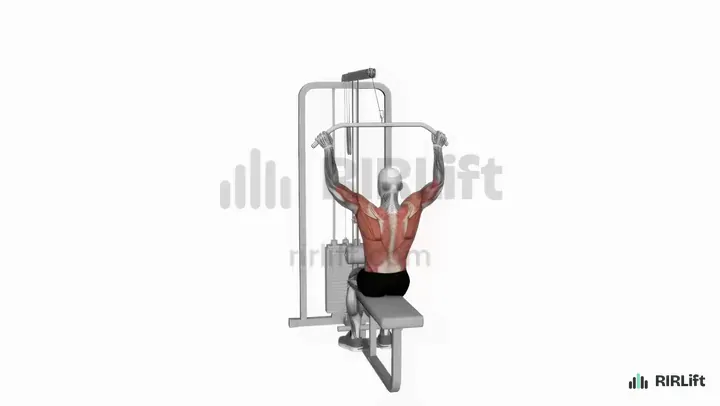
Lat Pulldown

Lats

Pulling a bar down to your chest builds the wide back muscles that give your upper body a V shape. Choose the weight; it is the pull-up for people who cannot do one yet.

How to do it

  1. Set the thigh pad so your legs are locked under it, then stand up and take the bar a little wider than your shoulders, palms forward.
  2. Sit down with your arms fully stretched overhead and lean back only slightly.
  3. Pull the bar to your upper chest by driving your elbows down toward your hips.
  4. Let the bar rise until your arms are straight and your shoulders lift toward your ears, then pull again.

Cues

  • Elbows to your back pockets
  • Bar to the top of the chest
  • Let the stack lift you at the top

Common mistakes

  • Leaning far back and rowing the bar to your stomach: stay nearly upright so it remains a vertical pull.
  • Stopping with the arms still bent at the top: the stretch overhead is half of what makes the pulldown work.

Swap for: Assisted Pull-Up, Neutral-Grip Lat Pulldown, One-Arm Dumbbell Row

Lats and upper back, supported row

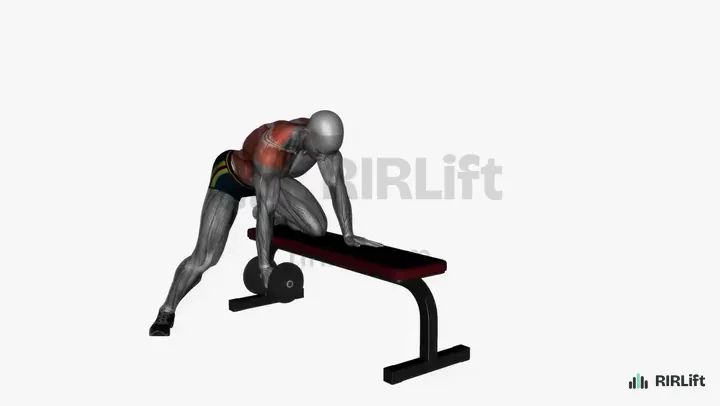
One-Arm Dumbbell Row

Lats, Upper Back

Bracing one hand on a bench takes your lower back out of it so you can row heavy. It is the row for home and gym.

How to do it

  1. Put one hand and the same-side knee on a bench, or your hand on a chair seat with both feet on the floor, so your back is flat.
  2. Hold a dumbbell in the other hand with your arm hanging straight.
  3. Pull your elbow back toward your hip until the dumbbell reaches your ribs.
  4. Lower it until your arm is straight again, finish all reps, then switch sides.

Cues

  • Elbow to your hip
  • Back flat as a table
  • Full stretch at the bottom

Common mistakes

  • Twisting your chest open to lift the dumbbell higher: keep both shoulders level.
  • Shrugging the shoulder up toward your ear: pull the elbow back, not the shoulder up.

Swap for: Band Bent-Over Row, Dumbbell Bent-Over Row, Seated Cable Row

Mid back, cable row

Seated Cable Row

Upper Back, Lats

Rowing a cable handle to your stomach works the muscles between your shoulder blades that pull your shoulders back. A steady seat makes it easy to take sets close to failure.

How to do it

  1. Sit at the cable row with your feet on the platform and knees slightly bent, holding a close-grip handle with your arms straight.
  2. Sit tall with your chest up and let the cable pull your shoulder blades forward a little.
  3. Row the handle to your lower ribs, driving your elbows back past your torso.
  4. Return it under control until your arms are straight and your shoulders reach forward, then repeat.

Cues

  • Sit tall, no rocking
  • Handle to the belly button
  • Shoulders reach at the front

Common mistakes

  • Rocking back and forth to move the stack: your torso should stay close to upright throughout.
  • Shrugging the handle up toward your neck: pull your shoulders down before the elbows bend.

Swap for: Chest-Supported Row, Single-Arm Cable Row, Barbell Row

Upper back and lats, bodyweight row

Inverted Row

Upper Back, Lats

Hanging under a bar at hip height and pulling your chest up turns your body weight into the load. Bend your knees to make it easier and straighten them as you get stronger.

How to do it

  1. Set a bar at about hip height, lie under it, and grip it with your hands a little wider than your shoulders.
  2. Straighten your body from heels to head, or bend your knees with feet flat for an easier version.
  3. Pull your chest up to the bar, leading with your elbows, and keep your hips in line.
  4. Lower until your arms are straight, then pull again.

Cues

  • Body stays a straight plank
  • Chest touches the bar
  • Bend your knees to make it easier

Common mistakes

  • Letting your hips sag so only your chest rises: squeeze your glutes and move as one piece.
  • Pulling the bar to your neck: aim for the bottom of your chest.

Swap for: TRX Row, One-Arm Dumbbell Row, Seated Cable Row

Lats and chest, dumbbell pullover

Dumbbell Chest Pullover

Chest

Lowering one dumbbell behind your head and pulling it back over your chest stretches and trains your lats with a single dumbbell. It is the home stand-in for a pulldown.

How to do it

  1. Lie along a flat bench with your head near one end, or on the floor with knees bent, holding one dumbbell over your chest with both hands cupping the top end.
  2. Keep the elbows soft and brace your abs so your lower back stays flat.
  3. Let the dumbbell travel behind your head in an arc until your upper arms reach the level of your ears.
  4. Pull it back over your chest along the same path and repeat.

Cues

  • Ribs stay down
  • Elbows soft, not bending more
  • Pull from the chest

Common mistakes

  • Arching the lower back to get the dumbbell lower: stop the arc where your back starts to lift.
  • Bending the elbows into a triceps extension: hold the angle and use a lighter dumbbell.

Swap for: Dumbbell Lat Pullover, Kettlebell Pullover, Dumbbell Chest Fly

Presses and raises for your shoulders

Rounder shoulders make your waist and arms look smaller by comparison. Press overhead for the front of the shoulder, raise for the sides, and face pull for the back of the shoulder and posture.

Shoulders and triceps, overhead press

Dumbbell Shoulder Press

Shoulders

Pressing overhead works your shoulders and triceps with more weight than any raise. Do it seated with your back supported to keep it strict.

How to do it

  1. Set a bench upright or one notch back from vertical, sit with your feet flat, and rest a dumbbell on each thigh.
  2. Kick one knee up at a time to bring the dumbbells to shoulder height, then set your back against the pad.
  3. Turn your elbows slightly forward so they sit a little in front of your torso, palms facing forward or angled in.
  4. Drive both weights overhead on a slight inward arc until your elbows are straight, keeping your ribs down and your back on the pad.
  5. Lower slowly until the dumbbells are around ear height or a bit below, then press again.

Cues

  • Ribs down, back on the pad
  • Elbows a little forward
  • Press up and slightly in

Common mistakes

  • Arching your lower back off the pad to finish reps: that turns it into an incline press, so lighten the weight and keep your ribs stacked over your hips.
  • Flaring the elbows straight out at shoulder height: bring them a little forward so the shoulder joint stays comfortable at the bottom.
  • Stopping each rep well above your ears: lower to around ear height so the delts work through a full range.

Swap for: Machine Shoulder Press, Arnold Press, Landmine Press

Side shoulders, lateral raise

Dumbbell Lateral Raise

Shoulders

Raising light dumbbells out to the sides builds the side of the shoulder, the part that makes your frame look wider and your waist narrower.

How to do it

  1. Pick light dumbbells you can raise for 12 clean reps, and stand with your feet hip width apart, the weights hanging by your thighs.
  2. Lean your chest forward a few degrees, pull your shoulders down away from your ears and soften your elbows.
  3. Sweep the weights out and slightly forward, leading with your elbows, until your upper arms are level with your shoulders.
  4. Hold that top position for a beat, then take two to three seconds to lower until the dumbbells are a hand's width from your thighs.
  5. Start the next rep from there without resting at the bottom or bouncing out of it.

Cues

  • Elbows lead, hands follow
  • Shoulders down, neck long
  • Push the weights out, not up

Common mistakes

  • Shrugging the weight up: if your shoulders rise toward your ears, drop to lighter dumbbells and stop each rep where your upper arm is level.
  • Swinging the torso to start each rep: brace, stand still and keep the first inch of the lift as slow as the rest.
  • Bending the elbows more and more as the set goes on: set the bend on rep one and keep it, or the lever shortens and the set gets easier without you noticing.

Swap for: Cable Lateral Raise, Band Lateral Raise, Seated Dumbbell Lateral Raise

Rear shoulders and upper back, cable face pull

Face Pull

Shoulders, Upper Back

Pulling a rope toward your face with your elbows high trains the back of the shoulders and the muscles that hold your shoulder blades back. It balances all the pressing.

How to do it

  1. Set the pulley at or just above head height and attach a rope. Grab it with your thumbs pointing back toward you.
  2. Step back until your arms are straight and the stack lifts, then stagger your feet or sit on a bench so you can lean back slightly without swaying.
  3. Pull the middle of the rope toward your forehead by driving your elbows out and back, keeping them at shoulder height or higher.
  4. As the rope reaches your face, pull the ends apart and rotate your hands back until your fists sit beside your ears, like a double-biceps pose.
  5. Hold that position for a beat, then let your arms straighten under control until your shoulder blades slide forward again.

Cues

  • Elbows high, hands finish behind them
  • Pull the rope apart, not just back
  • Reach forward at the start of every rep

Common mistakes

  • Loading it like a row and leaning back to move the stack: drop the weight until you can hold the end position for a second without your torso rocking.
  • Letting the elbows drop below your shoulders: the pull turns into a row and your lats and biceps take the work. Raise the pulley or lighten the load.
  • Stopping when the rope touches your face: the outward rotation at the end is what the face pull adds, so finish with your fists beside your ears.

Swap for: Band Face Pull, Dumbbell Rear Delt Fly, Reverse Pec Deck

The ski erg for upper-body conditioning

Most cardio machines run on your legs. The ski erg makes your lats, arms and trunk pull every stroke, so a few hard intervals fit at the end of an upper-body day.

Lats, arms and trunk, ski machine

Ski Erg

Shoulders, Upper Back

Pulling the handles down and hinging with each stroke drives your heart rate up mostly with your upper body. Thirty-second hard pieces make a short finisher.

How to do it

  1. Stand facing the machine with the handles above your head and arms straight.
  2. Pull the handles down toward your thighs, hinging your hips back and bending your knees slightly.
  3. Finish with the hands beside your thighs and your torso leaning forward.
  4. Rise back up and reach high for the next stroke, keeping a steady rhythm.

Cues

  • Reach tall at the top
  • Pull with lats, not just arms
  • Hinge into each stroke

Common mistakes

  • Pulling only with the arms: drive the handles down with your lats and a hip hinge.
  • Going too hard on the first interval: pace so the last one is as strong.

Swap for: Rowing Machine, Battle Rope Wave, Air Bike

Put them together: example sessions

Each session below picks from the exercises above for one situation, with the sets, reps, rest and RIR filled in.

Session 1

Two upper-body days in a gym

  • Workouts2× a week
  • Working sets30 a week
  • Per workout~35 min
  • EquipmentDumbbells, Flat Bench, Lat Pulldown, Cable Row +3

You train in a gym four days a week, upper and lower on alternate days, and want the two upper sessions to keep your muscle while you lose weight.

Each upper day has two presses, two pulls and a shoulder move, about 15 sets, so chest, back and shoulders each get 9 to 12 hard sets a week. Ski erg intervals at the end of one day add conditioning without touching your legs before a lower day.

Upper 1
ExerciseSets × repsRIRRest
Flat Dumbbell Press2 warm-up sets first 3 × 8–12 2 2 min
Lat Pulldown 3 × 8–12 1 90 s
Dumbbell Shoulder Press 3 × 8–12 2 90 s
Seated Cable Row 3 × 10–12 1 90 s
Ski ErgSeconds. Hard pulls, easy strokes in the rest. 4 × 30 2 1 min
Upper 2
ExerciseSets × repsRIRRest
Incline Dumbbell Press1 warm-up set first 3 × 8–12 2 2 min
One-Arm Dumbbell RowPer arm. 3 × 8–12 1 90 s
Lat Pulldown 2 × 10–15 1 90 s
Dumbbell Lateral Raise 3 × 12–20 0 1 min
Face Pull 3 × 12–20 1 1 min
How to run it
Do Upper 1 and Upper 2 on two nonconsecutive days, with your lower-body days in between.
How to progress
Double progression: hit the top of the range on all sets at the target reps in reserve, then add weight. If a press stalls for three sessions while you are dieting, keep the weight and add one set for two weeks.

Session 2

At home with dumbbells

  • Workouts2× a week
  • Working sets22 a week
  • Per workout~25 min
  • EquipmentDumbbells

You train at home with a pair of dumbbells and a bench or sturdy chair, and you want two upper-body sessions a week alongside your leg work.

With no pulldown machine, the dumbbell row and pullover train your back, and push-ups and the shoulder press cover pressing. About 11 sets a session gives your chest, back and shoulders 8 to 10 hard sets a week.

Home Upper A
ExerciseSets × repsRIRRest
Push-Up 3 × 8–15 1 90 s
One-Arm Dumbbell RowPer arm. 3 × 10–15 1 75 s
Dumbbell Shoulder Press1 warm-up set firstSeated on a chair. 3 × 8–12 2 90 s
Dumbbell Lateral Raise 2 × 12–20 1 1 min
Home Upper B
ExerciseSets × repsRIRRest
Dumbbell Shoulder Press1 warm-up set first 3 × 8–12 2 90 s
Dumbbell Chest PulloverOn the bench or the floor. 3 × 10–15 1 75 s
Push-Up3 s down. 3 × 8–15 1 90 s
One-Arm Dumbbell RowPer arm. 2 × 12–15 1 1 min
How to run it
Do Home Upper A and Home Upper B on two nonconsecutive days each week.
How to progress
Add reps to the top of each range, then go to heavier dumbbells. On push-ups, move from a raised surface to the floor, then slow the lowering to three seconds.

Session 3

A 25-minute upper-body circuit

  • Workouts2× a week
  • Working sets34 a week
  • Per workout~25 min
  • EquipmentBarbells, Dumbbells, Cable Row, Ski Ergometer

You want a short, fast upper-body session in a gym that also gets you breathing hard, once or twice a week.

Press and pull pairs keep you moving while each muscle rests, and the session ends on the ski erg. Around 12 hard sets in 25 minutes keeps your upper-body muscle while the pace adds conditioning.

Upper Circuit
ExerciseSets × repsRIRRest
A1 Push-Up 3 × 10–15 1 1 min
A2 Inverted Row 3 × 8–12 1 1 min
B1 Dumbbell Shoulder Press 3 × 8–12 2 1 min
B2 Seated Cable Row 3 × 10–12 1 1 min
Ski ErgSeconds. Hard pulls. 5 × 30 2 1 min
How to run it
Run the circuit on one or two days a week, away from heavy leg days if you can.
How to progress
Keep the rest fixed and add reps; when every set hits the top, add weight on the press and the row. On inverted rows, lower the bar a notch to make each rep harder.

Make it fit you

Questions

How can I slim down my upper body?

Lower your overall body fat with a calorie deficit, and train your back and shoulders so your upper body has shape underneath. Two upper-body sessions a week with presses and rows is enough.

Are 4 exercises enough for upper body day?

Yes, if they are two presses and two pulls done for 3 hard sets each. The plans here use four or five per day, adding a shoulder exercise or a short conditioning piece when there is time.

Do upper body workouts burn fat?

They burn calories like any training and help you keep muscle while you diet. Fat loss itself comes from the calorie deficit across the week, and it comes off everywhere, not from the muscles you trained.

What is the 30/30/30 rule for fat loss?

It is a trend: 30 grams of protein within 30 minutes of waking, then 30 minutes of easy cardio. It can help some people eat more protein and move more, but the deficit and your training are what drive fat loss.

Should I train upper body or lower body to lose weight?

Both. Lower body burns more because the muscles are bigger, but your upper body loses muscle on a diet just as easily if you stop training it.