Anterior chain exercises: quads, hip flexors, abs, chest and front delts

The anterior chain is the muscle along the front of your body: quads, hip flexors, abs, chest and front shoulders. The best anterior chain exercises are the front squat, heels-elevated goblet squat, leg extension and sissy squat for the quads; hanging leg raises, cable hip flexion, ab wheel rollouts and dead bugs for the hip flexors and abs; and the bench press, overhead press and push-up for the chest and shoulders. Train them on two days a week, balanced by the same number of sets for the back of the body.

  1. Front Squat Quads, Glutes, Adductors
  2. Heels-Elevated Goblet Squat Quads
  3. Leg Extension Quads
  4. Hanging Leg Raise Abs
  5. Ab Wheel Rollout Abs
  6. Barbell Bench Press Chest
  7. Barbell Overhead Press Shoulders
Quads: the biggest part of the front chain

Squats that keep your torso upright and your knees traveling forward shift the work from the hips to the quads. The front squat and heels-elevated goblet squat do that with load, and the leg extension and sissy squat train the quads with the hips out of the way.

Quads, front-loaded squat

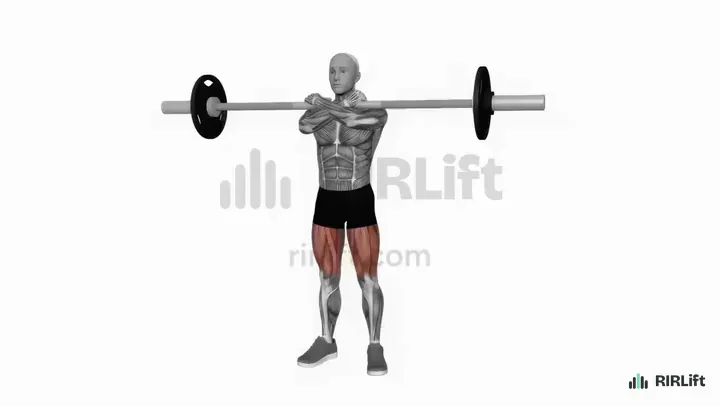
Front Squat

Quads, Glutes, Adductors

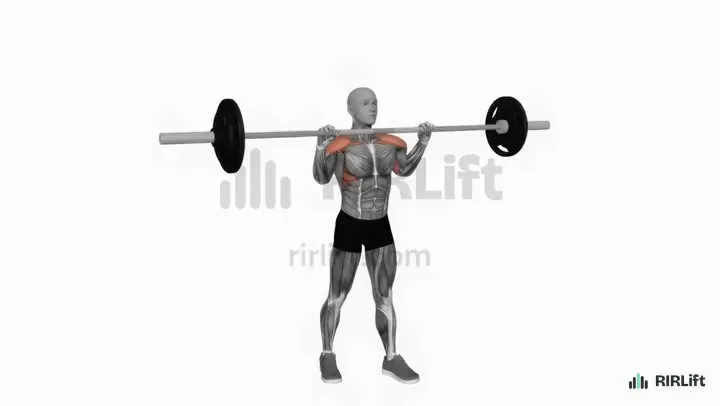
Holding the bar on the front of your shoulders keeps your torso upright, so the knees travel forward and the quads do more of the lift than in a back squat. Your abs also have to work hard to keep you from folding forward under the bar.

How to do it

  1. Set the bar in a rack at upper-chest height and step under it so it rests on the front of your shoulders, elbows high.
  2. Unrack it, take a step back, and set your feet about shoulder-width apart.
  3. Take a big breath, brace, and squat down with your elbows staying up and your torso upright.
  4. Drive up through your whole foot to standing, breathing out at the top.

Cues

  • Elbows high
  • Brace before you descend
  • Chest stays tall

Common mistakes

  • Elbows dropping as you come up: that lets the bar roll forward.
  • Breathing out at the bottom: hold the brace until you are nearly standing.

Swap for: Barbell Back Squat, Goblet Squat

Quads, heels-elevated squat

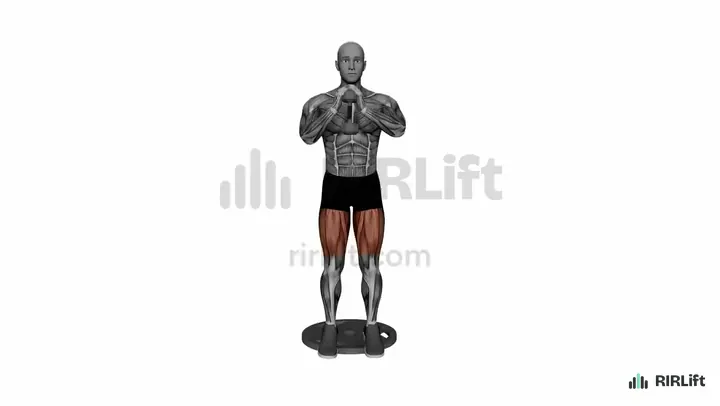
Heels-Elevated Goblet Squat

Quads

Raising your heels and holding a dumbbell at your chest lets the knees move far past the toes, which is what makes a squat quad-dominant. It is the anterior chain squat for anyone without a rack or with stiff ankles.

How to do it

  1. Set your heels on a small plate, wedge or thick book with your feet close together and toes pointing forward or slightly out.
  2. Cup the top end of one dumbbell under your chin, elbows down.
  3. Sit straight down, letting your knees drive forward past your toes, until the backs of your thighs touch your calves or you reach your lowest upright position.
  4. Stand by pushing through the balls of the feet and the heels together, keeping your chest tall.

Cues

  • Knees forward, chest up
  • Sit straight down
  • Smooth bottom, no bounce

Common mistakes

  • Leaning forward to finish the rep: that hands the work to your hips. Lighten the dumbbell and stay tall.
  • Stopping high because it burns: the deepest part is where the quads are stretched and do the most.

Swap for: Goblet Squat, Dumbbell Front Squat

Quads, machine isolation

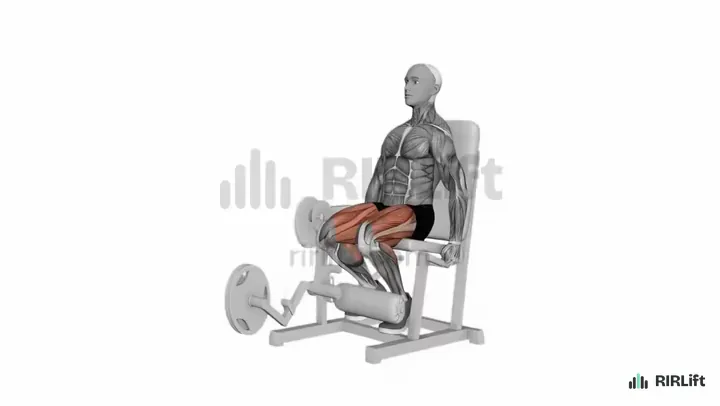
Leg Extension

Quads

The leg extension is the only common lift that trains the quads with no help from the hips, including the rectus femoris, the quad muscle that also flexes the hip. Use it after squats to finish the quads close to failure.

How to do it

  1. Sit with your knees at the pivot and the pad on your lower shins.
  2. Straighten both knees until your legs are level.
  3. Lower slowly. Build up the weight over 2 lighter sets.

Cues

  • Squeeze at the top
  • Control the drop

Common mistakes

  • Letting the stack slam between reps: keep tension on.

Swap for: Single-Leg Leg Extension, Sissy Squat

Quads, kneeling bodyweight lean

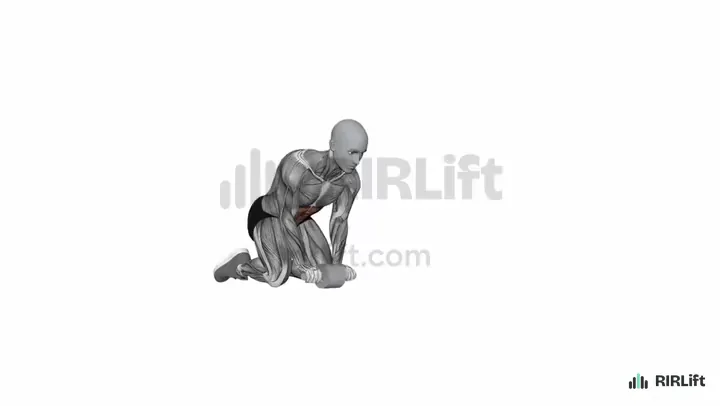
Sissy Squat

Quads

Leaning back from the knees with the hips locked straight stretches the quads and the front of the hips at the same time, so it trains the anterior chain as one long line. Body weight alone is hard enough for most people.

How to do it

  1. Kneel on a soft surface knees about hip-width apart, toes tucked or flat, and your body upright from knees to head.
  2. Keep your hips pushed forward so your body stays in one straight line, and lean back slowly from the knees.
  3. Go back as far as you can control, until you feel a strong pull along the front of your thighs.
  4. Pull yourself back to upright with your quads, keeping the hips from folding.

Cues

  • Hips forward, body straight
  • Lean back from the knees only
  • Slow on the way back

Common mistakes

  • Bending at the hips to lean back: that takes the stretch off the quads. Squeeze your glutes to stay straight.
  • Going further back than you can return from: start with a short lean and increase it as you get stronger.

Swap for: Wall Sit, Pistol Squat, Skater Squat

Hip flexors and abs

The hip flexors lift the thigh and the abs stop the ribs from flaring. Leg raises and cable hip flexion train the first; the ab wheel and dead bug train the abs to hold the spine still while the arms or legs move away from it.

Hip flexors and abs, hanging

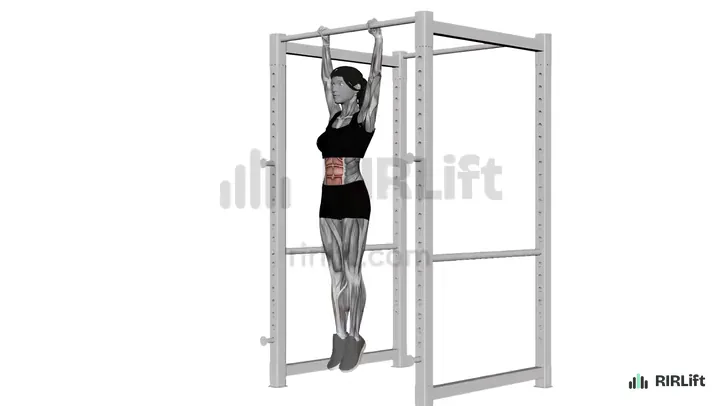
Hanging Leg Raise

Abs

Lifting straight legs from a hang works the hip flexors through their full range and makes the lower abs curl the pelvis at the top. Bend the knees to make it easier.

How to do it

  1. Hang from the bar, legs long and pressed together.
  2. Lift your legs, keeping your knees straight, until your feet reach at least hip height.
  3. Tilt your pelvis up at the top, then lower under control.

Cues

  • Legs locked
  • Pelvis tilts
  • No kip

Common mistakes

  • Bending the knees as you tire: switch to knee raises for the rest of the set.
  • Using a swing to get the legs up.

Swap for: Hanging Knee Raise, Lying Knee Raise

Hip flexors, cable

Standing Cable Hip Flexion

Abs

Driving one knee up against a cable is the most direct way to load the hip flexors, the muscles that pull your leg through every running stride. A cable gives smooth resistance you can increase in small steps.

How to do it

  1. Attach an ankle strap to a low pulley, strap one ankle and face away from the stack.
  2. Hold the frame for balance and stand tall on the other leg.
  3. Drive the strapped knee up toward hip height or above, then lower it slowly.

Cues

  • Tall chest
  • Knee high
  • Control the return

Common mistakes

  • Leaning back to lift the knee higher.
  • Letting the stack yank the leg back.

Swap for: Hanging Knee Raise, Captain's Chair Knee Raise

Abs, anti-extension

Ab Wheel Rollout

Abs

As the wheel rolls out, your abs and front shoulders work to stop your lower back from sagging. It trains the abs to resist extension under a long lever, which is the job they do when you press overhead or sprint.

How to do it

  1. Kneel with the wheel under your shoulders and your arms straight.
  2. Brace and roll forward, letting your hips follow, until just before your back starts to sag.
  3. Pull the wheel back to your knees using your abs, not your hips.

Cues

  • Tuck the pelvis
  • Roll only as far as you own
  • Arms straight

Common mistakes

  • Letting the lower back cave at the far end.
  • Sitting the hips back first on the return instead of pulling with the abs.

Swap for: Stability Ball Body Saw, Plank

Abs, anti-extension on the floor

Dead Bug

Abs

Pressing your lower back to the floor while one arm and the opposite leg reach out trains the deep abs to hold the pelvis still. It is the floor version of the rollout and works as a warm-up before squats.

How to do it

  1. Lie face up, arms pointing up and knees bent at right angles over your hips.
  2. Press your lower back into the floor.
  3. Reach one arm overhead and the opposite leg out long, both hovering above the floor.
  4. Bring them back and repeat with the other pair.

Cues

  • Back glued down
  • Breathe out as you reach
  • Opposite arm and leg

Common mistakes

  • Letting the back arch when the leg goes long: reach less far.
  • Going fast: each rep should take about three seconds.

Swap for: Plank, Alternating Leg Raise

Chest and front shoulders

Pressing is the upper half of the front chain. One horizontal press and one overhead press cover the chest, front delts and triceps; the push-up is the version that needs nothing but the floor.

Chest, front delts and triceps

Barbell Bench Press

Chest

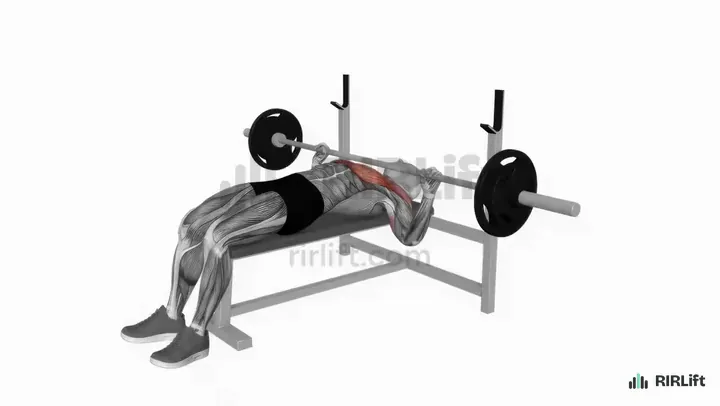
The bench press lets you put more weight on the chest and front shoulders than most presses. It is the main upper-body lift for the anterior chain and the one to put first on a front-body day.

How to do it

  1. Lie on the bench with your eyes under the bar, feet planted, and squeeze your shoulder blades back and down into the pad.
  2. Grip the bar a little wider than shoulder width, unrack it, and hold it over your shoulders with locked elbows.
  3. Lower the bar to your lower chest, around nipple height, with your elbows angled roughly 45 to 70 degrees from your sides.
  4. Touch your chest without bouncing, then press the bar up and slightly back until it is over your shoulders again.

Cues

  • Shoulder blades stay pinned
  • Bar to the nipple line
  • Drive your feet into the floor

Common mistakes

  • Flaring the elbows straight out to the sides: let them sit a bit closer to your ribs so your shoulders stay comfortable.
  • Lifting your hips off the bench to finish a rep: keep your glutes down and count that rep as your last.

Swap for: Flat Dumbbell Press, Smith Machine Bench Press, Machine Chest Press

Front delts, standing press

Barbell Overhead Press

Shoulders

Pressing overhead from a standing position trains the front delts and triceps, while the abs and glutes stop your lower back from arching. It covers the top of the front chain and its trunk in one lift.

How to do it

  1. Set the bar in a rack at collarbone height and grip it just outside your shoulders, wrists stacked over your elbows.
  2. Unrack it onto your upper chest, take one step back and set your feet about hip width apart.
  3. Squeeze your glutes, brace your abs so your ribs stay down, and take a big breath.
  4. Press straight up, pulling your chin back so the bar clears your face.
  5. Once the bar passes your forehead, push your head through until the bar sits over the middle of your foot with your arms locked.
  6. Lower it along the same line to your upper chest and re-brace before the next rep.

Cues

  • Glutes tight, ribs down
  • Chin back, bar straight up
  • Head through at the top

Common mistakes

  • Leaning back to finish reps, which turns the lift into an incline press: lower the weight until your torso stays vertical for the whole set.
  • Pressing the bar forward around your face: pull your chin back and keep the bar close enough to brush your nose.
  • Stopping short of lockout: finish every rep with the bar over your mid-foot and your arms straight, or the rep doesn't count in your log.

Swap for: Dumbbell Shoulder Press, Landmine Press, Seated Barbell Overhead Press

Chest and front delts, bodyweight

Push-Up

Chest

The push-up trains the same chest and shoulder muscles as the bench press while the abs hold a plank. It is the anterior chain press for home and the easiest to do for higher reps.

How to do it

  1. Set your hands slightly wider than your shoulders with your body straight from head to heels.
  2. Lower until your chest nearly touches the floor, elbows at about 45 degrees.
  3. Press back up to straight arms.

Cues

  • One straight line
  • Elbows angled back

Common mistakes

  • Flaring the elbows straight out: tuck them toward your ribs.

Swap for: Kneeling Push-Up, Incline Push-Up, Push-Up Plus

Put them together: example sessions

Each session below picks from the exercises above for one situation, with the sets, reps, rest and RIR filled in.

Session 1

A four-day front and back split

  • Workouts2× a week
  • Working sets28 a week
  • Per workout~45 min
  • EquipmentBarbells, Flat Bench, Pull-Up Bar, Leg Extension +3

You lift four days a week and want to try an anterior and posterior split: two days for the front of the body, two days for the back.

These are the two front days: 14 working sets each, with one heavy day and one lighter volume day. Matching them with two posterior chain days of the same size keeps the week balanced front to back.

Front A: Heavy
ExerciseSets × repsRIRRest
Front Squat3 warm-up sets first 4 × 4–6 2 3 min
Barbell Bench Press2 warm-up sets first 4 × 4–6 2 3 min
Hanging Leg Raise 3 × 8–12 2 90 s
Leg Extension 3 × 10–15 1 90 s
Front B: Volume
ExerciseSets × repsRIRRest
Heels-Elevated Goblet Squat1 warm-up set first 3 × 8–12 2 2 min
Barbell Overhead Press2 warm-up sets first 4 × 6–8 2 2:30 min
Ab Wheel Rollout 3 × 6–10 2 90 s
Standing Cable Hip FlexionPer leg. 2 × 10–12 2 1 min
Sissy Squat 2 × 8–12 2 90 s
How to run it
Alternate front and back days, for example front on Monday and Thursday, back on Tuesday and Friday. Do the heavy day after your rest day.
How to progress
On Day 1, add 5 pounds to the front squat and bench press when all four sets reach 6 reps at the target reps in reserve. On Day 2, add reps first and weight once every set hits the top of the range.

Session 2

Front body at home with one dumbbell

  • Workouts2× a week
  • Working sets24 a week
  • Per workout~30 min
  • EquipmentDumbbells

You train at home with a dumbbell or two and want a short session that covers the whole front of the body.

Four exercises cover quads, chest, front shoulders and abs in 12 working sets, about 30 minutes. Run twice a week, that is 12 hard sets for the quads and 6 each for the chest and abs, enough to make progress from a home setup.

Front body at home
ExerciseSets × repsRIRRest
Heels-Elevated Goblet Squat1 warm-up set first 3 × 10–15 2 90 s
Push-Up 3 × 8–20 2 90 s
Sissy Squat 3 × 6–12 2 90 s
Dead BugPer side. 3 × 8–12 2 1 min
How to run it
Do it twice a week on non-consecutive days. On the other days, train your back, glutes and hamstrings so the front never outpaces the back.
How to progress
Add reps until you reach the top of each range, then make it harder: a heavier dumbbell for the goblet squat, feet raised on a step for push-ups, a slower lean for sissy squats and a longer reach for dead bugs.

Session 3

Your deadlift outpaces your squat

  • Workouts1× a week
  • Working sets11 a week
  • Per workout~30 min
  • EquipmentBarbells, Leg Extension, Adjustable Cable, Pull-Up Bar

You already follow a full program, but your hinge has run ahead of your squat and your quads look and feel like the weak link.

One extra session of 11 front-chain sets, aimed mostly at the quads, adds volume where you are behind without rebuilding your whole program. Keep it away from your main squat day so the quads are fresh for both.

Quads and hip flexors
ExerciseSets × repsRIRRest
Front Squat2 warm-up sets first 3 × 6–8 2 2:30 min
Leg Extension 3 × 12–15 1 75 s
Standing Cable Hip FlexionPer leg. 2 × 10–15 1 1 min
Hanging Leg Raise 3 × 8–15 1 75 s
How to run it
Add it once a week, at least two days after your heaviest squat session. Leave your existing program as it is.
How to progress
Add weight to the front squat when all three sets reach 8 reps at 2 reps in reserve. Take the leg extension and leg raise to 1 rep in reserve and add a plate or rep every week you can.

Make it fit you

Questions

What muscles are in the anterior chain?

The anterior chain is the muscle on the front of the body: the quadriceps, hip flexors, abdominals, chest and front deltoids, with the tibialis on the shin at the bottom. The posterior chain is the back: calves, hamstrings, glutes, spinal erectors, lats and upper back.

What is the difference between anterior and posterior chain workouts?

An anterior chain workout is built on squats, presses and ab work that load the front of the body. A posterior chain workout uses hinges, rows, pull-ups and hamstring curls for the back. Training both twice a week is a full program.

Is a front and back split good?

Yes, for four days a week. It works like an upper and lower split but divides the body front to back, so each workout pairs a lower-body lift with an upper-body one. Use the front days on this page with two posterior chain days.

What is the best anterior chain exercise?

The front squat. It loads the quads hardest of any squat and makes the abs and upper back hold you upright. If you have no rack, the heels-elevated goblet squat is the closest dumbbell version.

Can you do a full-body anterior chain workout?

Yes. One squat, one press, one ab exercise and one quad or hip flexor isolation cover the front from shins to shoulders. The home session on this page is exactly that in four exercises.