Apple Watch basketball workout: strength and jumps from your wrist

To record a game or a practice, pick Basketball in the Apple Watch Workout app. For the strength and jump training behind your game, log each set on the Watch in RIRLift: weight, reps and reps in reserve, saved to Apple Health as Traditional Strength Training. Copy one of the three sessions below: two gym days for a rec league player, a home session with dumbbells and a step, or one short lift in a week with two games.

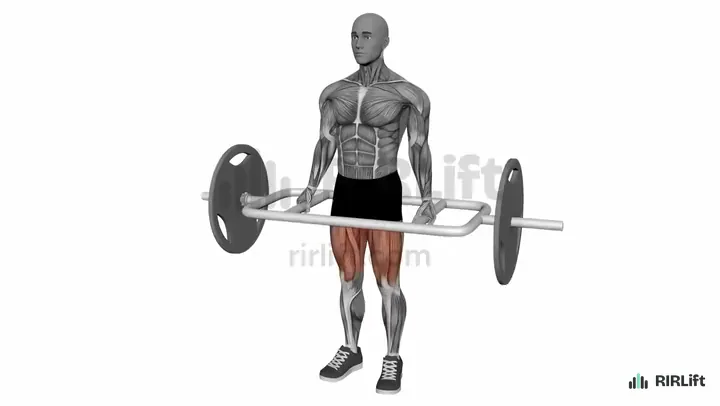
  1. Trap Bar Deadlift Quads, Glutes
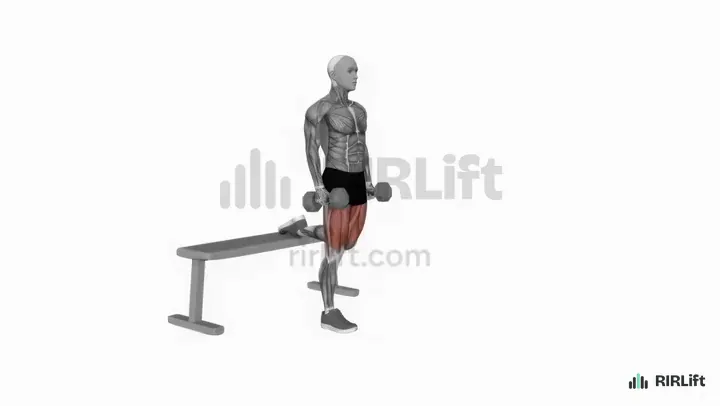
  2. Bulgarian Split Squat Quads, Glutes
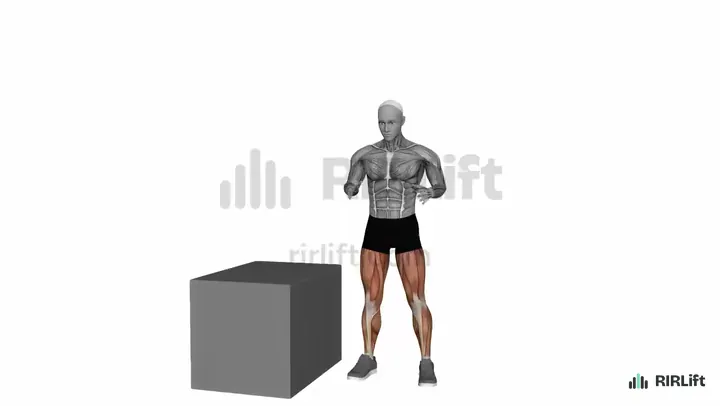
  3. Lateral Box Jump Quads, Glutes, Abductors
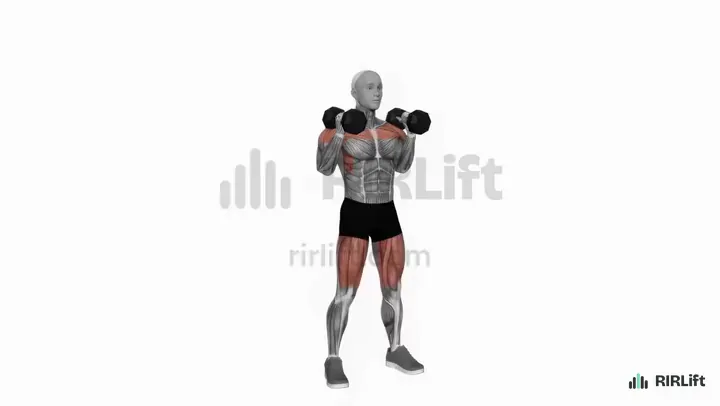
  4. Dumbbell Push Press Shoulders
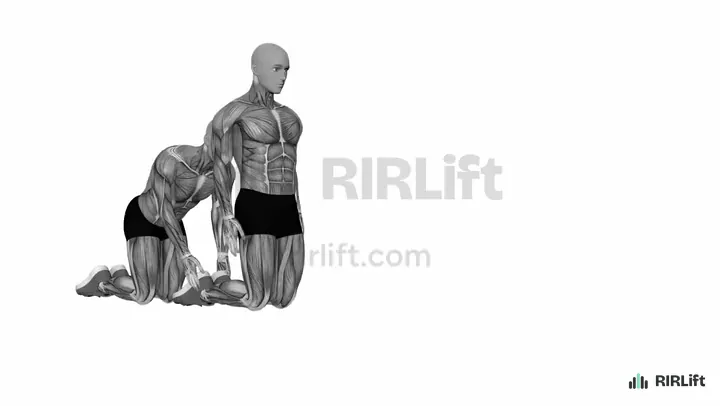
  5. Nordic Hamstring Curl Hamstrings
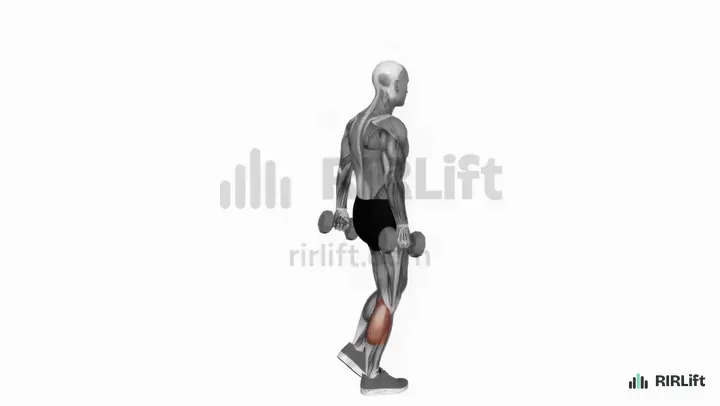
  6. Single-Leg Calf Raise Calves
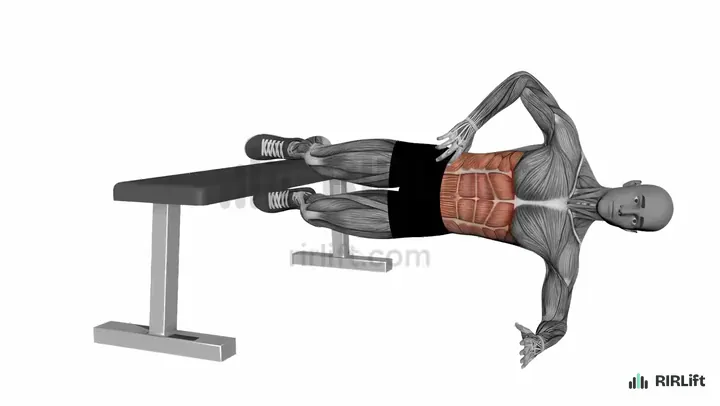
  7. Copenhagen Plank Adductors, Abs

Jumps

Short sets of jumps go first, while you are fresh, so every takeoff is fast and every landing quiet.

Lateral power, box jump

Lateral Box Jump

Quads, Glutes, Abductors

Trains a sideways takeoff like a closeout or a slide. Three reps, full reset between them.

How to do it

  1. Stand beside a low box with your feet at hip width.
  2. Dip quickly into a quarter squat and jump up and sideways onto the box.
  3. Land softly with both feet flat and knees bent, stand up, then step down and reset before the next rep.

Cues

  • Quick dip, big push
  • Land quiet

Common mistakes

  • Choosing a box so high that you land in a deep squat: the landing should look like your takeoff position.

Swap for: Box Jump, Single-Leg Box Jump, Jump Squat

One-leg takeoff, box jump

Single-Leg Box Jump

Quads, Glutes

A layup takes off from one leg. A low box keeps the landing easy.

How to do it

  1. Stand on one leg facing a low box.
  2. Swing your arms back, dip on the standing leg, and jump onto the box.
  3. Land on the same foot with a soft knee, stand tall, step down, and do every rep on one leg before switching.

Cues

  • Arms drive the jump
  • Stick the landing for a second

Common mistakes

  • Rushing reps so each takeoff is weaker than the last: rest a few seconds between jumps, every rep should be your best.

Swap for: Lateral Box Jump, Box Jump, Step-Up

Legs and hips

Heavy lifts for the legs you jump and cut with, plus the hamstrings that brake every sprint.

Whole lower body, trap bar

Trap Bar Deadlift

Quads, Glutes

The heaviest lift of the week and the easiest to learn. Strength here carries into your jump.

How to do it

  1. Step into the middle of the bar with your feet about hip-width apart.
  2. Push your hips back, bend your knees and grab the handles with your palms facing in, arms straight.
  3. Brace, then push the floor away and stand up tall, hips and knees straightening together.
  4. Lower the bar by sending your hips back first, then bending your knees, and set it down before the next rep.

Cues

  • Push the floor away
  • Chest proud, arms long
  • Stand tall, don't lean back

Common mistakes

  • Squatting it with hips too low and chest folded over. Start with your shoulders a little ahead of the handles.
  • Leaning back at the top. Finish by squeezing your glutes with your ribs stacked over your hips.

Swap for: Dumbbell Romanian Deadlift, Romanian Deadlift, Kettlebell Deadlift

Single-leg strength, dumbbells

Bulgarian Split Squat

Quads, Glutes

Each leg works on its own, the way you push off and land in a game.

How to do it

  1. Stand two to three feet in front of a bench, a dumbbell in each hand, and reach one foot back so its laces rest on the bench.
  2. Lower straight down until your back knee is just above the floor and your front thigh is about level.
  3. Push through your whole front foot to stand back up, keeping your torso steady.
  4. Finish all reps on one leg, then switch.

Cues

  • Straight down, straight up
  • Front foot flat
  • Back leg just rests

Common mistakes

  • Standing too close to the bench so your front heel lifts. Step out until your shin can stay fairly upright.
  • Pushing off the back foot. Keep it relaxed; the front leg does the work.

Swap for: Dumbbell Split Squat, Dumbbell Reverse Lunge, Step-Up

Single-leg strength, step

Step-Up

Quads, Glutes

Needs only a sturdy step or bench, so it is the main leg lift of the home session.

How to do it

  1. Stand facing a bench or box at about knee height, dumbbells hanging at your sides.
  2. Plant one whole foot on the box.
  3. Drive through that foot to stand up on the box without pushing off the floor leg.
  4. Step back down slowly with the same leg leading down, then repeat.

Cues

  • The top leg does the work
  • Stand fully tall
  • Slow on the way down

Common mistakes

  • Bouncing off the bottom foot: keep it light so the top leg lifts you.
  • Using a box so high your hip drops below your knee: lower it.

Swap for: Dumbbell Reverse Lunge, Bulgarian Split Squat

Hamstrings and balance, one leg

Single-Leg RDL

Hamstrings, Glutes

Builds the hamstrings and the balance to land on one leg and stay there.

How to do it

  1. Balance on one foot, knee soft, holding a dumbbell on that same side.
  2. Tip forward from the hip and let your other leg travel straight behind you as the weight drops toward the floor.
  3. Stop when your chest and back leg are close to level, or sooner if your back begins to round.
  4. Push your hips forward to stand tall again. Do every rep on that leg before changing sides.

Cues

  • Hips stay level
  • Reach back with your heel
  • Weight stays close to your leg

Common mistakes

  • Letting the back hip open toward the ceiling. Point the toes of your back foot at the floor.
  • Losing balance every rep. Touch a bench with your free hand until you can hold it steady.

Swap for: Dumbbell B-Stance RDL, Dumbbell Romanian Deadlift

Hamstrings, bodyweight

Nordic Hamstring Curl

Hamstrings

Hard and short. Strong hamstrings handle the sprints and the hard stops.

How to do it

  1. Kneel on a pad with your ankles held down by a partner or a fixed support.
  2. Keep a straight line from knees to shoulders and lean forward as slowly as you can.
  3. When you can't hold it anymore, catch yourself with your hands, push back up lightly, and repeat.

Cues

  • Slow the fall for as long as possible
  • Hips stay extended

Common mistakes

  • Bending at the hips to shorten the lever: squeeze your glutes so the body stays one straight line.

Swap for: Lying Leg Curl, Glute Ham Raise, Stability Ball Leg Curl

Upper body

A press, a push-up and a row for contact under the basket and for strong rebounds.

Shoulders and leg drive, dumbbells

Dumbbell Push Press

Shoulders

A dip and drive from the legs into a press: the same quick extension as a jump.

How to do it

  1. Hold two dumbbells at your shoulders, palms facing in, feet hip-width.
  2. Dip a few inches by bending your knees, keeping your torso upright.
  3. Drive up hard through your legs and use that momentum to press the dumbbells to straight arms overhead.
  4. Lower them back to your shoulders with control.

Cues

  • Short dip, fast drive
  • Finish with biceps by your ears

Common mistakes

  • Dipping too deep and turning it into a squat: a quarter dip is enough.

Swap for: Dumbbell Shoulder Press, Landmine Press, Single-Arm Dumbbell Shoulder Press

Chest and triceps, bodyweight

Push-Up

Chest

The press for the home session. You add reps until you start adding weight.

How to do it

  1. Set your hands slightly wider than your shoulders and walk your feet back to a straight plank.
  2. Lower your chest to a fist's height from the floor, elbows angled back at about 45 degrees.
  3. Push the floor away until your arms are straight, keeping your body in one line.

Cues

  • Body moves as one piece
  • Elbows back, not flared

Common mistakes

  • Letting the hips sag or pike: squeeze your glutes and stomach the whole set.

Swap for: Weighted Push-Up, Flat Dumbbell Press, Incline Push-Up

Upper back, one arm

One-Arm Dumbbell Row

Lats, Upper Back

Balances the presses and needs only one dumbbell and a bench or chair.

How to do it

  1. Put one hand and knee on a bench, the other foot on the floor, with a dumbbell in the free hand.
  2. Let the dumbbell hang straight below your shoulder with your back flat.
  3. Pull the dumbbell toward your hip, driving your elbow back past your torso.
  4. Lower until your arm is straight and your shoulder blade stretches forward. Finish all reps, then switch.

Cues

  • Elbow to hip
  • Chest stays square to the floor
  • Full stretch at the bottom

Common mistakes

  • Twisting your torso open to heave the weight up. Use a weight you can row with your chest facing the floor.
  • Shrugging toward your ear. Pull toward your back pocket instead.

Swap for: Single-Arm Cable Row, Chest-Supported Row

Ankles, groin and trunk

Small, steady work for the calves, the inner thigh and the sides of the trunk.

Calves and ankles, one leg

Single-Leg Calf Raise

Calves

Calves and Achilles take every jump and landing. Slow on the way down.

How to do it

  1. Stand on one foot holding a dumbbell at your side, other foot lifted, a hand on something for balance if needed.
  2. Lower your heel as far as it comfortably goes.
  3. Rise up as high as you can onto the ball of the foot.
  4. Hold the top for a second, then lower slowly.

Cues

  • Full height every rep
  • Pause at the top
  • Slow lowering

Common mistakes

  • Bouncing through short reps: use the full range of the ankle.
  • Rolling onto the outer toes: push through the big toe.

Swap for: Standing Calf Raise, Seated Calf Raise

Inner thigh, timed hold

Copenhagen Plank

Adductors, Abs

Strengthens the groin muscles that take the strain of quick cuts. Tap Start hold on the Watch.

How to do it

  1. Lie on your side next to a bench and place your top leg on it at the knee or ankle.
  2. Prop yourself on your forearm and lift your hips until your body is straight, bottom leg hanging free or tucked under the bench.
  3. Hold for the target time, lower, and switch sides.

Cues

  • Squeeze the top leg down into the bench
  • Hips high, body straight

Common mistakes

  • Starting with the bench at the ankle: begin with the knee on the bench, then move toward the ankle as holds get easy.

Swap for: Side Plank, Hip Adduction Machine, Dumbbell Side Plank

Side of the trunk, timed hold

Side Plank

Abs

Holds the trunk steady from the side, for contact under the basket. Tap Start hold on the Watch.

How to do it

  1. Lie on your side with your elbow under your shoulder and legs stacked.
  2. Lift your hips until your body forms one straight line, head to heels.
  3. Hold for the target time, breathing normally, then switch sides.

Cues

  • Push the floor away with the elbow
  • Hips forward, not piked

Common mistakes

  • Letting the hips sag toward the floor: stop the hold once you can't keep the straight line.

Swap for: Copenhagen Plank, Dumbbell Side Plank, Pallof Press

Put them together: example sessions

Each session below picks from the exercises above for one situation, with the sets, reps, rest and RIR filled in.

Session 1

Rec league: two gym days around weekly games

  • Workouts2× a week
  • Working sets24 a week
  • Per workout~35 min
  • EquipmentPlyo Box, Trap Bar, Dumbbells

You play one or two league games a week and lift twice in a full gym.

Each day opens with jumps, then one heavy lift and the single-leg, hamstring and ankle work behind it. Every lift stops 1 to 2 reps short of failure, 11 working sets on Day A and 13 on Day B.

Day A: Jump and hinge
ExerciseSets × repsRIRRest
Lateral Box JumpPer side. Full reset between reps. 3 × 3 3 90 s
Trap Bar Deadlift2 warm-up sets first 3 × 4–6 2 3 min
Bulgarian Split SquatPer leg. 3 × 6–10 2 2 min
Copenhagen PlankPer side. 2 × 20–30 s 2 45 s
Day B: Jump and press
ExerciseSets × repsRIRRest
Single-Leg Box JumpPer leg. Low box. 3 × 3 3 90 s
Dumbbell Push Press 3 × 5–8 2 2 min
One-Arm Dumbbell RowPer arm. 3 × 8–12 2 75 s
Nordic Hamstring Curl 2 × 3–6 1 2 min
Single-Leg Calf RaisePer leg. 2 × 10–15 2 45 s
How to run it
Import it, then switch to it in My Programs: only the active program's routines show on the Watch. Do Day A early in the week and Day B at least two days before a game. Start each hold from the Watch so it is timed.
How to progress
Double progression, judged on your weakest set. Dumbbell push press with 40 lb dumbbells and a target of 6: you log 7, 6, 6, the weakest set hit 6, so the weight holds and the target becomes 7. Log 8, 8, 8 and every set is at the top of 5 to 8, so the next session opens at 45 lb for 5. Box jumps don't get heavier: raise the box only when every landing is quiet.

Session 2

At home with dumbbells and a step

  • Workouts2× a week
  • Working sets34 a week
  • Per workout~40 min
  • EquipmentDumbbells, Flat Bench

You shoot at the park or the driveway and train at home with a pair of dumbbells and a sturdy step.

Step-ups, single-leg deadlifts, push-ups and rows cover the legs and upper body with no rack or bench. 17 working sets at 2 reps in reserve, about 40 minutes.

Home session
ExerciseSets × repsRIRRest
Step-UpPer leg. 3 × 8–12 2 75 s
Single-Leg RDLPer leg. 3 × 8–10 2 75 s
Push-Up 3 × 8–15 2 1 min
One-Arm Dumbbell RowPer arm. 3 × 10–12 2 1 min
Single-Leg Calf RaisePer leg. 3 × 12–20 2 45 s
Side PlankPer side. 2 × 30–45 s 2 30 s
How to run it
Twice a week. Set the dumbbells for the first exercise before you start the routine on the Watch, and start the side plank from the Watch so the hold is timed.
How to progress
Step-up with 30 lb dumbbells for 12, 12, 12 tops 8 to 12, so the next session opens at 35 lb for 8. Push-ups and calf raises are bodyweight: you log the reps, and the weight is only what you add.

Session 3

Two games a week: one 25-minute lift

  • Workouts1× a week
  • Working sets8 a week
  • Per workout~25 min
  • EquipmentTrap Bar, Dumbbells, Flat Bench

Your week already has two games and a practice, and one short lift is all it can take.

One heavy hinge, one single-leg lift, a row and calves, 2 sets each that stop 2 to 3 reps short of failure. 8 working sets keep your strength without leaving your legs heavy for the next game.

Short lift
ExerciseSets × repsRIRRest
Trap Bar Deadlift2 warm-up sets first 2 × 3–5 3 3 min
Step-UpPer leg. 2 × 6–8 3 90 s
One-Arm Dumbbell RowPer arm. 2 × 8–10 2 1 min
Single-Leg Calf RaisePer leg. 2 × 10–12 2 45 s
How to run it
Once a week, the day after a game. Start it on the Watch and log each set before you rest.
How to progress
Hold the weights you have. If the trap bar goes three sessions without a new rep, the recap offers to drop it about 10%; take it in a week with an extra game.

Make it fit you

Questions

Can Apple Watch track basketball?

Yes. Basketball is one of the workout types in Apple's Workout app, for recording a game or practice.

How do I track a basketball strength workout on Apple Watch?

Run it in a lifting app on the Watch. In RIRLift you start the routine on your wrist, log weight, reps and reps in reserve after each set, time the holds, and the rest timer starts by itself.

Do I need my phone in the gym?

No. The session runs on the Watch and each set is saved there as you log it. Everything syncs back to the iPhone afterward.

Is it free?

Logging, the rest timer, swaps and the next weight on the Watch are free on iPhone and Apple Watch.