Apple Watch climbing workout: the strength sessions climbers run from the wrist

Apple Watch has a Climbing workout type in the Workout app for the climbing itself. The strength training around it, pull-ups, hangs, presses and grip work, is logged set by set: in RIRLift you log the added weight, reps and how many reps you had left on the Watch, time hangs from your wrist, and the session is saved to Apple Health as Traditional Strength Training. Below are sessions for after a climbing gym visit, a doorway bar at home, and a winter strength block.

  1. Pull-Up Lats
  2. Dead Hang Forearms
  3. Push-Up Chest
  4. Dumbbell Shoulder Press Shoulders
  5. Hanging Leg Raise Abs
  6. Plate Pinch Deadlift Forearms
  7. Dumbbell External Rotation Shoulders
Pulling and hangs

Pull-ups and rows for pulling strength, hangs for time on the bar. Add weight to pull-ups once clean reps get easy.

Lats and arms, the climbing pull

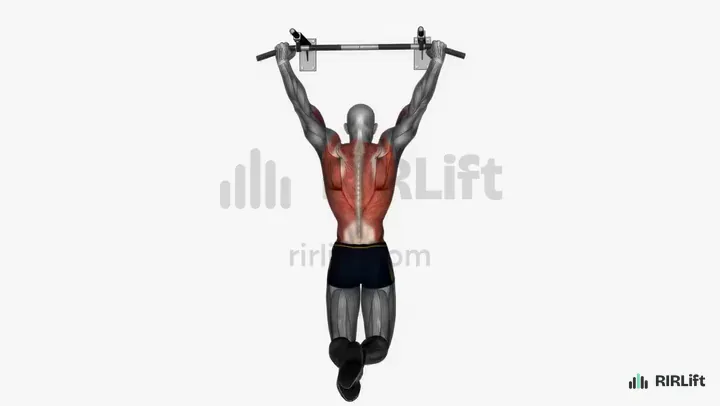
Pull-Up

Lats

The base pulling lift for climbers. Log the reps, and once you add a belt or backpack, log the added weight as the load.

How to do it

  1. Grab the bar overhand, hands a little wider than your shoulders, and hang from fully straight arms.
  2. Pull your shoulders down away from your ears before your elbows start to bend.
  3. Drive the elbows toward your ribs until your chin passes over the bar.
  4. Lower slowly to a dead hang and pull again.

Cues

  • Shoulders down, then pull
  • Legs still and together
  • Two seconds on the way down

Common mistakes

  • Swinging the legs to cheat reps: cross your ankles and brace the abs.
  • Half reps from a bent-arm start: finish each rep at a full hang.

Swap for: Chin-Up, Lat Pulldown, Band-Assisted Pull-Up

One arm at a time

Archer Pull-Up

Lats, Upper Back

Shifts most of your weight to one arm, a step toward the lock-offs climbing asks for. Log the reps for one side.

How to do it

  1. Take an overhand grip about twice your shoulder width and hang with your arms straight.
  2. Pull your body toward your right hand, letting your left arm straighten along the bar.
  3. Get your chin near your right hand at the top, then lower back to the middle.
  4. Alternate sides each rep, or do all reps on one side and switch.

Cues

  • Pull toward one hand
  • Other arm straight
  • Lower to center

Common mistakes

  • Bending the assisting arm so both share the work: straighten it as much as you can.
  • Rushing back through the middle: control the lowering on each side.

Grip endurance on the bar

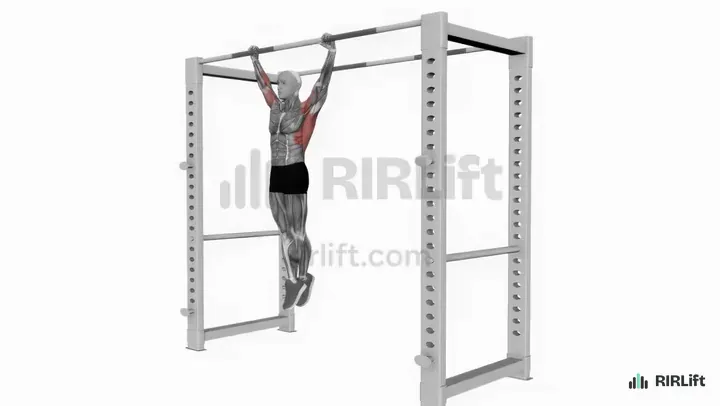
Dead Hang

Forearms

Hangs build time on the bar without a hangboard. Start each from the Watch so it is timed, and lengthen it yourself.

How to do it

  1. Grip a pull-up bar overhand with your hands about shoulder width.
  2. Lift your feet and hang with straight arms and your shoulders relaxed away from your ears.
  3. Breathe slowly and hold for the planned time, then step down.

Cues

  • Straight arms
  • Shoulders not shrugged
  • Slow breathing

Common mistakes

  • Swinging or kicking: hang still.
  • Hanging to the point your grip opens: stop a few seconds short.

Swap for: Farmer's Walk, Plate Pinch Deadlift, Pull-Up

Upper back, a horizontal pull

Seated Cable Row

Upper Back, Lats

Rows train the mid-back that holds your shoulders down while you pull. The stack moves in small steps.

How to do it

  1. Sit at the cable row with your feet on the platform and knees slightly bent, holding a close-grip handle with your arms straight.
  2. Sit tall with your chest up and let the cable pull your shoulder blades forward a little.
  3. Row the handle to your lower ribs, driving your elbows back past your torso.
  4. Return it under control until your arms are straight and your shoulders reach forward, then repeat.

Cues

  • Sit tall, no rocking
  • Handle to the belly button
  • Shoulders reach at the front

Common mistakes

  • Rocking back and forth to move the stack: your torso should stay close to upright throughout.
  • Shrugging the handle up toward your neck: pull your shoulders down before the elbows bend.

Swap for: Chest-Supported Row, Single-Arm Cable Row, Barbell Row

The pushing climbing skips

Climbing pulls all session. Presses, push-ups and rotator cuff work balance the shoulders.

Chest, shoulders, triceps

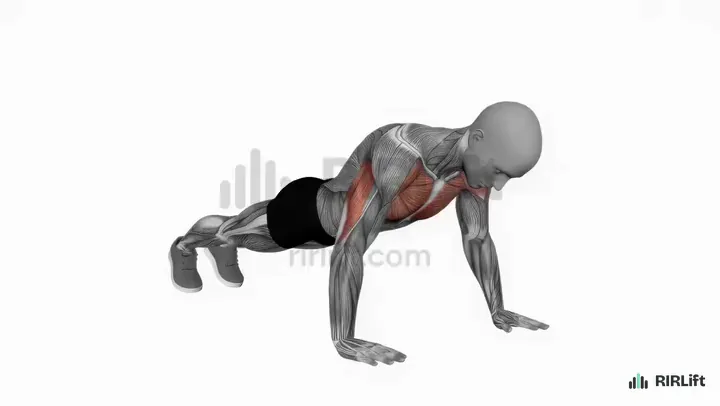
Push-Up

Chest

The simplest antagonist work for climbers. Log the reps, and add a backpack once they pass 20.

How to do it

  1. Set your hands slightly wider than your shoulders with your body straight from head to heels.
  2. Lower until your chest nearly touches the floor, elbows at about 45 degrees.
  3. Press back up to straight arms.

Cues

  • One straight line
  • Elbows angled back

Common mistakes

  • Flaring the elbows straight out: tuck them toward your ribs.

Swap for: Kneeling Push-Up, Incline Push-Up, Push-Up Plus

Shoulders and triceps

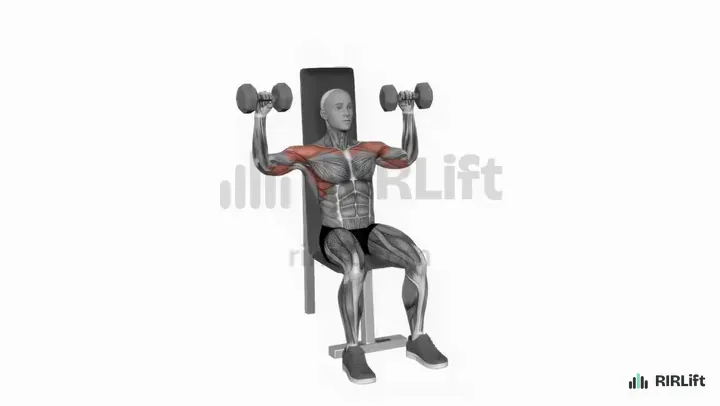
Dumbbell Shoulder Press

Shoulders

Pressing overhead balances all the pulling and helps with mantles. Sets of 8 to 12.

How to do it

  1. Set a bench upright or one notch back from vertical, sit with your feet flat, and rest a dumbbell on each thigh.
  2. Kick one knee up at a time to bring the dumbbells to shoulder height, then set your back against the pad.
  3. Turn your elbows slightly forward so they sit a little in front of your torso, palms facing forward or angled in.
  4. Drive both weights overhead on a slight inward arc until your elbows are straight, keeping your ribs down and your back on the pad.
  5. Lower slowly until the dumbbells are around ear height or a bit below, then press again.

Cues

  • Ribs down, back on the pad
  • Elbows a little forward
  • Press up and slightly in

Common mistakes

  • Arching your lower back off the pad to finish reps: that turns it into an incline press, so lighten the weight and keep your ribs stacked over your hips.
  • Flaring the elbows straight out at shoulder height: bring them a little forward so the shoulder joint stays comfortable at the bottom.
  • Stopping each rep well above your ears: lower to around ear height so the delts work through a full range.

Swap for: Machine Shoulder Press, Arnold Press, Landmine Press

Rotator cuff

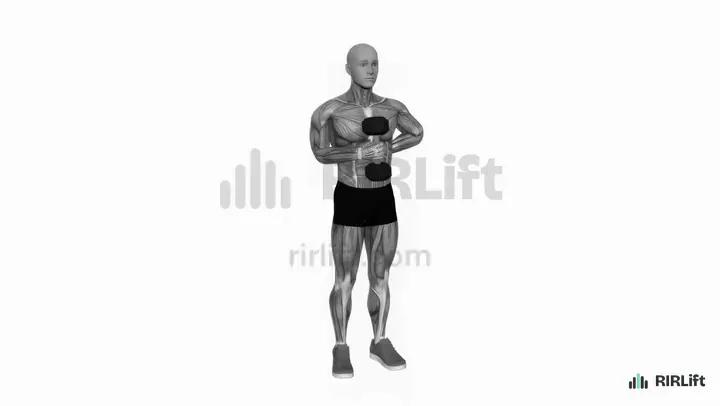
Dumbbell External Rotation

Shoulders
Light, slow reps for the small muscles that keep the shoulder centered. Log one side at a time.

How to do it

  1. Hold a light dumbbell with your elbow bent to 90 degrees and tucked at your side.
  2. Turn the forearm out, with the elbow pinned to your ribs.
  3. Return slowly until the forearm is across your stomach.

Cues

  • Elbow glued to your side
  • Light and slow

Common mistakes

  • Letting the elbow drift away from the body: hold a rolled towel under the arm.

Swap for: Dumbbell Lying External Rotation, Band Pull-Apart, Face Pull

Rear shoulders and rotator cuff

Face Pull

Shoulders, Upper Back

Pulls the shoulders back and turns them out, the opposite of a hunched climbing posture.

How to do it

  1. Set the pulley at or just above head height and attach a rope. Grab it with your thumbs pointing back toward you.
  2. Step back until your arms are straight and the stack lifts, then stagger your feet or sit on a bench so you can lean back slightly without swaying.
  3. Pull the middle of the rope toward your forehead by driving your elbows out and back, keeping them at shoulder height or higher.
  4. As the rope reaches your face, pull the ends apart and rotate your hands back until your fists sit beside your ears, like a double-biceps pose.
  5. Hold that position for a beat, then let your arms straighten under control until your shoulder blades slide forward again.

Cues

  • Elbows high, hands finish behind them
  • Pull the rope apart, not just back
  • Reach forward at the start of every rep

Common mistakes

  • Loading it like a row and leaning back to move the stack: drop the weight until you can hold the end position for a second without your torso rocking.
  • Letting the elbows drop below your shoulders: the pull turns into a row and your lats and biceps take the work. Raise the pulley or lighten the load.
  • Stopping when the rope touches your face: the outward rotation at the end is what the face pull adds, so finish with your fists beside your ears.

Grip and forearms

Pinch grip and both sides of the forearm. Keep this light when your fingers are tired from the wall.

Pinch grip

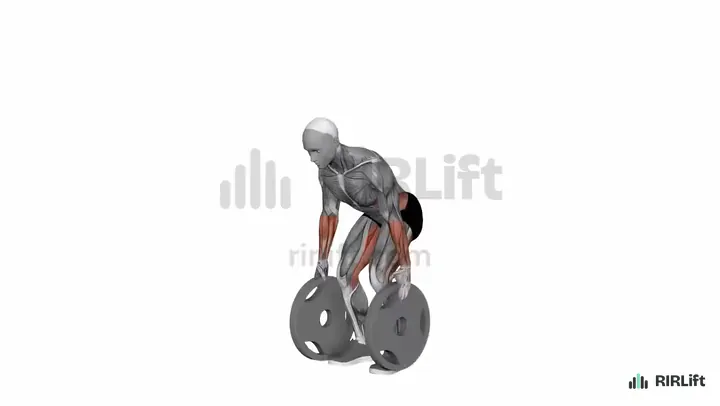
Plate Pinch Deadlift

Forearms

Pinches train the thumb and grip shape climbing uses on pinches and slopers. Log the weight of the plates in one hand.

How to do it

  1. Set out two pairs of plates, smooth sides out, one pair beside each foot.
  2. Squat down and pinch a pair in each hand.
  3. Stand up with them like a deadlift and hold at the top for a few seconds.
  4. Set them down under control.

Cues

  • Squeeze with the thumb
  • Stand tall
  • Hold at the top

Common mistakes

  • Using plates too heavy to hold: start light.
  • Letting one hand do less: if one pair slips first, use that hand's limit for both.

Swap for: Farmer's Walk, Dead Hang, Dumbbell Suitcase Carry

Forearm flexors

Wrist Curl

Forearms

Builds the closing side of the forearm with a barbell. Keep the reps between 12 and 20.

How to do it

  1. Kneel behind a flat bench and lay your forearms across it, palms up, wrists just past the edge.
  2. Take a barbell palms up and let it roll toward your fingertips.
  3. Close your hands and curl your wrists up as high as they go.
  4. Lower slowly to the fingertips and repeat.

Cues

  • Forearms stay on the bench
  • Let the bar roll to your fingers
  • Pause at the top

Common mistakes

  • Lifting your forearms off the bench: only the wrists move.
  • Bouncing at the bottom: control the bar at full stretch.

Swap for: Reverse Wrist Curl, Kettlebell Wrist Curl, Farmer's Walk

Forearm extensors

Reverse Wrist Curl

Forearms

Trains the side of the forearm climbing barely uses. Light and slow.

How to do it

  1. Sit with your forearms resting on your thighs, palms down, hands hanging past your knees.
  2. Let the dumbbells tip your knuckles down.
  3. Lift your knuckles up as high as they go, moving only at the wrist.
  4. Lower slowly and repeat.

Cues

  • Forearms stay down
  • Only the wrist moves
  • Smooth reps

Common mistakes

  • Lifting your forearms off your legs: keep them pinned.
  • Going heavy: this small muscle does best with 15 to 25 reps.

Swap for: Cable Wrist Extension, Zottman Curl

Core and legs

Leg raises and hollow holds for keeping your feet on, split squats for high steps.

Abs and hip flexors

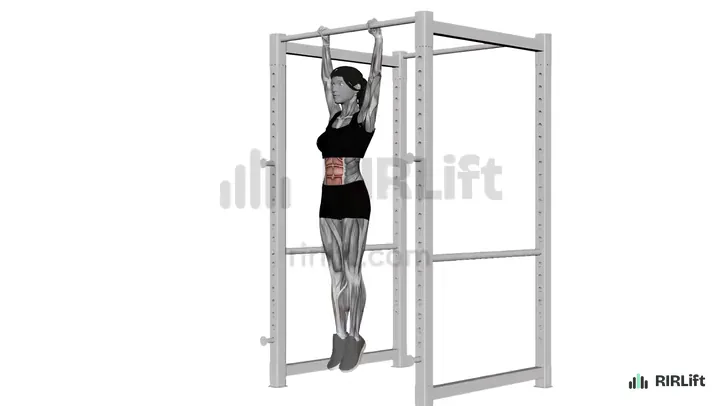
Hanging Leg Raise

Abs

Lifting your legs from a hang is how you keep your feet on steep rock. Log the reps.

How to do it

  1. Hang from the bar, legs long and pressed together.
  2. Lift your legs, keeping your knees straight, until your feet reach at least hip height.
  3. Tilt your pelvis up at the top, then lower under control.

Cues

  • Legs locked
  • Pelvis tilts
  • No kip

Common mistakes

  • Bending the knees as you tire: switch to knee raises for the rest of the set.
  • Using a swing to get the legs up.

Swap for: Hanging Knee Raise, Lying Knee Raise

Trunk tension

Plate Hollow Hold

Abs

Holds the body tight from fingers to toes. Start each hold from the Watch.

How to do it

  1. Lie face up holding a light plate with straight arms above your chest.
  2. Press your lower back into the floor.
  3. Lift your shoulders and straight legs, pushing the plate up over your chest.
  4. Hold the shape without letting your back lift.

Cues

  • Back flat
  • Long and tight
  • Breathe shallow

Common mistakes

  • Letting the lower back peel up.
  • Starting with legs too low: raise them to make it easier.

Swap for: Dead Bug, Landmine Hollow Hold

One leg at a time

Bulgarian Split Squat

Quads, Glutes

High steps and rockovers are single-leg moves. One or two leg exercises a week is enough.

How to do it

  1. Set the top of your back foot on a bench and place your front foot a long stride ahead.
  2. Hold a dumbbell in each hand at your sides, and keep your front foot flat.
  3. Drop your back knee straight toward the floor until the front thigh is close to level.
  4. Press through the front foot to rise, then finish all reps before switching legs.

Cues

  • Go deep for the inner thigh
  • Front foot flat
  • Rear foot is just a kickstand

Common mistakes

  • Pushing up with the back leg: let it relax and make the front leg do the work.
  • Front knee collapsing inward: keep it pointed the same way as your toes.

Swap for: Dumbbell Split Squat, Step-Up, Reverse Lunge

Put them together: example sessions

Each session below picks from the exercises above for one situation, with the sets, reps, rest and RIR filled in.

Session 1

After climbing: 25 minutes in the weights corner

  • Workouts2× a week
  • Working sets22 a week
  • Per workout~20 min
  • EquipmentDumbbells, Adjustable Cable, Pull-Up Bar

You boulder or rope climb two or three times a week at a gym that has a few dumbbells and a cable, and you lift right after an easy session.

Your pulling is already done on the wall, so this is the work climbing skips: a press, push-ups, the rotator cuff and the rear shoulders, plus leg raises. About 25 minutes, nothing that taxes the fingers.

Antagonist block
ExerciseSets × repsRIRRest
Dumbbell Shoulder Press 3 × 8–12 2 90 s
Push-Up 2 × 10–25 2 1 min
Face Pull 2 × 12–20 2 1 min
Dumbbell External RotationPer arm. Light. 2 × 12–20 3 45 s
Hanging Leg Raise 2 × 6–12 2 1 min
How to run it
Import the plan, then switch to it in My Programs so its routines reach the Watch. Run it after your easier climbing days, twice a week. Start it on the Watch before you take your shoes off.
How to progress
Dumbbells are logged per hand. Shoulder press with 30 lb dumbbells for 12, 12, 12 tops 8 to 12, so next time it is 35 lb for 8. External rotations stay light: 8 lb for 15, 14, 13 against a target of 13 means the next target is 14 at the same weight.

Session 2

Rest days at home: a doorway bar

  • Workouts2× a week
  • Working sets26 a week
  • Per workout~30 min
  • EquipmentPull-Up Bar

You climb two or three days a week and have a pull-up bar in a doorway at home for the days you are not at the wall.

Pull-ups, archer pull-ups and hangs for pulling strength, with push-ups between so the shoulders get both directions. Short hangs and no sets to failure, so you are fresh for the next climbing day.

Bar day
ExerciseSets × repsRIRRest
Pull-Up 3 × 4–8 2 2 min
Archer Pull-UpPer side. 2 × 3–6 2 2 min
Push-Up 3 × 10–25 2 1 min
Dead Hang 3 × 15–20 s 3 90 s
Hanging Leg Raise 2 × 6–12 2 1 min
How to run it
Once or twice a week on a rest day, never the day before your hardest climbing. Start each hang from the Watch so it is timed. Enter your bodyweight once on the iPhone so RIRLift counts it on pull-ups.
How to progress
Pull-ups 8, 7, 6 against a target of 6: the weakest set hit it, so the next target is 7. Once all three sets reach 8, put 10 lb in a backpack and log 10 lb as the load. Hangs keep the time you set: when all three feel easy at 20 seconds, change them to 25.

Session 3

Winter block: climbing less, lifting heavier

  • Workouts2× a week
  • Working sets24 a week
  • Per workout~30 min
  • EquipmentPull-Up Bar, Cable Row, Barbells, Dumbbells

Outdoor season is over, you climb once or twice a week indoors, and you want two heavier gym days to come back stronger.

A heavy pull day with weighted pull-ups, rows and pinches, and a push and legs day with presses, split squats and the forearms. Low reps on the pull-ups build strength without much extra size.

Day A: Heavy pull and grip
ExerciseSets × repsRIRRest
Pull-UpWeighted. Log the added weight. 4 × 3–5 2 3 min
Seated Cable Row 3 × 6–10 2 2 min
Plate Pinch DeadliftHold each rep 3 seconds at the top. 3 × 5–8 2 90 s
Plate Hollow Hold 2 × 20–30 s 2 1 min
Day B: Push, legs, forearms
ExerciseSets × repsRIRRest
Dumbbell Shoulder Press 3 × 6–10 2 2 min
Bulgarian Split SquatPer leg. 3 × 8–12 2 90 s
Wrist Curl 2 × 12–20 2 1 min
Reverse Wrist Curl 2 × 15–25 2 1 min
Dumbbell External RotationPer arm. Light. 2 × 12–20 3 45 s
How to run it
Two gym days a week, away from your climbing days. Log the belt or backpack weight on pull-ups as the load; RIRLift adds it to your bodyweight.
How to progress
Pull-ups with 25 lb added for 5, 5, 5 are the top of 3 to 5 on every set, so the next session suggests 27.5 lb for 3, one 2.5 lb step. If your smallest plate is 5 lb, hang 30 lb and log 30; the next weight works from what you logged. Seated row at 140 lb for 10, 9, 8 against a target of 8: the weakest set hit it, so the target goes to 9.

Make it fit you

Questions

Is rock climbing a workout on Apple Watch?

Yes. Climbing is one of the workout types in Apple's Workout app. Strength training for climbing is a separate session: RIRLift saves it to Apple Health as Traditional Strength Training.

Can I log dead hangs on Apple Watch?

Yes. Dead hangs are timed exercises in RIRLift: tap Start hold on the Watch and the hang is timed and logged.

How do I log weighted pull-ups?

Log the added weight as the load: a 25 lb belt is 25 lb. RIRLift adds it to your bodyweight, which you enter once on the iPhone.

Should climbers lift weights?

In moderation. Two short sessions a week build pulling and antagonist strength; keep them away from your hardest climbing days.