Marathon training on Apple Watch: the strength sessions your runs need

For marathon training, Apple Watch handles the running: outdoor run workouts, custom interval workouts and Pacer for a target finish time. The strength sessions in your block are the part your running app leaves out. RIRLift runs them on the Watch you run with: start the routine on your wrist, log weight, reps and reps left, and the session is saved to Apple Health as Traditional Strength Training next to your runs.

  1. Trap Bar Deadlift Quads, Glutes
  2. Step-Up Quads, Glutes
  3. Single-Leg RDL Hamstrings, Glutes
  4. Single-Leg Calf Raise Calves
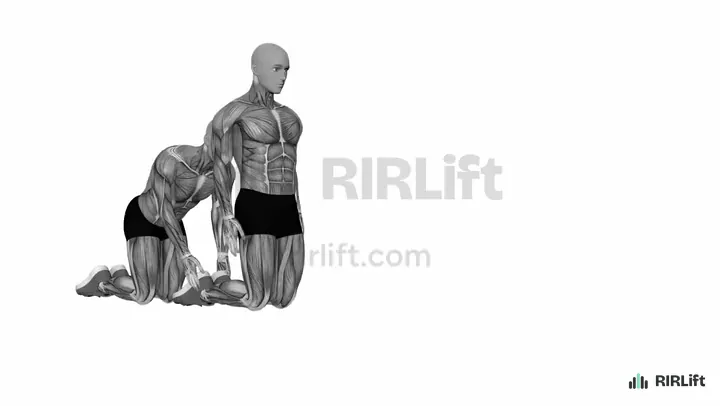
  5. Nordic Hamstring Curl Hamstrings
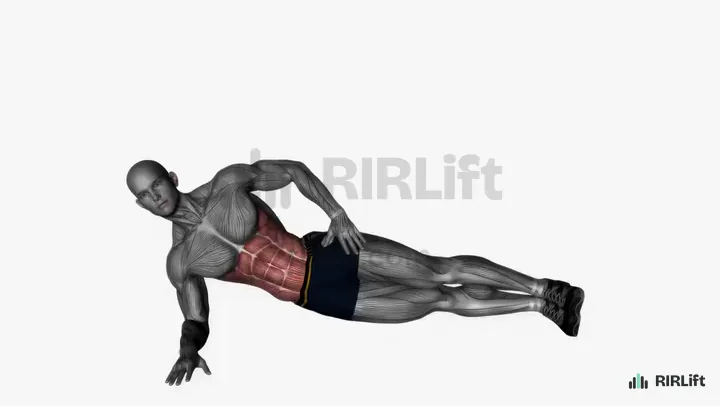
  6. Side Plank Abs

Heavy basics

A deadlift, a squat and a hip thrust for the base phase, when mileage is easy and you can recover from heavy sets.

Hips and legs, heavy

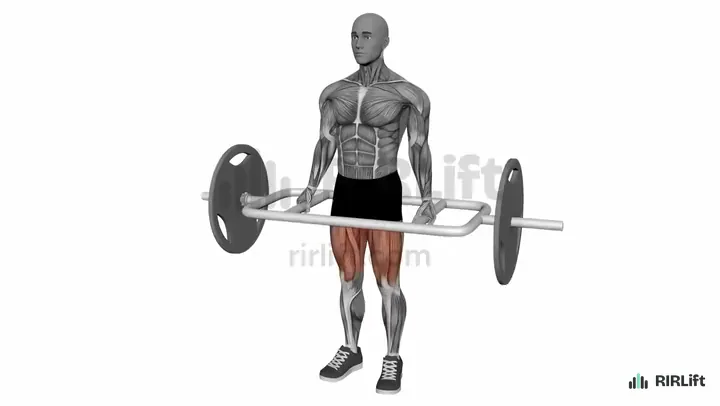
Trap Bar Deadlift

Quads, Glutes

One heavy lift for the base phase. Low reps build strength without the soreness that would cost you a run.

How to do it

  1. Stand inside the hex frame and grip the handles with a flat back, hips above knees.
  2. Tighten your trunk and lats as if bending the handles outward.
  3. Drive the floor away and stand tall.
  4. Reverse the motion with control until the plates touch, then reset.

Cues

  • Bend the handles out
  • Drive the floor away
  • Reset between reps

Common mistakes

  • Rounding the back to reach the handles: lower your hips until the back stays flat.
  • Hyperextending at the top: finish standing straight with glutes tight.

Swap for: Romanian Deadlift, Kettlebell Deadlift, Barbell Deadlift

Squat with one dumbbell

Goblet Squat

Quads, Glutes

A squat you can load without a rack, and the first lift to come back to after race day.

How to do it

  1. Hold a dumbbell or kettlebell vertically against your chest.
  2. Sit down between your knees, elbows inside them at the bottom.
  3. Stand up tall.

Cues

  • Elbows nudge the knees out at the bottom.
  • Chest stays up behind the weight.

Common mistakes

  • Letting the weight pull you forward.

Swap for: Bodyweight Squat, Barbell Back Squat

Glutes, heavy

Hip Thrust

Glutes

Glutes drive the push-off at every stride. Heavy thrusts train them without much stress on the knees.

How to do it

  1. Sit with your shoulder blades against the long side of a flat bench and roll a padded bar over your hips.
  2. Plant your feet flat about hip width apart, close enough that your shins are vertical at the top.
  3. Drive through your heels and lift your hips until your torso and thighs form a straight line.
  4. Hold the top for a second with your chin tucked, then lower your hips most of the way down and repeat.

Cues

  • Chin tucked, ribs down
  • Shins vertical at the top
  • One-second squeeze

Common mistakes

  • Arching your lower back to get higher: stop when your hips are level with your knees and squeeze your glutes there.
  • Feet too far out, which turns it into a hamstring exercise: bring them in until your shins are vertical at lockout.

One leg at a time

Every running stride is a single-leg landing. These train each leg on its own and show you if one side lags.

One leg, hip and knee drive

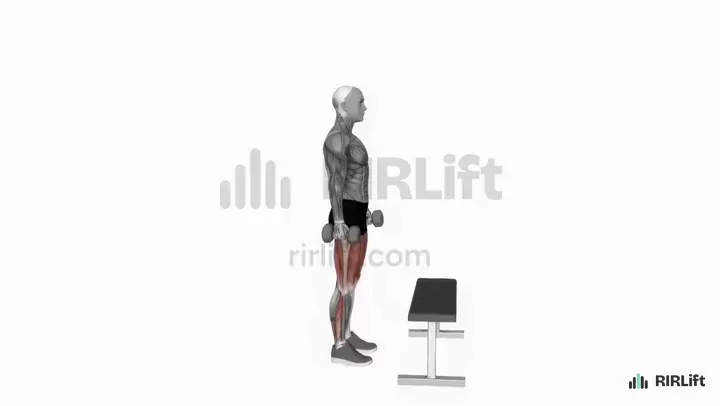
Step-Up

Quads, Glutes

Close to the running stride. Lower slowly on each rep to train the downhill miles too.

How to do it

  1. Stand facing a knee-high box or bench, dumbbells hanging by your hips.
  2. Set your whole right foot on the box.
  3. Push through that foot to stand up on the box, bringing the left foot up beside it without pushing off the floor.
  4. Step the left foot back down slowly, taking three seconds, then the right. Finish the reps on one leg, then switch.

Cues

  • Lead foot does all the lifting
  • Three seconds down
  • Stand fully tall on top

Common mistakes

  • Bouncing off the back foot to get up: start with the trailing toes lifted so they cannot help.
  • Dropping down from the box: the slow lowering is half of what makes this useful for descents.

Swap for: Kettlebell Step-Up, Barbell Step-Up, Bulgarian Split Squat

One leg, quads and glutes

Bulgarian Split Squat

Quads, Glutes

The heavier single-leg lift for base weeks. Log the reps for one leg and keep both sides even.

How to do it

  1. Stand a long step ahead of a bench and lay the top of your rear foot on it, dumbbells at your sides.
  2. Sink until the front thigh sits about level and the rear knee is close to the ground.
  3. Keep your front knee tracking over your middle toes.
  4. Drive up through the front foot. Finish the side, then switch.

Cues

  • Knee over middle toes
  • Most weight on the front leg
  • Control the bottom

Common mistakes

  • Knee caving inward on the way up: slow down and use less weight until it tracks straight.
  • Short stance that lifts the front heel: step farther from the bench.

Swap for: Dumbbell Split Squat, Reverse Lunge, Step-Up

Hamstrings and balance

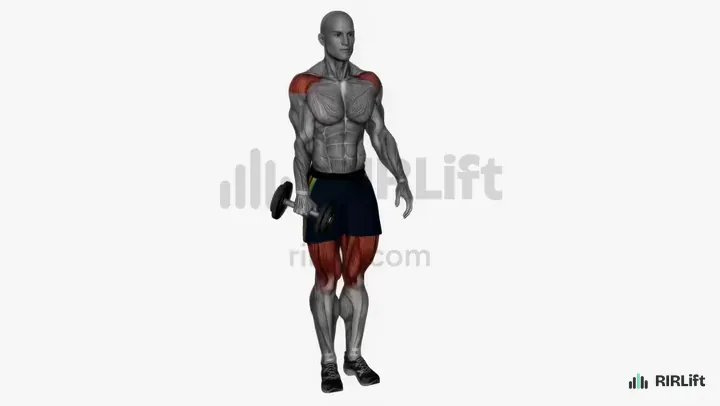
Single-Leg RDL

Hamstrings, Glutes

Hamstrings and hip control on one leg. Light enough to keep in the peak weeks.

How to do it

  1. Hold a dumbbell in the hand opposite your standing leg.
  2. Hinge forward at the hip while the free leg reaches straight back, keeping your hips square to the floor.
  3. Lower until your torso and back leg are near level or your hamstring stops you.
  4. Drive the standing hip forward to come back up tall. Finish the side, then switch.

Cues

  • Hips square, toes of back foot down
  • Long line from head to heel
  • Soft standing knee

Common mistakes

  • Opening the hip so the back leg turns out: point the back toes at the floor.
  • Rushing and losing balance: slow down, and touch a wall with the free hand if you need it.

Swap for: Dumbbell B-Stance RDL, Dumbbell Romanian Deadlift, Kettlebell Deadlift

Hamstrings and calves

The muscles that take the most from 20 miles of running: slow hamstring work and both kinds of calf raise.

Hamstrings, lowering

Nordic Hamstring Curl

Hamstrings

Slow lowering work for the hamstrings. Few reps, full rest, and only on a day away from speed work.

How to do it

  1. Kneel on a pad with a partner holding your ankles down firmly.
  2. Keep a straight line from knees to head with your hips extended.
  3. Lean forward as slowly as you can, resisting with your hamstrings.
  4. Catch yourself with your hands near the floor, push back up lightly, and repeat.

Cues

  • Hips stay forward
  • Fight the fall the whole way
  • Hands only at the bottom

Common mistakes

  • Bending at the hips to shorten the lever: keep knees, hips and shoulders in line.
  • Dropping fast once it gets hard: control even the first few inches, and stop the set if you cannot.

Swap for: Glute Ham Raise, Lying Leg Curl, Stability Ball Leg Curl

Calves and Achilles, straight knee

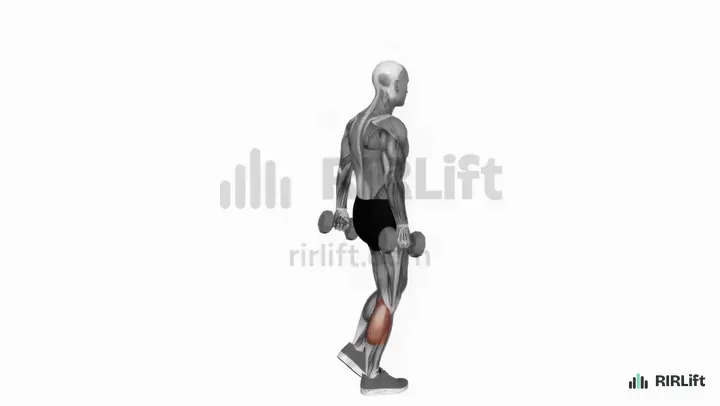
Single-Leg Calf Raise

Calves

The calf that springs you forward. Slow single-leg sets; add a dumbbell once bodyweight sets top out.

How to do it

  1. Stand on one foot on a step edge with the heel free and one hand on a support, a dumbbell in the other hand.
  2. Lower the heel slowly into a full stretch.
  3. Press up onto the ball of the foot as high as you can.
  4. Hold the top for a second, lower for three, and repeat. Then switch.

Cues

  • Knee straight
  • Three seconds down
  • Big toe pushes

Common mistakes

  • Rolling out to the little toes at the top: push through the big toe side.
  • Quick, short reps: the full range and slow lowering matter most.

Swap for: Standing Calf Raise, Dumbbell Standing Calf Raise, Smith Machine Calf Raise

Calves, bent knee

Seated Calf Raise

Calves

The bent-knee calf raise trains the deeper calf muscle that the straight-knee raise misses.

How to do it

  1. Sit at a seated calf machine with the pad on your lower thighs and the balls of your feet on the platform.
  2. Release the safety and let your heels sink into a deep stretch.
  3. Push up as high as you can onto your toes.
  4. Pause, lower slowly, and repeat.

Cues

  • Deep stretch, high finish
  • Pause at both ends
  • Steady tempo

Common mistakes

  • Bouncing at the bottom: pause there instead.
  • Loading so heavy the range shrinks to an inch: use a weight you can move fully.

Swap for: Dumbbell Seated Calf Raise, Kettlebell Seated Calf Raise, Leg Press Calf Raise

Hips and trunk

Side hips and trunk for the last 10K, when form is what slips first.

Side hips

Lateral Band Walk

Abductors

Keeps the hip from dropping on each landing. A band around the knees or ankles is all it needs.

How to do it

  1. Place a mini band just above your knees or around your ankles.
  2. Sit into a quarter squat with feet set at hip distance.
  3. Step sideways with one foot, keeping tension on the band, then follow with the other without letting the feet meet.
  4. Take the target number of steps one way, then come back the other way.

Cues

  • Stay low
  • Toes forward
  • Never let the band go slack

Common mistakes

  • Standing up tall as you tire: hold the quarter squat throughout.
  • Swinging the torso side to side to step: keep the shoulders level and move from the hips.

Swap for: Band Standing Hip Abduction, Hip Abduction Machine, Clamshell

Side trunk, hold

Side Plank

Abs

Holds your trunk level as you tire. Time each side.

How to do it

  1. Lie on one side with your elbow under your shoulder and your feet stacked.
  2. Raise your hips so your body forms a straight line.
  3. Hold steady and breathe.
  4. Lower down and switch to the opposite elbow.

Cues

  • Hips forward and high
  • Stack the shoulders
  • Long neck

Common mistakes

  • Letting the hips sit back: push them forward in line with your shoulders.
  • Holding your breath: breathe steadily for the whole hold.

Swap for: Dumbbell Side Plank, Copenhagen Plank, Pallof Press

Front trunk, control

Dead Bug

Abs

Teaches the trunk to stay still while arms and legs move, as they do in every stride.

How to do it

  1. Lie face up with your arms reaching to the ceiling and hips and knees bent at right angles.
  2. Flatten your lower back against the floor.
  3. Extend the opposite arm and leg slowly until they hover just off the ground.
  4. Return and switch sides.

Cues

  • Back flat the whole time
  • Breathe out as you reach
  • Slow and even

Common mistakes

  • Arching as the leg reaches out: shorten the reach.
  • Moving both sides at once in a rush: alternate deliberately.

Swap for: Plate Hollow Hold, Pallof Press, Plank

Put them together: example sessions

Each session below picks from the exercises above for one situation, with the sets, reps, rest and RIR filled in.

Session 1

Base phase in the gym, 16 or more weeks out

  • Workouts2× a week
  • Working sets25 a week
  • Per workout~35 min
  • EquipmentTrap Bar, Dumbbells, Seated Calf Raise, Barbells +1

Your mileage is building and mostly easy. You can get to a gym twice a week after an easy run or on a rest day.

A heavy day and a single-leg day, 12 or 13 working sets each. Low reps on the big lifts build strength while the miles are still easy to recover from.

Day 1: Heavy
ExerciseSets × repsRIRRest
Trap Bar Deadlift 4 × 4–6 2 2:30 min
Bulgarian Split SquatPer leg. 3 × 6–8 2 90 s
Seated Calf Raise 3 × 10–15 2 1 min
Side PlankPer side. 3 × 30–45 s 2 45 s
Day 2: Single leg
ExerciseSets × repsRIRRest
Hip Thrust 3 × 6–10 2 2 min
Step-UpPer leg. 3 s down. 3 × 6–8 2 90 s
Nordic Hamstring Curl 3 × 3–6 2 2 min
Dead BugPer side. 3 × 8–10 2 45 s
How to run it
Two days a week with at least one easy day between, and never the day before the long run. Import the program, switch to it in My Programs, and both days show up on the Watch. Start the day there and log each set as you finish it.
How to progress
Hip thrust at 185 lb for 10, 10, 10 tops the 6 to 10 range, so the next Day 2 opens at 190 lb for 6. Nordic curls are bodyweight, so they move by reps: 4, 4, 3 against a target of 3 earns a target of 4.

Session 2

Peak weeks: one 25-minute dumbbell session

  • Workouts1× a week
  • Working sets10 a week
  • Per workout~20 min
  • EquipmentDumbbells, Flat Bench, Resistance Bands

Your longest runs are in the calendar and the legs are often heavy. You keep one short session with a pair of dumbbells, after an easy run.

Five exercises, two sets each, three reps short of failure: 10 working sets that hold your strength without adding soreness.

Peak week
ExerciseSets × repsRIRRest
Single-Leg RDLPer leg. 2 × 8–10 3 1 min
Step-UpPer leg. 2 × 8–10 3 1 min
Single-Leg Calf RaisePer leg. 2 × 12–15 2 45 s
Lateral Band WalkSteps each way. 2 × 12–15 2 45 s
Side PlankPer side. 2 × 30–40 s 2 30 s
How to run it
Once a week, after an easy run and at least three days before the long run. If the first set shows heavy legs, log it as it went: below the rep range with less left than planned, and the Watch lowers the next set.
How to progress
Single-leg RDL with a 35 lb dumbbell for 10, 10 tops the 8 to 10 range, so next week it is 40 lb for 8. Step-up with 30 lb dumbbells for 9, 8 against a target of 8: the weakest set hit it, so the weight holds and the target becomes 9.

Session 3

After race day: back to lifting

  • Workouts2× a week
  • Working sets22 a week
  • Per workout~25 min
  • EquipmentDumbbells, Flat Bench, Seated Calf Raise

The marathon is done, you took a few weeks off lifting, and you want to start again without a week of sore legs.

Light squats, step-ups and calf work, four reps short of failure at first. 11 working sets that bring the legs back before heavier work returns.

Return
ExerciseSets × repsRIRRest
Goblet Squat 3 × 8–12 4 75 s
Step-UpPer leg. 2 × 8–10 3 75 s
Seated Calf Raise 3 × 10–15 3 1 min
Dead BugPer side. 3 × 8–10 2 45 s
How to run it
Twice a week for two or three weeks, then go back to the base-phase days. After three weeks or more without a session, RIRLift offers Ease back in when you start: one week about 10% lighter, marked Easing back on the Watch.
How to progress
With Ease back in, a goblet squat last logged at 60 lb opens about 10% lighter, rounded to a dumbbell step, and normal progression starts the week after. From there, 12, 12, 12 tops the 8 to 12 range and the next session is one dumbbell heavier for 8.

Make it fit you

Questions

Is Apple Watch good for marathon training?

For the running, yes: it records pace, distance and heart rate, runs custom interval workouts and has Pacer for a target time.

How do I track strength training for a marathon on Apple Watch?

Start the routine in RIRLift on the Watch and log weight, reps and reps left after each set. The session is saved to Apple Health as Traditional Strength Training, next to your runs.

How often should marathon runners lift?

Twice a week in the base phase and once a week in the peak weeks, as in the plans above.

Do I need my phone?

No. The session runs on the Watch and each set is saved there as you log it. It syncs to the iPhone when the two are back in range.