Apple Watch police workout: academy test prep and strength around your shifts

Police academy fitness tests are set by each state or agency; a common format, used by the New York State Police, is push-ups, sit-ups in one minute and a timed 1.5-mile run. On Apple Watch you train for them by logging each set, not only the time. In RIRLift you tap in the reps after each set, the rest timer starts on your wrist, and the strength work around the test gets its next weight from what you logged. Below are sessions for the months before the academy, rotating shifts, and training with no gym.

  1. Push-Up Chest
  2. Plate Sit-Up Abs
  3. Running Quads, Hamstrings, Calves
  4. Trap Bar Deadlift Quads, Glutes
  5. Pull-Up Lats
  6. Goblet Squat Quads, Glutes
  7. Plank Abs

The test events

Push-ups and sit-ups are counted, the run is timed. Practice them the way they are scored and log every set.

Chest, shoulders, triceps for the push-up test

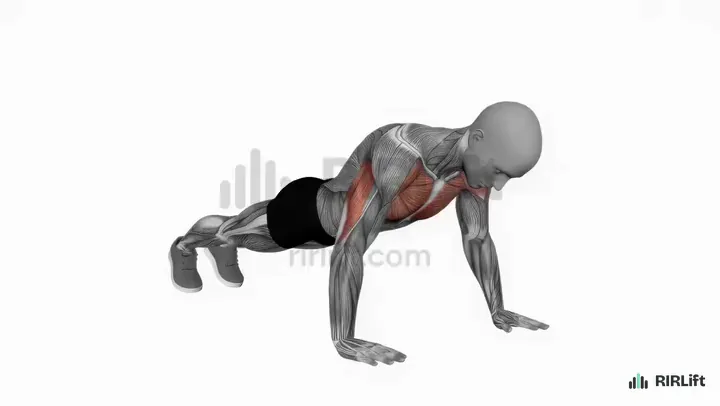
Push-Up

Chest

Push-ups are counted on almost every academy test. Practice the depth your test requires and log the reps of each set.

How to do it

  1. Set your hands slightly wider than your shoulders with your body straight from head to heels.
  2. Lower until your chest nearly touches the floor, elbows at about 45 degrees.
  3. Press back up to straight arms.

Cues

  • One straight line
  • Elbows angled back

Common mistakes

  • Flaring the elbows straight out: tuck them toward your ribs.

Swap for: Kneeling Push-Up, Incline Push-Up, Push-Up Plus

Abs for the sit-up test

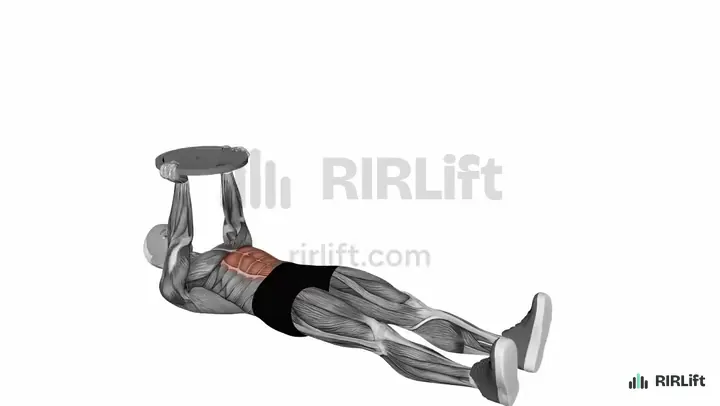
Plate Sit-Up

Abs

The sit-up test is usually a one-minute count. Sit-ups with a light plate make bodyweight reps feel easier; log the plate's weight as the load.

How to do it

  1. Lie back with your legs straight and your feet hooked under a bench or held by a partner.
  2. Hold a plate in both hands with your arms straight, pointing it up over your chest.
  3. Curl up and sit tall, keeping your arms reaching up.
  4. Roll back down under control.

Cues

  • Curl up
  • Arms straight, plate up
  • Slow descent

Common mistakes

  • Throwing the plate forward to sit up.
  • Dropping back on the way down.

Swap for: Decline Crunch, Machine Crunch

Abs, no equipment

Jackknife

Abs

The floor version for days without a plate. Fold up and lower slowly, and log the reps.

How to do it

  1. Lie face up on a mat, legs long and arms resting straight beside you.
  2. Brace and lift your shoulders and your straight legs off the floor at the same time.
  3. Reach your hands toward your feet as your body folds into a V over your hips.
  4. Lower both ends back to a light touch on the floor over two seconds, then repeat.

Cues

  • Fold, then unfold slowly
  • Hands meet feet over the hips
  • No bounce at the bottom

Common mistakes

  • Swinging your arms to throw yourself up: lift your shoulders and legs with your abs, then reach.
  • Crashing back to the floor: lowering is half the rep, so take two seconds.

Run intervals for the 1.5-mile run

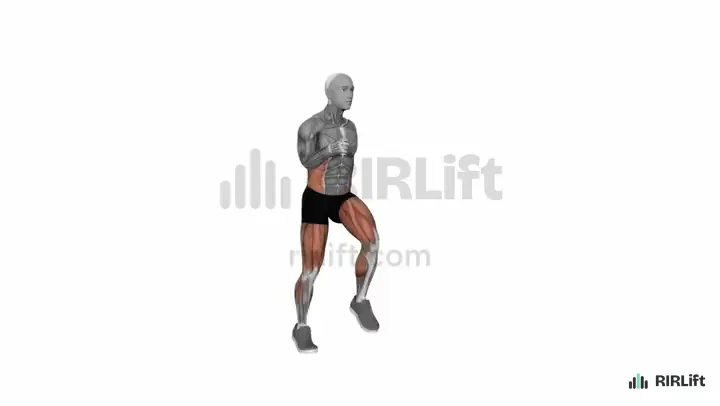
Running

Quads, Hamstrings, Calves

The run is timed, so train pace in bouts. Log each bout as a timed run and rate how hard it was.

How to do it

  1. Start with a few minutes of easy jogging.
  2. Run the work bout at the effort the plan asks for, arms swinging forward and back.
  3. Keep your shoulders low and your steps quick and light.
  4. Walk or jog easy through the rest, then start the next bout.

Cues

  • Arms forward and back
  • Quick, light steps
  • Relaxed shoulders

Common mistakes

  • Sprinting the first bout and fading: the last bout should be as fast as the first.
  • Running with your chin up and shoulders tight: let the shoulders drop.

Swap for: High Knees, Jump Rope, Stationary Bike

The strength behind them

A stronger body makes every test rep easier and holds up to the job: a deadlift, a squat, a press and two rows.

Legs and back

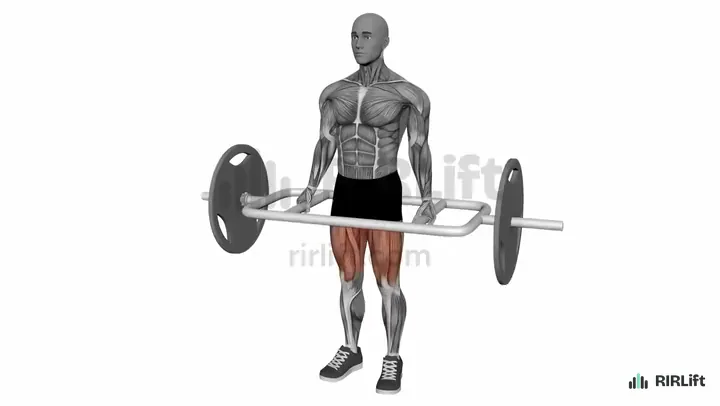
Trap Bar Deadlift

Quads, Glutes

The heaviest lift in the plan and the easiest deadlift to learn. Sets of 5 to 8 build strength for lifting, carrying and getting up fast.

How to do it

  1. Step inside the trap bar with the handles beside your feet.
  2. Push your hips back, bend your knees, and grip the handles in the middle.
  3. Flatten your back, take the slack out, and stand up by pushing the floor away.
  4. Lower the bar to the floor under control. Do not drop it.

Cues

  • Push the floor away
  • Flat back
  • Slack out before you pull

Common mistakes

  • Yanking the bar off the floor: pull the slack out first.
  • Rounding the back as the weight climbs: stop adding weight until the setup is solid.

Swap for: Barbell Deadlift, Romanian Deadlift, Kettlebell Deadlift

Quads and trunk

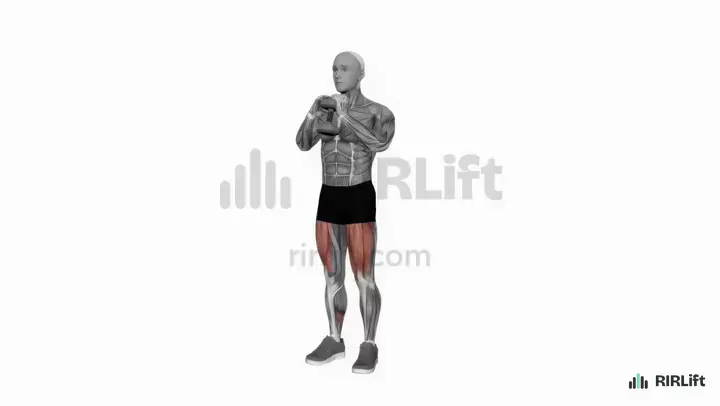
Goblet Squat

Quads, Glutes

A squat you can do with one dumbbell in any gym. Hold it at your chest and sit down between your knees.

How to do it

  1. Hold a dumbbell or kettlebell vertically against your chest.
  2. Sit down between your knees, elbows inside them at the bottom.
  3. Stand up tall.

Cues

  • Elbows nudge the knees out at the bottom.
  • Chest stays up behind the weight.

Common mistakes

  • Letting the weight pull you forward.

Swap for: Bodyweight Squat, Barbell Back Squat

Chest and triceps under load

Flat Dumbbell Press

Chest

A heavier press makes the push-up test feel lighter. Log the dumbbells per hand.

How to do it

  1. Lying on a flat bench, hold two dumbbells above your chest.
  2. Lower the bells to the sides of your chest with elbows at about 45 degrees.
  3. Press them back up over your shoulders.

Cues

  • Shoulder blades pinched.
  • Control the lowering.

Common mistakes

  • Flaring the elbows straight out.

Swap for: Push-Up, Barbell Bench Press

Upper back and lats

One-Arm Dumbbell Row

Lats, Upper Back

Rows balance all the pushing and keep the shoulders healthy.

How to do it

  1. Put one hand and the same-side knee on a bench, or your hand on a chair seat with both feet on the floor, so your back is flat.
  2. Hold a dumbbell in the other hand with your arm hanging straight.
  3. Pull your elbow back toward your hip until the dumbbell reaches your ribs.
  4. Lower it until your arm is straight again, finish all reps, then switch sides.

Cues

  • Elbow to your hip
  • Back flat as a table
  • Full stretch at the bottom

Common mistakes

  • Twisting your chest open to lift the dumbbell higher: keep both shoulders level.
  • Shrugging the shoulder up toward your ear: pull the elbow back, not the shoulder up.

Swap for: Band Bent-Over Row, Dumbbell Bent-Over Row, Seated Cable Row

Lats and grip

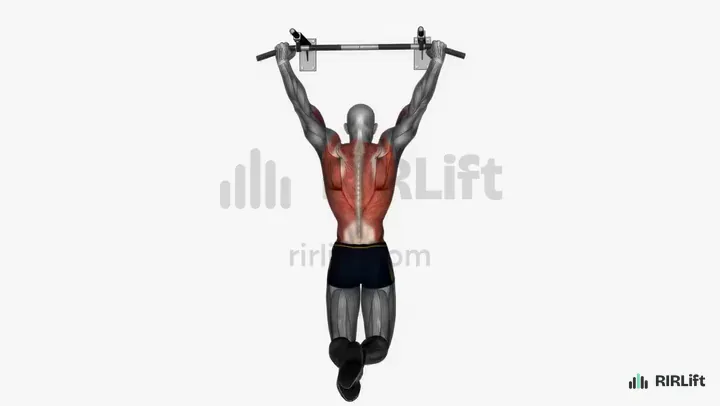
Pull-Up

Lats

Pull-ups build the grip and the back for pulling yourself up and over. Log the reps, then added weight once they get easy.

How to do it

  1. Grab the bar overhand, hands a little wider than your shoulders, and hang from fully straight arms.
  2. Pull your shoulders down away from your ears before your elbows start to bend.
  3. Drive the elbows toward your ribs until your chin passes over the bar.
  4. Lower slowly to a dead hang and pull again.

Cues

  • Shoulders down, then pull
  • Legs still and together
  • Two seconds on the way down

Common mistakes

  • Swinging the legs to cheat reps: cross your ankles and brace the abs.
  • Half reps from a bent-arm start: finish each rep at a full hang.

Swap for: Chin-Up, Lat Pulldown, Band-Assisted Pull-Up

Upper back without a gym

Inverted Row

Upper Back, Lats

Rows under a sturdy table or low bar, for days with no gym. Bend your knees to make it easier.

How to do it

  1. Set a bar at about hip height, lie under it, and grip it with your hands a little wider than your shoulders.
  2. Straighten your body from heels to head, or bend your knees with feet flat for an easier version.
  3. Pull your chest up to the bar, leading with your elbows, and keep your hips in line.
  4. Lower until your arms are straight, then pull again.

Cues

  • Body stays a straight plank
  • Chest touches the bar
  • Bend your knees to make it easier

Common mistakes

  • Letting your hips sag so only your chest rises: squeeze your glutes and move as one piece.
  • Pulling the bar to your neck: aim for the bottom of your chest.

Swap for: TRX Row, Lat Pulldown, Assisted Pull-Up

Legs and trunk

Single-leg work for running and getting up off the ground, carries for a duty belt's weight, and planks for the trunk.

One leg at a time

Bulgarian Split Squat

Quads, Glutes

Each leg works alone, the way it does when you run, climb or get up off the ground.

How to do it

  1. Set the top of your back foot on a bench and place your front foot a long stride ahead.
  2. Hold a dumbbell in each hand at your sides, and keep your front foot flat.
  3. Drop your back knee straight toward the floor until the front thigh is close to level.
  4. Press through the front foot to rise, then finish all reps before switching legs.

Cues

  • Go deep for the inner thigh
  • Front foot flat
  • Rear foot is just a kickstand

Common mistakes

  • Pushing up with the back leg: let it relax and make the front leg do the work.
  • Front knee collapsing inward: keep it pointed the same way as your toes.

Swap for: Dumbbell Split Squat, Step-Up, Reverse Lunge

Grip, traps and trunk

Farmer's Walk

Forearms, Traps, Shoulders

Carries build the grip and the trunk to wear a loaded belt for a full shift. Log how many seconds you walked.

How to do it

  1. Pick up two heavy dumbbells with your back flat.
  2. Stand tall with your ribs down and walk with short, quick steps.
  3. Set the weights down with a flat back when the time or distance is up.

Cues

  • Ribs down
  • Crush the handles
  • Quick steps

Common mistakes

  • Letting the shoulders round forward.
  • Walking so slowly the dumbbells start to swing.

Swap for: Dumbbell Suitcase Carry, Dumbbell Single-Arm Overhead Carry

Abs and trunk

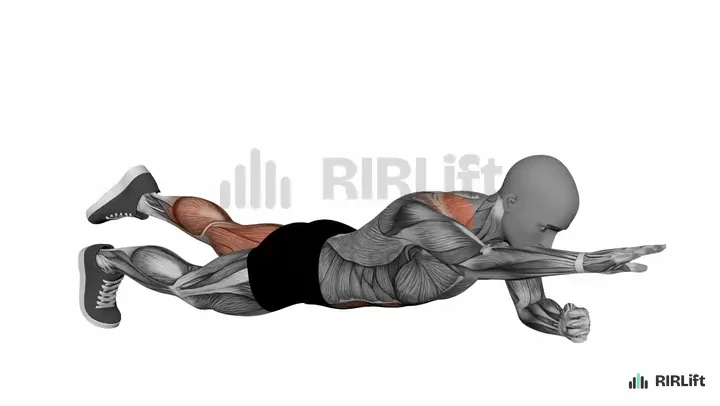
Plank

Abs

A stiff trunk for the push-ups and the run. Start each hold from the Watch so it is timed.

How to do it

  1. Set your forearms under your shoulders and your feet behind you, body in a straight line.
  2. Squeeze your glutes and pull your ribs down toward your hips.
  3. Hold, breathing normally, without letting your hips sag or rise.
  4. For the harder version, reach one arm forward and lift the opposite foot, hold, then switch sides.

Cues

  • Ribs down
  • Glutes tight
  • Straight line

Common mistakes

  • Hips sagging toward the floor: that hangs on your lower back.
  • Holding for minutes at an easy level: make it harder instead.

Swap for: Long Lever Plank, Plank Shoulder Tap

Deep abs, slow and controlled

Dead Bug

Abs

Slow reps teach your abs to hold your lower back still while your arms and legs move.

How to do it

  1. Lie face up, arms pointing up and knees bent at right angles over your hips.
  2. Press your lower back into the floor.
  3. Reach one arm overhead and the opposite leg out long, both hovering above the floor.
  4. Bring them back and repeat with the other pair.

Cues

  • Back glued down
  • Breathe out as you reach
  • Opposite arm and leg

Common mistakes

  • Letting the back arch when the leg goes long: reach less far.
  • Going fast: each rep should take about three seconds.

Swap for: Plank, Alternating Leg Raise

Put them together: example sessions

Each session below picks from the exercises above for one situation, with the sets, reps, rest and RIR filled in.

Session 1

Academy in 10 weeks, gym 3 days a week

  • Workouts3× a week
  • Working sets34 a week
  • Per workout~30 min
  • EquipmentTrap Bar, Dumbbells, Flat Bench, Barbells +1

You have a start date and a gym, and the test is push-ups, one-minute sit-ups and a 1.5-mile run.

Two strength days build the base with the test's push-ups and sit-ups at the end of each, and a run day works on pace. The run day has only running in it, so it is saved to Apple Health as a run.

Day A: Deadlift, press, push-ups
ExerciseSets × repsRIRRest
Trap Bar Deadlift2 warm-up sets first 3 × 5–8 2 2:30 min
Flat Dumbbell Press 3 × 8–12 2 90 s
One-Arm Dumbbell RowPer arm. 3 × 8–12 2 1 min
Push-Up 2 × 15–50 1 2 min
Plate Sit-UpLight plate. 2 × 15–30 1 90 s
Run day: intervals
ExerciseSets × repsRIRRest
RunningFaster than test pace. Walk or jog easy through the rest. 6 × 90 s 2 90 s
Day B: Squat, pull, carry
ExerciseSets × repsRIRRest
Goblet Squat 3 × 8–12 2 90 s
Pull-Up 3 × 3–10 2 2 min
Bulgarian Split SquatPer leg. 2 × 8–12 2 90 s
Farmer's WalkSeconds of walking. 3 × 30–45 2 90 s
Push-Up 2 × 15–50 1 2 min
Plate Sit-UpLight plate. 2 × 15–30 1 90 s
How to run it
Import the plan, then switch to it in My Programs so its routines reach the Watch. Run Day A, the run day, then Day B through the week. Start each session on the Watch; on the run day, start each bout from the Watch and rate it when it ends.
How to progress
Trap bar at 185 lb for 8, 8, 8 tops 5 to 8, so the next session opens at 190 lb for 5. Push-ups go by reps: 30, 26, 24 against a target of 24 means the next target is 25. The run bouts keep the time you set: when all six feel Hard rather than Max, make them 2 minutes.

Session 2

Rotating shifts: two 35-minute sessions

  • Workouts2× a week
  • Working sets26 a week
  • Per workout~30 min
  • EquipmentDumbbells, Flat Bench

You are already on the job, the schedule rotates, and two short gym visits a week is what survives it.

One full-body routine you can run on any day of the rotation: squat, press, row, carry and plank, about 35 minutes. If a week only allows one session, the next one picks up at the weight you earned.

Full body
ExerciseSets × repsRIRRest
Goblet Squat 3 × 8–12 2 90 s
Flat Dumbbell Press 3 × 8–12 2 90 s
One-Arm Dumbbell RowPer arm. 3 × 8–12 2 1 min
Farmer's WalkSeconds of walking. 2 × 30–45 2 90 s
Plank 2 × 45–60 s 2 45 s
How to run it
Twice a week, whenever the rotation leaves a gap. Start it on the Watch; rest is set per exercise, and +15 s or -15 s on the Watch adjusts it when you need longer.
How to progress
Dumbbells are logged per hand. Flat press with 55 lb dumbbells for 12, 10, 9 against a target of 10: the weakest set fell short, so the weight and the target hold. A skipped session changes nothing; after three weeks or more off, RIRLift offers an easier week to ease back in.

Session 3

No gym: the floor, a table and a run

  • Workouts3× a week
  • Working sets30 a week
  • Per workout~25 min
  • EquipmentBarbells, Dumbbells

You train at home or on the road with no equipment, and want the test events and enough strength work to keep improving.

A floor session trains the push-ups and sit-ups with rows under a table and split squats, and a separate run day works on pace.

Floor session
ExerciseSets × repsRIRRest
Push-Up 3 × 15–50 1 2 min
Jackknife 3 × 10–25 2 1 min
Inverted RowUnder a sturdy table or low bar. 3 × 6–15 2 90 s
Bulgarian Split SquatPer leg. Bodyweight or a backpack. 3 × 8–15 2 90 s
Dead BugPer side. 2 × 8–12 2 45 s
Run day: intervals
ExerciseSets × repsRIRRest
RunningFaster than test pace. Walk or jog easy through the rest. 6 × 90 s 2 90 s
How to run it
Do the floor session twice a week and the run once. Enter your bodyweight once on the iPhone so RIRLift counts it on push-ups and rows.
How to progress
Bodyweight lifts progress by reps. Inverted rows 12, 11, 10 against a target of 10: the weakest set hit it, so the next target is 11. When push-ups reach 50 on every set, add a backpack and log its weight as the load.

Make it fit you

Questions

What is on a police academy fitness test?

It depends on the state and agency. Many test push-ups, sit-ups in one minute and a 1.5-mile run; the New York State Police, for example, test those three with entry and graduation standards by age and sex.

Can I track push-ups and sit-ups on Apple Watch?

Yes, as sets. In RIRLift you tap in the reps after each set and how many you had left, and the rest timer starts. Heart rate is recorded while the session runs.

Do I need my phone at the gym?

No. The session runs on the Watch and each set is saved there as you log it. Everything syncs back to the iPhone afterward.

What if I miss a week on a hard rotation?

A skipped session changes nothing: the next one starts at the weight you had earned. After three weeks or more off, RIRLift offers one easier week to ease back in.