Apple Watch tennis workout: gym sessions you run from your wrist

To record a match or a practice, pick Tennis in the Apple Watch Workout app. For the strength work that speeds up your first step and protects your hitting shoulder, log each set on the Watch in RIRLift: weight, reps and reps in reserve, saved to Apple Health as Traditional Strength Training. Copy one of the three sessions below: two gym days in league season, 20 minutes of shoulder and forearm work after practice, or a home day with one pair of dumbbells.

  1. Bulgarian Split Squat Quads, Glutes
  2. Skater Hop Glutes, Quads, Abductors
  3. Med Ball Rotational Throw Abs
  4. Single-Leg RDL Hamstrings, Glutes
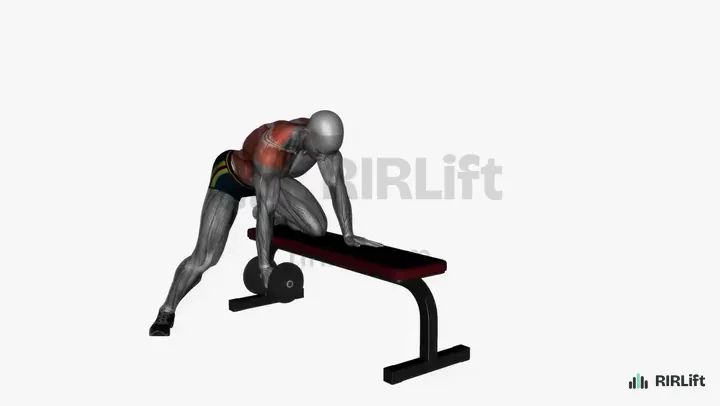
  5. One-Arm Dumbbell Row Lats, Upper Back
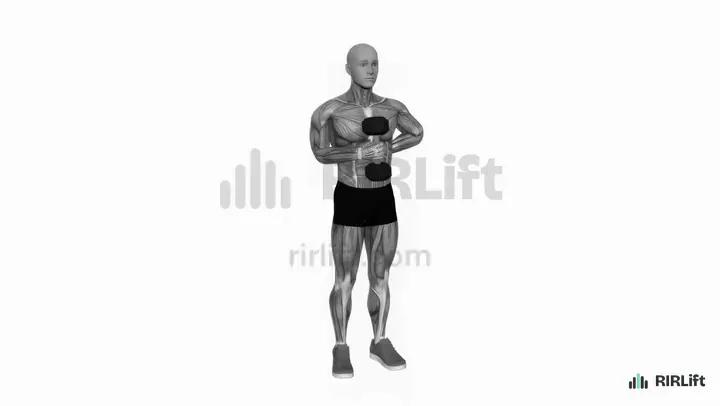
  6. Dumbbell External Rotation Shoulders
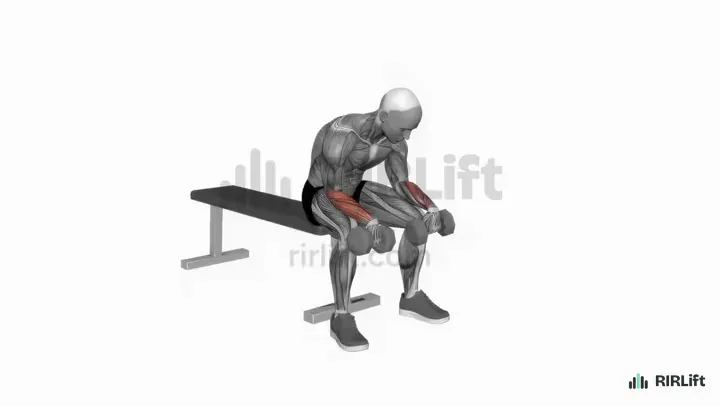
  7. Reverse Wrist Curl Forearms

First step and legs

Every point starts with a split step and a push to one side. Hops train the push; split squats, lunges and single-leg deadlifts give it strength.

Lateral push-off, bodyweight

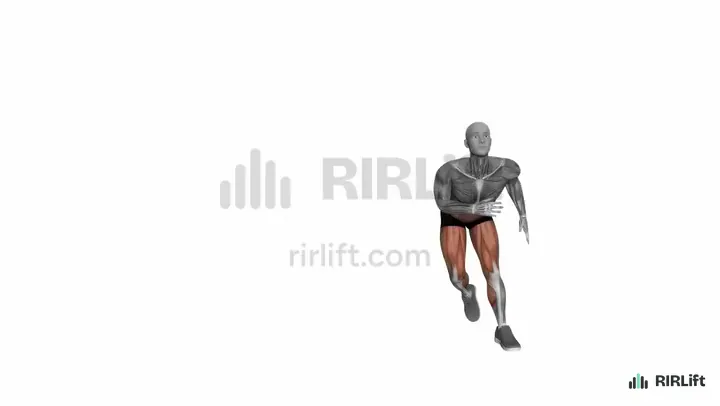
Skater Hop

Glutes, Quads, Abductors

The side-to-side push of court movement. Few reps, full effort, a quiet landing on each one.

How to do it

  1. Stand on one leg knee just unlocked.
  2. Push off sideways and jump to land on the other foot.
  3. Land softly in a slight squat and hold it for a moment.
  4. Bound back the other way and keep alternating.

Cues

  • Push sideways, not up
  • Stick every landing
  • Knee over toes on landing

Common mistakes

  • Landing stiff-legged: absorb with the hip and knee.
  • Rushing so the landings wobble: pause until each one is still.

Swap for: Dumbbell Lateral Lunge, Jump Squat

Single-leg strength, dumbbells

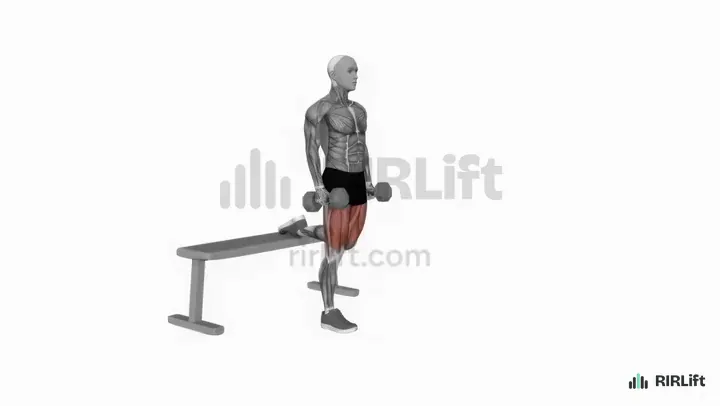
Bulgarian Split Squat

Quads, Glutes

The main leg lift of the gym days. Strong single legs make for a faster push into the first step.

How to do it

  1. Stand two to three feet in front of a bench, a dumbbell in each hand, and reach one foot back so its laces rest on the bench.
  2. Lower straight down until your back knee is just above the floor and your front thigh is about level.
  3. Push through your whole front foot to stand back up, keeping your torso steady.
  4. Finish all reps on one leg, then switch.

Cues

  • Straight down, straight up
  • Front foot flat
  • Back leg just rests

Common mistakes

  • Standing too close to the bench so your front heel lifts. Step out until your shin can stay fairly upright.
  • Pushing off the back foot. Keep it relaxed; the front leg does the work.

Swap for: Dumbbell Split Squat, Dumbbell Reverse Lunge, Step-Up

Quads and glutes, one dumbbell

Goblet Squat

Quads, Glutes

A squat you can do with one dumbbell, at the club gym or at home.

How to do it

  1. Hold one dumbbell upright against your chest with both hands, elbows pointing down.
  2. Stand with your feet a little wider than your hips, toes turned slightly out.
  3. Sit down between your heels, knees moving out over your toes, as deep as you can keep your chest up.
  4. Push through your whole foot to stand back up.

Cues

  • Elbows inside your knees
  • Chest up
  • Whole foot on the floor

Common mistakes

  • Heels lifting at the bottom. Squat a little less deep or stand on small plates under your heels.
  • Knees caving in on the way up. Push them out as you stand.

Swap for: Heels-Elevated Goblet Squat, Cable Goblet Squat

Side-to-side leg strength

Dumbbell Lateral Lunge

Quads, Glutes, Adductors

Loads the wide stance you hit from on a stretch ball, under control.

How to do it

  1. Stand with your feet together and a dumbbell in each hand at your sides.
  2. Take a wide step to one side and sit your hips back over that foot, keeping the other leg straight.
  3. Lower until your working thigh is close to level with the floor, chest up.
  4. Push off the bent leg to step back to the start, then lunge to the other side.

Cues

  • Sit back, not down
  • Both feet point forward
  • Knee follows your toes

Common mistakes

  • Stepping too short so it turns into a squat. Step out wide enough that your straight leg feels a stretch on the inside.
  • Letting the bent knee cave inward. Push it out over your middle toes.

Swap for: Cossack Squat, Kettlebell Lateral Lunge

Hamstrings and balance, one leg

Single-Leg RDL

Hamstrings, Glutes

Trains the hamstrings that brake each sprint and the balance to hit off one leg.

How to do it

  1. Balance on one foot, knee soft, holding a dumbbell on that same side.
  2. Tip forward from the hip and let your other leg travel straight behind you as the weight drops toward the floor.
  3. Stop when your chest and back leg are close to level, or sooner if your back begins to round.
  4. Push your hips forward to stand tall again. Do every rep on that leg before changing sides.

Cues

  • Hips stay level
  • Reach back with your heel
  • Weight stays close to your leg

Common mistakes

  • Letting the back hip open toward the ceiling. Point the toes of your back foot at the floor.
  • Losing balance every rep. Touch a bench with your free hand until you can hold it steady.

Swap for: Dumbbell B-Stance RDL, Dumbbell Romanian Deadlift

Calves and ankles, one leg

Single-Leg Calf Raise

Calves

Calves take every split step. One leg at a time also trains the ankle to stay steady.

How to do it

  1. Stand on one foot holding a dumbbell at your side, other foot lifted, a hand on something for balance if needed.
  2. Lower your heel as far as it comfortably goes.
  3. Rise up as high as you can onto the ball of the foot.
  4. Hold the top for a second, then lower slowly.

Cues

  • Full height every rep
  • Pause at the top
  • Slow lowering

Common mistakes

  • Bouncing through short reps: use the full range of the ankle.
  • Rolling onto the outer toes: push through the big toe.

Swap for: Standing Calf Raise, Seated Calf Raise

Rotation for groundstrokes and serves

A throw and a rotational press train the turn of a forehand; the Pallof press trains holding your trunk steady.

Rotational power, med ball

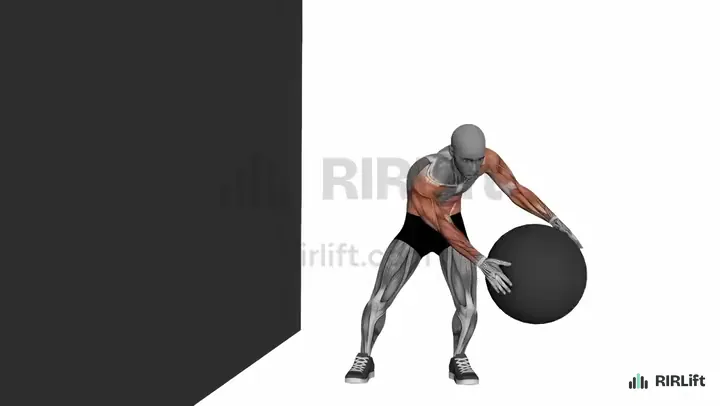
Med Ball Rotational Throw

Abs

The gym version of a forehand: legs and hips turn first, the ball leaves last. Every throw fast.

How to do it

  1. Stand side-on to a solid wall, about an arm's length plus a step away, feet a little wider than your hips.
  2. Hold the ball at hip height and turn away from the wall, shifting your weight into your back hip.
  3. Drive off your back foot, turn your hips first, then your chest, and throw the ball into the wall at waist height.
  4. Catch it off the bounce, reset your stance and repeat. Finish all reps on one side, then switch.

Cues

  • Hips before hands
  • Throw through the wall
  • Reset every rep

Common mistakes

  • Throwing with your arms while your hips stay square. Let your back knee and hip turn toward the wall first.
  • Using a ball so heavy the throw turns into a slow push. Pick one light enough to throw hard every rep.

Swap for: Med Ball Woodchop, Landmine Rotational Press, Cable Woodchop

Rotational press, landmine

Landmine Rotational Press

Shoulders, Abs

Links the turn of your hips to a push through the arm, close to the path of a serve.

How to do it

  1. Stand side-on to a landmine and squat to grip the end of the bar low outside one hip.
  2. Stand up and turn your back foot and hip in toward the anchor.
  3. Rotate and press the bar up and across your body until the arm is straight.
  4. Lower the bar back to your hip under control. Finish the side, then switch.

Cues

  • Pivot the back foot
  • Hip turns before the arm presses
  • Finish long

Common mistakes

  • Pressing before the hips turn: let the rotation start the press.
  • Leaning back at the top: keep the trunk stacked.

Swap for: Med Ball Rotational Throw, Landmine Press

Anti-rotation, cable

Pallof Press

Abs

Teaches your trunk to resist twisting so the rotation you do make is controlled.

How to do it

  1. Set a cable at chest height with a single handle and stand side-on to it, far enough away that the stack lifts.
  2. Hold the handle at your breastbone with both hands, feet hip-width apart and knees soft.
  3. Press the handle straight out until your arms are long, holding your chest square to the front.
  4. Hold for a second, bring it back to your chest and repeat. Do all reps facing one way, then turn around.

Cues

  • Chest stays square
  • Squeeze your glutes
  • Press straight out, not toward the stack

Common mistakes

  • Letting your torso turn toward the cable as you press. Use less weight or stand closer.
  • Leaning away from the stack to fight it. Stay upright and let your trunk do the resisting.

Swap for: Dead Bug, Side Plank, Landmine Twist

Hitting shoulder and forearm

Light, high-rep work for the muscles that slow the arm down after every serve and absorb every backhand.

Upper back, one arm

One-Arm Dumbbell Row

Lats, Upper Back

Keeps the back of the shoulder as strong as the front that hitting builds.

How to do it

  1. Put one hand and knee on a bench, the other foot on the floor, with a dumbbell in the free hand.
  2. Let the dumbbell hang straight below your shoulder with your back flat.
  3. Pull the dumbbell toward your hip, driving your elbow back past your torso.
  4. Lower until your arm is straight and your shoulder blade stretches forward. Finish all reps, then switch.

Cues

  • Elbow to hip
  • Chest stays square to the floor
  • Full stretch at the bottom

Common mistakes

  • Twisting your torso open to heave the weight up. Use a weight you can row with your chest facing the floor.
  • Shrugging toward your ear. Pull toward your back pocket instead.

Swap for: Single-Arm Cable Row, Chest-Supported Row

Rotator cuff, dumbbell

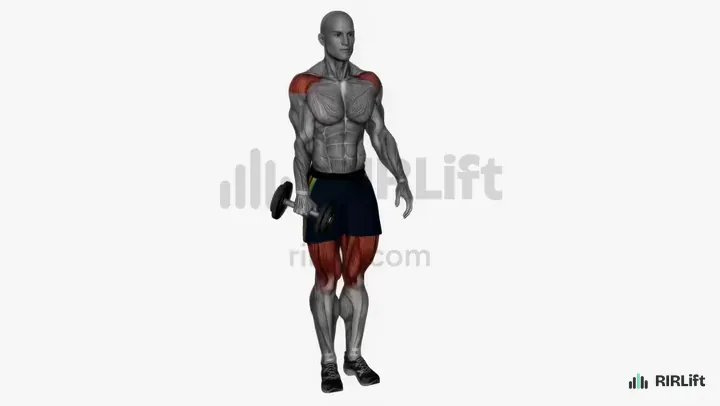
Dumbbell External Rotation

Shoulders

Strengthens the small muscles that slow the arm down after a serve. Light, slow, many reps.

How to do it

  1. Stand holding a light dumbbell, elbow bent to 90 degrees and tucked against your side, forearm across your stomach.
  2. Keep the elbow pinned to your side.
  3. Rotate your forearm outward as far as you can without the elbow moving.
  4. Return slowly and repeat. Finish one arm, then switch.

Cues

  • Elbow glued to your side
  • Slow both ways
  • Light weight

Common mistakes

  • Letting the elbow drift away from the body: tuck a small towel under it.
  • Going heavy and twisting the trunk: this is a light, strict exercise.

Swap for: Dumbbell Lying External Rotation, Face Pull

Lower traps, dumbbells

Dumbbell Chest-Supported Y Raise

Shoulders

Holds the shoulder blade in place when the arm is overhead, which is where every serve starts.

How to do it

  1. Lie face down on a bench set to about 45 degrees, light dumbbells hanging below your shoulders.
  2. Turn your thumbs up.
  3. Raise your arms forward and up in a Y shape until they line up with your body.
  4. Hold a second at the top, then lower slowly.

Cues

  • Thumbs up
  • Shoulders away from ears
  • Very light weight

Common mistakes

  • Shrugging the dumbbells up: pull the shoulder blades down first.
  • Swinging from the hips: keep your chest on the pad.

Swap for: Cable Y Raise, Plank IYTW

Forearm extensors, dumbbell

Reverse Wrist Curl

Forearms

Builds the back of the forearm that absorbs each backhand and volley.

How to do it

  1. Take a seat on a bench, forearms resting along your thighs, palms facing down, wrists just past your knees.
  2. Hold a light dumbbell in each hand.
  3. Raise the backs of your hands toward the ceiling by bending your wrists.
  4. Lower slowly to a full stretch and repeat.

Cues

  • Forearms stay planted
  • Lift with the knuckles
  • Slow lowering

Common mistakes

  • Using the elbows to lift: forearms stay still on your legs.
  • Heavy weight with short reps: go light and use the full range.

Swap for: Cable Wrist Extension, Kettlebell Wrist Extension

Put them together: example sessions

Each session below picks from the exercises above for one situation, with the sets, reps, rest and RIR filled in.

Session 1

League season: two gym days around matches

  • Workouts2× a week
  • Working sets25 a week
  • Per workout~35 min
  • EquipmentDumbbells, Adjustable Cable, Medicine Ball, Landmine

You play league matches every week and have a full gym two days in between.

Day A trains legs and the first step, Day B rotation and pulling. Hops and throws come first while you are fresh and stay well short of failure; the lifts stop 2 reps short. That is 13 working sets on Day A and 12 on Day B.

Day A: Legs and first step
ExerciseSets × repsRIRRest
Skater HopPer side. Stick each landing. 3 × 4–6 3 1 min
Bulgarian Split SquatPer leg. 3 × 6–10 2 2 min
Single-Leg RDLPer leg. 3 × 8–10 2 90 s
Pallof PressPer side. 2 × 10–12 2 45 s
Single-Leg Calf RaisePer leg. 2 × 10–15 2 45 s
Day B: Rotation and pull
ExerciseSets × repsRIRRest
Med Ball Rotational ThrowPer side. Throw hard. 3 × 5–6 3 1 min
Goblet Squat1 warm-up set first 3 × 6–10 2 2 min
Landmine Rotational PressPer side. 3 × 6–8 2 90 s
One-Arm Dumbbell RowPer arm. 3 × 8–12 2 1 min
How to run it
Import it, then switch to it in My Programs: only the active program's routines show on the Watch. Do Day B early in the week and Day A at least two days before a match.
How to progress
Double progression, judged on your weakest set. Bulgarian split squat with 35 lb dumbbells and a target of 8: you log 9, 8, 8, the weakest set hit 8, so the weight holds and the target becomes 9. Log 10, 10, 10 and every set is at the top of 6 to 10, so the next session opens at 40 lb for 6. Skater hops have no weight to add: keep the reps and make each landing quieter.

Session 2

20 minutes after practice: shoulder and forearm

  • Workouts2× a week
  • Working sets20 a week
  • Per workout~15 min
  • EquipmentDumbbells

You hit three or four times a week and want the arm work done at the club gym straight after practice.

The small muscles behind the shoulder and on the back of the forearm take the load of every serve and backhand. Light dumbbells, high reps and two supersets fit 10 working sets into about 20 minutes, and nothing goes close enough to failure to leave the arm sore for the next hit.

Shoulder and forearm
ExerciseSets × repsRIRRest
A1 Dumbbell External RotationPer arm. 2 × 12–15 2 45 s
A2 Dumbbell Chest-Supported Y Raise 2 × 10–15 2 45 s
B1 Reverse Wrist Curl 2 × 15–20 2 45 s
B2 Single-Leg Calf RaisePer leg. 2 × 10–15 2 45 s
One-Arm Dumbbell RowPer arm. 2 × 8–12 2 1 min
How to run it
Twice a week after a hitting session. Start it on the Watch: each pair runs back to back, and the rest starts after the second exercise of the pair.
How to progress
External rotation with a 10 lb dumbbell for 15, 15 is the top of 12 to 15 on both sets, so the next session asks for the next dumbbell, 15 lb on a rack that goes up in 5s, for 12. If that is too big a jump for the cuff, set 10 lb on the Watch and keep adding reps: the app works from the weight you logged.

Session 3

At home with one pair of adjustable dumbbells

  • Workouts2× a week
  • Working sets32 a week
  • Per workout~40 min
  • EquipmentDumbbells

No gym near the courts, but a pair of adjustable dumbbells at home and 40 minutes twice a week.

Six exercises cover the legs, a row and the hitting arm with one pair of dumbbells and no bench: 16 working sets at 2 reps in reserve.

Home day
ExerciseSets × repsRIRRest
Goblet Squat 3 × 8–12 2 90 s
Dumbbell Lateral LungePer side. 3 × 8–10 2 75 s
Single-Leg RDLPer leg. 3 × 8–10 2 75 s
One-Arm Dumbbell RowPer arm. 3 × 10–12 2 1 min
Dumbbell External RotationPer arm. 2 × 12–15 2 45 s
Reverse Wrist Curl 2 × 15–20 2 45 s
How to run it
Twice a week on days you don't play, or after a light hit. Set the dumbbells for the first exercise before you start the routine on the Watch, and change them during the rest.
How to progress
Goblet squat at 40 lb with a target of 10: you log 11, 10, 10, the weakest set hit 10, so the weight holds and the target becomes 11. Once you log 12, 12, 12, every set is at the top of 8 to 12 and the next session opens at 45 lb for 8. You log the weight of the one dumbbell you hold.

Make it fit you

Questions

Does Apple Watch have a tennis workout?

Yes. Tennis is one of the workout types in Apple's Workout app, for recording a match or practice.

How do I track a tennis strength workout on Apple Watch?

Run it in a lifting app on the Watch. In RIRLift you start the routine on your wrist, log weight, reps and reps in reserve after each set, and the rest timer starts by itself.

Do I log both arms on one-arm exercises?

Do every rep on one side, then the other, and log the reps of your weaker side so the next weight is set from it.

Is it free?

Logging, the rest timer, swaps and the next weight on the Watch are free on iPhone and Apple Watch.