
Back exercises for women: a strong, defined back and your first pull-up
Published October 19, 2026
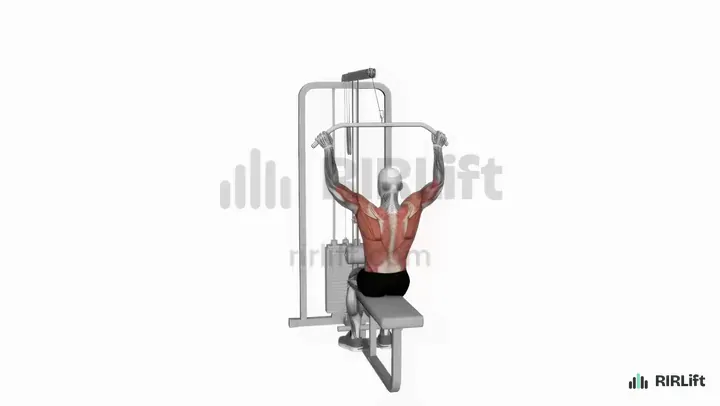
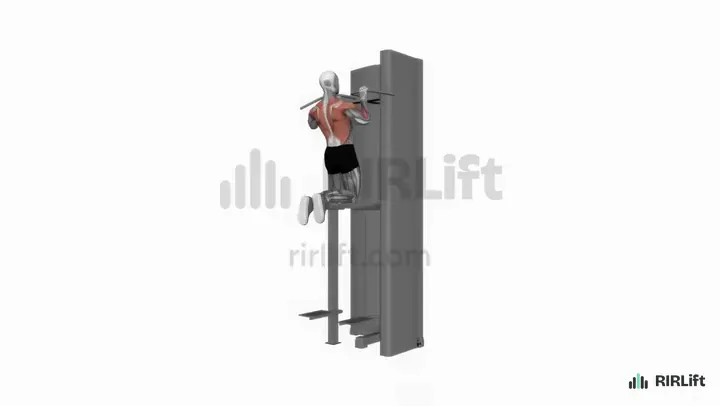
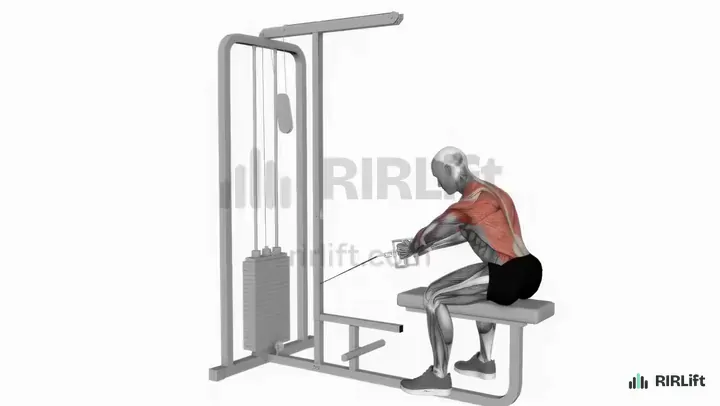
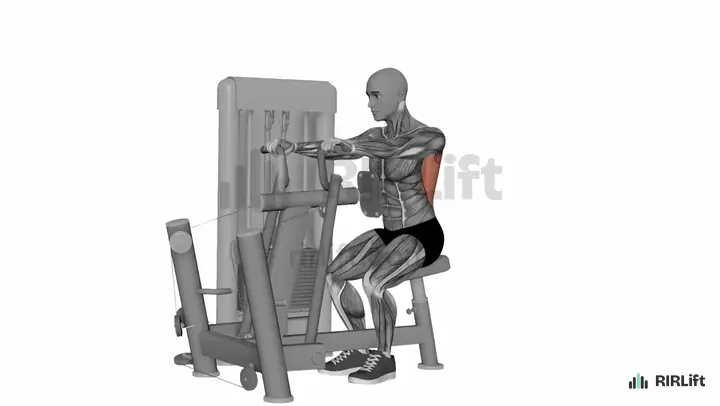
The best back exercises for women are the lat pulldown and assisted pull-up for the lats that give the back its shape, the seated cable row and chest-supported row for the mid back, the face pull and reverse pec deck for posture, and the Romanian deadlift for the lower back and glutes. At home, the one-arm dumbbell row, bent-over row, rear delt fly and band pull-apart cover the same muscles. Women train the back with the same exercises as anyone; the plans here are built around common goals: a first pull-up, back and glutes on one day, or training at home.
- Lat Pulldown Lats
- Assisted Pull-Up Lats
- Seated Cable Row Upper Back, Lats
- Chest-Supported Row Upper Back, Lats
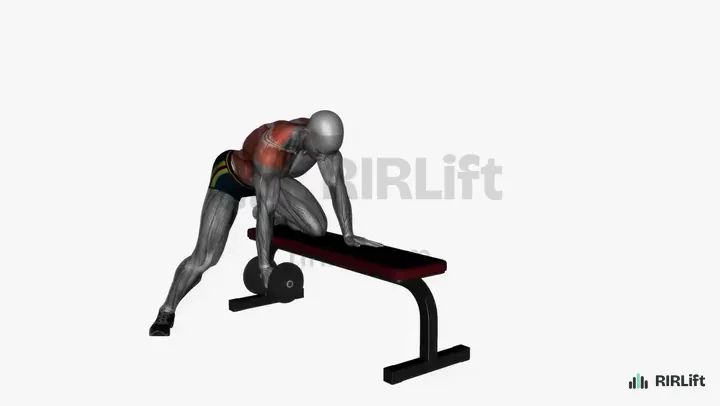
- One-Arm Dumbbell Row Lats, Upper Back
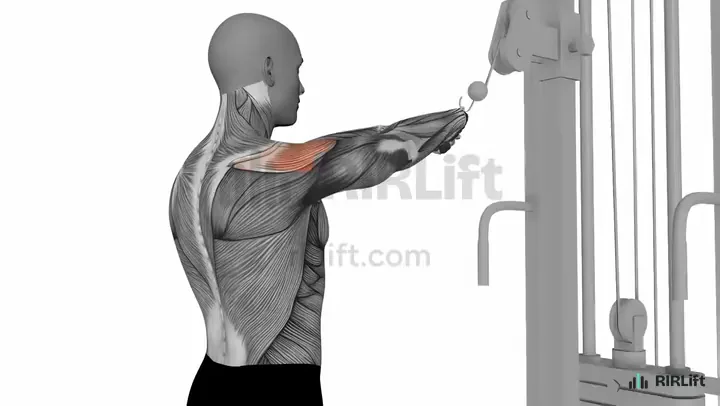
- Face Pull Shoulders, Upper Back
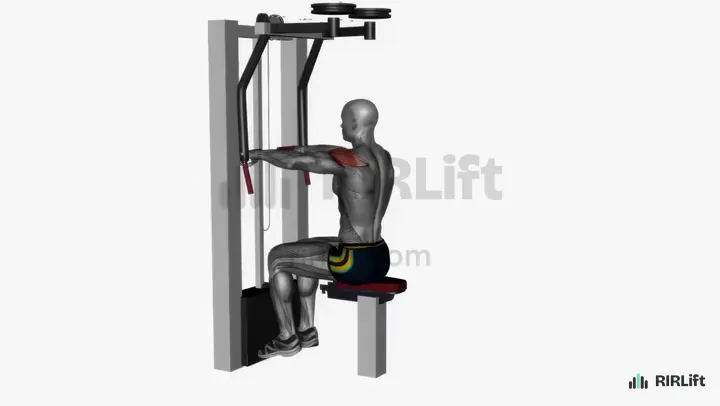
- Reverse Pec Deck Shoulders
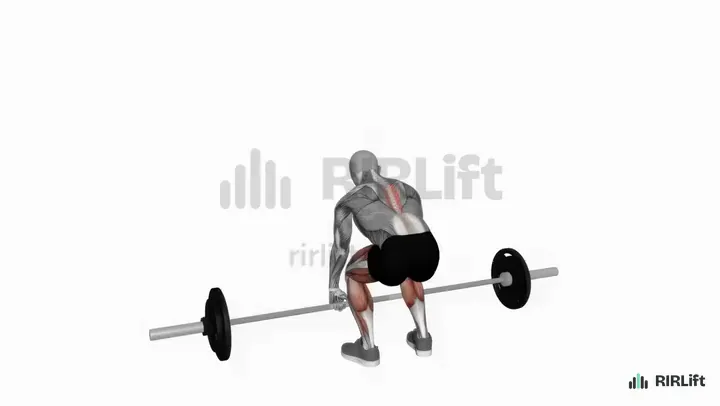
- Romanian Deadlift Hamstrings, Glutes
Put them together: example sessions
Each session below picks from the exercises above for one situation, with the sets, reps, rest and RIR filled in. Open one in the session builder to change a pick, price it from a recent set, and add it to RIRLift.
-
Session 1
At the gym, training for your first pull-up
You train at a gym and want to do an unassisted pull-up, and right now you can't do one.
2× a week · 26 sets a week · ~30 min
-
Session 2
At the gym, back paired with glutes
You train at the gym with a split built around lower body and glutes, and you want one day that covers your back and glutes together.
2× a week · 25 sets a week · ~30 min
-
Session 3
At home with dumbbells, a bench and a band
You train at home with a few pairs of dumbbells, a bench and a light band, and no pull-up bar or cables.
2× a week · 24 sets a week · ~25 min
Session 1
At the gym, training for your first pull-up
- Workouts2× a week
- Working sets26 a week
- Per workout~30 min
- EquipmentAssisted Machine, Barbells, Seated Row Machine, Adjustable Cable +2
You train at a gym and want to do an unassisted pull-up, and right now you can't do one.
Both sessions open with a vertical pull: assisted pull-ups on day A to practice the movement, pulldowns on day B to build strength in it with more load. The inverted row and chest-supported row build the mid back that holds you steady at the top. Pull-ups and pulldowns stop 2 reps short so every rep is clean; the rows and face pulls go to 1. Session A has 13 working sets and session B has 13.
| Exercise | Sets × reps | RIR | Rest |
|---|---|---|---|
| Assisted Pull-UpLeast help that gets you 6 reps. | 4 × 6–10 | 2 | 2 min |
| Inverted RowRaise the bar if you can't reach it. | 3 × 8–15 | 1 | 90 s |
| Chest-Supported Row | 3 × 10–15 | 1 | 90 s |
| Face Pull | 3 × 15–20 | 1 | 1 min |
Open Pull-Up Day A in the session builder
| Exercise | Sets × reps | RIR | Rest |
|---|---|---|---|
| Lat Pulldown3 s up on every rep. | 4 × 8–12 | 2 | 2 min |
| Chest-Supported Row | 3 × 10–15 | 1 | 90 s |
| Straight-Arm Pulldown | 3 × 12–15 | 1 | 1 min |
| Reverse Pec Deck | 3 × 15–20 | 0 | 1 min |
Open Pull-Up Day B in the session builder
- How to run it
- Do the two sessions on non-consecutive days each week, on their own or after your leg training. Test a strict pull-up at the start of session A every two weeks.
- How to progress
- On the assisted machine, take 5 lb of help away whenever you reach 10 reps on every set at 2 reps in reserve. When the help is down to about a quarter of your body weight, try singles on the bar at the start of each session.
Session 2
At the gym, back paired with glutes
- Workouts2× a week
- Working sets25 a week
- Per workout~30 min
- EquipmentBarbells, Lat Pulldown, Cable Row, Hyperextension +2
You train at the gym with a split built around lower body and glutes, and you want one day that covers your back and glutes together.
The Romanian deadlift opens the session because it works the lower back, glutes and hamstrings at once and needs you fresh. The pulldown and seated row then cover the lats and mid back, the back extension adds glute and lower-back work without a second heavy hinge, and the reverse pec deck finishes the rear delts. One heavy day plus one lighter upper day gives 25 working sets across the week.
| Exercise | Sets × reps | RIR | Rest |
|---|---|---|---|
| Romanian Deadlift2 warm-up sets firstStop just below the knees. | 3 × 8–12 | 2 | 2:30 min |
| Lat Pulldown | 3 × 10–15 | 1 | 90 s |
| Seated Cable Row | 3 × 10–15 | 1 | 90 s |
| Weighted Back ExtensionPlate on your chest. Squeeze the glutes. | 3 × 10–15 | 1 | 75 s |
| Reverse Pec Deck | 2 × 15–20 | 0 | 1 min |
Open Back and Glutes in the session builder
| Exercise | Sets × reps | RIR | Rest |
|---|---|---|---|
| Seated Cable RowPause 1 s with elbows back. | 3 × 10–15 | 1 | 90 s |
| Straight-Arm Pulldown | 3 × 12–15 | 1 | 1 min |
| Face Pull | 3 × 15–20 | 1 | 1 min |
| Reverse Pec Deck | 2 × 15–25 | 0 | 1 min |
Open Upper Back in the session builder
- How to run it
- Run Back and Glutes once a week and Upper Back once a week, with at least two days between them. Put your leg day apart from Back and Glutes so the Romanian deadlift isn't on tired hamstrings.
- How to progress
- Use double progression: once every set of a lift reaches the top of its range at the target RIR, add the smallest weight step and start again at the bottom of the range.
Session 3
At home with dumbbells, a bench and a band
- Workouts2× a week
- Working sets24 a week
- Per workout~25 min
- EquipmentDumbbells, Resistance Bands
You train at home with a few pairs of dumbbells, a bench and a light band, and no pull-up bar or cables.
With no bar or cables, rows carry the lats: the one-arm row for a heavy stretch, the bent-over row for both arms. The rear delt fly and pull-apart do the posture work that face pulls do in a gym. Rows stop 1 rep short and the light rear-shoulder work goes to 0, since light dumbbells need sets taken close to failure to do their job. Session A has 12 working sets and session B has 12.
| Exercise | Sets × reps | RIR | Rest |
|---|---|---|---|
| One-Arm Dumbbell RowPer arm. Hand on the bench. | 4 × 8–15 | 1 | 75 s |
| Dumbbell Rear Delt FlySeated, chest on your thighs. | 3 × 15–25 | 0 | 1 min |
| Band Pull-Apart | 3 × 15–25 | 0 | 45 s |
| Dumbbell Bent-Over Row | 2 × 10–15 | 1 | 90 s |
Open Home Back A in the session builder
| Exercise | Sets × reps | RIR | Rest |
|---|---|---|---|
| Dumbbell Bent-Over RowPause 1 s at the top. | 4 × 10–15 | 1 | 90 s |
| One-Arm Dumbbell Row | 3 × 10–15 | 1 | 75 s |
| Band Pull-ApartPalms up. | 2 × 20–30 | 1 | 45 s |
| Dumbbell Rear Delt Fly | 3 × 15–25 | 0 | 1 min |
Open Home Back B in the session builder
- How to run it
- Do the sessions twice a week on non-consecutive days. Pull-aparts can also go between sets of your other exercises on any day.
- How to progress
- Add reps until every set hits the top of its range at the target RIR. When it does, move to the next dumbbell, or with fixed weights slow every lowering to three seconds first.
Make it fit you
-
Already doing a glute program
Count your hip thrusts and Romanian deadlifts as lower-back work and drop the back extension. Spend those sets on an extra row or pulldown instead.
-
Can do one pull-up
Start session A with three sets of single strict pull-ups, resting two minutes between, then go to the assisted machine for the rest. Add a second rep to the first set when the singles feel smooth.
-
Want a more defined back, not a bigger one
Definition comes from muscle plus lower body fat, so keep training close to failure and growing the muscle. Building muscle on the back is slow for everyone, and a few pounds of it over a year makes the back look sharper, not bulky.
-
Training three days a week, full body
Put one row or pulldown and one rear-delt move into each full-body day. Three sessions of 7 to 8 back sets gets you the same weekly volume as two dedicated back days.
-
Shoulders roll forward when you sit
Add two sets of face pulls or band pull-aparts to every session, including leg days. They are short, light and easy to recover from, so frequency costs little.
-
Log RIR to know when to add weight
Write down how many reps you had left on each set. If you log in RIRLift, it uses that reps in reserve to suggest your next weight, so you add load when the sets are getting easier, not when you guess.
Questions
What are the best back exercises for women?
The lat pulldown or assisted pull-up, the seated cable row, the face pull and the Romanian deadlift cover the whole back at the gym: lats, mid back, rear shoulders and lower back. At home, the one-arm dumbbell row, bent-over row, rear delt fly and band pull-apart do the same. There are no women-only back exercises; the difference is in the goals you plan around.
How do I tone my back quickly?
A toned back is muscle you can see, so it takes two things: training the back hard enough to grow, and enough body fat loss for the muscle to show. Train your back twice a week, 12 to 20 hard sets of rows and pulls plus a few for the rear shoulders, ending most sets 1 to 2 reps short of failure. Expect visible change over months, not weeks.
What are the big 3 exercises for back?
A vertical pull (pull-up or lat pulldown), a horizontal row (seated cable row or dumbbell row) and a hip hinge (Romanian deadlift or deadlift). Together they train your lats, mid back and lower back. A face pull is a good fourth for the rear shoulders.
What are the 5 best back exercises?
The lat pulldown, the assisted or strict pull-up, the seated cable row, the face pull and the Romanian deadlift. If you train at home, swap in the one-arm dumbbell row, bent-over row and band pull-apart for the machine and cable moves.
How can a woman do her first pull-up?
Train the pull-up itself with help: the assisted machine or a band, two or three times a week, using the least help that gets you 6 to 10 clean reps. Add lat pulldowns and inverted rows for strength, and reduce the help a little each time the reps hit the top of the range. The first-pull-up plan on this page follows that pattern.
Will back exercises make my back bulky?
Not without years of deliberate effort. Adding visible muscle to the back is slow, and most women find that a few pounds of it makes the waist look smaller and the shoulders sit straighter. You control size with how much you train and eat, and you can stop adding volume whenever you like the result.
How often should women train back?
Twice a week works well for most people: either two back sessions, or back exercises spread across two or three full-body days. Aim for 12 to 20 hard sets of rows and pulls per week, plus a few rear-delt and hinge sets, and recover at least two days between sessions with heavy rows or hinges.
Related templates
-
The best workout for women, for your week
Full-body and split programs that put these back sessions alongside legs and glutes.
-
Back exercises at the gym: machines, cables and barbells
The full gym list of cables, machines and barbells for the back.
-
Back exercises at home: with a bar, weights, bands or no equipment
More home options with dumbbells, bands and a pull-up bar.
-
Pull ups: form, your first rep and the best alternatives
Pull-up variations and a progression from assisted to strict.
-
Arm exercises for women: firm, strong arms at home or at the gym
Arms work hard in every row and pulldown; this page trains them directly.
-
How to use reps in reserve (RIR)
How to judge the reps in reserve targets in these sessions.