
Barbell exercises for women: squat, deadlift, hip thrust, press and row
Published October 29, 2026
The best barbell exercises for women are the back squat, split squat and step-up for legs, the deadlift, Romanian deadlift and hip thrust for glutes and hamstrings, the bench press, overhead press and landmine press for chest, shoulders and arms, and the barbell row for your back. Most gyms have a 20 kg (45 lb) bar and many also a 15 kg (33 lb) one; start with the empty bar or a light one, and add 2.5 to 5 kg at a time. Train 2 to 4 days a week with 3 to 4 sets of 5 to 12 reps, stopping 1 to 3 reps short of failure.
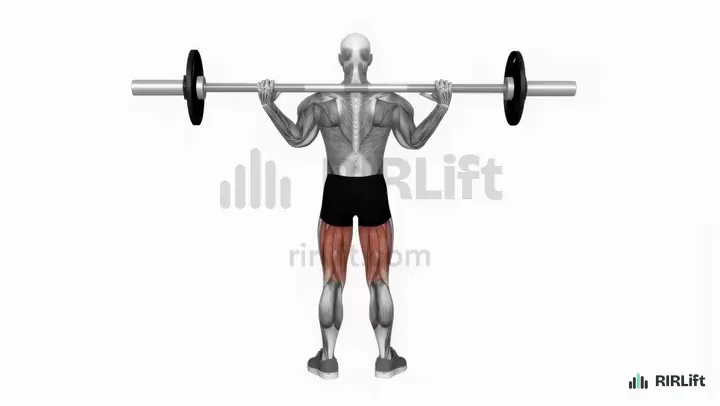
- Barbell Back Squat Quads, Glutes, Adductors
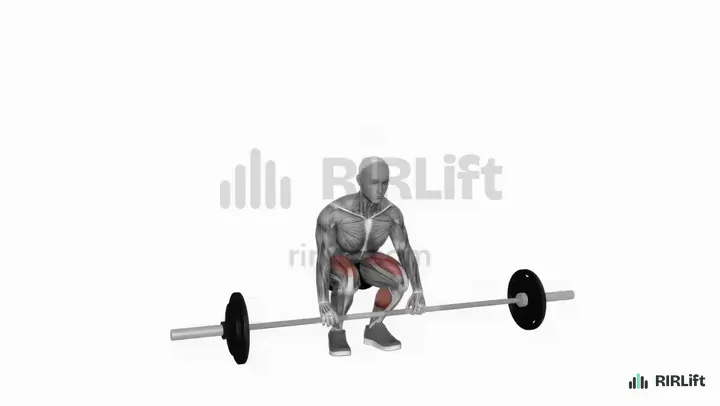
- Barbell Deadlift Glutes, Lower Back
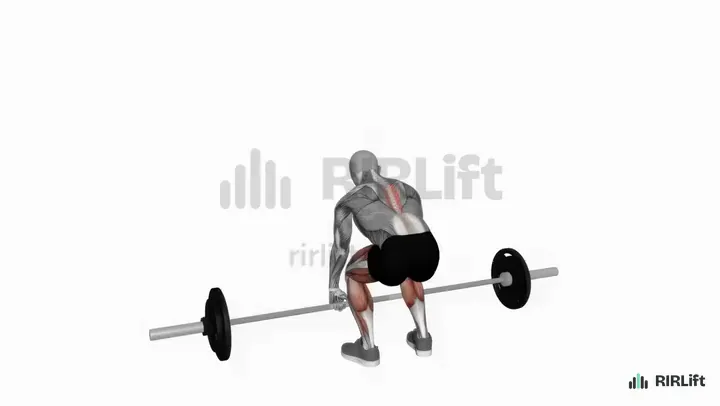
- Romanian Deadlift Hamstrings, Glutes
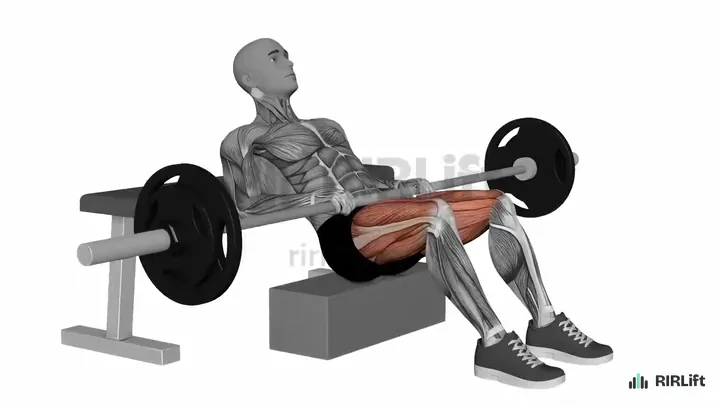
- Hip Thrust Glutes
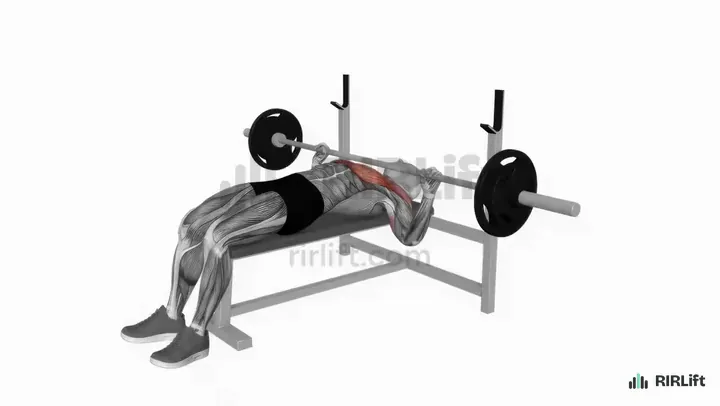
- Barbell Bench Press Chest
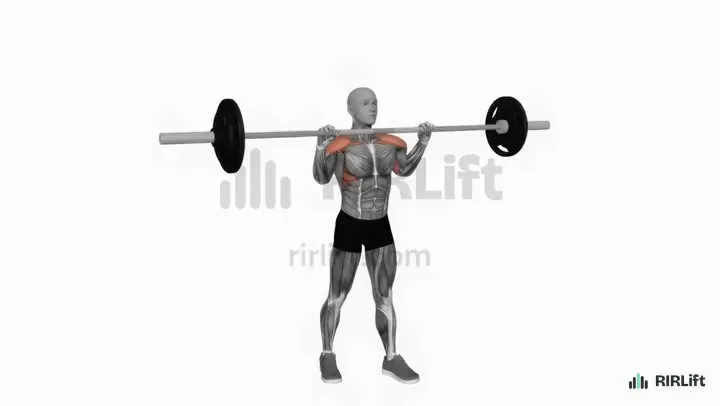
- Barbell Overhead Press Shoulders
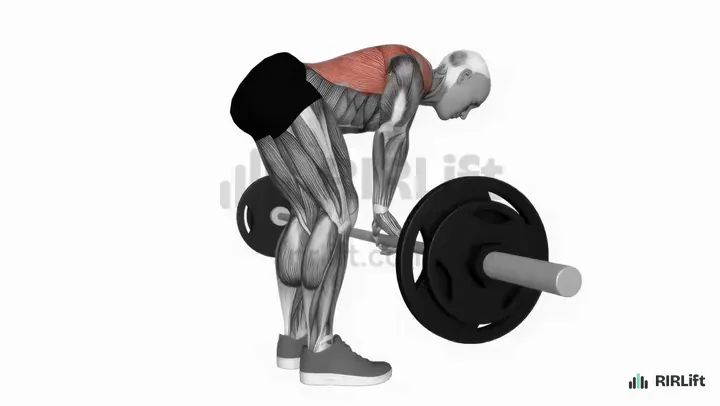
- Barbell Row Upper Back, Lats
Put them together: example sessions
Each session below picks from the exercises above for one situation, with the sets, reps, rest and RIR filled in.
-
Session 1
New to the barbell, three days
You have done some training with machines or dumbbells and want to learn the main barbell lifts and get strong on them.
3× a week · 36 sets a week · ~40 min
-
Session 2
Glutes and strength, four days
You have lifted with a barbell for six months or more, you know your working weights, and you want more glute and leg growth while your upper body keeps getting stronger.
4× a week · 50 sets a week · ~45 min
-
Session 3
Two days, knees or back that complain
You want the strength of barbell training, but deep squats or floor deadlifts flare up your knees or lower back, and you have two gym days a week.
2× a week · 25 sets a week · ~40 min
Session 1
New to the barbell, three days
- Workouts3× a week
- Working sets36 a week
- Per workout~40 min
- EquipmentBarbells, Flat Bench
You have done some training with machines or dumbbells and want to learn the main barbell lifts and get strong on them.
Alternating two full-body sessions three times a week practices each lift often, which is how the technique sticks. Each muscle group gets about 6 to 9 hard sets a week, and the main lifts stay at 2 to 3 reps in reserve while you learn. Each day has 12 working sets and takes about 50 minutes.
| Exercise | Sets × reps | RIR | Rest |
|---|---|---|---|
| Barbell Back Squat2 warm-up sets first | 3 × 5–8 | 3 | 3 min |
| Barbell Bench Press1 warm-up set first | 3 × 6–10 | 2 | 2:30 min |
| Barbell Row | 3 × 8–10 | 2 | 2 min |
| Hip Thrust | 3 × 8–12 | 2 | 2 min |
| Exercise | Sets × reps | RIR | Rest |
|---|---|---|---|
| Barbell Deadlift2 warm-up sets first | 3 × 4–6 | 3 | 3 min |
| Barbell Overhead Press1 warm-up set first | 3 × 6–8 | 2 | 2:30 min |
| Barbell Split SquatPer leg. | 3 × 8–10 | 2 | 2 min |
| Barbell Row | 3 × 8–10 | 2 | 2 min |
- How to run it
- Train Monday, Wednesday and Friday, doing A, B, A one week and B, A, B the next. Start every lift with the empty bar for a warm-up set.
- How to progress
- Add 2.5 kg (5 lb) to squats and deadlifts, and 1 to 2.5 kg to presses, whenever every set reaches the top of the rep range at 2 reps in reserve. If you miss the bottom of the range two sessions in a row, take 10% off and build back up.
Session 2
Glutes and strength, four days
- Workouts4× a week
- Working sets50 a week
- Per workout~45 min
- EquipmentBarbells, Flat Bench, Landmine
You have lifted with a barbell for six months or more, you know your working weights, and you want more glute and leg growth while your upper body keeps getting stronger.
Two lower days give glutes and hamstrings about 13 hard sets a week from hip thrusts, Romanian deadlifts and deadlifts, plus squats and single-leg work. Two upper days give chest, shoulders and back about 8 sets each. Lower days have 13 working sets and upper days have 12, about an hour each.
| Exercise | Sets × reps | RIR | Rest |
|---|---|---|---|
| Barbell Back Squat3 warm-up sets first | 4 × 5–8 | 2 | 3 min |
| Romanian Deadlift | 3 × 8–10 | 2 | 2:30 min |
| Hip Thrust | 3 × 10–15 | 1 | 2 min |
| Barbell Step-UpPer leg. | 3 × 8–12 | 2 | 90 s |
| Exercise | Sets × reps | RIR | Rest |
|---|---|---|---|
| Barbell Bench Press2 warm-up sets first | 4 × 5–8 | 2 | 3 min |
| Barbell Row | 4 × 8–10 | 1 | 2 min |
| Landmine Press | 4 × 8–12 | 1 | 90 s |
| Exercise | Sets × reps | RIR | Rest |
|---|---|---|---|
| Barbell Deadlift3 warm-up sets first | 3 × 3–5 | 2 | 3:30 min |
| Barbell Split SquatPer leg. | 3 × 8–10 | 2 | 2 min |
| Hip Thrust | 4 × 6–10 | 1 | 2:30 min |
| Box Squat | 3 × 8–10 | 2 | 2:30 min |
| Exercise | Sets × reps | RIR | Rest |
|---|---|---|---|
| Barbell Overhead Press2 warm-up sets first | 4 × 5–8 | 2 | 3 min |
| Barbell Row | 4 × 10–12 | 1 | 2 min |
| Barbell Bench Press | 4 × 8–12 | 1 | 2 min |
- How to run it
- Lower Monday and Thursday, upper Tuesday and Friday. Do the heaviest lift of each day first, while you are fresh.
- How to progress
- Squats, deadlifts and hip thrusts go up by 2.5 to 5 kg when every set reaches the top of the range at 1 to 2 reps in reserve. Presses move up by the smallest plate available, or add a rep first if your gym has no small plates.
Session 3
Two days, knees or back that complain
- Workouts2× a week
- Working sets25 a week
- Per workout~40 min
- EquipmentBarbells, Landmine, Flat Bench
You want the strength of barbell training, but deep squats or floor deadlifts flare up your knees or lower back, and you have two gym days a week.
Box squats, hip thrusts, Romanian deadlifts from standing and landmine presses keep heavy loading on your legs, glutes and shoulders while limiting depth and spinal bending. Two full-body days give each muscle group 6 to 7 sets a week at 2 to 3 reps in reserve. Each day has 12 to 13 working sets and takes about 50 minutes.
| Exercise | Sets × reps | RIR | Rest |
|---|---|---|---|
| Box Squat2 warm-up sets first | 4 × 6–10 | 3 | 2:30 min |
| Landmine Press | 3 × 8–12 | 2 | 90 s |
| Hip Thrust | 3 × 10–15 | 2 | 2 min |
| Barbell Row | 3 × 8–12 | 2 | 2 min |
| Exercise | Sets × reps | RIR | Rest |
|---|---|---|---|
| Romanian Deadlift2 warm-up sets first | 3 × 8–10 | 3 | 2:30 min |
| Barbell Step-UpPer leg. | 3 × 8–10 | 2 | 90 s |
| Barbell Bench Press | 3 × 8–10 | 2 | 2:30 min |
| Hip Thrust | 3 × 8–12 | 2 | 2 min |
- How to run it
- Leave two or three days between the sessions, for example Monday and Thursday. Set the box squat height where your knees and back feel fine, and lower it 2 to 3 cm at a time as long as they stay that way.
- How to progress
- Use double progression: work up to the top of the rep range at 2 reps in reserve, then add 2.5 kg. Lower the box before adding weight to the box squat if depth is your goal.
Make it fit you
-
When the empty bar is too heavy
Start presses and rows with a lighter fixed barbell or an EZ bar, or use dumbbells for the first weeks. Squats can start as box squats holding a plate at your chest before you put a bar on your back.
-
Small plates matter
Adding 5 kg to a 25 kg overhead press is a 20% jump. Buy or borrow 0.5 to 1.25 kg fractional plates, or add a rep per set before you add weight.
-
Hip thrust comfort
Use a thick bar pad or a folded mat across your hips, and set the bench so its edge sits just below your shoulder blades. A smith machine is an easier setup if your gym has one.
-
Log your working sets
When you rack the bar, write down how many clean reps were still in you. RIRLift sets the next session's weight from that number, which keeps progress steady through weeks when you sleep less or your cycle makes training feel harder.
-
Training at home
A rack with safety arms, a bar and a bench cover every lift on this page. Without a rack, keep the floor lifts (deadlifts, Romanian deadlifts, hip thrusts and rows) and swap back squats for split squats you can clean into position.
Questions
What is the best barbell workout for women?
A full-body plan built on the squat, deadlift, hip thrust, bench press, overhead press and row, done two or three days a week. Women train the same lifts as men; the starting weights are just lighter.
How much should a beginner woman lift with a barbell?
Start with the empty bar, 15 or 20 kg (33 or 45 lb), and add weight each session until a set of 8 leaves you with 2 or 3 reps in reserve. That number is your starting weight; it is different for every lift.
Will lifting barbells make women bulky?
No. Muscle builds slowly over months of training, and you control how much you add by how you eat and train. What changes first is shape: firmer legs and glutes, more defined shoulders and arms.
Which barbell exercise is best for the chest?
The bench press. It trains your chest, the fronts of your shoulders and your triceps together, and you can add weight to it for years.
How many days a week should women lift barbells?
Two to four. Three full-body days suit beginners because you practice each lift often. Four days of upper and lower sessions suit you once each workout gets long.
Related templates
-
Barbell exercises: the 18 lifts worth learning, and how to put them together
Every barbell lift, including Olympic lifts and arm work.
-
Glute exercises for women: thrusts, hinges and side glute work
Glute work with machines, cables and dumbbells to go with your barbell lifts.
-
Barbell leg exercises: squats, hinges, thrusts and split squats
More squat, lunge and hinge variations with a bar.
-
Strength training for women: the lifts, the weights and a plan
A broader guide to training for strength with any equipment.
-
Progressive overload workout plan
How to keep adding weight to the bar once beginner gains slow down.