
Bench exercises for your whole body, grouped by muscle
Published October 19, 2026
With a weight bench and a pair of dumbbells you can train every major muscle: press flat and incline for your chest, row lying face down on the incline for your back, raise to your shoulders, curl and skullcrush for your arms, hip thrust and step up for your legs and glutes. An adjustable bench doubles the list compared with a flat one, because the incline is what makes chest-supported rows, incline curls and upper-chest presses possible. Add a barbell and rack and the bench press, close-grip press and barbell hip thrust become your heaviest lifts.
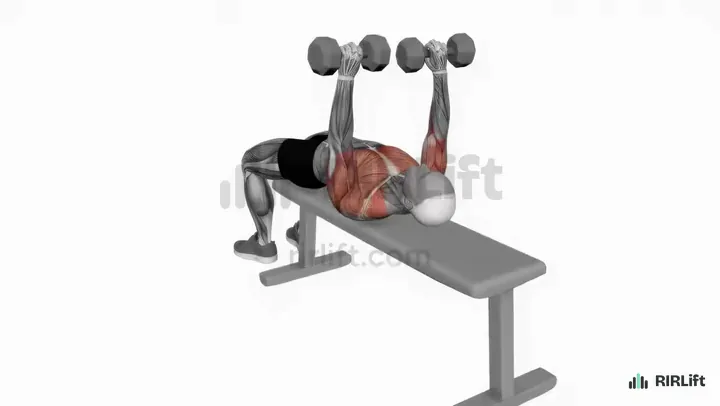
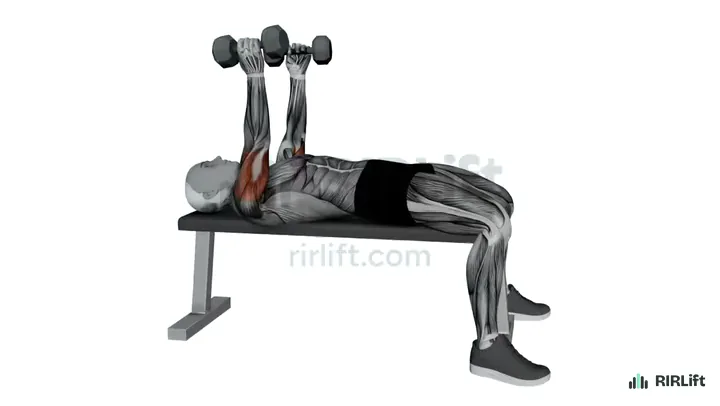
- Flat Dumbbell Press Chest
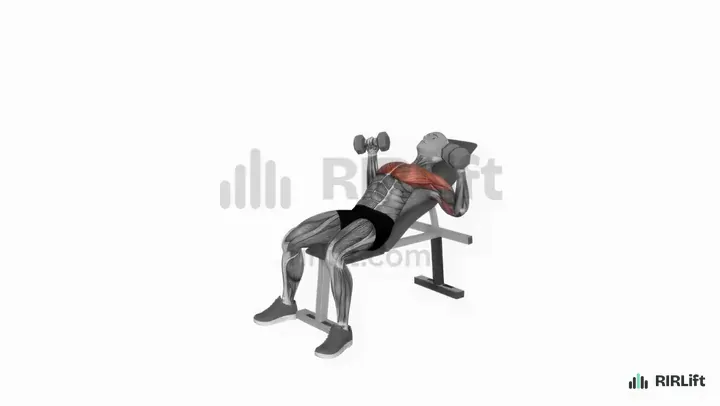
- Incline Dumbbell Press Chest
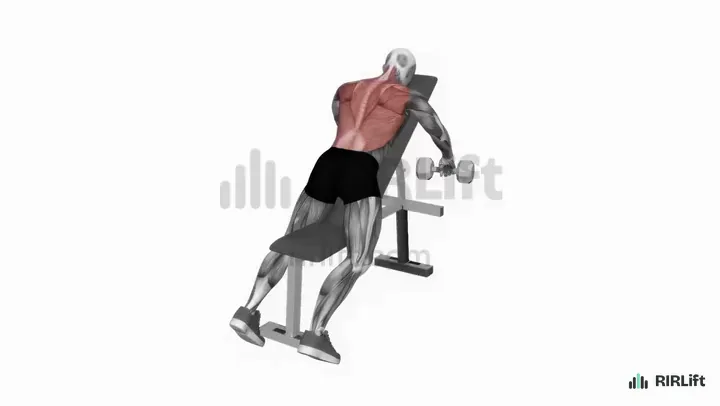
- Incline Dumbbell Row Upper Back, Lats
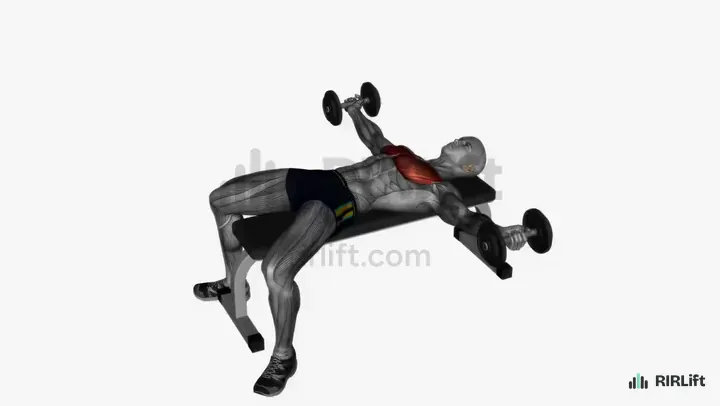
- Dumbbell Chest Fly Chest
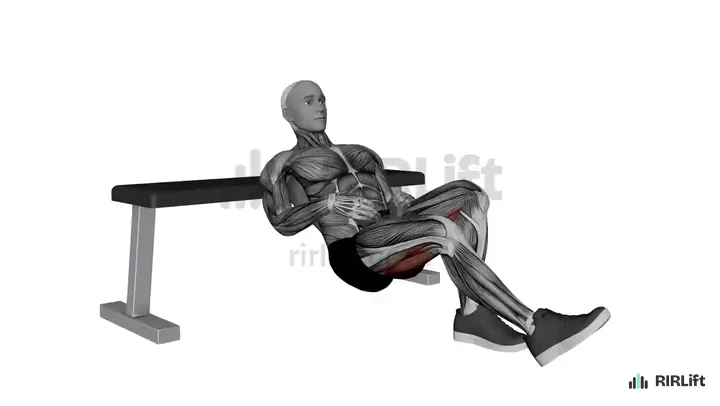
- Dumbbell Staggered Hip Thrust Glutes
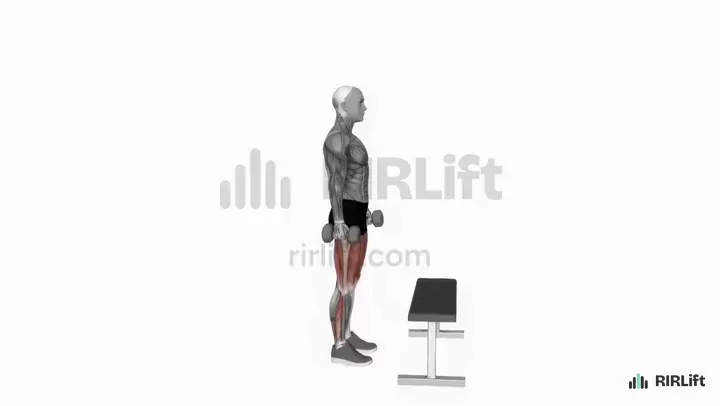
- Step-Up Quads, Glutes
- Dumbbell Skullcrusher Triceps
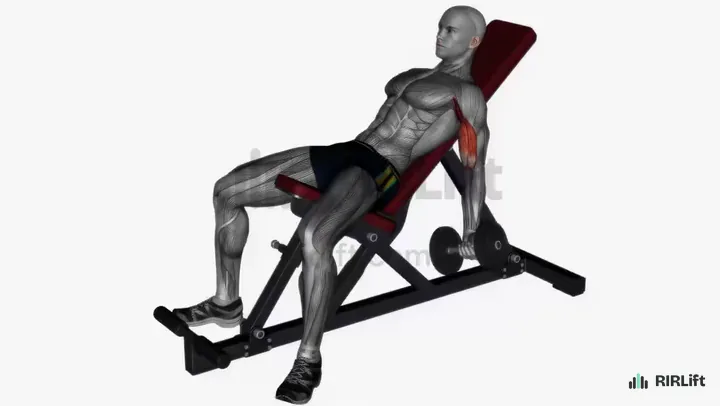
- Incline Dumbbell Curl Biceps
Put them together: example sessions
Each session below picks from the exercises above for one situation, with the sets, reps, rest and RIR filled in. Open one in the session builder to change a pick, price it from a recent set, and add it to RIRLift.
-
Session 1
Adjustable bench and a pair of dumbbells at home
You have an adjustable bench and dumbbells, adjustable or a small set, and want one routine that covers your whole body.
3× a week · 51 sets a week · ~40 min
-
Session 2
Two short sessions a week
You have 30 minutes, twice a week, and want the bench to do as much as possible in that time.
2× a week · 21 sets a week · ~20 min
-
Session 3
Bench with a rack and a barbell
You train at a gym or in a garage with a rack, a barbell and plates, and you want the heavy versions of the bench lifts.
4× a week · 54 sets a week · ~40 min
Session 1
Adjustable bench and a pair of dumbbells at home
- Workouts3× a week
- Working sets51 a week
- Per workout~40 min
- EquipmentDumbbells, Incline Bench, Flat Bench
You have an adjustable bench and dumbbells, adjustable or a small set, and want one routine that covers your whole body.
Every exercise here uses the bench in a different way: flat to press, incline to row face down, as a back support for the hip thrust and as a step. The press and row get three sets at 2 reps in reserve because they carry the most load; the fly, raise and curl get two sets at 1 rep in reserve because a light isolation set has to end close to failure to do much.
| Exercise | Sets × reps | RIR | Rest |
|---|---|---|---|
| Incline Dumbbell Press1 warm-up set firstSwap in the flat press every other session. | 3 × 8–12 | 2 | 2 min |
| Incline Dumbbell RowChest stays on the pad. | 3 × 8–12 | 2 | 90 s |
| Dumbbell Staggered Hip ThrustPer side. | 3 × 10–15 | 2 | 90 s |
| Step-UpPer side. | 2 × 8–12 | 2 | 90 s |
| Dumbbell Chest Fly | 2 × 10–15 | 1 | 1 min |
| Incline Dumbbell Rear Delt Raise | 2 × 12–20 | 1 | 1 min |
| Incline Dumbbell Curl | 2 × 10–15 | 1 | 1 min |
- How to run it
- Run the routine three times a week with a day between. Alternate the incline press and the flat press each session so both angles get trained every week. You need an adjustable bench and dumbbells you can change in small jumps.
- How to progress
- When every set of an exercise reaches the top of its rep range at the target reps in reserve, move to the next dumbbell. On the staggered hip thrust and step-up, add reps until you hit the top of the range on both legs before going heavier.
Session 2
Two short sessions a week
- Workouts2× a week
- Working sets21 a week
- Per workout~20 min
- EquipmentDumbbells, Flat Bench, Incline Bench
You have 30 minutes, twice a week, and want the bench to do as much as possible in that time.
Pairing a push with a pull or a leg move on the same bench setting lets you rest one muscle while the other works, so two exercises fit into the rest time of one. Sets stay at 1 to 2 reps in reserve because with only two sessions a week, each set has to count, and the set count per exercise is low enough that you will not run out of time.
| Exercise | Sets × reps | RIR | Rest |
|---|---|---|---|
| A1 Flat Dumbbell Press1 warm-up set first | 3 × 8–12 | 2 | 90 s |
| A2 Incline Dumbbell Row | 3 × 8–12 | 2 | 90 s |
| B1 Incline Dumbbell Lateral RaisePer side. | 2 × 12–20 | 1 | 1 min |
| B2 Dumbbell Skullcrusher | 2 × 10–15 | 1 | 1 min |
Open Upper in the session builder
| Exercise | Sets × reps | RIR | Rest |
|---|---|---|---|
| A1 Step-UpPer side. | 3 × 8–12 | 2 | 90 s |
| A2 Incline Dumbbell Curl | 3 × 10–15 | 1 | 90 s |
| B1 Dumbbell Staggered Hip ThrustPer side. | 3 × 10–15 | 2 | 90 s |
| B2 Bench Dip | 2 × 10–20 | 1 | 1 min |
Open Lower and Arms in the session builder
- How to run it
- Do the A and B pairs back to back, resting after each pair. Run Upper on one day and Lower plus Arms on the other, with at least two days between them. You need an adjustable bench and dumbbells.
- How to progress
- Add a rep to the first set each session until all sets hit the top of the range, then go up a weight. If both sessions finish in under 25 minutes, add a third set to the first pair.
Session 3
Bench with a rack and a barbell
- Workouts4× a week
- Working sets54 a week
- Per workout~40 min
- EquipmentBarbells, Flat Bench, Dumbbells, Incline Bench
You train at a gym or in a garage with a rack, a barbell and plates, and you want the heavy versions of the bench lifts.
The barbell takes over the two lifts where load matters most, the bench press and the hip thrust, and both get a warm-up set and longer rest at 2 reps in reserve so you can add weight week to week without grinding. The close-grip press replaces dumbbell triceps work for the same reason. Dumbbells stay for the row and fly, where moving each arm on its own beats a bar.
| Exercise | Sets × reps | RIR | Rest |
|---|---|---|---|
| Barbell Bench Press2 warm-up sets firstSafeties set. | 4 × 5–8 | 2 | 3 min |
| Incline Dumbbell Press | 3 × 8–12 | 2 | 2 min |
| Dumbbell Chest Fly | 2 × 10–15 | 1 | 1 min |
| Close-Grip Bench Press | 3 × 6–10 | 2 | 2 min |
Open Push in the session builder
| Exercise | Sets × reps | RIR | Rest |
|---|---|---|---|
| Hip Thrust1 warm-up set firstPad the bar. | 4 × 6–10 | 2 | 2:30 min |
| Incline Dumbbell Row | 4 × 8–12 | 2 | 90 s |
| Step-UpPer side. | 3 × 8–12 | 2 | 90 s |
| Incline Dumbbell Rear Delt Raise | 2 × 12–20 | 1 | 1 min |
| Incline Dumbbell Curl | 2 × 10–15 | 1 | 1 min |
Open Pull and Legs in the session builder
- How to run it
- Split it into Push and Pull plus Legs, and run each twice a week (four sessions). Set the rack safeties just below chest height for both presses.
- How to progress
- Add the smallest plates when all sets of the bench press, hip thrust or close-grip press reach the top of the range at 2 reps in reserve. Keep the dumbbell lifts on rep progression first.
Make it fit you
-
Flat bench only, no incline
You lose the chest-supported row, the incline curl and the rear delt raise, so swap the row for a one-arm row with your knee and hand on the flat bench and do your curls standing. Keep the flat press, fly, skullcrusher, step-up and hip thrust as they are. If you buy one thing next, make it an adjustable bench.
-
Your dumbbells top out too light
Move the presses and rows to the single-arm or alternating versions, slow the lowering to three seconds and take the last set of each to 0 or 1 reps in reserve. When your flat press passes 15 reps, the flat press has outgrown your dumbbells; that is when a barbell and rack pay off.
-
Shoulders ache when you press
Lower the incline a notch, tuck your elbows closer to your sides and try the neutral-grip versions, palms turned in. The squeeze press keeps the dumbbells together and is often comfortable when a regular press is not.
-
Training alone with a barbell
Set the safety arms just below your chest before the first set and stop every bench press set at 2 reps in reserve instead of chasing failure. Do your hard sets closer to failure on the dumbbell lifts, where you can simply drop the weights.
-
Use the reps in reserve you log
Log each set in RIRLift with how many more reps you could have done. If your press sets keep landing at 3 or 4 in reserve, the weight is too light; if they land at 0 before the bottom of the range, it is too heavy. The app reads those numbers to suggest the weight for your next session.
-
You also have a cable station
Swap the dumbbell fly for the flat-bench cable fly or the incline cable fly. Cables keep tension once the arms close, where dumbbells go slack, and the bench positions stay the same.
Questions
What workouts can I do with just a bench?
With only a bench and no weights, you have bench dips, step-ups, decline crunches and incline or decline push-ups. Add one pair of dumbbells and you can do a full-body routine: presses, flys, chest-supported rows, rear delt raises, curls, skullcrushers, hip thrusts and weighted step-ups.
Is an adjustable bench worth it over a flat bench?
For most home gyms, yes. The incline setting is what lets you row face down with your back supported, curl from a stretch and press for the upper chest. A flat bench covers presses, flys, skullcrushers, hip thrusts and step-ups, and not much more.
Can you build muscle with only a bench and dumbbells?
Yes, as long as your sets end close to failure and you add weight or reps over time. The limit is usually your heaviest dumbbells, not the bench. When you outgrow them, single-arm versions, slower lowering and higher reps keep you progressing before you need to buy more weight.
How many times a week should I bench?
Two or three sessions of pressing a week works for most people. The full-body plan here presses three times a week with three sets each time; the barbell plan presses twice a week with more sets per session. Both put chest volume in a range most lifters grow on.
What is the 5/3/1 bench program?
5/3/1 is a barbell strength program that cycles the bench press, squat, deadlift and overhead press through monthly waves of 5, 3 and 1 reps based on a training max. It needs a barbell and rack. If you have them, the barbell plan here works as hypertrophy work alongside or between strength blocks.
How high should a bench be for step-ups?
High enough that your thigh is about parallel to the floor when your foot is on it. A standard flat bench, around 17 inches, fits most people. If your knee ends up well above your hip, use a lower step.
Related templates
-
Chest exercises with dumbbells, with or without a bench
More chest presses and flys if the bench is mostly for your chest.
-
Bench press: how to do it, and what to swap it for
The barbell bench press on its own: setup, grip and programming.
-
Dumbbell bench press: how to do it and how heavy to go
The flat dumbbell press in detail, with variations.
-
Back exercises with dumbbells: lats, upper back, traps and lower back
More rows and pulls for a bench-and-dumbbell setup.
-
Lift with limited equipment
How to keep progressing when the bench and a few dumbbells are all you have.