
Bodyweight ab exercises: crunches, obliques, planks and bar work
Published October 19, 2026
The best bodyweight ab exercises are the crunch and reverse crunch for the front of your abs, the side plank and windshield wipers for your obliques, and the spider plank and plank shoulder tap for bracing. With a pull-up bar, the hanging knee raise and hanging oblique crunch add the most range, and the dragon flag and L-sit are the hardest no-weight options there are. You do not need equipment to train abs hard: pick one crunching move, one oblique move and one plank, do 2 to 4 sets of each close to failure, and make the exercise harder whenever you pass 20 reps.
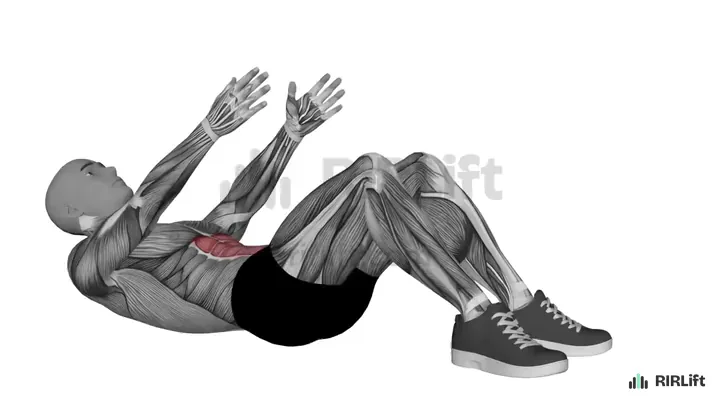
- Crunch Abs
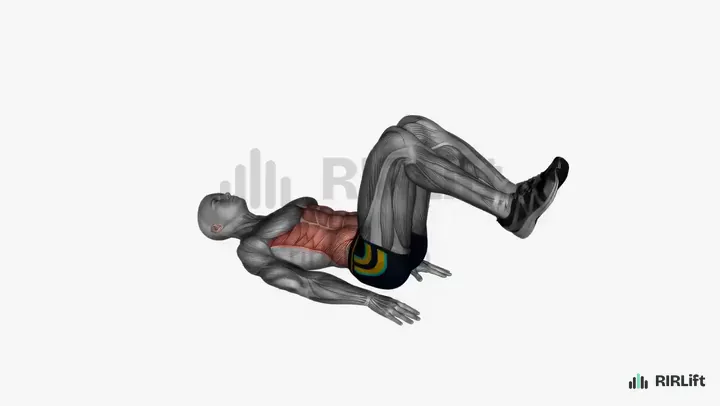
- Reverse Crunch Abs
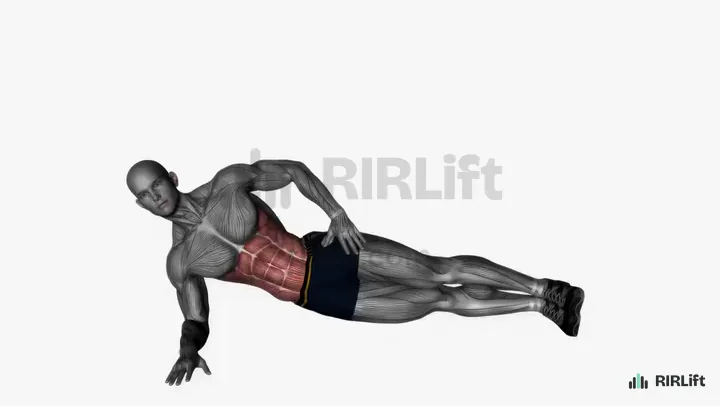
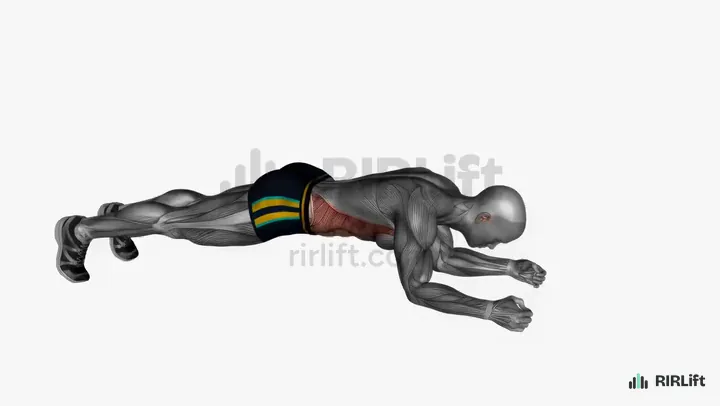
- Side Plank Abs
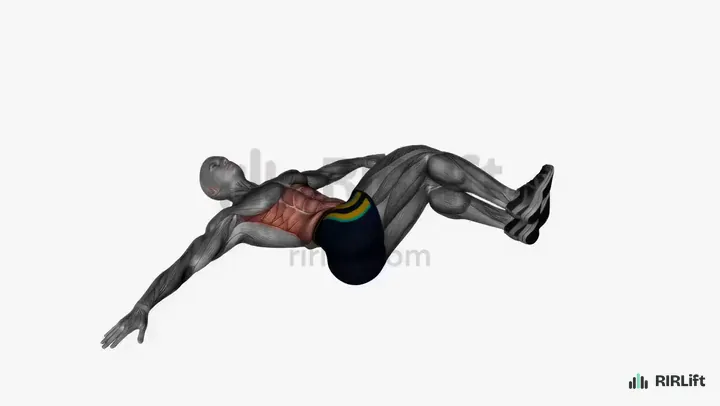
- Windshield Wipers Abs
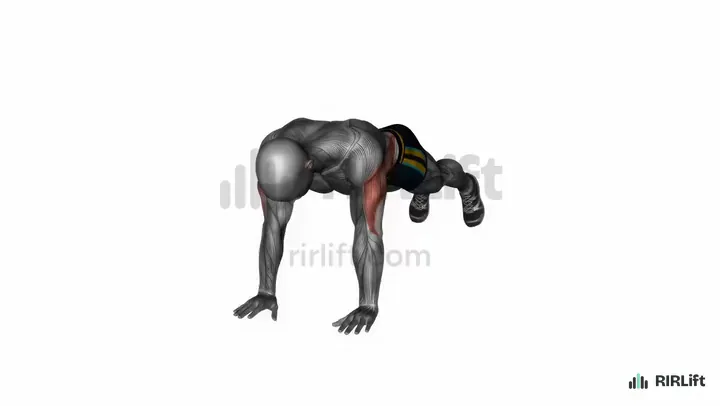
- Spider Plank Abs
- Plank Shoulder Tap Abs
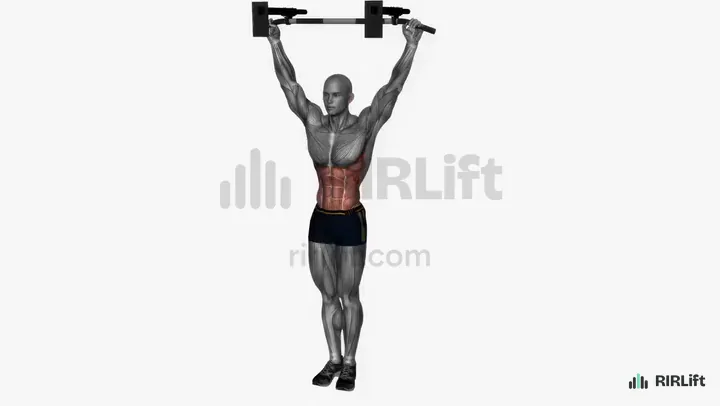
- Hanging Knee Raise Abs
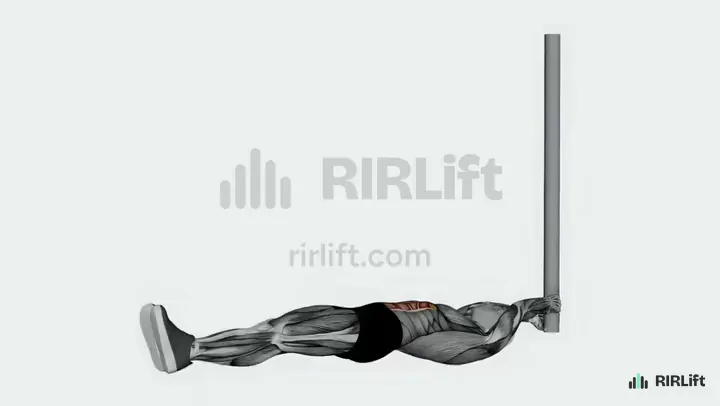
- Dragon Flag Abs
Put them together: example sessions
Each session below picks from the exercises above for one situation, with the sets, reps, rest and RIR filled in. Open one in the session builder to change a pick, price it from a recent set, and add it to RIRLift.
-
Session 1
No equipment, 15 minutes
You train abs at home, in a hotel room or after a run with only floor space, and want two short sessions that cover every part of your abs.
3× a week · 30 sets a week · ~20 min
-
Session 2
New to ab training
You have not trained abs before, a plank still feels shaky, and you want one short routine to repeat while you learn the basics.
3× a week · 24 sets a week · ~15 min
-
Session 3
Pull-up bar and a bench, floor work too easy
You can do 25 crunches and long planks without much trouble, and you have a pull-up bar and a bench at home or at a park.
2× a week · 18 sets a week · ~20 min
Session 1
No equipment, 15 minutes
- Workouts3× a week
- Working sets30 a week
- Per workout~20 min
- EquipmentBodyweight
You train abs at home, in a hotel room or after a run with only floor space, and want two short sessions that cover every part of your abs.
Each session pairs a crunching move with an oblique move and a moving plank, so the front of your abs, the sides and the bracing all get trained without a single piece of gear. Without weight, sets run to 15 or 20 reps and stop 1 short of failure; the planks stop 2 early because the back sags before the abs give out. Each session is 9 to 10 working sets.
| Exercise | Sets × reps | RIR | Rest |
|---|---|---|---|
| CrunchPause 1 s at the top. | 3 × 12–25 | 1 | 45 s |
| Russian TwistReps per side. Heels down to start. | 3 × 10–20 | 1 | 45 s |
| Side PlankSeconds per side. | 2 × 20–45 | 2 | 30 s |
| Plank Shoulder TapTaps per side. Hips still. | 2 × 10–20 | 2 | 45 s |
Open Abs A in the session builder
| Exercise | Sets × reps | RIR | Rest |
|---|---|---|---|
| Reverse CrunchDead stop at the bottom. | 3 × 10–20 | 1 | 45 s |
| Windshield WipersReps per side. Knees bent to start. | 3 × 6–12 | 1 | 1 min |
| Spider PlankReps per side. | 2 × 6–12 | 2 | 45 s |
| Bear CrawlSteps forward, then back. | 2 × 10–20 | 2 | 1 min |
Open Abs B in the session builder
- How to run it
- Do Abs A and Abs B on separate days, two to four times a week in total. Plank holds are counted in seconds.
- How to progress
- Add reps until you reach the top of every range at the target reps in reserve, then move up a step: crunch to jackknife, Russian twist to windshield wipers, plank shoulder tap to spider plank.
Session 2
New to ab training
- Workouts3× a week
- Working sets24 a week
- Per workout~15 min
- EquipmentBodyweight
You have not trained abs before, a plank still feels shaky, and you want one short routine to repeat while you learn the basics.
This uses the three easiest exercises to learn, the crunch, reverse crunch and side plank, so you can focus on feeling your abs work instead of on balance or grip. Every set stops 2 reps or seconds before failure because form fades before strength does when you are new. It is 8 sets in under 10 minutes.
| Exercise | Sets × reps | RIR | Rest |
|---|---|---|---|
| CrunchSlow up, slower down. | 3 × 10–15 | 2 | 1 min |
| Reverse CrunchSmall lift of the tailbone. | 3 × 8–12 | 2 | 1 min |
| Side PlankSeconds per side. Knees down if needed. | 2 × 15–30 | 2 | 45 s |
- How to run it
- Do the routine two or three times a week on non-consecutive days. Do the side plank from your knees at first if a full one lasts under 15 seconds.
- How to progress
- When every set reaches the top of its range with 2 reps in reserve, lower the target to 1 and add a third set to the crunch. After four to six weeks, move to the no-equipment plan.
Session 3
Pull-up bar and a bench, floor work too easy
- Workouts2× a week
- Working sets18 a week
- Per workout~20 min
- EquipmentPull-Up Bar
You can do 25 crunches and long planks without much trouble, and you have a pull-up bar and a bench at home or at a park.
Once floor moves pass 20 reps, the only way to keep bodyweight abs hard is a longer lever, so this plan is built on hanging raises, the dragon flag and the L-sit. Reps drop to 5 to 12 and rest goes up to 90 seconds, because these are closer to strength work. The dragon flag and L-sit stop 2 reps or seconds early since form breaks suddenly on them; the hanging moves go to 1. Each session is 9 working sets.
| Exercise | Sets × reps | RIR | Rest |
|---|---|---|---|
| Hanging Knee RaiseStill hang before each rep. | 3 × 8–15 | 1 | 90 s |
| Dragon FlagLower over 4 s. | 3 × 3–8 | 2 | 2 min |
| Side PlankSeconds per side. Top leg lifted. | 3 × 30–50 | 1 | 45 s |
Open Hard Abs A in the session builder
| Exercise | Sets × reps | RIR | Rest |
|---|---|---|---|
| Hanging Oblique CrunchReps per side. | 3 × 6–12 | 1 | 90 s |
| L-Sit HoldSeconds. One knee tucked to start. | 3 × 10–25 | 2 | 90 s |
| JackknifeLower over 2 s. | 3 × 10–20 | 1 | 1 min |
Open Hard Abs B in the session builder
- How to run it
- Do Hard Abs A and B once each per week with two days between them. The L-sit numbers are seconds.
- How to progress
- On the hanging moves, straighten your legs a little more each week. On the dragon flag, lower more slowly before trying full reps. Add 5 seconds to the L-sit when every hold reaches the top of its range.
Make it fit you
-
Crunches hurt your neck
Cross your arms on your chest and look at the ceiling instead of your knees. If it still bothers you, train the front of your abs with the reverse crunch and jackknife instead.
-
Sets keep running past 30 reps
That means the exercise is too easy to build much more muscle. Slow every rep to three seconds down with a pause at the top, then move to the next harder move in the same section.
-
You want visible abs
These exercises build the muscle, and that is what shows once body fat comes down. Two or three short sessions a week is enough for the abs; how lean you get depends on your eating and your overall training.
-
You already lift heavy
Squats, deadlifts and overhead presses already make your abs brace hard. Skip the planks and spend your ab sets on the crunching and hanging exercises, which train what lifting does not.
-
Only a doorway bar, no bench
Run the advanced plan but swap the dragon flag for a third set of jackknives, and do the L-sit between two sturdy chairs.
-
Log the RIR, not just the reps
With bodyweight, reps in reserve are the only way to tell a hard set from an easy one. If you log in RIRLift, you can see when your crunches or knee raises have drifted to 4 or 5 reps left and it is time for the harder variation.
Questions
Can you build abs with bodyweight exercises only?
Yes. Your abs are a small muscle group, and your own body weight on a long lever, like a hanging knee raise or a dragon flag, is plenty of load for them. The key is to keep the sets close to failure and move to a harder exercise once you pass about 20 reps.
What are the easiest ab exercises to do?
The crunch, the reverse crunch and the side plank from your knees. They need no balance or grip, and you can feel your abs working from the first set. The beginner plan on this page uses exactly those three.
Will 100 sit-ups a day give me abs?
Not on their own. Once you can do 100 of anything, the set is too easy to keep building the muscle, and visible abs depend mostly on body fat. Fewer, harder sets of crunches or hanging raises a few times a week work better.
How often should I do ab workouts?
Two to four sessions a week of 8 to 10 hard sets each is plenty. Your abs recover quickly, but more days only help if each session is still hard.
Can I get a six-pack in 2 weeks?
Only if you are already lean enough that the muscle is close to showing. For most people, getting lean enough takes months of steady training and eating, while ab training in that time builds the muscle that will show.
What is the best ab exercise without equipment?
The reverse crunch for the front of your abs and the side plank for your obliques. If you can do 20 strict reverse crunches, move to the jackknife; if you have a bar, the hanging knee raise beats both.
Related templates
-
Bodyweight core exercises: front, sides, back and bar work
Bracing, lower back and anti-rotation work to go with the ab exercises here.
-
Ab exercises at home, with or without equipment
Home ab exercises that add dumbbells, bands and a stability ball.
-
Standing ab exercises that load your core, with sessions for home, the gym and sport
Ab work you can do without getting on the floor.
-
Reverse crunch: how to do it right and what it works
The full guide to the reverse crunch, with easier and harder versions.
-
Side plank: how to do it, how long to hold, and how to make it harder
Side plank form, easier and harder versions, and how to program it.