Bodyweight core exercises: front, sides, back and bar work

The best bodyweight core exercises are the dead bug and long-lever plank for the front of your core, the side plank and Copenhagen plank for your sides, and the superman for your lower back. Your core's main job is to keep your spine still while your arms and legs move, so most of these exercises resist movement rather than create it. Do one exercise for the front, one for the sides and one for the back, 2 to 3 sets each, and you have a complete core session with no equipment. A pull-up bar adds the hanging leg raise and, for advanced lifters, the front and back lever.

  1. Dead Bug Abs
  2. Side Plank Abs
  3. Superman Lower Back
  4. Long Lever Plank Abs
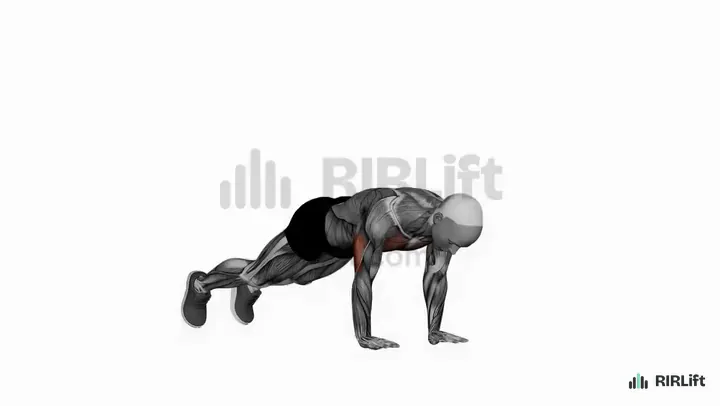
  5. Plank to Push-Up Abs, Shoulders
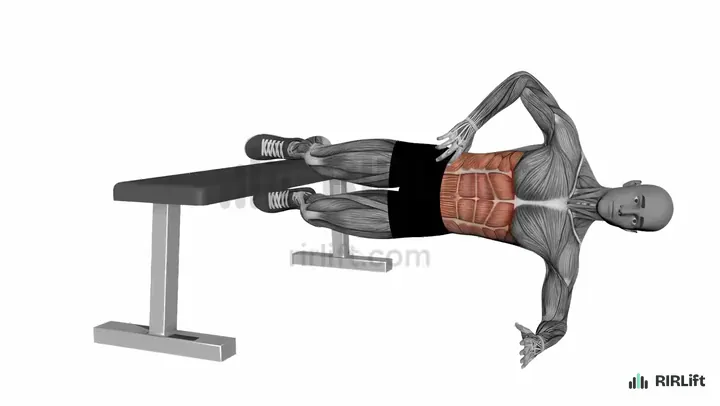
  6. Copenhagen Plank Adductors, Abs
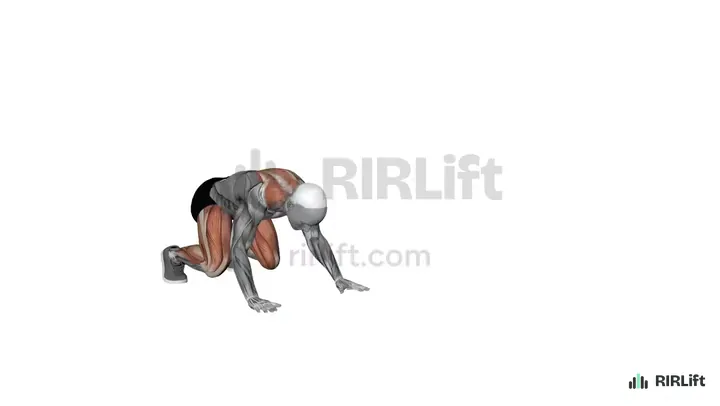
  7. Bear Crawl Abs, Shoulders
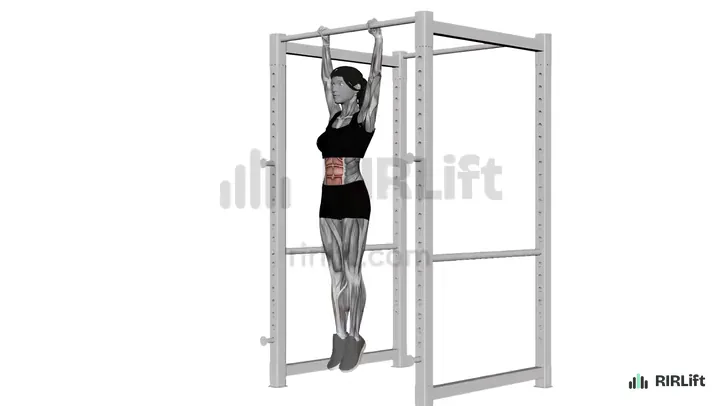
  8. Hanging Leg Raise Abs

Front of the core: stop your back from arching

These exercises put a load ahead of you, your arms, your legs or your whole body, and make your abs keep your lower back from sagging into an arch. Start with the dead bug, move to the long-lever plank when it gets easy, and use the plank to push-up or bear crawl when you want your shoulders working too.

Front, arm and leg reach

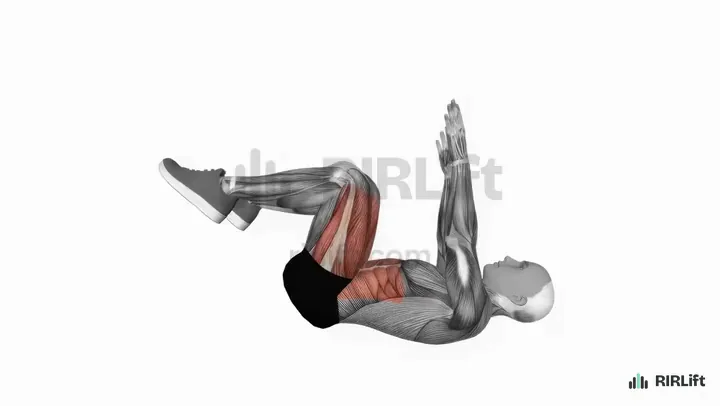
Dead Bug

Abs

The dead bug is the safest way to learn the core's main job: holding your lower back flat while opposite limbs move away from you. Moving slowly makes it hard enough for experienced lifters, so it stays useful for years.

How to do it

  1. Lie face up with both arms pointing at the ceiling and your knees bent to 90 degrees over your hips.
  2. Tilt your pelvis back so your lower back presses into the floor.
  3. Reach one arm back past your head while the opposite leg straightens toward the floor, stopping when your back starts to lift.
  4. Return both limbs and reach with the other pair. Alternate for the whole set.

Cues

  • Low back stays heavy on the floor
  • Long exhale on every reach
  • Opposite arm, opposite leg

Common mistakes

  • Moving the arm and leg too fast: three seconds out, three seconds back.
  • Letting the reaching leg drop so low the back arches: keep it higher.

Swap for: Alternating Leg Raise, Long Lever Plank, Bear Crawl

Build a session with Dead Bug

Front, plank with elbows forward

Long Lever Plank

Abs

Sliding your elbows ahead of your head makes the plank much harder for your abs without making it longer. Short hard holds train the core better than long easy ones, and this is the simplest way to get them.

How to do it

  1. Get into a forearm plank, then shift your elbows forward until they sit a few inches in front of your eyes.
  2. Squeeze your glutes and tuck your tailbone slightly so your lower back flattens.
  3. Hold your body in a single line, head to heels.
  4. End the hold when your hips begin to sag, rest, and go again.

Cues

  • Glutes tight, ribs down
  • Elbows forward, not wide
  • 20 hard seconds beats 2 easy minutes

Common mistakes

  • Raising your hips to take the strain off: keep the line and hold for less time.
  • Holding your breath: breathe short and steady through the hold.

Swap for: Dead Bug, Plank to Push-Up, Bear Crawl

Front, plank that changes levels

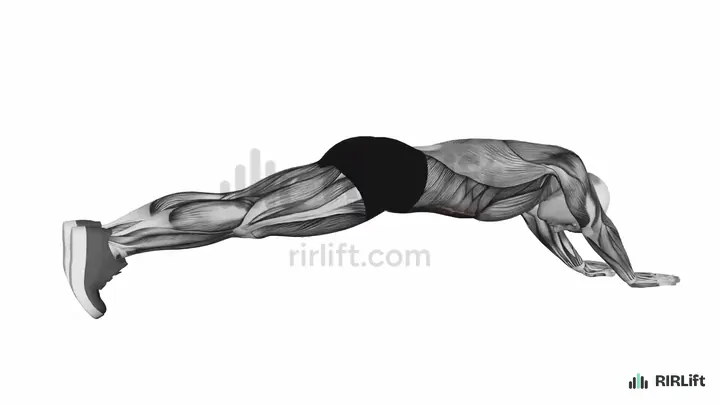
Plank to Push-Up

Abs, Shoulders

Moving from your forearms up to your hands and back makes your core stop your hips from rocking each time you shift, and works your shoulders and triceps at the same time. It is a good pick when you want one exercise to cover the core and the upper body.

How to do it

  1. Start in a forearm plank with your feet about hip width apart.
  2. Place one hand where that elbow was and press up, then do the same with the other hand so you finish at the top of a push-up.
  3. Lower back to one forearm, then the other.
  4. Lead with the other arm on the next rep and keep alternating.

Cues

  • Hips stay level
  • Wider feet for more balance
  • Press the floor away

Common mistakes

  • Swaying your hips side to side as you press up: slow down and widen your feet.
  • Letting the lower back sag at the top: squeeze your glutes the whole set.

Swap for: Long Lever Plank, Bear Crawl, Plank IYTW

Front, crawling with knees hovering

Bear Crawl

Abs, Shoulders

Crawling with your knees just off the floor keeps your core braced while your arms and legs take turns moving, the way it has to when you carry or climb. It doubles as conditioning, so it fits at the end of a session.

How to do it

  1. Get on your hands and knees with your hands below your shoulders and your knees below your hips.
  2. Lift your knees an inch off the floor and hold your back flat.
  3. Step one hand and the opposite foot forward a few inches together, then the other pair.
  4. Crawl forward for your set distance, crawl back, and rest.

Cues

  • Hips at shoulder height
  • Small steps
  • Quiet hands and feet

Common mistakes

  • Lifting your hips high: you lose the brace and it turns into a walk.
  • Looking forward: keep your neck long.

Swap for: Plank to Push-Up, Dead Bug, Long Lever Plank

Sides of the core: stop your body from bending or twisting

Your obliques and the deep muscles along your spine keep your trunk from tipping sideways or rotating. The side plank is the base exercise; the Copenhagen plank adds your inner thighs, and the plank IYTW makes you hold still while one arm moves at a time, which pulls your body toward a twist.

Sides, hold on one forearm

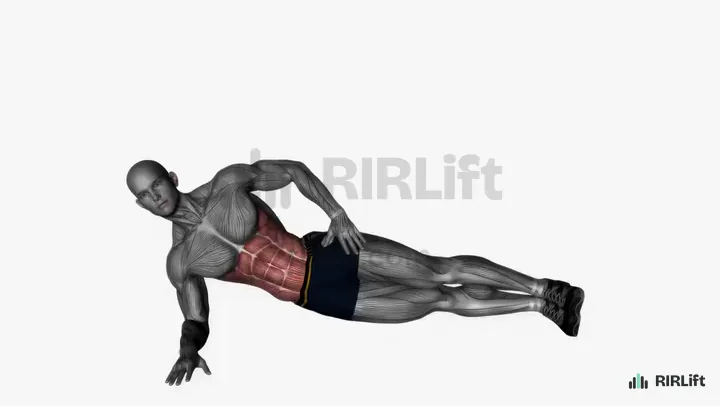
Side Plank

Abs

The side plank trains the obliques and the muscles alongside your spine together, without bending or twisting your back. It is one of the most useful core exercises you can do with no equipment and easy to scale from the knees up.

How to do it

  1. Lie on your side legs straight and stacked, and your forearm on the floor, elbow right below your shoulder.
  2. Lift your hips until your ankles, hips and shoulders line up.
  3. Hold with your top hip directly above the bottom one and your free hand on your hip.
  4. Lower before your hips start to drop, rest briefly, then switch sides.

Cues

  • Push the floor away with the forearm
  • Hips forward, not bent back
  • Neck long, gaze down

Common mistakes

  • Hips sinking toward the floor: stop the hold there.
  • Twisting the chest down: keep your shoulders stacked.

Swap for: Copenhagen Plank, Plank IYTW, Bear Crawl

Sides, top leg on a bench

Copenhagen Plank

Adductors, Abs

Resting your top leg on a bench or sofa and lifting your hips makes your obliques and your inner thighs hold you up together. It is a step up from the side plank and a good pick if you run or play sports with lots of side-to-side moves.

How to do it

  1. Lie on your side next to a bench, sofa or sturdy chair, with your forearm on the floor and your top leg resting on the seat.
  2. Start with the inside of your knee on the seat; put the inside of your ankle there once that gets easy.
  3. Press your top leg down into the seat and lift your hips until your body forms a line.
  4. Hold, lower, and switch sides.

Cues

  • Top leg presses down hard
  • Hips stacked and high
  • Knee support first, ankle later

Common mistakes

  • Starting from the ankle too soon: the knee version is still hard work.
  • Letting the hips drop back: keep them in line with your shoulders.

Swap for: Side Plank, Plank IYTW, Dead Bug

Sides, plank with one arm lifting

Plank IYTW

Abs, Upper Back

Lifting one arm in an I, Y, T and W shape from a plank makes your core resist twisting each time the support changes, and it trains your upper back while you are at it. It suits warm-ups before upper body days.

How to do it

  1. Start at the top of a push-up with your feet wider than your hips.
  2. Lift one arm straight forward in line with your ear for an I, then lower it.
  3. Lift it out at an angle for a Y, out to the side for a T, and with the elbow bent and pulled back for a W, lowering between each.
  4. Repeat the four shapes with the other arm.

Cues

  • Hips stay square to the floor
  • Thumb up as the arm lifts
  • Wider feet, steadier plank

Common mistakes

  • Rotating your torso to lift the arm higher: lift only as high as you can without turning.
  • Rushing the shapes: hold each for a second.

Swap for: Plank to Push-Up, Side Plank, Bear Crawl

Back of the core: lower back and spinal muscles

A core routine made only of planks and crunches skips the muscles along the back of your spine. The superman trains them with nothing but the floor; the back lever is its far harder version on a bar for people already strong at calisthenics.

Back, face-down lift

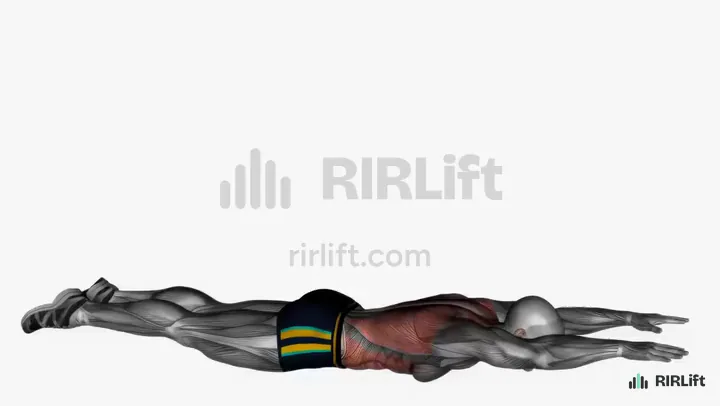
Superman

Lower Back

Lifting your arms and legs while face down trains the muscles along your spine, which most planks and crunches miss. It takes no equipment and balances out the front-of-core work in a session.

How to do it

  1. Lie face down with your arms reaching past your head and your legs long behind you.
  2. Squeeze your glutes and raise arms, chest and legs a few inches off the floor together.
  3. Hold for two seconds at the top with your neck long and your eyes on the floor.
  4. Lower with control and repeat.

Cues

  • Reach long, not high
  • Glutes first, then lift
  • Look down, not forward

Common mistakes

  • Craning your head up: keep your face toward the floor.
  • Yanking up as high as possible: a few inches with a pause is the exercise.

Swap for: Back Lever, Bear Crawl, Plank IYTW

Build a session with Superman

Back, advanced bar hold

Back Lever

Lats, Lower Back

Holding your body horizontal and face down while hanging from a bar is an advanced calisthenics skill that loads the lower back, lats and core together. It is only for people who can already do several strict pull-ups and hanging leg raises.

How to do it

  1. Hang from a bar, tuck your knees and roll backward until your hips pass between your arms and you hang upside down behind the bar.
  2. With your knees tucked, slowly lower your hips until your back is close to horizontal and face down.
  3. Hold with straight arms and a tight core, and keep your knees tucked until you can hold a straighter body.
  4. Roll back up the way you came and come down from the bar.

Cues

  • Arms straight the whole time
  • Tuck first, extend later
  • Short holds, full control

Common mistakes

  • Trying the straight-body version first: build up through the tucked hold.
  • Bending the elbows to make it easier: that shifts the strain to the shoulders.

Swap for: Superman, Front Lever Raise, Hanging Leg Raise

Leg raises and hanging work

Leg raises move your legs while your core holds your pelvis in place, so they train the lower abs and hip flexors together. Start with the alternating leg raise and lying knee raise on the floor, and move to the bar when those pass 20 reps. The front lever raise is the hardest exercise on the page and belongs only in advanced sessions.

Leg raise, one leg at a time

Alternating Leg Raise

Abs

Raising one straight leg while the other hovers trains the core to hold the pelvis still under a long lever without the jump in difficulty of raising both legs. It is the easiest of the leg raises here and a good partner for the dead bug.

How to do it

  1. Lie face up with your legs long and your hands flat beside your hips.
  2. Flatten your lower back and lift both heels just off the floor.
  3. Raise one straight leg until it points up while the other leg hovers.
  4. Swap legs in a slow scissor, never letting either heel rest.

Cues

  • Lower back stays down
  • Slow scissor
  • Hover leg higher if needed

Common mistakes

  • Arching when the low leg drops: raise the hover height.
  • Bending the knees a lot: keep them nearly straight.

Swap for: Dead Bug, Lying Knee Raise, Hanging Leg Raise

Leg raise, both knees in

Lying Knee Raise

Abs

Pulling both knees toward your chest from straight legs moves your pelvis through a full curl, which the planks never do. It is the floor exercise to master before hanging work.

How to do it

  1. Lie face up on the floor or a flat bench, legs long, and hold the floor beside your hips or the bench behind your head.
  2. Lift your heels a few inches and press your lower back down.
  3. Draw your knees toward your chest and let your hips curl up slightly at the end.
  4. Push your legs back out to a hover over two seconds and repeat.

Cues

  • Curl the hips at the top
  • Slow on the way out
  • Heels hover between reps

Common mistakes

  • Stopping when the thighs are vertical: finish with the small hip curl.
  • Letting the legs drop fast: the slow return is half the work.

Swap for: Alternating Leg Raise, Hanging Leg Raise, Dead Bug

Bar, legs raised from a hang

Hanging Leg Raise

Abs

Hanging from a bar and raising your legs gives your core the longest range and heaviest lever of any leg raise. Bending your knees makes it easier, so you can start it before you are strong enough for straight legs.

How to do it

  1. Take an overhand grip on the bar and hang with straight arms and your feet together.
  2. Pull your shoulders down slightly and stop any swing.
  3. Raise your legs with soft knees until they are at least level with your hips, letting your pelvis tilt up at the top.
  4. Lower them slowly to a still hang and repeat.

Cues

  • Still hang before every rep
  • Pelvis tilts up at the top
  • Bend the knees to scale

Common mistakes

  • Swinging the legs up with momentum: pause at the bottom of every rep.
  • Lifting only to hip height with an arched back: if the pelvis never tilts, bend the knees more.

Swap for: Lying Knee Raise, Front Lever Raise, Alternating Leg Raise

Bar, advanced body raise

Front Lever Raise

Lats, Abs

Raising your straight body from a hang up to horizontal, face up, is one of the hardest core and lat exercises in calisthenics. It belongs in the advanced plan only, for people who already do hanging leg raises with straight legs.

How to do it

  1. Hang from the bar with straight arms and your shoulders pulled down.
  2. Tuck your knees and press the bar down toward your hips so your body tips back.
  3. Raise your hips until your back is horizontal and face up, keeping your arms straight.
  4. Lower slowly to the hang. Straighten your legs over time as you get stronger.

Cues

  • Arms straight, press the bar down
  • Tuck first, open up later
  • Lower slower than you raise

Common mistakes

  • Bending the elbows to pull yourself up: keep them locked.
  • Trying straight legs too soon: build the tucked version first.

Swap for: Hanging Leg Raise, Back Lever, Lying Knee Raise

Put them together: example sessions

Each session below picks from the exercises above for one situation, with the sets, reps, rest and RIR filled in. Open one in the session builder to change a pick, price it from a recent set, and add it to RIRLift.

Session 1

Ten minutes a day, no equipment

Open in the session builder
  • Workouts5× a week
  • Working sets40 a week
  • Per workout~15 min
  • EquipmentBodyweight

You want a short core routine you can do most days, at home or before a workout, covering the front, sides and back with nothing but the floor.

One exercise for each side of the core, the dead bug for the front, the side plank for the sides and the superman for the back, gives you full coverage in 8 sets. Because you do it often, every set stops 2 to 3 reps or seconds short of failure so you recover by the next day, and the volume stays low.

Core Basics
ExerciseSets × repsRIRRest
Dead BugReps per side. 3 s per reach. 3 × 6–10 3 30 s
Side PlankSeconds per side. 3 × 15–30 2 30 s
SupermanHold 2 s at the top. 2 × 8–12 3 30 s
How to run it
Do it four to six days a week, on its own or as a warm-up. Side plank numbers are seconds.
How to progress
When every set reaches the top of its range at the target, make it harder rather than longer: straighten the dead bug's reaching leg lower, lift the top leg in the side plank, and hold the superman for three seconds.

Session 2

Hotel room or living room, 20 minutes, twice a week

Open in the session builder
  • Workouts2× a week
  • Working sets20 a week
  • Per workout~20 min
  • EquipmentBodyweight

You run, play a sport or are away from your gym, and want two harder core sessions a week with no equipment beyond a chair or bed for the Copenhagen plank.

These sessions trade the gentle daily moves for harder ones: the long-lever plank and plank to push-up for the front, the Copenhagen plank and plank IYTW for the sides, plus leg raises and the bear crawl. With only two sessions a week, sets end 1 to 2 reps or seconds short of failure, and each session is 10 working sets.

Core A
ExerciseSets × repsRIRRest
Long Lever PlankSeconds. Glutes squeezed. 3 × 15–30 2 1 min
Copenhagen PlankSeconds per side. Knee on the seat. 3 × 15–30 2 45 s
Lying Knee RaiseHips curl at the top. 2 × 12–20 1 1 min
SupermanHold 2 s. 2 × 10–15 2 45 s

Open Core A in the session builder

Core B
ExerciseSets × repsRIRRest
Plank to Push-UpSwitch the lead arm each rep. 3 × 6–12 2 1 min
Plank IYTWRounds of I, Y, T, W per arm. 2 × 3–6 2 1 min
Alternating Leg RaiseReps per leg. Heels hover. 3 × 10–20 1 45 s
Bear CrawlSteps forward, then back. 2 × 10–20 2 1 min

Open Core B in the session builder

How to run it
Do Core A and Core B once each per week, two or three days apart. Holds are counted in seconds. Use a sofa, bed or sturdy chair for the Copenhagen plank.
How to progress
Add reps or seconds until you reach the top of every range, then make the exercise harder: elbows farther forward on the long-lever plank, the ankle instead of the knee on the Copenhagen plank, and a slower crawl.

Session 3

Pull-up bar, advanced calisthenics

Open in the session builder
  • Workouts2× a week
  • Working sets18 a week
  • Per workout~25 min
  • EquipmentPull-Up Bar

You already do strict pull-ups and floor core work feels easy, and you want core training that builds toward the front and back lever.

This plan is built on bar exercises because they are the only way to keep bodyweight core work heavy once floor moves stop challenging you. The levers are trained first while fresh, with low reps or short holds, 2 to 3 minutes of rest, and 2 reps in reserve because form fails suddenly on them. The hanging leg raise and dead bug follow at 1 to 2 reps in reserve. Each session is 9 working sets.

Bar A
ExerciseSets × repsRIRRest
Front Lever RaiseTucked. Arms locked. 3 × 3–6 2 2:30 min
Hanging Leg RaisePelvis tilts up at the top. 3 × 6–12 1 90 s
Side PlankSeconds per side. Top leg raised. 3 × 30–45 1 45 s

Open Bar A in the session builder

Bar B
ExerciseSets × repsRIRRest
Back LeverSeconds. Tucked hold. 3 × 5–15 2 2:30 min
Long Lever PlankSeconds. Elbows far forward. 3 × 20–40 1 1 min
Dead BugReps per side. Arms and legs straight. 3 × 8–12 2 45 s

Open Bar B in the session builder

How to run it
Do Bar A and Bar B once each per week, two days or more apart, after your pull-up work or on their own. Back lever holds are counted in seconds.
How to progress
Hold the tucked lever positions until 15 seconds is easy, then open your hips a little, one leg out first. Add reps to the hanging leg raise until 12 clean reps, then straighten your knees fully.

Make it fit you

Questions

What are the big 3 exercises for the core?

The term usually refers to a modified curl-up, the side plank and the bird dog, a set chosen to train the front, sides and back of the core with little load on the spine. This page's daily plan uses the same idea with the dead bug, side plank and superman.

What are the best core exercises without equipment?

The dead bug, side plank, long-lever plank and superman. Together they train the front, sides and back of your core and need only floor space.

Is 20 minutes of core a day enough?

It is more than you need. Ten minutes most days or two 20-minute sessions a week, with every set close to failure, covers the core well. Spend the rest of your time on full-body strength training, which trains the core too.

Are bodyweight core exercises enough?

For most people, yes. The core holds your body still more than it moves weight, so harder versions like the long-lever plank, Copenhagen plank and hanging leg raise keep progressing without equipment.

What is the difference between core and abs exercises?

Ab exercises usually curl or twist the trunk to train the abs themselves. Core exercises also include the obliques, lower back and hips, and are mostly about holding the spine still against a load, like a plank or a side plank.