Bodyweight exercises for muscle gain: what to do and how to keep it hard

The best bodyweight exercises for muscle gain are pull-ups and chin-ups for your back and biceps, dips and push-ups for chest and triceps, pike push-ups for shoulders, Bulgarian split squats and pistol squats for your legs, and Nordic curls and single-leg glute bridges for the back of the thighs. Body weight builds muscle as long as each set ends 0 to 2 reps short of failure, so do 3 to 4 sets of 5 to 20 reps, and move to a harder version (archer push-ups, single-leg squats, a weighted backpack) once you pass about 20 reps.

  1. Pull-Up Lats
  2. Chest Dip Chest, Triceps
  3. Push-Up Chest
  4. Pike Push-Up Shoulders
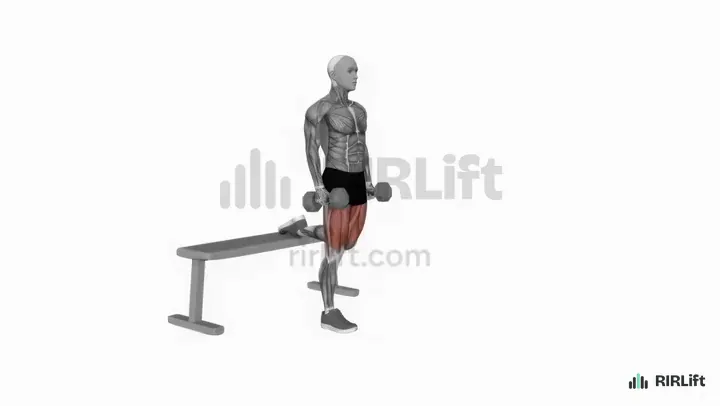
  5. Bulgarian Split Squat Quads, Glutes
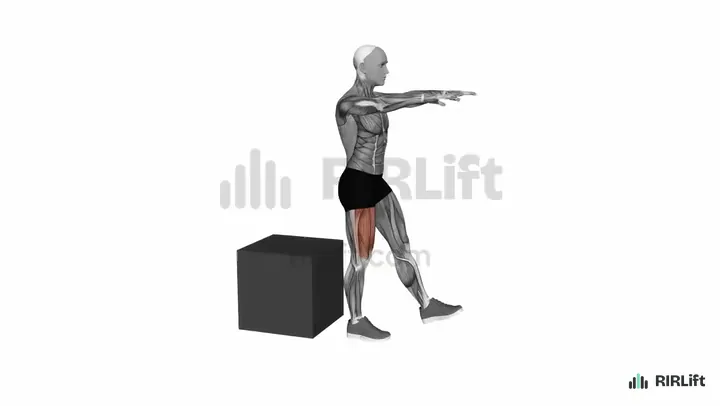
  6. Pistol Squat Quads, Glutes
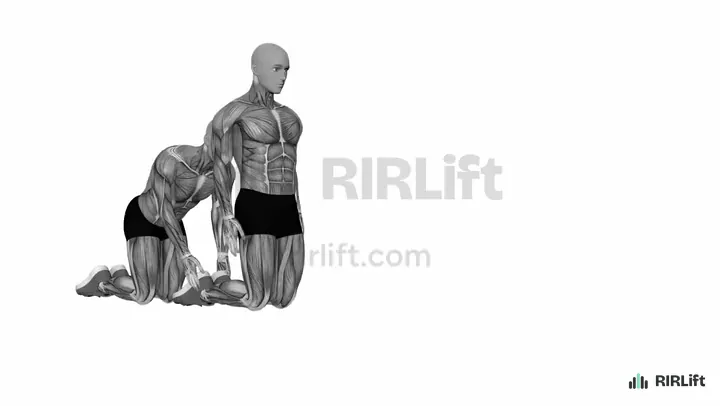
  7. Nordic Hamstring Curl Hamstrings
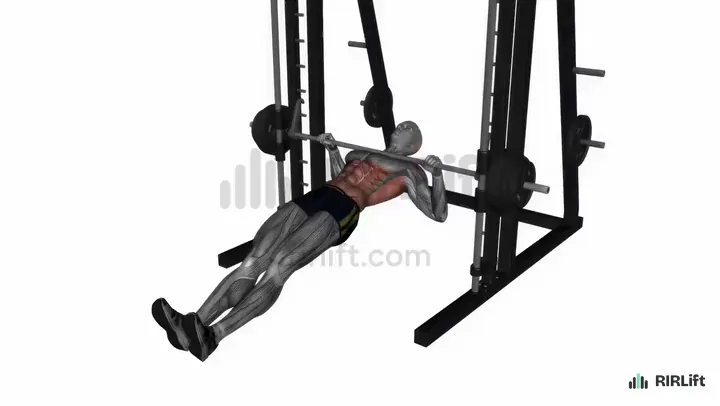
  8. Inverted Row Upper Back, Lats

Pulls for the back and biceps

Hanging from a bar is the one place bodyweight training is as heavy as a gym: a pull-up lifts nearly your whole body weight. Pick one bar exercise every session, and use the inverted row when you need lighter pulls or have no bar.

Lats and upper back, vertical pull

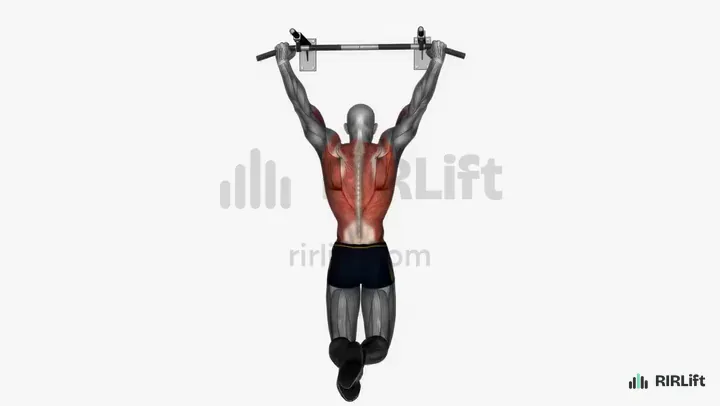
Pull-Up

Lats

It loads your back with almost your full body weight, so it builds muscle for years before it gets too easy. Past 12 reps, put a few books or a water jug in a backpack.

How to do it

  1. Grab the bar overhand, hands a little wider than your shoulders, and hang from fully straight arms.
  2. Pull your shoulders down away from your ears before your elbows start to bend.
  3. Drive the elbows toward your ribs until your chin passes over the bar.
  4. Lower slowly to a dead hang and pull again.

Cues

  • Shoulders down, then pull
  • Legs still and together
  • Two seconds on the way down

Common mistakes

  • Swinging the legs to cheat reps: cross your ankles and brace the abs.
  • Half reps from a bent-arm start: finish each rep at a full hang.

Swap for: Chin-Up, Inverted Row, Band-Assisted Pull-Up

Lats and biceps, underhand pull

Chin-Up

Lats

Turning your palms toward you puts the biceps to work lifting your body, which makes it the best bodyweight arm builder. Most people can do two or three more chin-ups than pull-ups.

How to do it

  1. Hang from the bar with your palms toward you and hands shoulder-width.
  2. Pull your elbows down and back until your chin is over the bar.
  3. Lower to a full hang with straight arms.
  4. Keep your legs quiet and your body still between reps.

Cues

  • Palms toward you
  • Chin over the bar
  • Dead hang at the bottom

Common mistakes

  • Kipping or kicking to finish: stop the set when you cannot pull cleanly.
  • Half reps at the top: straighten your arms fully every time.

Swap for: Close-Grip Chin-Up, Assisted Pull-Up

Upper back, horizontal pull

Inverted Row

Upper Back, Lats

Rowing your chest to a bar at hip height trains the middle back, which pull-ups miss. At home, a sturdy table edge or rings do the job, and putting your feet up makes it heavier.

How to do it

  1. Set a bar at about hip height, lie under it, and grip it with your hands a little wider than your shoulders.
  2. Straighten your body from heels to head, or bend your knees with feet flat for an easier version.
  3. Pull your chest up to the bar, leading with your elbows, and keep your hips in line.
  4. Lower until your arms are straight, then pull again.

Cues

  • Body stays a straight plank
  • Chest touches the bar
  • Bend your knees to make it easier

Common mistakes

  • Letting your hips sag so only your chest rises: squeeze your glutes and move as one piece.
  • Pulling the bar to your neck: aim for the bottom of your chest.

Swap for: TRX Row, Chin-Up

Push-ups and dips for chest, shoulders and triceps

A push-up moves about two thirds of your body weight, which gets light fast. The fix is leverage: shift the load onto one arm, onto your shoulders, or onto dip bars, where you press your whole body weight.

Chest and triceps, horizontal press

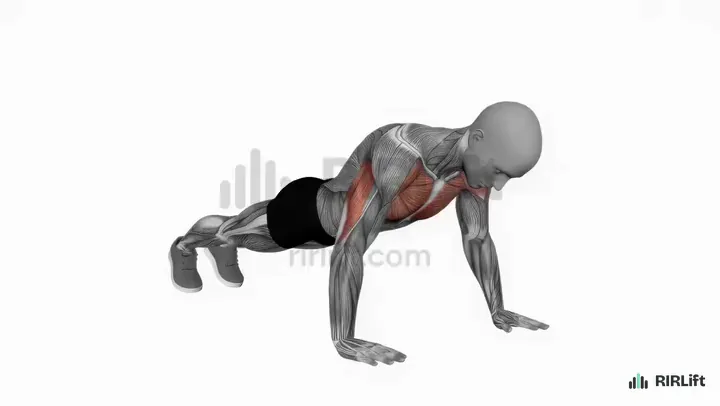
Push-Up

Chest

The base pushing exercise. For muscle, keep the body rigid and lower until your chest nearly touches the floor; once 20 reps is easy, it is time for a harder version.

How to do it

  1. Set your hands slightly wider than your shoulders with your body straight from head to heels.
  2. Lower until your chest nearly touches the floor, elbows at about 45 degrees.
  3. Press back up to straight arms.

Cues

  • One straight line
  • Elbows angled back

Common mistakes

  • Flaring the elbows straight out: tuck them toward your ribs.

Swap for: Kneeling Push-Up, Incline Push-Up, Push-Up Plus

Chest and triceps, one-arm bias

Archer Push-Up

Chest

Shifting your weight onto one arm while the other stays straight roughly doubles the load on the working side. It is the step between a regular push-up and a one-arm push-up.

How to do it

  1. Set your hands about twice shoulder width apart in a plank, fingers turned slightly out.
  2. Lower toward your right hand, bending the right elbow while the left arm stays straight.
  3. Bring your chest close to your right hand, then press back to the middle.
  4. Repeat to the left and keep alternating, or finish one side first.

Cues

  • Bent arm does the work
  • Straight arm only balances
  • Hips stay square

Common mistakes

  • Bending both arms equally, which makes it a wide push-up: keep the helping arm straight.
  • Twisting your hips toward the floor: hold the plank level as you shift.

Swap for: Push-Up, Deep Push-Up, One-Arm Push-Up

Triceps, narrow push-up

Close-Grip Push-Up

Triceps, Chest

Hands under your chest moves the work from the chest to the triceps, the biggest muscle in your upper arm. It is the triceps exercise when you have no dip bars.

How to do it

  1. Get into a high plank with your hands directly below your shoulders.
  2. Lower yourself with your elbows sliding back past your ribs.
  3. Stop just above the floor, then push up to locked elbows.
  4. Drop to your knees for the last reps if your hips start to sag.

Cues

  • Hands under shoulders
  • Elbows travel back
  • Full lockout

Common mistakes

  • Flaring the elbows into a T: that moves the work to your chest.
  • Half reps near the top: lower until your chest is close to the floor.

Swap for: Kneeling Push-Up, Incline Push-Up

Chest and triceps, full body-weight press

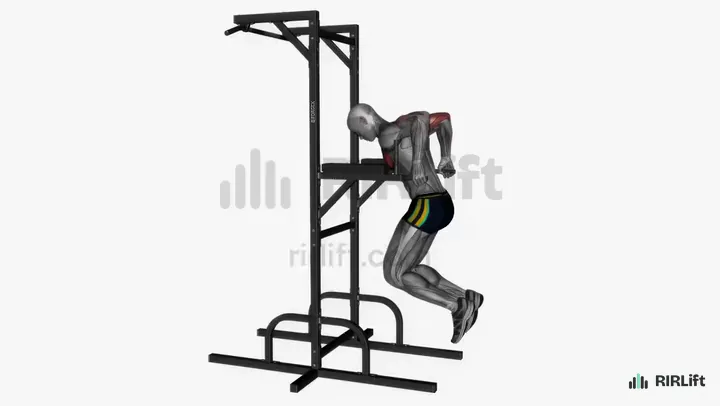
Chest Dip

Chest, Triceps

You press your entire body weight, more than any push-up, through a deep stretch for the lower chest and triceps. Two sturdy chairs or the corner of a kitchen counter can stand in for dip bars.

How to do it

  1. Grip parallel bars and step or jump up until your arms are straight and you are holding yourself above the bars.
  2. Lean your chest slightly forward with your legs under you or a little behind.
  3. Bend your elbows to sink down until your upper arms are about level with the bars.
  4. Press back up to straight arms and lock out.

Cues

  • Shoulders down, chest proud
  • Slight forward lean
  • Lock out every rep

Common mistakes

  • Sinking so deep your shoulders ache: stop when your upper arms reach the level of the bars.
  • Swinging your legs to get up: keep them still and end the set when you need momentum.

Swap for: Bench Dip, Deep Push-Up, Close-Grip Push-Up

Shoulders, bodyweight overhead press

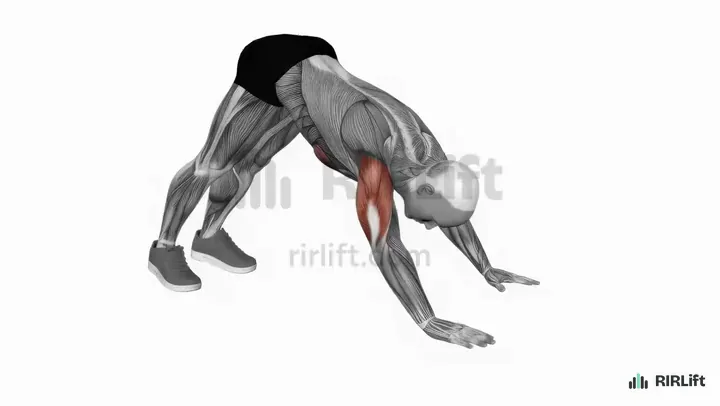
Pike Push-Up

Shoulders

Raising your hips turns the push-up into a press over your head and moves the load to your shoulders. Put your feet on a chair to make it heavier on the way to handstand push-ups.

How to do it

  1. Start in a push-up position with your hands a bit wider than your shoulders and fingers spread.
  2. Walk your feet toward your hands and raise your hips until your body forms an upside-down V, with your weight leaning over your hands.
  3. Bend your elbows and lower the top of your head toward a point a few inches in front of your hands, so your head and hands form a triangle.
  4. Bend your elbows out to the sides and stop when your head lightly touches the floor or just above it.
  5. Press the floor away and straighten your arms, pushing your hips back up to the V.

Cues

  • Hips stay high
  • Head forward of hands
  • Push the floor away

Common mistakes

  • Letting the hips drop as you lower: that turns it back into a regular push-up; keep the hips stacked over your shoulders as much as you can.
  • Lowering your head straight between your hands: aim slightly forward so your forearms stay close to vertical.
  • Cutting the range short: lower until your head is near the floor, using a yoga block or book as a target if you need one.

Swap for: Handstand Push-Up, Decline Push-Up

Single-leg work for the legs

Two-leg squats stop building muscle once you can do 30 of them. Putting your weight on one leg doubles the load without equipment, so every lower-body exercise here is single-leg or a Nordic curl.

Quads and glutes, single leg

Bulgarian Split Squat

Quads, Glutes

With your back foot on a chair, the front leg carries most of your body weight, which is heavy enough to build muscle for most people. When 20 reps is easy, hold a loaded backpack or dumbbells like in the demo.

How to do it

  1. Set the top of your back foot on a bench and place your front foot a long stride ahead.
  2. Hold a dumbbell in each hand at your sides, and keep your front foot flat.
  3. Drop your back knee straight toward the floor until the front thigh is close to level.
  4. Press through the front foot to rise, then finish all reps before switching legs.

Cues

  • Go deep for the inner thigh
  • Front foot flat
  • Rear foot is just a kickstand

Common mistakes

  • Pushing up with the back leg: let it relax and make the front leg do the work.
  • Front knee collapsing inward: keep it pointed the same way as your toes.

Swap for: Dumbbell Split Squat, Step-Up, Reverse Lunge

Quads and glutes, single-leg squat

Pistol Squat

Quads, Glutes

Squatting on one leg puts your whole body weight on it. Sitting back to a box or chair, as in the demo, makes it learnable; lower the box as you get stronger until you reach full depth.

How to do it

  1. Stand on one leg in front of a chair or box, the other leg straight out in front and arms reaching forward.
  2. Push your hips back and bend the standing knee, lowering slowly toward the seat.
  3. Touch the chair lightly, without sitting your weight down, and keep the front leg off the floor.
  4. Drive through the standing heel to stand all the way up; sets are per leg.

Cues

  • Touch the chair, don't sit
  • Reach forward to stay balanced
  • Lower the chair as you get stronger

Common mistakes

  • Dropping onto the seat and bouncing back up: control the lowering and barely touch, or raise the seat.
  • Heel popping up at the bottom: shift your weight to mid-foot and use a higher box until it stays down.

Swap for: Skater Squat, Reverse Lunge, Sissy Squat

Hamstrings, eccentric curl

Nordic Hamstring Curl

Hamstrings

Lowering your body forward from your knees with your heels anchored loads the hamstrings with most of your body weight on the way down, so 3 to 6 reps are enough. Anchor your heels under a couch or have a partner hold them, and catch yourself with your hands.

How to do it

  1. Kneel on a cushion with your ankles pinned under a couch, or held by a partner, and your body upright from knees to head.
  2. Squeeze your glutes and lower your torso forward as slowly as you can, bending only at the knees.
  3. When your hamstrings can't hold you, catch yourself with your hands on the floor.
  4. Push off the floor lightly and pull with your hamstrings to come back up to kneeling.

Cues

  • Hips stay open, no folding
  • Lower as slowly as possible
  • Hands catch, then help up

Common mistakes

  • Bending at the hips to make the lowering easier: keep a straight line from knees to shoulders.
  • Flopping to the floor after a few inches: fight it the whole way down; the slow lowering is the rep.

Swap for: Single-Leg RDL, Band Good Morning, Superman

Glutes, single-leg bridge

Single-Leg Glute Bridge

Glutes

Bridging off one leg doubles the load of a regular bridge and trains each glute alone. Add a weight on your hip, as in the demo, once body weight alone passes 20 reps.

How to do it

  1. On your back, plant one foot flat and the other leg lifted; rest a light kettlebell on the working hip if you have one.
  2. Press the planted heel down and raise your hips until your body is straight from knee to shoulder.
  3. Lower slowly and finish the set before switching.

Cues

  • Push through the heel
  • Hips level
  • Pause at the top

Common mistakes

  • Letting one hip drop: lower the height until both stay level.

Swap for: Donkey Kick, Dumbbell Glute Bridge, Clamshell

Abs from the bar

Hanging leg raises load the abs with your legs as the weight, which is heavy enough to build them, and they need only the pull-up bar you already have.

Abs, hanging raise

Hanging Leg Raise

Abs

Lifting straight legs from a hang makes your lower body the weight, which is far heavier than a crunch. Bend your knees to make it easier until you can lift straight legs for 8 reps.

How to do it

  1. Hang from the bar, legs long and pressed together.
  2. Lift your legs, keeping your knees straight, until your feet reach at least hip height.
  3. Tilt your pelvis up at the top, then lower under control.

Cues

  • Legs locked
  • Pelvis tilts
  • No kip

Common mistakes

  • Bending the knees as you tire: switch to knee raises for the rest of the set.
  • Using a swing to get the legs up.

Swap for: Hanging Knee Raise, Lying Knee Raise

Put them together: example sessions

Each session below picks from the exercises above for one situation, with the sets, reps, rest and RIR filled in.

Session 1

Pull-up bar, dip station and floor, three days a week

  • Workouts3× a week
  • Working sets40 a week
  • Per workout~35 min
  • EquipmentPull-Up Bar, Dumbbells, Dip Bar, Barbells

You train at home or in a park with a pull-up bar and somewhere to dip, and want to build muscle with no weights.

Each day has a pull, a push, a leg exercise and one more, so every muscle is trained three times a week, which suits bodyweight work where each session is lighter than a gym day. Day A has 16 sets, Day B 12 and Day C 12, about 10 sets a week each for back and chest and 15 for the legs.

Day A: Pull-ups and push-ups
ExerciseSets × repsRIRRest
Pull-Up 4 × 5–10 1 2:30 min
Push-Up 4 × 8–20 1 90 s
Bulgarian Split SquatPer leg. 3 × 8–15 1 90 s
Single-Leg Glute BridgePer leg. 3 × 10–15 1 1 min
Hanging Leg Raise 2 × 8–12 2 90 s
Day B: Chin-ups and dips
ExerciseSets × repsRIRRest
Chin-Up 3 × 5–10 1 2:30 min
Chest Dip 3 × 6–12 1 2 min
Pistol SquatPer leg. 3 × 5–8 2 90 s
Nordic Hamstring Curl 3 × 3–6 2 2 min
Day C: Rows and pike push-ups
ExerciseSets × repsRIRRest
Inverted Row 3 × 8–15 1 90 s
Pike Push-Up 3 × 6–12 2 2 min
Archer Push-UpPer side. 3 × 5–8 1 90 s
Bulgarian Split SquatPer leg. 3 × 12–20 1 90 s
How to run it
Train three non-consecutive days a week, rotating A, B and C. Each takes 40 to 50 minutes. Rest 2 minutes on the pulls and dips and less on the rest.
How to progress
Once you clear the top of the rep range on every set with the target reps in reserve, move to a harder version instead of adding endless reps: push-up to archer push-up, Bulgarian split squat to holding a backpack, pistol to box to a lower box. For pull-ups and dips, add weight in a backpack in 5 pound steps.

Session 2

Experienced, upper and lower four days a week

  • Workouts4× a week
  • Working sets54 a week
  • Per workout~40 min
  • EquipmentPull-Up Bar, Barbells, Dumbbells, Dip Bar

You can already do 10 pull-ups and 30 push-ups, and full-body sessions no longer leave you tired enough to grow.

Splitting upper and lower lets each session hold 13 or 14 hard sets for fewer muscles, about 14 weekly sets for the back, 11 for the chest and 11 for the quads. Harder variations do the job weights would: archer push-ups, dips, pistols and Nordic curls are all heavy enough to keep the reps in the 5 to 12 range where you can judge your reps in reserve.

Upper 1: Pull-ups and archer push-ups
ExerciseSets × repsRIRRest
Pull-Up 4 × 6–10 1 2:30 min
Archer Push-UpPer side. 4 × 6–10 1 2 min
Inverted Row 3 × 10–15 1 90 s
Close-Grip Push-Up 3 × 10–20 1 90 s
Lower 1: Pistols and Nordic curls
ExerciseSets × repsRIRRest
Pistol SquatPer leg. 4 × 5–10 1 2 min
Nordic Hamstring Curl 3 × 3–8 1 2:30 min
Single-Leg Glute BridgePer leg. 3 × 12–20 1 1 min
Hanging Leg Raise 3 × 8–15 1 90 s
Upper 2: Chin-ups and dips
ExerciseSets × repsRIRRest
Chin-Up 4 × 6–10 1 2:30 min
Chest Dip 4 × 6–12 1 2 min
Pike Push-Up 3 × 6–12 1 2 min
Inverted Row 3 × 10–15 1 90 s
Lower 2: Split squats and bridges
ExerciseSets × repsRIRRest
Bulgarian Split SquatPer leg. 4 × 10–20 1 90 s
Single-Leg Glute BridgePer leg. 3 × 12–20 0 1 min
Pistol SquatPer leg. 3 × 5–8 2 2 min
Hanging Leg Raise 3 × 8–15 1 90 s
How to run it
Run Upper 1, Lower 1, rest, Upper 2, Lower 2, and two rest days. If your legs are slow to recover from Nordic curls, move Lower 2 a day later.
How to progress
Add a rep where you can each week. When a variation reaches the top of its range on every set at the target reps in reserve, take the next step: weight in a backpack for pull-ups, chin-ups and dips, a lower box for pistols, a longer range for Nordic curls before you need your hands.

Session 3

No bar, only the floor, a chair and a table

  • Workouts3× a week
  • Working sets41 a week
  • Per workout~35 min
  • EquipmentBarbells, Dumbbells

You train at home or in a hotel room with no pull-up bar or dip station, just the floor, a sturdy chair and a solid table.

Without a bar, the inverted row under a table carries all the pulling, so it comes first both days. Push-ups, pike push-ups and archer push-ups split the pressing between chest and shoulders, and split squats and pistols to a chair cover the legs. Day 1 has 15 sets and Day 2 has 12.

Day 1: Table rows and push-ups
ExerciseSets × repsRIRRest
Inverted Row 4 × 6–15 1 2 min
Push-Up 4 × 10–25 1 90 s
Bulgarian Split SquatPer leg. 4 × 10–20 1 90 s
Single-Leg Glute BridgePer leg. 3 × 12–20 1 1 min
Day 2: Pike push-ups and pistols
ExerciseSets × repsRIRRest
Inverted Row 3 × 8–15 1 2 min
Pike Push-Up 3 × 6–12 2 2 min
Archer Push-UpPer side. 3 × 5–10 1 90 s
Pistol SquatPer leg. 3 × 5–10 2 90 s
How to run it
Train three days a week with a rest day between, alternating the days: 1, 2, 1 one week and 2, 1, 2 the next.
How to progress
On push-ups and split squats, once 20 reps is no longer close to failure, slow the lowering to three seconds and pause at the bottom, then move to the archer push-up or a lower chair for pistols. For inverted rows, walk your feet further under the table.

Make it fit you

Questions

Is it possible to build real muscle with only your body weight?

Yes. Muscle grows from sets taken close to failure, not from the source of the load. Bodyweight training works as long as you keep moving to harder variations so each set stays in about 5 to 20 reps.

What is the single best bodyweight exercise for muscle gain?

The pull-up, because it is heavy, trains a large amount of muscle, and is hard to outgrow. The dip is a close second for the chest and triceps.

How many days a week should I do bodyweight training to build muscle?

Three full-body days or four upper and lower days. Training each muscle two or three times a week makes up for each session being lighter than a gym session.

How do I lift my own body weight?

Build up to it with easier versions. For pull-ups, start with inverted rows and slow lowerings; for dips, start with bench dips; for pistols, squat to a box. Add a rep or lower the support each week.

How do I make bodyweight exercises harder?

Change the leverage before you add reps: put more weight on one limb (archer push-ups, pistols), raise your feet, slow the lowering to three seconds, or wear a loaded backpack.