Bodyweight exercises for women: legs, glutes, upper body and core

The best bodyweight exercises for women are the squat, skater squat and single-leg glute bridge for legs and glutes, donkey kicks for the glutes on their own, kneeling and full push-ups, pike push-ups and bench dips for the chest, shoulders and arms, the inverted row and superman for your back, and the plank, side plank and dead bug for your core. Do 5 or 6 of them per session, 3 days a week, for 2 to 4 sets, stopping 1 to 3 reps short of failure. When a move gets easy at 20 reps, switch to its harder version instead of doing more reps.

  1. Bodyweight Squat Quads
  2. Single-Leg Glute Bridge Glutes
  3. Skater Squat Quads, Glutes
  4. Kneeling Push-Up Chest
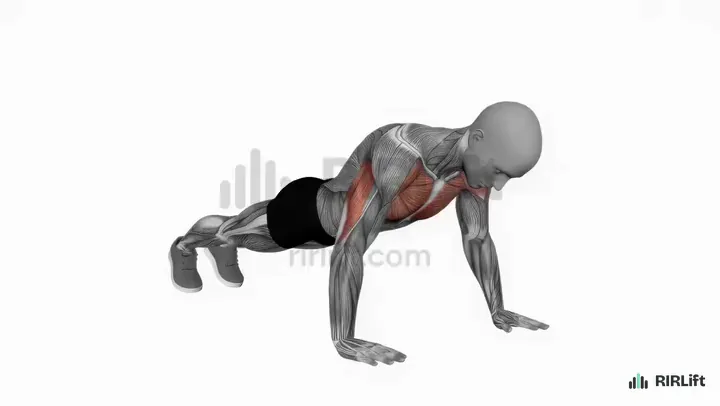
  5. Push-Up Chest
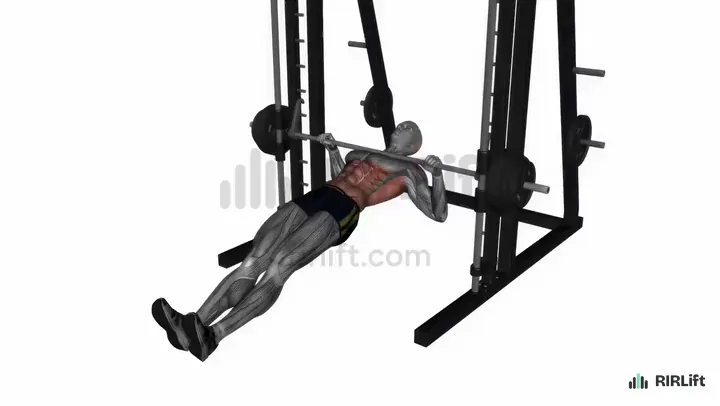
  6. Inverted Row Upper Back, Lats
  7. Plank Abs
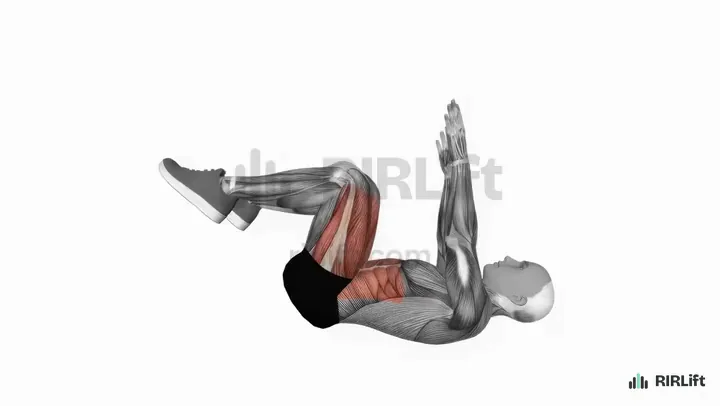
  8. Dead Bug Abs

Legs and glutes

Your legs are strong enough that two-leg squats stop challenging them quickly. Learn the squat, then move most of your leg work to one leg at a time, which puts far more load on each leg without any weights.

Quads and glutes, squat

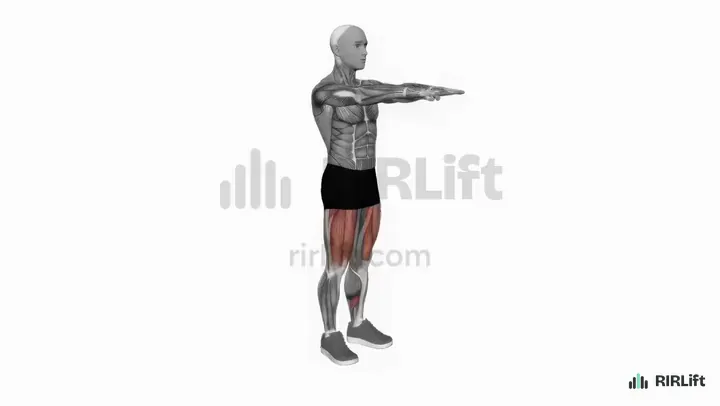
Bodyweight Squat

Quads

The squat is the movement every other leg exercise builds on, and getting your hips below knee height with heels down is the goal before adding anything harder. Beginners can use it as their main leg builder for the first few weeks.

How to do it

  1. Stand with your feet about shoulder-width apart, toes turned out slightly, arms out in front for balance.
  2. Push your hips back and bend your knees, keeping your heels flat and your chest up.
  3. Lower until your thighs are at least parallel to the floor, deeper if your heels stay down.
  4. Drive through your whole foot to stand tall, then go straight into the next rep.

Cues

  • Heels glued to the floor
  • Knees over toes
  • Thighs to parallel or lower

Common mistakes

  • Knees caving in on the way up: push them out over your little toes.
  • Quarter squats to hit a rep count: a full-depth set of 12 beats a shallow set of 30.

Swap for: Reverse Lunge, Wall Sit, Jump Squat

Quads and glutes, single leg

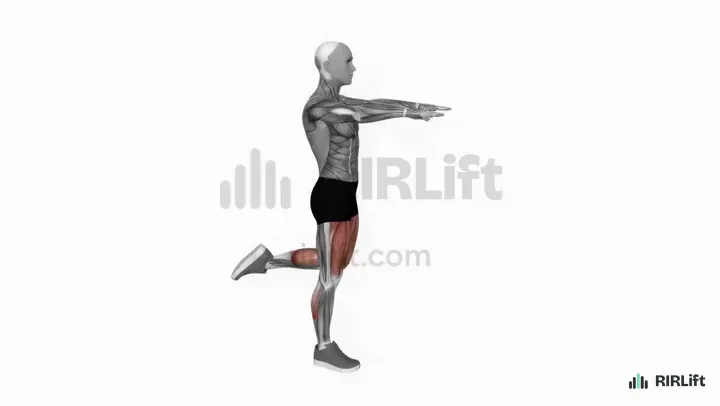
Skater Squat

Quads, Glutes

Lowering on one leg with the other knee behind you loads one thigh with your full body weight, the closest a no-equipment routine gets to a heavy squat. Hold a chair at first and let go as your balance improves.

How to do it

  1. Stand on one foot and bend the other knee so that foot is behind you, arms straight out in front as a counterweight.
  2. Push your hips back and lean your chest forward as you bend the standing knee.
  3. Lower until the back knee is just above the floor.
  4. Drive through your standing foot to stand tall; sets are per leg.

Cues

  • Arms forward as the counterweight
  • Chest leans, back stays flat
  • Back knee to a folded towel

Common mistakes

  • Only going down a few inches: put a folded towel or cushion where your knee should land and touch it every rep.
  • Letting the standing knee collapse inward: track it over your toes, and slow the lowering if it wobbles.

Swap for: Pistol Squat, Reverse Lunge, Cossack Squat

Glutes and hamstrings, bridge

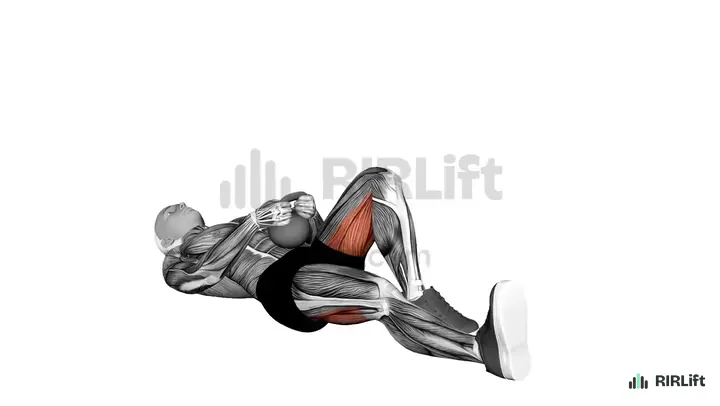
Single-Leg Glute Bridge

Glutes

Two-leg bridges become easy fast, but lifting your hips on one foot makes the glute of that leg do all the work. It is the main glute builder when you have no weights.

How to do it

  1. On your back, plant one foot flat and the other leg lifted; rest a light kettlebell on the working hip if you have one.
  2. Press the planted heel down and raise your hips until your body is straight from knee to shoulder.
  3. Lower slowly and finish the set before switching.

Cues

  • Push through the heel
  • Hips level
  • Pause at the top

Common mistakes

  • Letting one hip drop: lower the height until both stay level.

Swap for: Donkey Kick, Dumbbell Glute Bridge, Clamshell

Glutes, hip extension

Donkey Kick

Glutes

On hands and knees, pressing one heel toward the ceiling isolates the glute without your thighs helping. Use it after squats and bridges to finish the glutes off with high reps.

How to do it

  1. Get on hands and knees with your wrists under your shoulders and knees under your hips.
  2. Keep one knee bent at a right angle and lift that foot toward the ceiling.
  3. Stop when your thigh is level with your back and squeeze for a second.
  4. Lower the knee back under your hip without touching the floor, finish the set, then switch legs.

Cues

  • Foot to the ceiling
  • Flat back
  • Squeeze at the top

Common mistakes

  • Arching your lower back to kick higher: the lift should come from your hip.
  • Swinging the leg: if momentum is moving it, slow down and pause at the top.

Swap for: Fire Hydrant, Single-Leg Glute Bridge, Cable Glute Kickback

Push-ups, shoulders and arms

Push-ups have a version for every level, from hands on the kitchen counter to feet on a step. Start at the one where you can do 8 clean reps and work down toward the floor. Pike push-ups and dips add shoulders and the backs of the arms.

Chest, shoulders and triceps, press

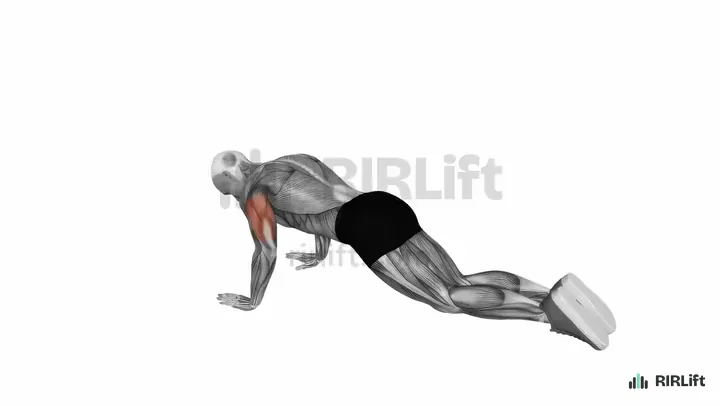
Kneeling Push-Up

Chest

Most women start here: the movement is a real push-up with less of your weight to lift. Once you can do 15 with a straight line from knees to head, start mixing in sets on your toes.

How to do it

  1. Kneel on a mat with your hands on the floor slightly wider than your shoulders and walk them forward until your body is a straight line from knees to head.
  2. Brace your abs and tuck your hips so your back stays flat.
  3. Lower your chest toward the floor between your hands, elbows angled back.
  4. Push back up to straight arms and repeat.

Cues

  • Straight line from knees to head
  • Chest leads, hips follow
  • Full lockout at the top

Common mistakes

  • Bending at the hips so your bottom sticks up: that shortens the range. Keep the line from knees to shoulders.
  • Dropping the head toward the floor before the chest: look slightly ahead of your hands.

Swap for: Incline Push-Up, Close-Grip Push-Up, Band-Assisted Push-Up

Chest, shoulders and triceps, press

Push-Up

Chest

The full push-up trains your chest, the fronts of your shoulders and the backs of your arms, and your trunk works as a plank the whole time. It is the upper-body lift you will progress for months.

How to do it

  1. Set your hands slightly wider than your shoulders with your body straight from head to heels.
  2. Lower until your chest nearly touches the floor, elbows at about 45 degrees.
  3. Press back up to straight arms.

Cues

  • One straight line
  • Elbows angled back

Common mistakes

  • Flaring the elbows straight out: tuck them toward your ribs.

Swap for: Kneeling Push-Up, Incline Push-Up, Push-Up Plus

Shoulders and triceps, overhead press

Pike Push-Up

Shoulders

With your hips high, the push-up becomes a press over your head that shifts the work to your shoulders. It fills the gap left by having no dumbbells to press.

How to do it

  1. Start in a push-up position with your hands a bit wider than your shoulders and fingers spread.
  2. Walk your feet toward your hands and raise your hips until your body forms an upside-down V, with your weight leaning over your hands.
  3. Bend your elbows and lower the top of your head toward a point a few inches in front of your hands, so your head and hands form a triangle.
  4. Bend your elbows out to the sides and stop when your head lightly touches the floor or just above it.
  5. Press the floor away and straighten your arms, pushing your hips back up to the V.

Cues

  • Hips stay high
  • Head forward of hands
  • Push the floor away

Common mistakes

  • Letting the hips drop as you lower: that turns it back into a regular push-up; keep the hips stacked over your shoulders as much as you can.
  • Lowering your head straight between your hands: aim slightly forward so your forearms stay close to vertical.
  • Cutting the range short: lower until your head is near the floor, using a yoga block or book as a target if you need one.

Swap for: Push-Up, Dumbbell Shoulder Press, Handstand Push-Up

Triceps, press

Bench Dip

Triceps

Dipping off the edge of a chair or bench trains the backs of your upper arms directly. Keep your knees bent to make it easier, straighten your legs to make it harder.

How to do it

  1. Sit on the front of a stable chair, hands gripping the edge next to your hips.
  2. Move your hips off the seat and set your heels out in front.
  3. Lower your body by bending your elbows until your upper arms are level with the floor.
  4. Straighten your arms to come back up.

Cues

  • Hips close to the chair
  • Elbows point back
  • Stop at level

Common mistakes

  • Going so deep that your shoulders pinch: shorten the range.
  • Pushing with your legs: keep them relaxed and let your arms lift you.

Swap for: Floor Triceps Dip, Close-Grip Push-Up

Back

Pulling is the gap in most no-equipment routines. A sturdy table edge, a low bar or a park rail is enough for inverted rows, and the superman trains the muscles along your spine with nothing at all.

Upper back and lats, pull

Inverted Row

Upper Back, Lats

Pulling your chest up to a bar while your heels stay on the floor is the only real rowing motion you can do without equipment. It balances all the pushing and trains the upper back that holds your posture.

How to do it

  1. Set a bar at about hip height, lie under it, and grip it with your hands a little wider than your shoulders.
  2. Straighten your body from heels to head, or bend your knees with feet flat for an easier version.
  3. Pull your chest up to the bar, leading with your elbows, and keep your hips in line.
  4. Lower until your arms are straight, then pull again.

Cues

  • Body stays a straight plank
  • Chest touches the bar
  • Bend your knees to make it easier

Common mistakes

  • Letting your hips sag so only your chest rises: squeeze your glutes and move as one piece.
  • Pulling the bar to your neck: aim for the bottom of your chest.

Swap for: TRX Row, Band Bent-Over Row, One-Arm Dumbbell Row

Lower back and glutes, extension

Superman

Lower Back

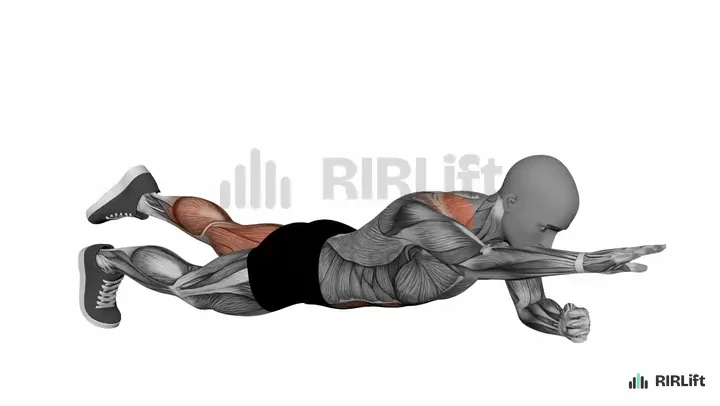
Lifting your arms, chest and legs off the floor at the same time trains the muscles along your spine and your glutes. It needs no space or gear, which makes it the back exercise for days you cannot get to a bar.

How to do it

  1. Lie face down with your arms stretched overhead and legs straight.
  2. Raise arms, chest and legs a few inches off the floor together.
  3. Hold for a second, then lower everything together.

Cues

  • Long, not high
  • Eyes on the floor

Common mistakes

  • Cranking the head back to lift higher: keep your neck in line with your spine.

Swap for: Back Extension, Exercise Ball Back Extension, Band Good Morning

Core

Three positions cover your trunk: the plank resists sagging, the side plank resists bending sideways, and the dead bug keeps your lower back down while your arms and legs move.

Abs, anti-extension hold

Plank

Abs

Holding a straight line from head to heels trains your abs to stop your lower back from sagging, the same job they do in every push-up. Build to 45 seconds with good form, then make it harder rather than longer.

How to do it

  1. Set your forearms under your shoulders and your feet behind you, body in a straight line.
  2. Squeeze your glutes and pull your ribs down toward your hips.
  3. Hold, breathing normally, without letting your hips sag or rise.
  4. For the harder version, reach one arm forward and lift the opposite foot, hold, then switch sides.

Cues

  • Ribs down
  • Glutes tight
  • Straight line

Common mistakes

  • Hips sagging toward the floor: that hangs on your lower back.
  • Holding for minutes at an easy level: make it harder instead.

Swap for: Long Lever Plank, Plank Shoulder Tap

Obliques, side hold

Side Plank

Abs

The side plank trains your obliques and the outside of your hips together. Start with your bottom knee down and straighten the leg as you get stronger.

How to do it

  1. Lie on one side with your elbow under your shoulder and your legs stacked.
  2. Lift your hips until your body is straight from head to feet.
  3. Hold, then switch sides.

Cues

  • Hips high
  • Stacked feet
  • Elbow under shoulder

Common mistakes

  • Letting the hips drop toward the floor as the hold goes on.
  • Rolling the chest forward or back.

Swap for: Dumbbell Side Plank, Copenhagen Plank

Abs, trunk control

Dead Bug

Abs

Lying on your back and slowly reaching opposite arm and leg away trains your abs to keep your lower back flat. It is gentle enough for beginners and stays hard if you move slowly.

How to do it

  1. Lie face up, arms pointing up and knees bent at right angles over your hips.
  2. Press your lower back into the floor.
  3. Reach one arm overhead and the opposite leg out long, both hovering above the floor.
  4. Bring them back and repeat with the other pair.

Cues

  • Back glued down
  • Breathe out as you reach
  • Opposite arm and leg

Common mistakes

  • Letting the back arch when the leg goes long: reach less far.
  • Going fast: each rep should take about three seconds.

Swap for: Plank, Alternating Leg Raise

Put them together: example sessions

Each session below picks from the exercises above for one situation, with the sets, reps, rest and RIR filled in.

Session 1

New to exercise, three days at home

  • Workouts3× a week
  • Working sets42 a week
  • Per workout~30 min
  • EquipmentDumbbells

You have not trained before, or not for a long time, and want a short routine you can do on a mat in your living room.

Three full-body sessions give your legs and glutes 15 sets a week and your chest and arms 9, all kept easy, which is plenty to get stronger while your joints and tendons catch up. Every set stops 2 to 3 reps short of failure so you are not sore for days. The session has 14 working sets and takes about 25 minutes.

Full body
ExerciseSets × repsRIRRest
Bodyweight Squat 3 × 10–15 3 1 min
Kneeling Push-Up 3 × 6–12 2 1 min
Single-Leg Glute BridgePer leg. 2 × 8–12 2 1 min
Superman 2 × 8–12 3 1 min
PlankSeconds per hold. 2 × 20–40 2 1 min
Dead BugPer side. 2 × 6–10 2 1 min
How to run it
Do the same session on three non-consecutive days, for example Monday, Wednesday and Friday. If the floor is hard on your knees, fold a towel under them for the push-ups.
How to progress
Aim for one more rep on each set than the week before. When you reach the top of the rep range on every set with 2 reps in reserve, add a set or switch to the harder version: full push-ups instead of kneeling, a longer plank.

Session 2

Building muscle with no equipment, four days

  • Workouts4× a week
  • Working sets48 a week
  • Per workout~30 min
  • EquipmentDumbbells, Barbells, Flat Bench

You can do 10 push-ups and squats are easy. You want visible muscle in your glutes, legs and arms without buying weights.

Bodyweight builds muscle when each set ends 1 to 2 reps from failure, so this plan uses the hardest version you can do for 6 to 15 reps. An upper and lower day, each done twice, gives legs and glutes 18 sets a week plus 4 of side planks, and the upper body 26. Lower days have 11 working sets and upper days have 13, about 40 minutes each.

Lower
ExerciseSets × repsRIRRest
Skater SquatPer leg. 4 × 6–12 2 90 s
Single-Leg Glute BridgePer leg. 3 × 10–15 1 1 min
Donkey KickPer leg. 2 × 15–25 1 1 min
Side PlankSeconds per side. 2 × 30–45 2 1 min
Upper
ExerciseSets × repsRIRRest
Push-Up 4 × 6–15 1 90 s
Inverted Row 4 × 6–12 1 90 s
Pike Push-Up 2 × 5–10 2 90 s
Bench Dip 3 × 8–15 1 1 min
How to run it
Train legs on Monday and Thursday and your upper body on Tuesday and Friday, so each half gets two days off before its next session. For inverted rows, use a sturdy table, a low bar at a park, or a smith machine if you have gym access.
How to progress
When a move reaches the top of its rep range at 1 rep in reserve, make it harder: slow the lowering to 3 seconds, pause at the bottom, or switch to the next variation. Logging reps in reserve shows you which exercises are ready.

Session 3

Busy weeks, 15 minutes four days a week

  • Workouts4× a week
  • Working sets40 a week
  • Per workout~15 min
  • EquipmentBodyweight

You have small windows of time, at home or in a hotel room, and would rather train briefly on most days than long on a few.

Short sessions work if the total adds up: four 15-minute circuits give your legs and glutes 20 sets a week, push-ups 12 and your back 8. Pairing a lower and an upper move keeps you moving while each side rests. Each session has 10 working sets.

Circuit
ExerciseSets × repsRIRRest
A1 Bodyweight Squat 3 × 15–20 2 1 min
A2 Push-Up 3 × 5–12 2 1 min
B1 Donkey KickPer leg. 2 × 15–20 2 1 min
B2 Superman 2 × 10–15 2 1 min
How to run it
Do it four days a week, any four. Go from the first exercise of a pair straight to the second, rest about a minute, and repeat.
How to progress
Keep the rest fixed and add reps until you hit the top of the range on every round at 2 reps in reserve, then move to the harder variation of that exercise.

Make it fit you

Questions

Is bodyweight exercise enough to build muscle?

Yes, as long as your sets end within a few reps of failure. That means moving to harder versions as you get stronger: skater squats instead of squats, full push-ups instead of kneeling. Doing 50 easy reps builds endurance more than muscle.

What is the 6-12-25 method for women?

It is three exercises for the same muscle done back to back: 6 hard reps, then 12, then 25, with almost no rest between. With no equipment, try pike push-ups, push-ups and kneeling push-ups, or skater squats, single-leg bridges and squats. Use it as a finisher, not a whole program.

What exercises can I do every day as a beginner?

Squats, glute bridges, kneeling push-ups, supermans, planks, side planks and dead bugs. Keep each set easy, 2 to 3 reps short of failure, if you train every day. Harder sessions need a day of rest between them.

How long should a bodyweight workout be?

20 to 40 minutes is enough. What matters is the number of hard sets per week, about 10 per muscle group, not the length of each session. Three 30-minute sessions or four 15-minute circuits both work.

Can I tone my body with only bodyweight exercises?

Toned means visible muscle with less fat over it. These exercises build the muscle; losing fat comes from eating a little less than you burn. Both together give the look most people mean by toned.