
Bodyweight shoulder exercises, from beginner to advanced
Published October 19, 2026
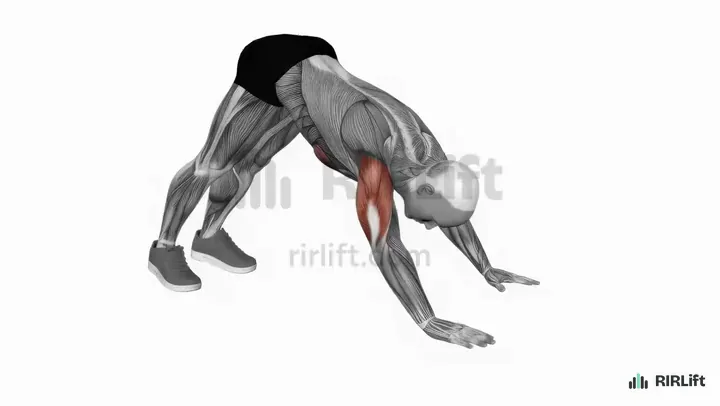
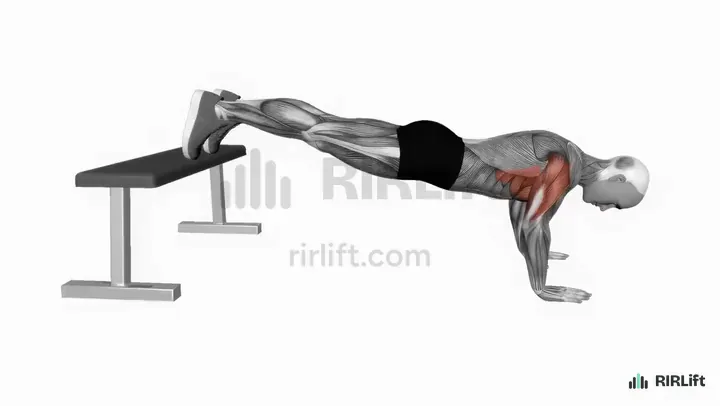
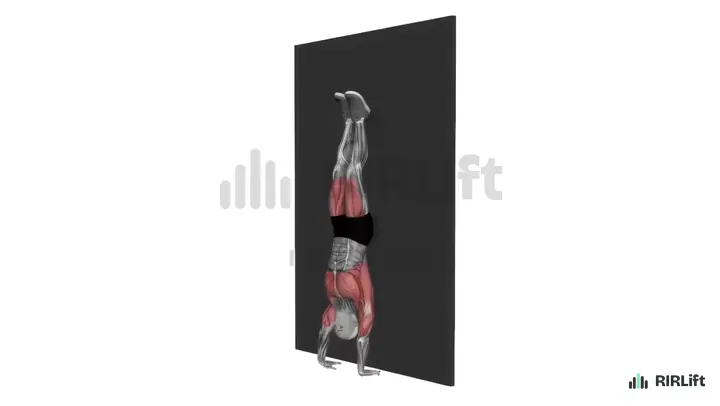
The best bodyweight shoulder exercises are the pike push-up, the decline push-up and the handstand push-up for pressing strength, the plank IYTW for the rear delts, and the plank shoulder tap and bear crawl for stability. A no-equipment shoulder workout pairs one overhead press variation with one push-up variation and one rear delt move, 3 or 4 sets each, finishing 0 to 2 reps short of failure. You progress by moving to a harder variation, not by adding weight.
- Pike Push-Up Shoulders
- Decline Push-Up Chest
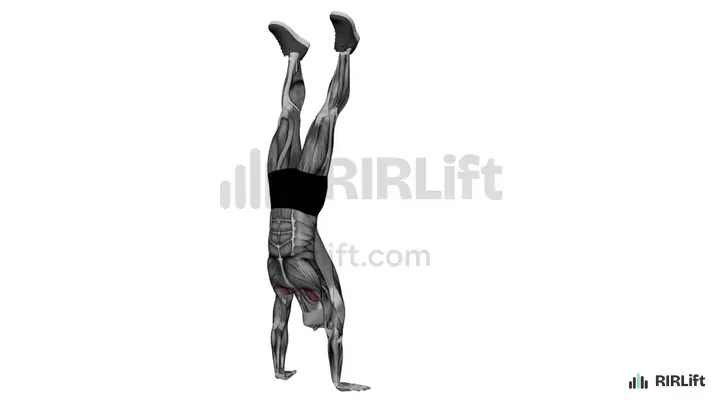
- Handstand Hold Shoulders
- Handstand Push-Up Shoulders, Triceps
- Push-Up Chest
- Plank IYTW Abs, Upper Back
- Plank Shoulder Tap Abs
- Bear Crawl Abs, Shoulders
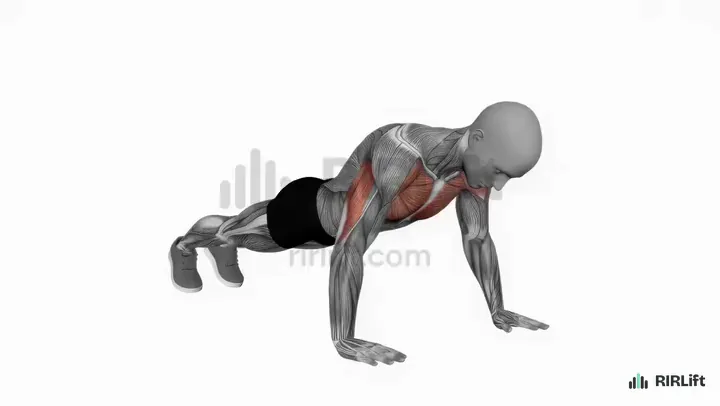
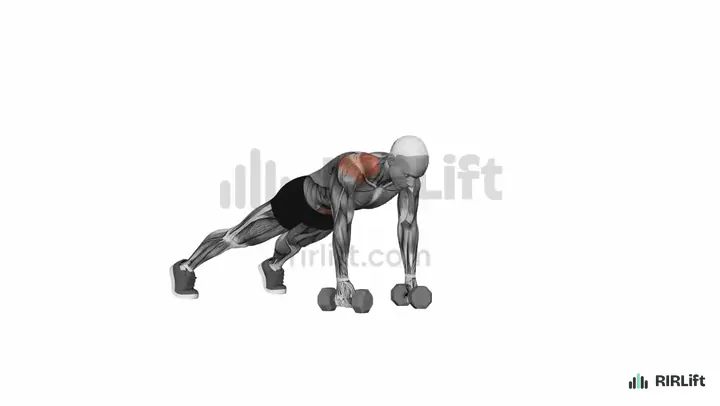
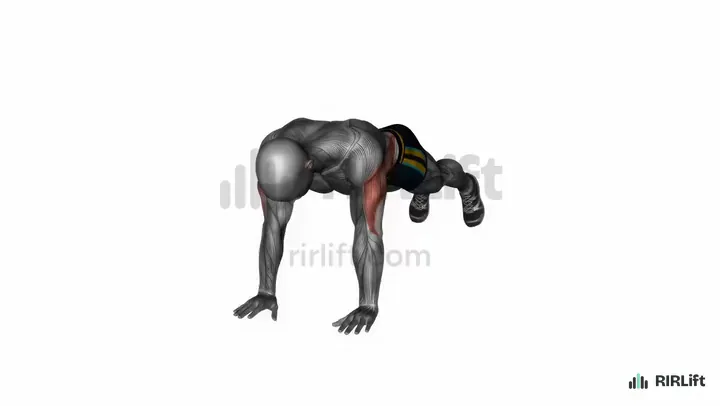
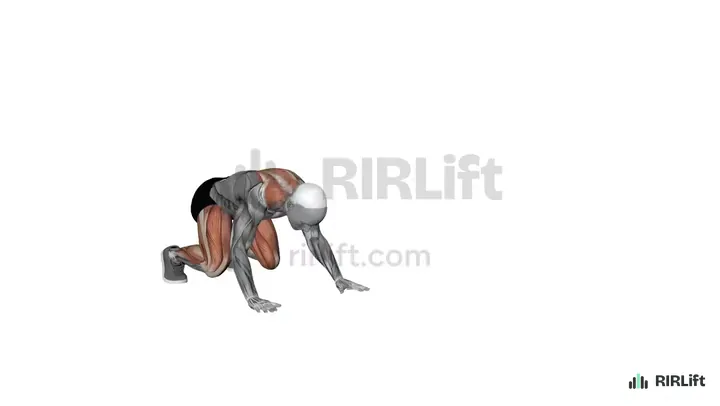
Put them together: example sessions
Each session below picks from the exercises above for one situation, with the sets, reps, rest and RIR filled in. Open one in the session builder to change a pick, price it from a recent set, and add it to RIRLift.
-
Session 1
Starting out, floor only
You have no equipment and can't yet do 10 clean push-ups.
3× a week · 30 sets a week · ~20 min
-
Session 2
A wall and a chair, building size
You can do 15 push-ups and want shoulders that grow, using only a wall and a chair at home.
3× a week · 32 sets a week · ~25 min
-
Session 3
Advanced, handstand push-ups in reach
You can do 10 or more elevated pike push-ups and have access to parallel bars at a park or two sturdy chairs.
2× a week · 24 sets a week · ~35 min
Session 1
Starting out, floor only
- Workouts3× a week
- Working sets30 a week
- Per workout~20 min
- EquipmentBodyweight
You have no equipment and can't yet do 10 clean push-ups.
This plan uses the four easiest exercises that each cover a different job: the push-up for the front delt, the pike push-up as your first overhead press, the plank IYTW for the rear delts, and shoulder taps for stability. RIR stays at 2 to 3 because early on, the quality of your reps is what makes you stronger. Do push-ups on your knees if you need to.
| Exercise | Sets × reps | RIR | Rest |
|---|---|---|---|
| Push-UpKnees down if needed. | 3 × 6–15 | 2 | 90 s |
| Pike Push-Up | 3 × 5–10 | 2 | 90 s |
| Plank IYTWPer side. | 2 × 4–6 | 2 | 1 min |
| Plank Shoulder TapTotal taps. | 2 × 10–20 | 2 | 1 min |
- How to run it
- Do this three times a week on non-consecutive days. One round of each exercise counts as one set.
- How to progress
- When you reach the high end of each rep range at 2 RIR, raise your feet on a step for the pike push-up and move to the intermediate plan once you can do 3 sets of 12 push-ups.
Session 2
A wall and a chair, building size
- Workouts3× a week
- Working sets32 a week
- Per workout~25 min
- EquipmentBodyweight
You can do 15 push-ups and want shoulders that grow, using only a wall and a chair at home.
The decline push-up and the elevated pike push-up are the two hardest loads you can create with a chair, so they get 4 sets each. Wall handstand holds build the position for future handstand push-ups. The plank IYTW handles the rear delts and the push-up plus trains shoulder blade control. Sets are taken to 0 to 1 RIR, because without added weight, effort is what drives growth.
| Exercise | Sets × reps | RIR | Rest |
|---|---|---|---|
| Pike Push-UpFeet on a chair. | 4 × 6–12 | 1 | 2 min |
| Decline Push-Up | 3 × 8–15 | 1 | 90 s |
| Plank IYTWPer side. | 3 × 5–8 | 1 | 1 min |
Open Session A in the session builder
| Exercise | Sets × reps | RIR | Rest |
|---|---|---|---|
| Handstand HoldSeconds. Chest to the wall or back to it. | 4 × 20–40 | 1 | 90 s |
| Decline Push-Up3 s lowering. | 4 × 8–15 | 0 | 90 s |
| Push-Up Plus | 3 × 10–15 | 1 | 1 min |
Open Session B in the session builder
- How to run it
- Alternate Session A and Session B, two or three times a week in total.
- How to progress
- Add reps to each set until it hits the top of its range. Then make the movement harder: raise the chair higher, slow the lowering to four seconds or add a pause at the bottom.
Session 3
Advanced, handstand push-ups in reach
- Workouts2× a week
- Working sets24 a week
- Per workout~35 min
- EquipmentDip Bar
You can do 10 or more elevated pike push-ups and have access to parallel bars at a park or two sturdy chairs.
The handstand push-up and planche push-up are the heaviest shoulder loads possible without weight, so they come first, fresh, for low reps at 1 to 2 RIR to keep each rep controlled. Dips add front delt and chest work, and the bear crawl finishes with shoulder endurance. Each session gives the front delts 9 to 10 hard sets.
| Exercise | Sets × reps | RIR | Rest |
|---|---|---|---|
| Handstand Push-Up1 warm-up set firstAgainst a wall. | 4 × 3–6 | 1 | 3 min |
| Planche Push-UpLean only as far as you control. | 3 × 4–8 | 1 | 2 min |
| Chest DipLean forward. | 3 × 6–12 | 1 | 2 min |
| Bear CrawlSeconds. | 2 × 20–30 | 2 | 1 min |
- How to run it
- Do this twice a week. Use a partial range on handstand push-ups at first, with a cushion under your head, and lower the cushion over time.
- How to progress
- Lower the cushion a little every week. Once you can do full-range handstand push-ups for 3 sets of 5, add a deficit with your hands on books or parallettes.
Make it fit you
-
Can't do a pike push-up yet
Do it with your hands on a sturdy chair or bench, so less of your weight is over them. Lower the hands a step at a time until you're on the floor.
-
Wrists hurt on the floor
Do push-ups on your knuckles, on push-up handles, or on two hexagonal dumbbells. Spread your fingers wide and press through the base of the fingers rather than the heel of the hand.
-
Only 15 minutes
Do a superset of pike push-ups and the plank IYTW, 4 rounds, and finish with one minute of bear crawl. That covers the front, side and rear of the shoulder.
-
Want to add a band
A single light band adds the pulling you can't do with body weight alone: face pulls and pull-aparts for the rear delts and lateral raises for the sides.
-
Log RIR on every set
Log each set's reps and RIR in RIRLift. Without weight to add, the sign it's time for a harder variation is your RIR staying at 2 or more at the high end of the rep range for two sessions in a row.
Questions
Can you build shoulders without weights?
Yes, up to a good level. Pike push-ups, decline push-ups and eventually handstand push-ups load the delts heavily, and sets taken close to failure build muscle across a wide range of reps. The side and rear delts are harder to reach without equipment, so a band helps a lot later on.
What is the best shoulder exercise without equipment?
The pike push-up. It is an overhead press using your body weight, it can be made easier or harder by changing your hand and foot height, and it leads directly to the handstand push-up.
How do I build my shoulder muscles at home?
Do a pike push-up variation, a push-up variation and a rear delt move two or three times a week, taking each set within 0 to 2 reps of failure. Move to a harder variation once you can do 15 good reps.
What are the top 3 shoulder exercises without equipment?
The pike push-up for overhead pressing, the decline push-up for the front delts, and the plank IYTW for the rear delts. Together they cover the main jobs of the shoulder.
Are 5 exercises enough for shoulders?
Usually more than enough. Three to four well-chosen exercises taken close to failure are plenty for a session. Adding more often just means you do the last ones half-heartedly.
How do I get better at handstand push-ups?
Build up the pike push-up with your feet raised on a chair until you can do 10 or more, practice wall handstand holds for 30 seconds or longer, then do partial handstand push-ups onto a cushion and lower it over time.
Related templates
-
Bodyweight exercises: the 18 that build muscle, by muscle group
The full list of no-equipment exercises for every muscle.
-
Shoulder exercises at home, with or without weights
Adds dumbbells, kettlebells and bands to these moves.
-
Shoulder exercises with resistance bands
The cheapest way to add rear and side delt work.
-
Decline push-up: how to do it, what it works, and how to scale it
Technique and progressions for the front delt push-up.
-
The best workout for shoulders, for your situation
Programs using weights and machines when you have them.