Bodyweight upper body exercises: push, press overhead and pull, with or without a bar

The best bodyweight upper body exercises are the push-up and its harder versions for your chest and triceps, the pike push-up for your shoulders, and the pull-up and chin-up for your back and biceps. If you have dip bars, add the chest dip. Without a pull-up bar, pulling is the hard part: a doorway curl and the plank IYTW are the floor-only options, and a doorway pull-up bar is the single best purchase for bodyweight upper body training. Balance every session with one push and one pull, and take each set to within 1 to 3 reps of failure.

  1. Push-Up Chest
  2. Pull-Up Lats
  3. Pike Push-Up Shoulders
  4. Chin-Up Lats
  5. Chest Dip Chest, Triceps
  6. Decline Push-Up Chest
  7. Bodyweight Bicep Curl Biceps
  8. Plank IYTW Abs, Upper Back

Pushing exercises for chest and triceps

Every push-up trains your chest, the front of your shoulders and your triceps; changing the angle or the hand position shifts which one works hardest. The incline push-up is the easiest, the decline and archer push-ups are the hardest, and the chest dip loads you heavier than any of them if you have bars.

Chest, shoulders and triceps, horizontal push

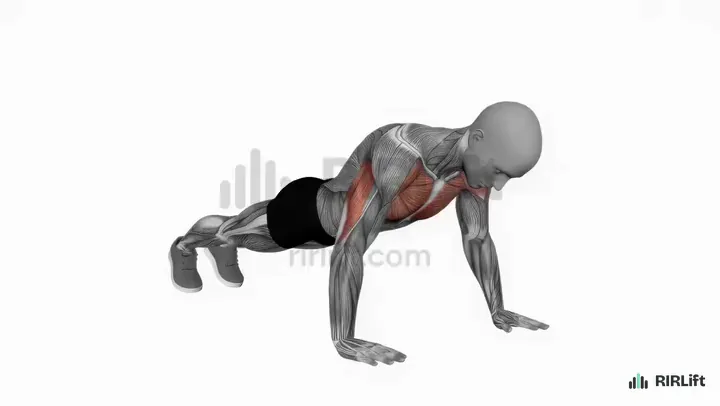
Push-Up

Chest

The push-up is the base of bodyweight upper body training: it loads your chest, front shoulders and triceps together and needs only floor space. Once you can do 20 or more good reps, move to the harder versions below rather than chasing higher numbers.

How to do it

  1. Plant both palms slightly wider than your shoulders, fingers forward, and walk your feet back until your body is one straight line.
  2. Squeeze your glutes and brace your abs so your hips stay in line with your shoulders.
  3. Bend your elbows to lower your chest to an inch from the floor, elbows angled about 45 degrees from your sides.
  4. Press the floor away until your arms are straight, and repeat.

Cues

  • Body moves as one piece
  • Chest to an inch off the floor
  • Elbows at 45 degrees, not flared

Common mistakes

  • Hips sagging toward the floor or piking up: brace like a plank, and switch to an incline push-up if you cannot hold it.
  • Short reps that stop halfway down: every rep goes until your chest nearly touches.

Swap for: Incline Push-Up, Decline Push-Up, Close-Grip Push-Up

Build a session with Push-Up

Chest and triceps, easier push

Incline Push-Up

Chest

With your hands on a box, bench or counter, you push less of your bodyweight, so you can do full-range reps while you build up to the floor. The higher the surface, the easier it is, which gives you a built-in progression.

How to do it

  1. Put your hands on a sturdy box, bench or kitchen counter a little wider than your shoulders.
  2. Walk your feet back until your body is straight and leaning toward the surface.
  3. Lower your chest to the edge with your elbows angled back.
  4. Push back up to straight arms and repeat.

Cues

  • Chest touches the edge
  • Body stays straight
  • Lower the surface as you get stronger

Common mistakes

  • Leading with your head toward the surface: your chest touches first.
  • Staying on the same height for months: when 20 reps feel easy, use a lower surface.

Swap for: Push-Up, Close-Grip Push-Up, Decline Push-Up

Upper chest and shoulders, feet-raised push

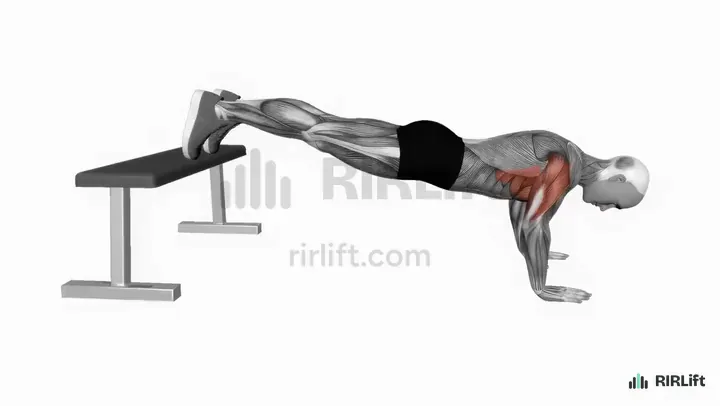
Decline Push-Up

Chest

Putting your feet on a chair shifts more of your weight onto your hands and tilts the press toward the upper chest and front shoulders. It is the simplest way to make push-ups harder without changing your hand position.

How to do it

  1. Place your feet on a chair or bench behind you and plant your palms a little wider than your shoulders.
  2. Brace so your body is straight from your feet to your head.
  3. Lower your chest toward the floor, keeping your elbows angled back.
  4. Push up to straight arms and repeat.

Cues

  • Hips level with your shoulders
  • Head neutral, eyes on the floor
  • Full lockout at the top

Common mistakes

  • Letting your hips drop so the body bends: a lower box is better than a broken line.
  • Reaching your face toward the floor to fake depth: the chest goes down, the neck stays still.

Swap for: Push-Up, Pike Push-Up, Archer Push-Up

Triceps and inner chest, narrow push

Close-Grip Push-Up

Triceps, Chest

Moving your hands under your shoulders and keeping your elbows tight to your ribs shifts the work onto your triceps. It is the main triceps exercise for bodyweight training, and it pairs well with a regular push-up in the same session.

How to do it

  1. Set your hands directly under your shoulders and step back into a straight-arm plank.
  2. Lower your body with your elbows brushing your sides as they bend.
  3. Stop when your chest is just above your hands.
  4. Press back up by straightening your elbows fully, and repeat.

Cues

  • Elbows brush your ribs
  • Hands under shoulders
  • Lock out every rep

Common mistakes

  • Placing the hands so close they touch, which strains the wrists: keep them about shoulder-width.
  • Letting the elbows flare out as you tire: if they drift, the set is over.

Swap for: Push-Up, Incline Push-Up, Chest Dip

Chest and triceps, one-side-biased push

Archer Push-Up

Chest

Shifting your body toward one hand while the other arm stays straight to the side puts most of your weight on one arm. It is the step between a regular push-up and a one-arm push-up, and it keeps the chest growing once 20 regular reps are easy.

How to do it

  1. Get into a plank with your palms set much wider than your shoulders.
  2. Lower your chest toward your right hand by bending the right elbow, letting the left arm straighten out sideways.
  3. Push back up through the right hand to the middle.
  4. Repeat toward the left. Count each side as one rep.

Cues

  • Straight arm only assists
  • Chest goes to the bending hand
  • Hips stay square to the floor

Common mistakes

  • Bending both elbows equally, which turns it into a wide push-up: keep the assisting arm straight.
  • Rotating your hips to reach the bottom: shorten the range until you can stay square.

Swap for: Decline Push-Up, Push-Up, Chest Dip

Lower chest and triceps, dip

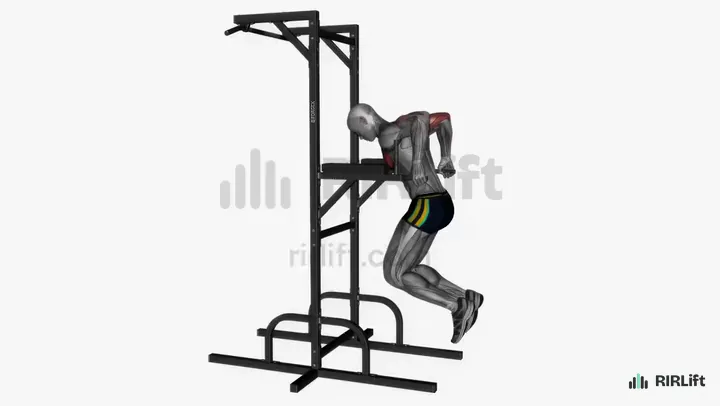
Chest Dip

Chest, Triceps

Dips press your entire bodyweight, more than any push-up, so they build the chest and triceps fastest once you have parallel bars at a park or a dip station. Leaning forward puts more of it on the chest.

How to do it

  1. Grip the parallel bars and press up so your arms are straight and your feet are off the ground.
  2. Lean your torso forward a little and bend your knees so your feet are behind you.
  3. Bend your elbows to lower until your shoulders are just below your elbows, or until you feel a deep stretch across your chest.
  4. Press back up to straight arms and repeat.

Cues

  • Lean forward for chest
  • Shoulders down, away from ears
  • Control the bottom

Common mistakes

  • Dropping fast into the bottom: take two seconds down and stop where your shoulders still feel solid.
  • Shrugging up as you press: push the bars down and keep your neck long.

Swap for: Decline Push-Up, Close-Grip Push-Up, Archer Push-Up

Build a session with Chest Dip

Overhead pressing for shoulders

Push-ups press forward, so your shoulders also need a move that presses overhead. Raising your hips into a pike turns the push-up into a vertical press, and putting your feet on a chair makes it harder until you are ready for handstand work.

Shoulders and triceps, overhead press

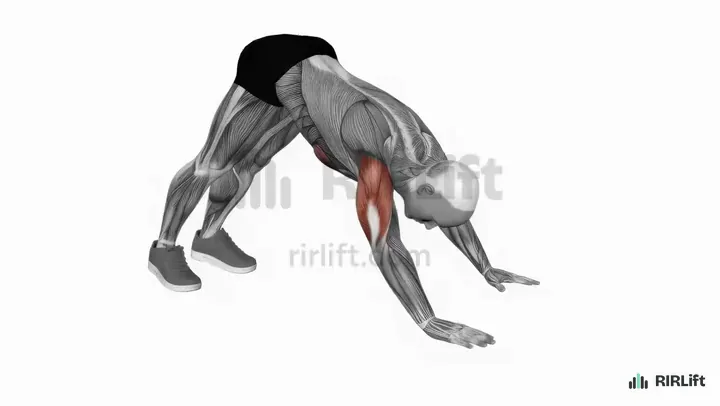
Pike Push-Up

Shoulders

With your hips high in an upside-down V, a push-up becomes a press over your head, loading the front delts and triceps the way a shoulder press does. Putting your feet on a chair later makes it harder and moves you toward a handstand push-up.

How to do it

  1. Start on your hands and feet with your hips raised high, so your body forms an upside-down V and your head points at the floor.
  2. Set your hands a little wider than your shoulders and walk your feet in until your torso is as vertical as you can manage.
  3. Bend your elbows to lower the top of your head toward a spot just in front of your hands.
  4. Press back up until your arms are straight and repeat.

Cues

  • Hips high
  • Head goes forward of your hands
  • Elbows track back, not out

Common mistakes

  • Letting your hips drop so it becomes a regular push-up: keep the V shape throughout.
  • Lowering only partway: touch your head lightly or come within an inch of the floor.

Swap for: Decline Push-Up, Push-Up, Plank IYTW

Pulling with a bar for back and biceps

Your back is the biggest muscle group in the upper body, and with only bodyweight, a bar is the way to load it. The pull-up trains the lats most, the chin-up adds more biceps, and the dead hang builds the grip and shoulder strength you need for both.

Lats and upper back, vertical pull

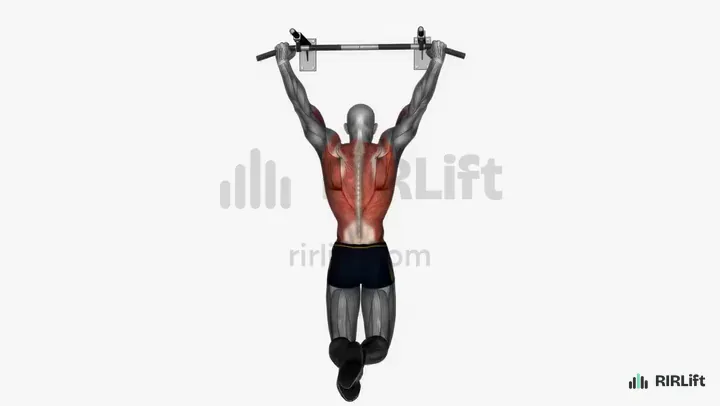
Pull-Up

Lats

The pull-up is the main back builder in bodyweight training, loading the lats with your whole body. A doorway bar at home or a park bar is enough, and if you cannot do one yet, slow lowering reps from the top build the strength.

How to do it

  1. Hang from the bar with your palms facing away and your hands a little wider than your shoulders.
  2. Draw your shoulder blades down to start, then drive your elbows toward your ribs to raise your body.
  3. Keep pulling until your chin passes the bar.
  4. Lower under control until your arms are fully straight, and repeat.

Cues

  • Shoulders down first
  • Elbows to your back pockets
  • Full hang between reps

Common mistakes

  • Kicking your legs to get over the bar: keep your legs still and stop when the pull stops.
  • Stopping short of a full hang at the bottom: straighten the arms every rep.

Swap for: Chin-Up, Dead Hang, Plank IYTW

Build a session with Pull-Up

Lats and biceps, underhand pull

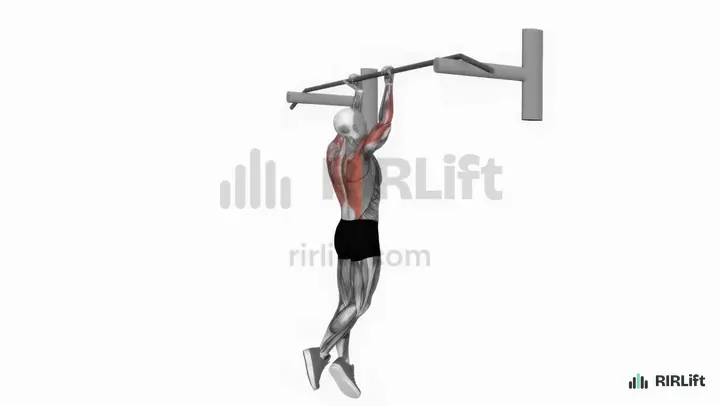
Chin-Up

Lats

Turning your palms toward you brings the biceps into the pull, so most people can do a few more chin-ups than pull-ups. That makes it the first bar exercise to learn and a double-duty move for your back and arms.

How to do it

  1. Grip the bar with your palms facing you, hands about shoulder-width, and hang with straight arms.
  2. Draw your shoulders down, then pull your chest up toward the bar.
  3. Go until your chin clears the bar and your elbows are by your sides.
  4. Lower slowly to a full hang, and repeat.

Cues

  • Chest to the bar
  • Elbows close to your body
  • Slow on the way down

Common mistakes

  • Craning your neck to get the chin over: pull higher, or count the rep as missed.
  • Dropping from the top: three seconds down builds as much as the pull up.

Swap for: Pull-Up, Bodyweight Bicep Curl, Dead Hang

Build a session with Chin-Up

Grip and shoulders, hang

Dead Hang

Forearms

Hanging from a bar with straight arms builds the grip and the shoulder strength to hold your bodyweight, which is what most beginners lack before their first pull-up. It also counts as a rest-friendly finisher after a pulling session.

How to do it

  1. Stand under a bar and grip it overhand with your hands a little wider than your shoulders.
  2. Lift your feet so you hang with straight arms.
  3. Keep your ribs down and your legs still, letting your shoulders rise toward your ears.
  4. Hold for the target time, then step down.

Cues

  • Full grip around the bar
  • Legs still
  • Breathe slowly

Common mistakes

  • Swinging to stay up longer: if you start swinging, the hold is over.
  • Hanging only from the fingertips: wrap your thumbs around the bar.

Swap for: Chin-Up, Pull-Up, Plank IYTW

Build a session with Dead Hang

Pulling without a bar

With no bar, your options are limited, and these two are the best of them. The doorway curl uses a door frame to load your biceps and the plank IYTW trains the upper back and rear delts from the floor. They keep your training balanced until you add a bar, but they do not replace a pull-up for building a wide back.

Biceps, doorway curl

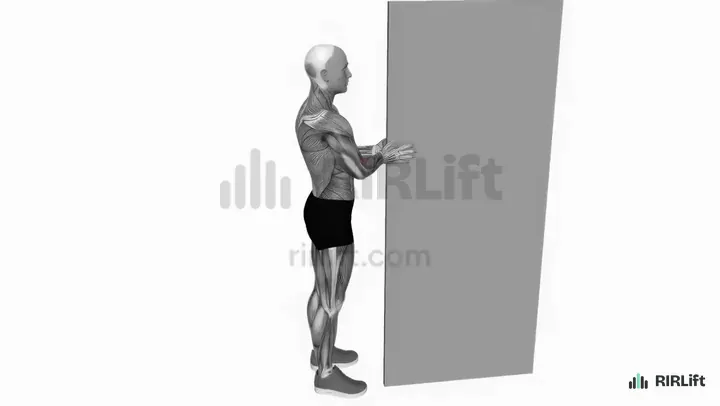
Bodyweight Bicep Curl

Biceps

Holding a door frame and leaning back, you curl your body toward the frame, which loads the biceps with no equipment. The more you lean, the harder it gets, so it works for beginners and stays useful as you get stronger.

How to do it

  1. Stand in an open doorway, holding the frame with both hands at about waist height.
  2. Walk your feet in toward the frame and lean back until your arms are straight and your body is at an angle.
  3. Bend your elbows to pull your body up toward the frame, keeping your elbows by your sides.
  4. Lower back to straight arms with control, and repeat.

Cues

  • Elbows stay by your sides
  • Lean further to make it harder
  • Body straight as you curl

Common mistakes

  • Letting your hips swing to help: hold a straight line and lean less.
  • Rowing with elbows flaring back: keep the elbows pinned and curl with your forearms.

Swap for: Chin-Up, Plank IYTW, Dead Hang

Upper back and rear delts, plank raises

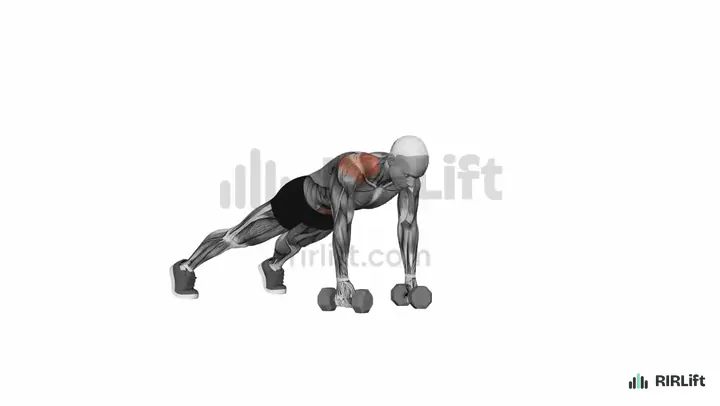
Plank IYTW

Abs, Upper Back

From a plank, you raise one arm at a time into an I, a Y, a T and a W shape, which trains the upper back, rear delts and the muscles that hold your shoulder blades, while your core works to stay still. It is the best floor-only pulling move for your back.

How to do it

  1. Start in a high plank with your hands under your shoulders and your feet a little apart.
  2. Lift your right arm straight forward beside your head into an I, then set it down.
  3. Lift the same arm into a Y, then out to the side into a T, then into a W with the elbow bent, setting it down each time.
  4. Repeat the four shapes on the left side. That is one round.

Cues

  • Hips stay square
  • Thumb up on every raise
  • Squeeze the shoulder blade back

Common mistakes

  • Twisting your hips as the arm lifts: widen your feet to stay stable.
  • Rushing through the letters: pause one second at the top of each.

Swap for: Bodyweight Bicep Curl, Dead Hang, Pull-Up

Put them together: example sessions

Each session below picks from the exercises above for one situation, with the sets, reps, rest and RIR filled in. Open one in the session builder to change a pick, price it from a recent set, and add it to RIRLift.

Session 1

Floor and a doorway, no bar

Open in the session builder
  • Workouts3× a week
  • Working sets38 a week
  • Per workout~25 min
  • EquipmentBodyweight

You have no pull-up bar or dip bars, just floor space, a chair and a door frame, and you can already do 10 or more push-ups.

Without a bar, you have more pushing options than pulling, so each session pairs a chest push and an overhead push with the two best floor pulls, the doorway curl and the plank IYTW, to keep your shoulders balanced. Push sets end 1 to 2 reps short of failure; the doorway curl and IYTW go to 1, since they are lighter. Upper A has 13 sets and Upper B has 12.

Upper A
ExerciseSets × repsRIRRest
Push-UpChest to an inch off the floor. 4 × 10–20 1 90 s
Bodyweight Bicep CurlDoor frame. Lean further to make it harder. 3 × 10–20 1 1 min
Pike Push-UpHips high. Head forward of hands. 3 × 6–12 2 90 s
Plank IYTWRounds; one round is both arms. 3 × 3–6 1 1 min

Open Upper A in the session builder

Upper B
ExerciseSets × repsRIRRest
Decline Push-UpFeet on a chair. 3 × 8–15 2 90 s
Plank IYTWPause 1 s on each letter. 3 × 3–6 1 1 min
Close-Grip Push-UpElbows brush your ribs. 3 × 8–15 1 90 s
Bodyweight Bicep Curl2 s lowering. 3 × 10–20 1 1 min

Open Upper B in the session builder

How to run it
Alternate Upper A and Upper B, three sessions a week, for example A on Monday, B on Wednesday and A on Friday, then B, A, B the next week.
How to progress
Add reps until you hit the top of every range at the target reps in reserve, then move up: push-up to decline push-up, pike push-up to feet on a chair, and lean further back on the doorway curl.

Session 2

Doorway bar, working toward your first pull-up

Open in the session builder
  • Workouts2× a week
  • Working sets26 a week
  • Per workout~30 min
  • EquipmentPull-Up Bar

You have a pull-up bar in a doorway but cannot do a full pull-up yet, and push-ups from the floor are still hard past 10 reps.

The goal is to build the grip, shoulders and back to pull your bodyweight, so every session starts with slow chin-up negatives while you are fresh and adds a dead hang for grip. Pushing uses incline push-ups so you can do full-range reps in the 8 to 15 range. Sets end 2 reps short of failure, because new movements are learned best when you are not grinding. It is 13 working sets per session.

Upper Base
ExerciseSets × repsRIRRest
Chin-UpNegatives: start at the top, lower over 5 s. 4 × 3–6 2 2 min
Incline Push-UpHands on a counter or bench. 3 × 8–15 2 90 s
Dead HangSeconds, not reps. 3 × 20–45 2 1 min
Pike Push-UpShorter range is fine at first. 3 × 5–10 2 90 s
How to run it
Do the session twice a week, two to three days apart. For chin-up negatives, step up on a chair so your chin is over the bar, then lower yourself as slowly as you can.
How to progress
When you can lower for 5 seconds on every chin-up negative, try a full chin-up at the start of each session. On incline push-ups, use a lower surface every time you hit 15 reps.

Session 3

Park with dip and pull-up bars, already strong

Open in the session builder
  • Workouts2× a week
  • Working sets28 a week
  • Per workout~40 min
  • EquipmentPull-Up Bar, Dip Bar

You can do 8 or more pull-ups and 20 or more push-ups, and you train at a park or outdoor gym with parallel bars and a pull-up bar.

Regular push-ups are now too easy to build your chest, so dips and archer push-ups take their place, and pull-ups and chin-ups split the back work across two days. Each session opens with the heaviest push and pull while you are fresh, at 1 to 2 reps in reserve, and the third and fourth exercises go to 1. Both sessions are 14 working sets.

Park A
ExerciseSets × repsRIRRest
Pull-UpFull hang between reps. 4 × 6–12 1 2:30 min
Chest DipLean forward. 2 s down. 4 × 6–12 1 2:30 min
Pike Push-UpFeet on a bench. 3 × 6–12 1 90 s
Close-Grip Push-UpFinisher for the triceps. 3 × 10–20 1 1 min

Open Park A in the session builder

Park B
ExerciseSets × repsRIRRest
Chin-Up3 s down. 4 × 6–12 1 2:30 min
Archer Push-UpPer side. 4 × 5–10 2 2 min
Decline Push-UpFeet on a bench. 3 × 10–20 1 90 s
Dead HangSeconds. Last set to grip failure. 3 × 30–50 1 1 min

Open Park B in the session builder

How to run it
Alternate Park A and Park B, twice each per week if you recover, otherwise once each, with a rest day between.
How to progress
Add reps up to the top of the range, then add a weighted backpack to dips and pull-ups, or slow the lowering to four seconds. Move from archer push-ups toward one-arm work when you hit 10 per side.

Make it fit you

Questions

How do you build upper body strength with bodyweight?

Pick one push and one pull per session, do 3 to 4 sets of each in the 5 to 15 rep range, and stop each set 1 to 2 reps short of failure. When you reach the top of the range, move to a harder variation: incline push-up to push-up to decline to archer, and chin-up negatives to chin-ups to pull-ups.

Are 3 exercises enough for the upper body?

Yes, if they are a horizontal push like the push-up, a vertical push like the pike push-up, and a pull like the pull-up or chin-up, done for 3 to 4 hard sets each. That covers chest, shoulders, back and arms. Growth depends on hard sets per muscle per week, so repeat it two or three times a week.

Can you build an upper body without a pull-up bar?

Your chest, shoulders and triceps, yes. Your back is the hard part, because the doorway curl and plank IYTW do not load it as much as a pull-up. A doorway pull-up bar is inexpensive and doubles what bodyweight training can do for your back.

What is the best bodyweight exercise for the upper body?

The push-up for pushing and the pull-up for pulling. If you can only do one, pick the push-up, since it needs no equipment, but add a pull as soon as you can, or your training will favor the front of your body.

How many push-ups and pull-ups should I do a day?

Think in hard sets per week rather than reps per day. Ten to twenty hard sets a week each for pushing and pulling, spread over two or three sessions, builds muscle for most people. Daily high-rep push-up sets mostly build endurance once they get easy.

How often should I train upper body with bodyweight?

Two or three times a week, with at least a day between sessions. Bodyweight sessions are lighter on your joints than heavy lifting, so three is realistic, but if your shoulders or elbows feel beat up, drop to two.