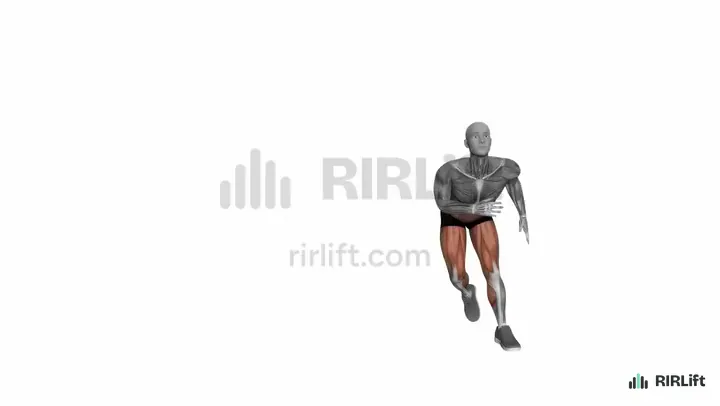
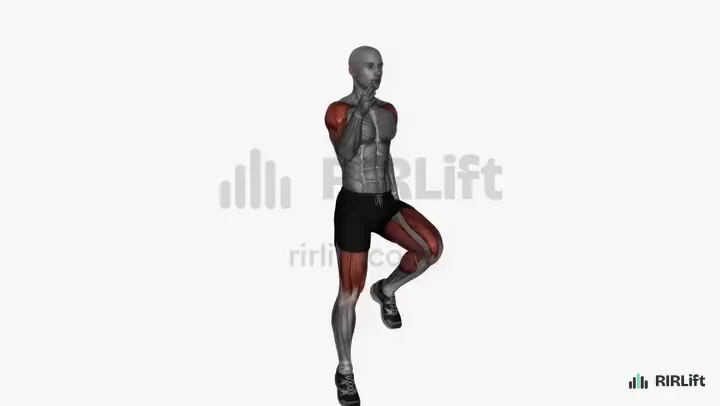
What cross training on Apple Watch is, and the exercises that belong in it

Cross Training is the Apple Watch workout type for gym conditioning that is neither a lift nor one cardio machine: box jumps, burpees, jumping jacks, mountain climbers and agility drills. RIRLift files exactly those under Cross Training, so a session made only of them is saved to Apple Health that way, with no type to pick. Add a lift and it becomes a strength session; add a rower or a run and it becomes Mixed Cardio.

  1. Box Jump Quads, Glutes, Hamstrings
  2. Burpee Quads, Glutes, Chest, Shoulders
  3. Jumping Jack Calves, Quads
  4. Mountain Climber Abs
  5. Skater Hop Glutes, Quads, Abductors
  6. High Knees Quads

Jumps

Short, powerful sets with full rests, logged as reps with how many more you had in you. Stop well short of failure: the landing gets sloppy before your legs give out.

Legs, jump up

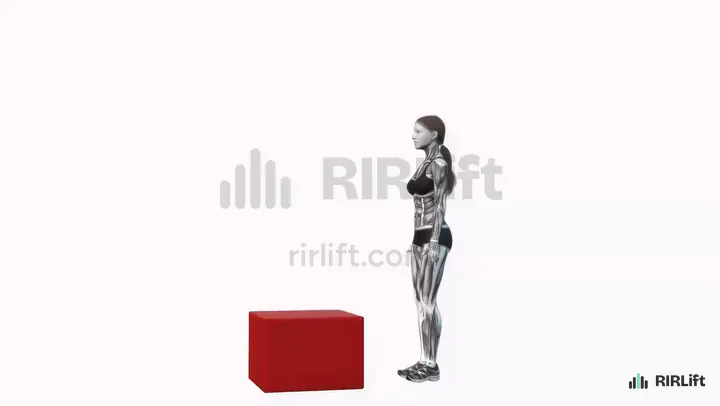
Box Jump

Quads, Glutes, Hamstrings

The cleanest jump to learn: the box takes the landing for you. Step down, never jump down.

How to do it

  1. Stand a short step from a sturdy box.
  2. Dip into a quarter squat and swing the arms back.
  3. Spring onto the box and absorb the landing quietly.
  4. Straighten up on top, then step back down.

Cues

  • Quick dip
  • Soft landing
  • Step down

Common mistakes

  • Using a box so tall you land in a deep squat: lower the box.
  • Jumping tired: keep sets short.

Swap for: Jump Squat, Lateral Box Jump, Single-Leg Box Jump

Legs and hips, jump sideways

Lateral Box Jump

Quads, Glutes, Abductors

The same jump onto a low box, sideways. Trains the push that changes direction.

How to do it

  1. Stand beside a low box with your feet at hip width.
  2. Dip quickly into a quarter squat and jump up and sideways onto the box.
  3. Land softly with both feet flat and knees bent, stand up, then step down and reset before the next rep.

Cues

  • Quick dip, big push
  • Land quiet

Common mistakes

  • Choosing a box so high that you land in a deep squat: the landing should look like your takeoff position.

Swap for: Box Jump, Single-Leg Box Jump, Jump Squat

Legs, jump in place

Jump Squat

Quads, Glutes

No box needed. The swap when every box is taken.

How to do it

  1. Stand with your feet about shoulder width and your arms ready.
  2. Dip into a quarter to half squat, then jump straight up, swinging your arms.
  3. Land softly with bent knees and reset before the next jump.

Cues

  • Soft, quiet landing
  • Reset between reps

Common mistakes

  • Landing stiff-legged: let the hips and knees bend to absorb the landing.

Swap for: Box Jump, Bodyweight Squat

Glutes and hips, side to side

Skater Hop

Glutes, Quads, Abductors

One leg at a time, sideways. Stick each landing before the next hop.

How to do it

  1. Stand on your right leg with a slight bend in the knee.
  2. Push off sideways and land on your left foot, letting your right leg swing behind you.
  3. Stick the landing, then bound back to the right.

Cues

  • Stick each landing
  • Push sideways, not up

Common mistakes

  • Taking off before you are balanced: pause for a beat on each landing.

Swap for: Lateral Box Jump, Single-Leg Jump

Jacks and burpees

Rep-counted bodyweight conditioning. Log each set like a lift: reps and reps left.

Whole body, rhythm

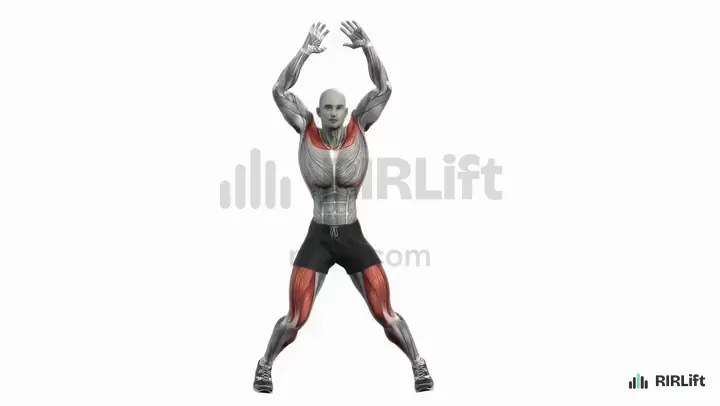
Jumping Jack

Calves, Quads

Easy to count and easy to pace. A good first exercise in any cross training session.

How to do it

  1. Stand tall with feet together and arms at your sides.
  2. Hop your feet wide as your arms sweep overhead.
  3. Hop back to the start as the arms come down, staying light on the balls of your feet.

Cues

  • Quiet landings
  • Full arm sweep

Common mistakes

  • Landing flat-footed and heavy: stay springy and soft.

Swap for: High Knees, Jump Rope, Skipping in Place

Whole body, jump

Star Jump

Quads, Hamstrings, Glutes

A jumping jack turned into a full jump. Fewer reps, more power.

How to do it

  1. Stand tall with feet together and dip into a quarter squat.
  2. Jump up and spread arms and legs into a big X in the air.
  3. Bring the limbs back in and land softly to reset.

Cues

  • Reset fully between jumps.
  • Land with bent knees.

Common mistakes

  • Stringing reps together with stiff landings.

Swap for: Jumping Jack, Jump Squat

Abs and shoulders, plank

Plank Jack

Abs

A jack in the plank position. Hips stay level while the feet move.

How to do it

  1. Set up in a forearm plank with your body in one straight line.
  2. Hop both feet out wide, then back together, without letting your hips bounce.
  3. Keep your weight even between both forearms.

Cues

  • Hips level
  • Quick, light feet

Common mistakes

  • Hips rising toward the ceiling: squeeze your glutes and keep the line.

Swap for: Jumping Jack, Plank Shoulder Tap

Whole body, floor to jump

Burpee

Quads, Glutes, Chest, Shoulders

The hardest move here. Sets of 8 to 12 with 2 left are hard enough.

How to do it

  1. Stand tall, then squat down and plant your palms.
  2. Kick your feet back into a plank.
  3. Jump your feet back under you.
  4. Stand up and jump, reaching your arms overhead.

Cues

  • Fast down, fast up
  • Solid plank
  • Land soft

Common mistakes

  • Sagging hips in the plank: brace on every rep.
  • Slowing to a walk-out: keep it crisp or rest.

Swap for: Half Burpee, Mountain Climber, Dumbbell Burpee

Whole body, no jump

Half Burpee

Quads, Abs, Shoulders

The burpee without standing and jumping. Quieter, and kinder to a hotel floor.

How to do it

  1. Start in a high plank, palms below your shoulders.
  2. Hop both feet in until they land just behind your hands.
  3. Hop them straight back out to the plank and repeat.

Cues

  • Hands stay planted
  • Land softly on the balls of your feet
  • Hips level in the plank

Common mistakes

  • Letting the hips sag when the feet land back: brace before each hop.
  • Landing flat-footed and heavy.

Swap for: Burpee, Mountain Climber, Bear Crawl

Floor drills and footwork

Mountain climbers, high knees, fast feet and the ladder are timed bouts: on the Watch you log the time and rate the effort, Easy to Max. Walkouts are slow reps, logged like a lift.

Abs and legs, plank

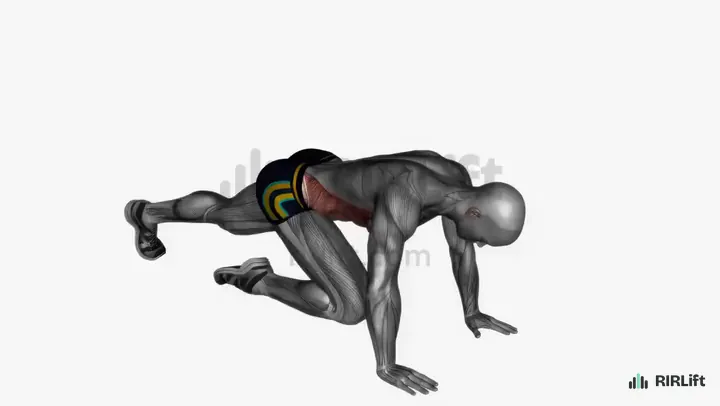
Mountain Climber

Abs

A running rhythm from a plank. Logged as time and effort.

How to do it

  1. Start in a high plank with hands under your shoulders.
  2. Drive one knee toward your chest, then switch legs in a running rhythm.
  3. Keep your hips level with your shoulders.

Cues

  • Hips stay low
  • Quick feet

Common mistakes

  • Bouncing the hips up and down: slow the pace until they stay still.

Swap for: High Knees, Plank Jack, Bear Crawl

Abs and shoulders, hinge to plank

Walkout

Abs, Shoulders, Chest

Hands walk out to a plank and back. Slow, logged as reps.

How to do it

  1. Stand with feet hip-width, hinge at the hips and put your palms on the floor, bending the knees as much as you need.
  2. Crawl your hands out one at a time into a high plank.
  3. Hold a beat, then crawl the hands back toward your feet and roll up to standing.

Cues

  • Brace your stomach in the plank so your hips do not sag.
  • Keep the legs as straight as you comfortably can on the way down.

Common mistakes

  • Letting the hips drop in the plank.

Swap for: Bear Crawl, Spider Plank

Legs, running in place

High Knees

Quads

Fast knee drives on the spot. Logged as time and effort.

How to do it

  1. Stand tall and start jogging in place.
  2. Drive each knee up toward hip height while your opposite arm swings forward.
  3. Stay on the balls of your feet and build the pace over the interval.

Cues

  • Knee to hip height
  • Tall chest
  • Arms pump with the legs

Common mistakes

  • Leaning back to get the knees higher: keep your torso upright and lower the knee height.

Swap for: Butt Kicks, Skipping in Place, Mountain Climber

Calves and feet, footwork

Fast Feet

Calves, Quads

Tiny, fast steps in place. Short bouts, logged as time and effort.

How to do it

  1. Stand in an athletic stance with knees bent and weight on the balls of your feet.
  2. Patter your feet up and down as fast as you can, barely leaving the floor.
  3. Stay in place for the set time.

Cues

  • Short, quick contacts.
  • Hips stay low.

Common mistakes

  • Standing up tall and slowing down.

Swap for: High Knees, Butt Kicks

Footwork, ladder pattern

Agility Ladder Drill

Calves, Quads

In-in-out-out down a ladder. Clean pattern first, then speed.

How to do it

  1. Lay a ladder flat on the floor.
  2. Run an in-in-out-out pattern: both feet into a square, then both out to the sides of the next.
  3. Stay on the balls of your feet with your knees slightly bent, like in guard.
  4. Go the length of the ladder, walk back, and repeat.

Cues

  • Light feet
  • Stay low
  • Clean pattern before speed

Common mistakes

  • Looking at your feet the whole way: glance down, then look ahead.
  • Going so fast you miss squares: slow down until the pattern is clean.

Swap for: Fast Feet, Jump Rope, High Knees

Lifts that make it a strength session

Put one of these in the same session and RIRLift saves the whole workout as Traditional Strength Training. The jumps stay in it as their own segments.

Legs, squat

Barbell Back Squat

Quads, Glutes, Adductors

The lift in the leg-day session below. One set of it makes the session strength training.

How to do it

  1. Set the bar across your upper back below the neck, hands just outside your shoulders, and unrack it.
  2. Stand with your feet about shoulder-width apart, toes turned out a little.
  3. Breathe in, tighten your stomach as if bracing for a punch, and sit down between your heels.
  4. Stand back up keeping your chest and hips rising together.

Cues

  • Breathe and brace
  • Chest and hips rise together
  • Whole-foot pressure

Common mistakes

  • Hips shooting up first out of the bottom: lighten the bar and keep your chest rising with them.
  • Letting the stomach go soft between reps: re-brace at the top of each one.

Swap for: Front Squat, Box Squat

Legs, single leg

Walking Lunge

Quads, Glutes

A dumbbell lunge after the squat. Also a lift, so it keeps the session strength.

How to do it

  1. Hold a weight plate overhead with straight arms, or one dumbbell per hand at your sides, and stand tall with your feet about hip-width apart in a clear lane.
  2. Step forward with one foot, far enough that your front shin stays roughly vertical when you lower.
  3. Drop straight down until your back knee is an inch or two above the floor, keeping your torso upright and the weight steady.
  4. Push through the whole front foot to stand up, and bring the back foot forward past the front one into your next step.
  5. Keep alternating legs until you have done the planned number of steps on each side.

Cues

  • Down like an elevator, not forward like a skier
  • Two train tracks, not a tightrope
  • Let the back knee kiss, not crash

Common mistakes

  • Stepping in a straight line, one foot in front of the other: keep your feet about hip-width apart side to side so you have a stable base.
  • Taking short, choppy steps: lengthen your stride until your front knee stops traveling far past your toes and your back knee can reach the floor.
  • Pausing upright between steps to rebalance: if you need to stop, the weight is too heavy for now; take a lighter pair and keep moving.

Swap for: Dumbbell Reverse Lunge, Bulgarian Split Squat, Step-Up

Put them together: example sessions

Each session below picks from the exercises above for one situation, with the sets, reps, rest and RIR filled in.

Session 1

Plyo box at the gym

  • Workouts2× a week
  • Working sets26 a week
  • Per workout~25 min
  • EquipmentPlyo Box

You have a box, some floor and fresh legs, and want a short power and conditioning session on a non-lifting day.

Box jumps and skater hops for power while you are fresh, then burpees and mountain climbers to finish. Low reps on the jumps keep every landing clean.

Plyo box
ExerciseSets × repsRIRRest
Box Jump 4 × 4–6 3 90 s
Skater HopReps per side. 3 × 8–10 2 1 min
Burpee 3 × 8–12 2 1 min
Mountain ClimberRated Hard. 3 × 30 s 2 30 s
How to run it
Run it on the Watch: log the jump sets as reps with 3 left, the burpees with 2 left, and rate each mountain climber bout with an effort level.
How to progress
Add a rep to each jump set when every landing was quiet, up to 6, then raise the box. Burpees go up a rep each session your weakest set hits its target, until all three sets reach 12. Saved to Apple Health as Cross Training.

Session 2

Hotel room or living room, 15 minutes, no equipment

  • Workouts3× a week
  • Working sets45 a week
  • Per workout~15 min
  • EquipmentBodyweight

You are travelling or at home with only floor space, and want a conditioning session with nothing to jump onto and low landings.

Jacks, plank jacks, half burpees and walkouts, then high knees to finish. Same Cross Training type as the gym session, with less landing force and no box.

Floor circuit
ExerciseSets × repsRIRRest
A1 Jumping Jack 3 × 30–40 3 1 min
A2 Plank Jack 3 × 12–15 2 1 min
A3 Half Burpee 3 × 8–12 2 1 min
A4 Walkout 3 × 5–6 2 1 min
A5 High KneesRated Hard. 3 × 30 s 2 1 min
How to run it
Run it as a circuit on the Watch, one set of each, three rounds, with a minute of rest after each round. Log the rep moves as reps and rate the high knees with an effort level.
How to progress
The rep target climbs by one each session your weakest round hits it. Once half burpees reach 12 every round, swap them for full burpees at 8. Saved as Cross Training.

Session 3

Leg day with a jump primer

  • Workouts2× a week
  • Working sets18 a week
  • Per workout~25 min
  • EquipmentPlyo Box, Barbells, Dumbbells

You lift legs once or twice a week and like a few jumps first to wake your legs up before squatting.

Three easy sets of box jumps, then the squat and the lunge. The jumps are short and far from failure, so they help the squat instead of tiring it.

Leg day
ExerciseSets × repsRIRRest
Box Jump 3 × 3 4 1 min
Barbell Back Squat 3 × 5–8 2 3 min
Walking LungeReps per leg, a dumbbell in each hand. 3 × 8–12 2 90 s
How to run it
Log the box jumps with 4 reps left, then lift as usual. The rest timer runs between sets on your wrist.
How to progress
Squat 205 lb for 8 / 8 / 8 at 2 left tops the 5 to 8 range: next time 210 lb for 5. This session is saved as Traditional Strength Training, with the box jumps as their own segment. That is right for a lifting day; give the jumps their own session only if you want them counted as Cross Training.

Make it fit you

Questions

What is the difference between HIIT and cross training on Apple Watch?

HIIT describes the interval structure: hard work, short rest, repeat. Cross Training describes what you did: jumps, burpees, jacks and drills. RIRLift files those exercises as Cross Training because a set of box jumps says nothing about intervals.

Is Cross Training on Apple Watch the same as CrossFit?

No. A CrossFit class with barbells has lifts in it, so RIRLift would save it as Traditional Strength Training. Cross Training is for the conditioning moves alone.

When should I use cross training on Apple Watch?

For a session of plyometrics, burpees, jacks or agility drills with no lifts and no cardio machine. If you log it in RIRLift on the Watch, it is saved as Cross Training on its own.

Does walking count as cross training?

No. In RIRLift a walk is saved as Walking.