Kettlebell exercises for seniors: deadlifts, squats, rows and swings

The best kettlebell exercises for seniors start with the kettlebell deadlift and goblet squat, then add the step-up, one-arm row and overhead press. Once those feel solid, the sumo deadlift, glute bridge, swing and Turkish get-up build on them. Train twice a week with 4 to 6 exercises, 2 to 3 sets of 6 to 12 reps, and stop each set with 2 or 3 reps left. Learn the deadlift before the swing: the swing is the same hip hinge done fast. One bell for pressing and rowing and a heavier one for deadlifts and squats covers most of the list.

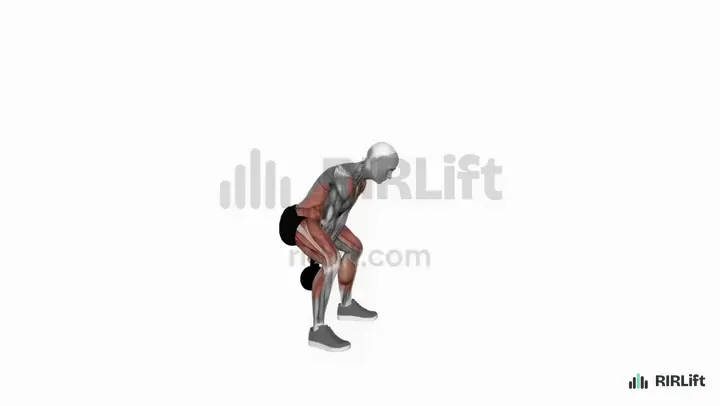
  1. Kettlebell Deadlift Glutes, Hamstrings, Lower Back
  2. Goblet Squat Quads, Glutes
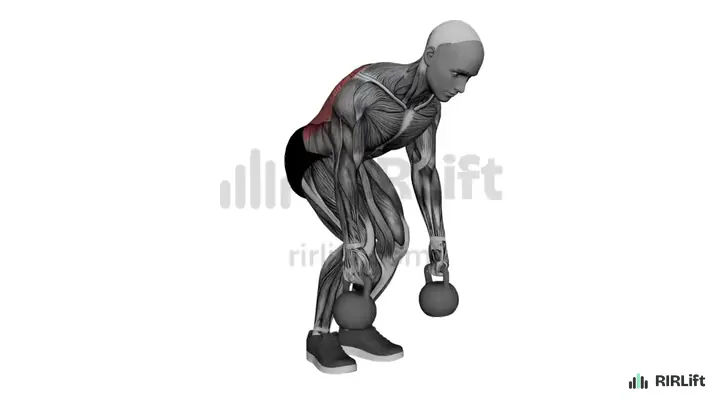
  3. Kettlebell Row Lats, Upper Back
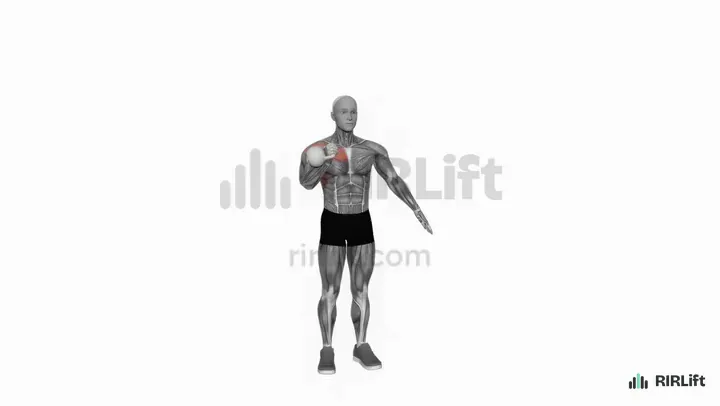
  4. Kettlebell Overhead Press Shoulders
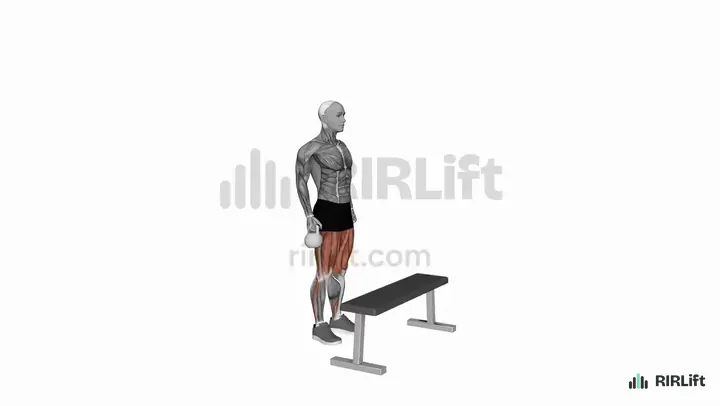
  5. Kettlebell Step-Up Quads, Glutes
  6. Kettlebell Swing Glutes, Hamstrings
  7. Kettlebell Sumo Deadlift Glutes, Hamstrings
Hinges: deadlifts, bridges and swings

The kettlebell's handle sits high, so the deadlift starts closer to standing than a barbell lift, which makes it a natural first exercise. Master the slow hinge with the deadlifts and bridge before speeding it up into a swing.

Glutes, hamstrings and back, hinge

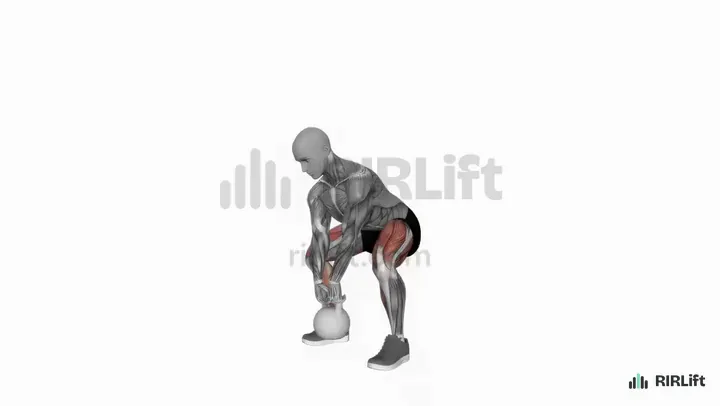
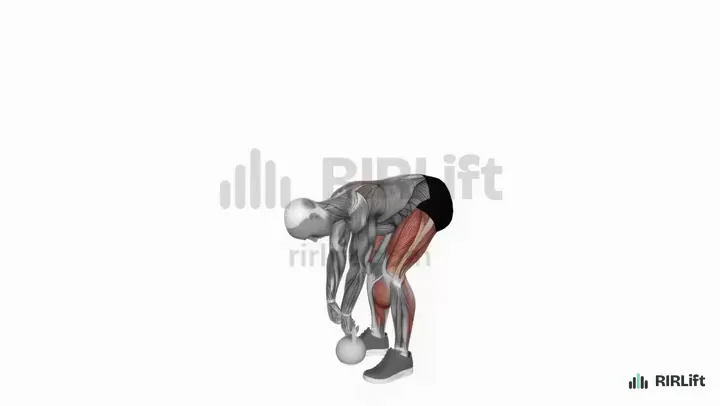
Kettlebell Deadlift

Glutes, Hamstrings, Lower Back

Picking a kettlebell up from beside your foot is the most useful lift for daily life: it is how you should lift a suitcase or a bag of soil. It is the exercise every kettlebell program for older adults starts with.

How to do it

  1. Stand with your feet about hip-width apart, the bell in one hand at your side and that arm straight.
  2. Push your hips back and bend your knees a little, letting the bell travel down beside your leg until it nearly reaches the floor, back flat.
  3. Keep your shoulders level and your chest facing forward as the bell lowers.
  4. Stand up by driving through your feet and squeezing your glutes. Finish the set, then switch hands. With two bells, hold one at each side.

Cues

  • Hips back, chest up
  • Bell close to your leg
  • Stand tall at the top

Common mistakes

  • Squatting straight down so the knees do all the work: lead with the hips.
  • Letting your back round to reach lower: stop the bell where your back is still flat.

Swap for: Kettlebell Good Morning, Kettlebell Swing, Kettlebell Row

Glutes and inner thighs, wide hinge

Kettlebell Sumo Deadlift

Glutes, Hamstrings
With the feet wide and the bell between them, the sumo deadlift lets you stay more upright and loads the inner thighs too. Many people with stiff backs find it more comfortable than the narrow version.

How to do it

  1. Stand wide with toes turned out and a kettlebell between your feet.
  2. Push your knees out and sit your hips down to grip the handle with a flat back.
  3. Stand up by pushing the floor apart.

Cues

  • Knees out
  • Chest up

Common mistakes

  • Knees caving as you stand: push them out over the toes.

Swap for: Sumo Squat, Trap Bar Deadlift

Glutes, bridge

Kettlebell Glute Bridge

Glutes

Resting the bell on your hips turns the floor bridge into a loaded glute exercise with your back fully supported. It is a good hip exercise for days when standing hinges feel off.

How to do it

  1. Lie on your back, knees bent, feet flat about hip width and close enough that your fingertips brush your heels.
  2. Rest the bell on your hips, holding the handle with both hands so it cannot roll.
  3. Push through your heels and lift your hips until your body is straight from shoulders to knees.
  4. Hold for a second, then lower until your hips touch the floor.

Cues

  • Ribs down, chin tucked
  • Squeeze at the top for a full second
  • Heels heavy, toes light

Common mistakes

  • Arching your lower back to get higher: the top is where your glutes finish, not where your back arches.
  • Rushing the lowering: control it or you lose half the set.

Swap for: Kettlebell Hip Thrust, Single-Leg Glute Bridge, Single-Leg Hip Thrust

Glutes and hamstrings, explosive hinge

Kettlebell Swing

Glutes, Hamstrings

The swing trains power, moving a load quickly, which slow lifts leave out and which you use to hurry across a street or up a flight of stairs. Only add it once the deadlift is solid, and keep the bell at chest height.

How to do it

  1. Stand with your feet a little wider than your hips, the bell set about a foot in front of you.
  2. Hinge down, grip the handle with both hands, and hike the bell back between your thighs.
  3. Snap your hips forward to stand tall, letting the bell float up to about shoulder height on straight arms.
  4. Let it fall back between your legs as you hinge again, and go straight into the next rep.

Cues

  • Hips snap, arms just hold on
  • Stand tall at the top
  • Bell passes high between the thighs

Common mistakes

  • Squatting the swing by bending the knees deeply: push your hips back and keep the shins nearly vertical.
  • Lifting the bell with your shoulders: if your arms are working, the hips are not driving it.

Swap for: Dumbbell Romanian Deadlift, Kettlebell Deadlift, Superman

Squats and single-leg work

Holding the bell at your chest keeps the squat upright and balanced. The step-up and split squat then train one leg at a time for stairs, curbs and getting up from a kneel.

Quads and glutes, squat

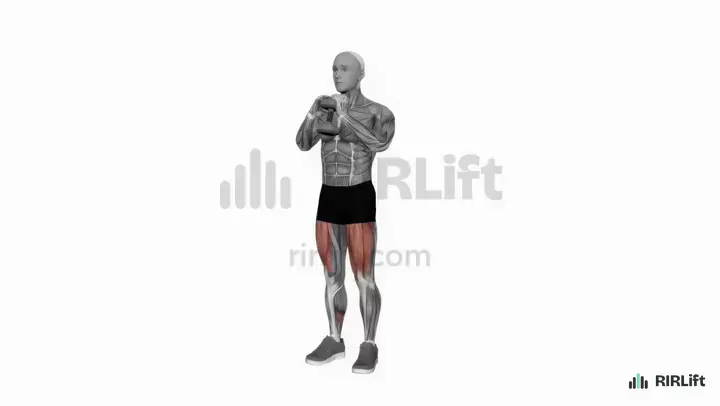
Goblet Squat

Quads, Glutes

Holding the bell by the horns at your chest counterbalances you so you can sit deeper with an upright back. Squat to a box or chair while you learn the depth.

How to do it

  1. Hold a dumbbell or kettlebell vertically against your chest.
  2. Sit down between your knees, elbows inside them at the bottom.
  3. Stand up tall.

Cues

  • Elbows nudge the knees out at the bottom.
  • Chest stays up behind the weight.

Common mistakes

  • Letting the weight pull you forward.

Swap for: Bodyweight Squat, Barbell Back Squat

Quads and glutes, step

Kettlebell Step-Up

Quads, Glutes

Stepping onto a low box with a kettlebell builds the single-leg strength stairs demand. Hold the bell at your chest and keep a rail or wall within reach.

How to do it

  1. Face a sturdy step, box or bench at about knee height, with a kettlebell hanging at each side or one at your chest.
  2. Plant one whole foot on the step.
  3. Lean forward slightly and push through that heel until you stand fully on top, without springing off the floor foot.
  4. Lower the trailing foot back down slowly and repeat all reps on the same leg.

Cues

  • Whole foot on top
  • No push from the floor leg
  • Lower slowly

Common mistakes

  • Springing off the floor foot: lift its toes so it cannot push.
  • Using a chair that tips or slides: put it against a wall or use a stair.

Swap for: Reverse Lunge, Skater Squat, Step-Up

Quads and glutes, split stance

Kettlebell Split Squat

Quads, Glutes

With both feet on the floor in a long stance, the split squat trains each leg with more balance than a lunge. Lower the back knee only as far as feels steady.

How to do it

  1. Take a long step forward so your back heel is up and your front shin stays close to vertical when you drop down.
  2. Hold a bell in each hand at your sides, or one bell at your chest.
  3. Lower your back knee straight toward the floor until your front thigh is about parallel.
  4. Push through your whole front foot to stand, finish every rep on one leg, then switch.

Cues

  • Back knee straight down, not forward
  • Front heel stays heavy
  • Lean slightly forward for more glutes

Common mistakes

  • Standing too narrow: if your front heel lifts, step your feet further apart.
  • Pushing off the back foot: it is there for balance only.

Swap for: Bulgarian Split Squat, Kettlebell Step-Up, Dumbbell Reverse Lunge

Rows, presses and curls

Rowing and pressing a kettlebell one arm at a time trains the upper body and the trunk together, since your body has to stay square against the uneven load.

Back, one-arm row

Kettlebell Row

Lats, Upper Back

Hinged forward with a bell in each hand, rowing one at a time to your hip trains the upper back that holds your shoulders back. Hinge less far if your lower back tires.

How to do it

  1. Stand with your feet about hip-width apart, a kettlebell in each hand.
  2. Hinge until your torso is close to parallel with the floor, arms hanging straight under your shoulders.
  3. Pull one bell toward your hip, keeping your elbow tucked in tight, while the other arm stays long.
  4. Lower it until your arm is straight and your shoulder blade slides forward, then row the other side. With only one bell, do all your reps on one side, then switch.

Cues

  • Elbow toward your hip
  • Stretch at the bottom
  • Shoulders square

Common mistakes

  • Turning your chest toward the ceiling to finish the rep: keep both shoulders facing the floor.
  • Short reps that stop with the elbow bent: reach all the way down before each pull.

Swap for: Kettlebell Gorilla Row, Kettlebell Rear Delt Row, Kettlebell Deadlift

Back and trunk, alternating row

Kettlebell Gorilla Row

Lats, Upper Back

With two bells on the floor and one pushed down while the other rows, the gorilla row trains the back and trunk hard. It is a progression for people who already row and deadlift comfortably.

How to do it

  1. Place two kettlebells between your feet, stand wider than shoulder-width and hinge until your torso is close to level with the floor.
  2. Grip both handles with your back flat.
  3. Row the right bell to your hip while pushing the left one into the floor.
  4. Lower it, then row the left. Alternate for the full set.

Cues

  • Flat back throughout
  • Elbow to the hip
  • Push the other bell into the ground

Common mistakes

  • Twisting your torso open to row higher: keep your shoulders square to the floor.
  • Standing up between reps: stay in the hinge for the whole set.

Swap for: Kettlebell Row, One-Arm Dumbbell Row, Dumbbell Bent-Over Row

Shoulders, one-arm press

Kettlebell Overhead Press

Shoulders

Pressing one bell from the shoulder trains the shoulders and the trunk that keeps you from leaning. The bell resting on your forearm is easier on the wrist than a dumbbell for many people.

How to do it

  1. Hold the bell in the rack at your shoulder, resting on the back of your forearm, palm facing in, elbow tucked to your ribs.
  2. Brace your trunk and let your free arm hang by your side.
  3. Press straight up, rotating your palm to face forward as the bell passes your head, until your arm locks out beside your ear.
  4. Lower under control back to the rack. Finish all reps, then switch arms.

Cues

  • Wrist straight, knuckles to the ceiling
  • Ribs down, don't lean back
  • Lock out beside your ear, not in front of it

Common mistakes

  • Bending the wrist back under the bell: grip the handle deep in the palm, not in the fingers.
  • Dipping your legs to start the press: that is a push press. Keep your knees locked and count only strict reps.

Swap for: Neutral-Grip Dumbbell Shoulder Press, Band Overhead Press, Landmine Press

Biceps, two-hand curl

Kettlebell Curl

Biceps

Curling one bell with both hands is a simple arm exercise at the end of a session. Keep your elbows at your sides and lower slowly.

How to do it

  1. Stand tall and hold the handle with both hands, palms up, the bell hanging in front of your thighs.
  2. Pin your elbows to your sides.
  3. Curl the bell up toward your chest until your forearms are close to vertical.
  4. Lower it slowly until your arms are straight again.

Cues

  • Elbows stay at your ribs
  • Lower for a slow count of three
  • Stand still, no hip drive

Common mistakes

  • Swinging the bell up with a hip thrust: if you need the hips, the bell is too heavy for curls.
  • Letting the elbows travel forward at the top, which unloads the biceps: stop the curl when the forearms are vertical.

Swap for: Dumbbell Curl, Kettlebell Single-Arm Curl, EZ-Bar Curl

The get-up: floor to standing

The Turkish get-up practices getting up from the floor and back down while holding a weight overhead. Learn each step without a bell first.

Shoulders and trunk, floor to standing

Kettlebell Turkish Get-Up

Shoulders, Abs

The get-up rehearses getting off the floor in steps while the shoulder holds a weight steady overhead. Practice it with an empty hand or a shoe balanced on your fist before adding a light bell.

How to do it

  1. Lie on your back with a kettlebell pressed up in one hand, the same-side knee bent.
  2. Roll onto the opposite elbow, then the hand, keeping the bell locked out above you.
  3. Lift your hips, sweep the straight leg back to a kneel, and stand up.
  4. Reverse each step back down to the floor.

Cues

  • Eyes on the bell
  • Arm locked
  • One step at a time

Common mistakes

  • Rushing the steps and losing the vertical arm.
  • Using a heavy bell before the sequence is smooth.

Swap for: Dumbbell Single-Arm Overhead Carry, Kettlebell Windmill

Put them together: example sessions

Each session below picks from the exercises above for one situation, with the sets, reps, rest and RIR filled in.

Session 1

First kettlebells at home

  • Workouts2× a week
  • Working sets19 a week
  • Per workout~25 min
  • EquipmentDumbbells, Kettlebells

You have one or two kettlebells, around 8 to 12 kilograms, and you want a simple full-body program to start with.

Two sessions give the legs and hips about 10 sets a week and the back, shoulders and arms about 9, 19 working sets in all. Light bells are enough for this, because one-arm and one-leg work makes them feel heavier.

Day A
ExerciseSets × repsRIRRest
Goblet Squat1 warm-up set first 3 × 8–12 3 90 s
Kettlebell RowPer arm. 3 × 8–12 2 75 s
Kettlebell Overhead PressPer arm. 2 × 6–10 2 75 s
Kettlebell Glute Bridge 2 × 10–15 2 1 min
Day B
ExerciseSets × repsRIRRest
Kettlebell Deadlift1 warm-up set firstPer side. 3 × 8–12 3 90 s
Kettlebell Step-UpPer leg. Low step. 2 × 6–10 3 75 s
Kettlebell Curl 2 × 10–12 2 1 min
Kettlebell RowPer arm. 2 × 10–12 2 1 min
How to run it
Alternate Day A and Day B on two days a week with two or three days between. Each takes about 30 minutes.
How to progress
Add reps until all sets reach the top of the range with 2 reps in reserve. When the bell is too light for the squat and deadlift, slow the lowering to 3 seconds, then buy the next bell up, usually 4 kilograms heavier.

Session 2

Fit and ready for swings and get-ups

  • Workouts2× a week
  • Working sets27 a week
  • Per workout~40 min
  • EquipmentKettlebells, Dumbbells

You have trained with kettlebells for a few months, your deadlift and squat feel solid, and you want to add power and the get-up.

Swings add power while the strength lifts stay heavy: 14 working sets on the hinge day and 13 on the squat day, 27 a week. The get-up stays at 1 to 2 slow reps per side because it is practice, not a grind.

Day 1: Hinge and get-up
ExerciseSets × repsRIRRest
Kettlebell Sumo Deadlift2 warm-up sets first 3 × 6–10 2 2 min
Kettlebell Swing 4 × 10–15 3 90 s
Kettlebell Gorilla RowPer arm. 3 × 6–10 2 90 s
Kettlebell Turkish Get-UpPer side. Slow. 4 × 1–2 3 90 s
Day 2: Squat and press
ExerciseSets × repsRIRRest
Goblet Squat1 warm-up set first 3 × 6–10 2 2 min
Kettlebell Split SquatPer leg. 3 × 8–10 2 90 s
Kettlebell Overhead PressPer arm. 3 × 5–8 2 90 s
Kettlebell Glute Bridge 2 × 12–15 2 1 min
Kettlebell Curl 2 × 10–12 2 1 min
How to run it
Do Day 1 and Day 2 once each a week, two or three days apart. Swings come right after the warm-up while you are fresh; stop each swing set when the bell stops floating to chest height.
How to progress
Add 2 swings per set each week up to 15, then move to the next bell. For the strength lifts, use double progression with 2 reps in reserve. Add weight to the get-up only when every step is smooth on both sides.

Session 3

Knees complain about squats

  • Workouts2× a week
  • Working sets24 a week
  • Per workout~30 min
  • EquipmentKettlebells

Squats and step-ups bother your knees, but you want to keep training your legs and the rest of your body with a kettlebell.

Hinges load the hips and hamstrings with little knee bend, so this plan builds the lower body from deadlifts and bridges instead of squats. Five exercises, 12 sets a session, 24 a week, at 2 to 3 reps in reserve.

Hinge-based
ExerciseSets × repsRIRRest
Kettlebell Deadlift1 warm-up set firstPer side. 3 × 8–12 2 90 s
Kettlebell Sumo Deadlift 2 × 8–10 3 90 s
Kettlebell Glute Bridge 3 × 10–15 2 1 min
Kettlebell RowPer arm. 2 × 8–12 2 75 s
Kettlebell Overhead PressPer arm. 2 × 6–10 2 75 s
How to run it
Do it twice a week. Keep the deadlift shins as upright as you can by pushing the hips back.
How to progress
Add reps up to the top of the range, then the next bell. If your knees improve, add a goblet squat to a high box after the deadlift, 2 sets of 8.

Make it fit you

Questions

What is the best kettlebell weight for seniors?

Most beginners start with a 6 to 8 kilogram bell for pressing and rowing and a 10 to 16 kilogram bell for deadlifts and squats. The right one lets you do 10 good reps with 2 or 3 left.

Are kettlebell workouts good for seniors?

Yes, when they start with slow strength lifts such as the deadlift and goblet squat. They train strength, grip and balance together. Swings and get-ups come later, once the basics are solid.

Are kettlebell swings safe for seniors?

Add them once you can deadlift the same bell for 10 reps with a flat back. Start light, keep the bell at chest height, and stop the set when your form slows.

What is the number one kettlebell exercise for seniors?

The kettlebell deadlift. It trains the hips, legs, back and grip in the exact motion of lifting things from the floor, and it is the base for swings later.

How often should seniors do kettlebell workouts?

Two times a week is enough to get stronger, with walking or other light activity in between. Three is fine once you recover easily.