
Dumbbell squats: how to do them and how to hold the weights
Published October 19, 2026
A dumbbell squat is a squat done with one dumbbell per hand with your arms hanging at your sides. Stand with your feet about shoulder-width, sit your hips back and down until your thighs reach parallel or a little lower, then drive up through your whole foot. It trains the quads and glutes with nothing more than a pair of dumbbells.
- WorksQuads, Glutes
- AlsoHamstrings, Adductors
- EquipmentDumbbells
- Start with3 × 8–12, 2 in reserve, 2 min rest
How to do the dumbbell squat
Holding the weights at your sides keeps the load low and centered, so the squat is easy to balance and your arms never limit how deep you go. It is a simple way to load a squat at home or when the racks are full, and it works for beginners and experienced lifters alike.
Steps
- Pick up two dumbbells and let them hang beside your thighs, palms facing in, feet about shoulder-width with toes turned out a little.
- Take a breath, brace your stomach and lift your chest so your back stays flat.
- Bend your knees and send your hips back and down, letting the dumbbells travel straight down beside your legs.
- Go down until your thighs are about level with the floor, or as deep as you can while your heels stay down and your back stays flat.
- Push through your whole foot to stand up, knees tracking over your toes, and finish tall with your glutes tight.
Cues
- Dumbbells drop straight down
- Knees follow the toes
- Whole foot stays on the floor
Common mistakes
- Knees caving in on the way up: push them out over your toes and lighten the dumbbells if they still collapse.
- Heels lifting at the bottom: stop a little higher, or stand on small plates under your heels until your ankles loosen up.
- Folding forward as the set gets hard: hold your chest high and stop the set when you can no longer hold that position.
Swap for: Goblet Squat, Dumbbell Split Squat, Leg Press
Muscles the dumbbell squat works
Dumbbell squats work your quads and glutes most, with your adductors and hamstrings helping. Your calves, lower back and abs keep you balanced, and your grip and upper back hold the dumbbells. With the weights at your sides, the load is mostly on the legs rather than the upper back.
Sets, reps and reps in reserve for the dumbbell squat
| Goal | Sets × reps | RIR | Rest |
|---|---|---|---|
| Build muscle | 3–4 × 8–15 | 1–2 | 2 min |
| Once grip limits you, use straps or switch to a goblet or split squat. | |||
| Light dumbbells only | 3–4 × 15–25 | 1–2 | 90 s |
| Add a 2–3 second lowering to make light weights count. | |||
| Beginner | 2–3 × 8–12 | 2–3 | 90 s |
| Squat to a bench behind you if you're unsure of depth. | |||
Dumbbell squat variations
-
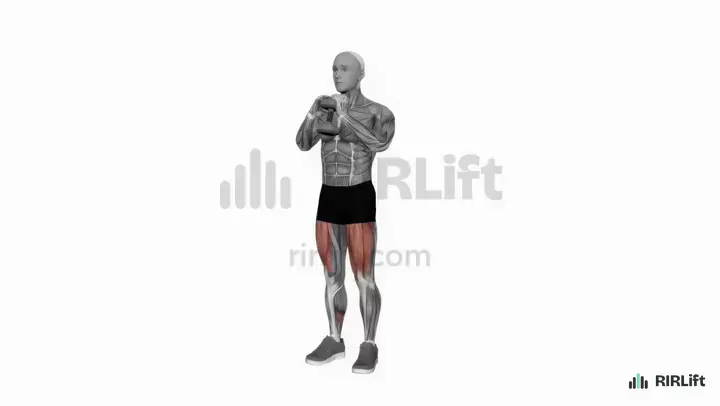
Goblet Squat
Hold one dumbbell at your chest when you want a more upright squat and more quad work.
Build a session with it -
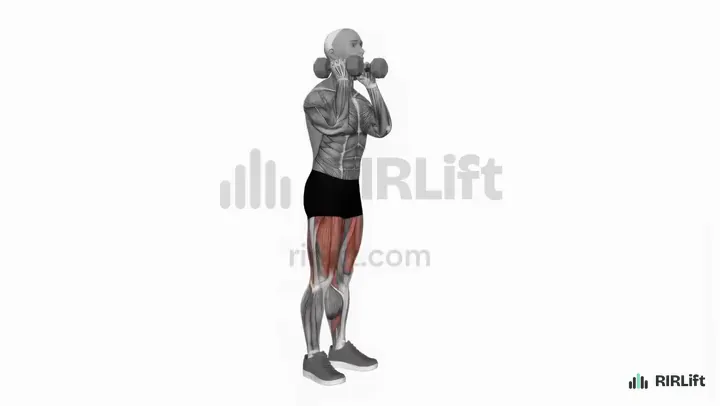
Dumbbell Front Squat
Rest two dumbbells on your shoulders when grip limits you at your sides.
Build a session with it -
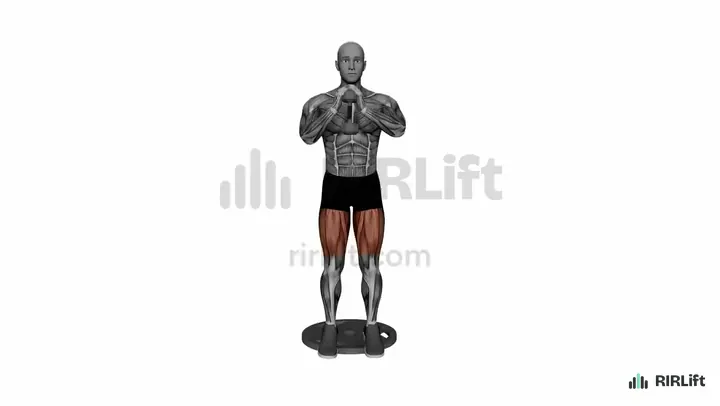
Heels-Elevated Goblet Squat
Raise your heels and squat with a narrow stance when you want the quads to do even more of the work.
Build a session with it -
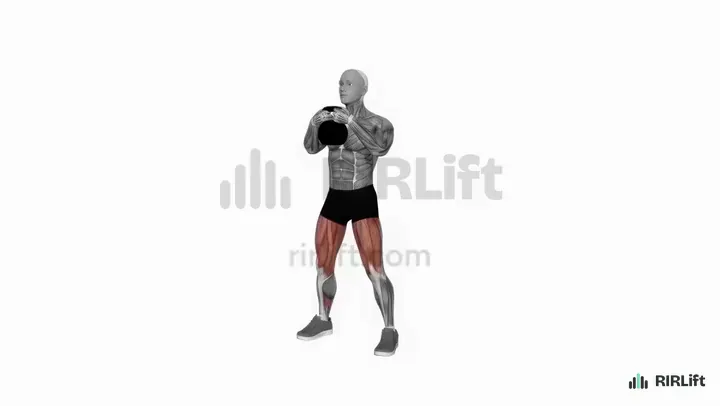
Sumo Squat
Take a wide stance with your toes turned out and hold one weight at your chest when you want more inner thigh and glute work.
Build a session with it
Dumbbell squat alternatives
Single-leg work
-
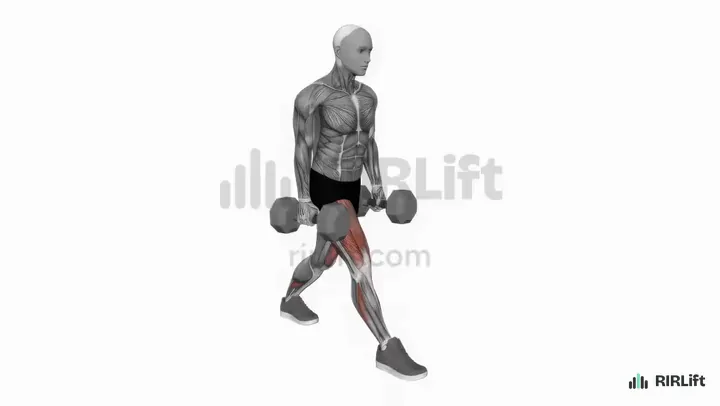
Dumbbell Split Squat
Split your stance when your dumbbells are too light to make two-leg squats hard.
Build a session with it -
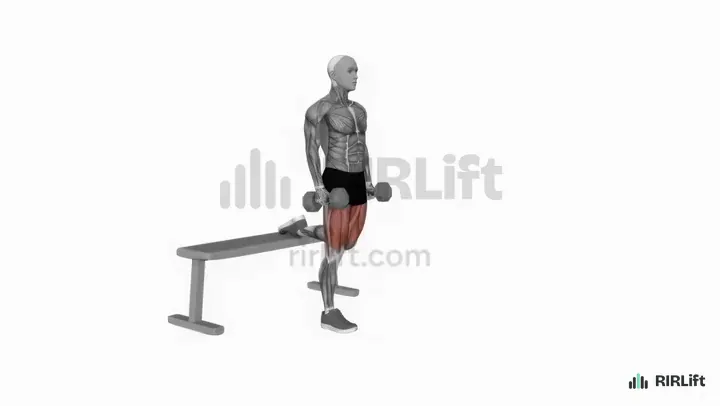
Bulgarian Split Squat
Put your back foot on a bench when you want a hard single-leg squat with light weights.
Build a session with it
Heavier squats
-
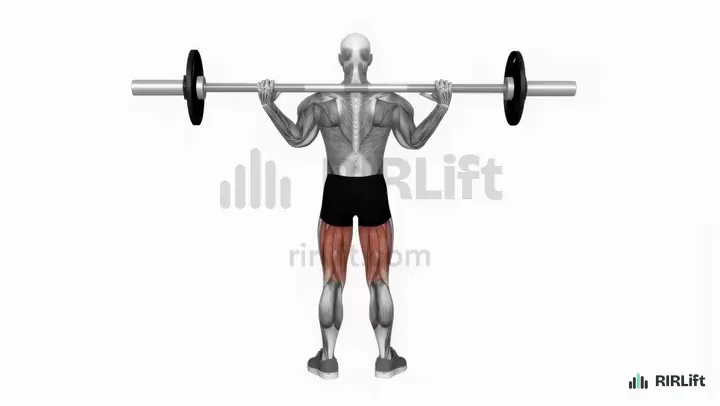
Barbell Back Squat
Move to a barbell once the dumbbells you have are too light.
Build a session with it -
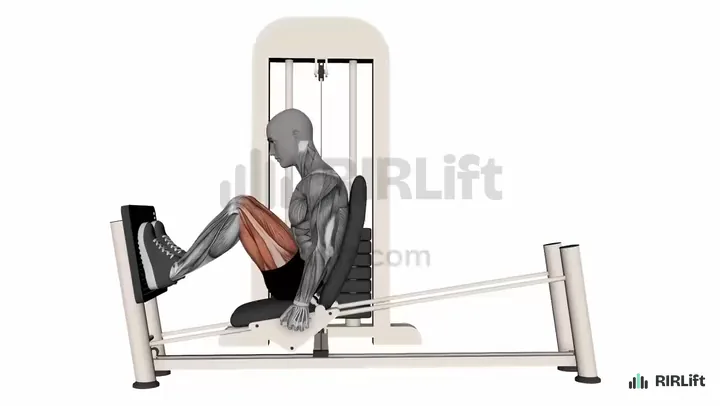
Leg Press
Use the leg press when you want heavy leg work without balancing or gripping weights.
Build a session with it
How to hold the dumbbells when you squat
There are three common holds. At your sides is the simplest and keeps your back most upright, but your grip can give out on long sets. On your shoulders in a front rack frees your grip and makes your upper back and abs work harder. One dumbbell held at your chest, the goblet hold, is the easiest way to stay upright and works best when you only have one weight.
Pick the hold that lets you finish the set because your legs are tired, not because your hands or shoulders gave out first.
Are dumbbell squats effective?
Yes, as long as the set is hard. Your legs grow from sets taken close to failure, whatever the weight is made of. The limit with dumbbells is how heavy they go: when you can do more than about 20 reps with the heaviest pair you own, slow the lowering, add a pause at the bottom, or move to a split squat so each leg gets more of the load.
Questions
Which muscles do dumbbell squats work?
Mainly the quads and glutes, with the adductors and hamstrings helping and the abs, lower back and grip holding you steady.
Are dumbbell squats as good as barbell squats?
For building muscle they work well while the dumbbells are heavy enough to bring you near failure in about 20 reps. Barbells win when you need more load than your dumbbells allow.
How heavy should dumbbell squats be?
Heavy enough that you finish each set 1 to 2 reps short of failure inside your rep range. If you can do 20 or more with good form, go heavier or slow the reps down.
How deep should I squat with dumbbells?
Aim for your thighs to reach level with the floor or a bit lower, as long as your heels stay down and your back stays flat.
What is the hardest type of squat?
Single-leg squats like the pistol squat or Bulgarian split squat are the hardest bodyweight and dumbbell versions for most people.
Are dumbbell squats good for beginners?
Yes. They are easy to set up and balance, and you can start light and progress in small steps.
Related templates
-
Goblet squat: how to do it, what it works and what to swap in
The one-dumbbell squat for staying upright.
-
Sumo squat: how to do it with a kettlebell or dumbbell
A wide-stance squat for more glutes and inner thighs.
-
Leg exercises with dumbbells: quads, hamstrings, glutes and calves
More dumbbell lifts for a full leg session.
-
Bulgarian split squat: form, foot position and alternatives
The single-leg squat to use when your dumbbells feel light.
-
The best workout with dumbbells, for the dumbbells you actually have
Full routines built around dumbbell squats.
-
How to use RIR
How to tell how many reps you have left.