
Muffin top exercises for your sides, lower belly and whole body
Published October 29, 2026
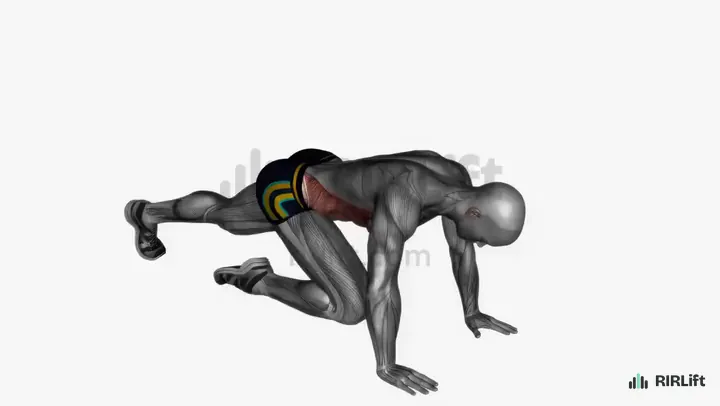
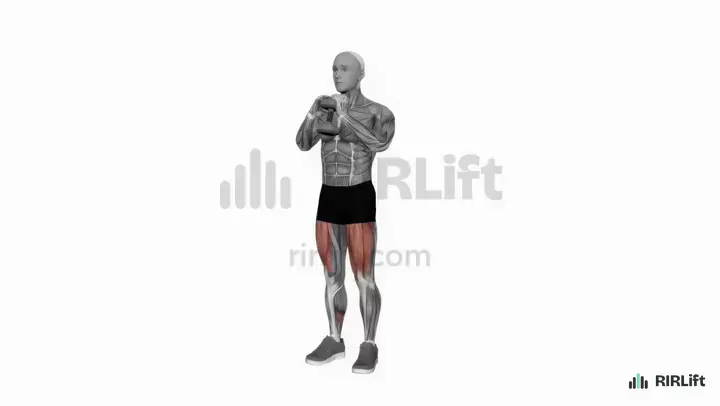
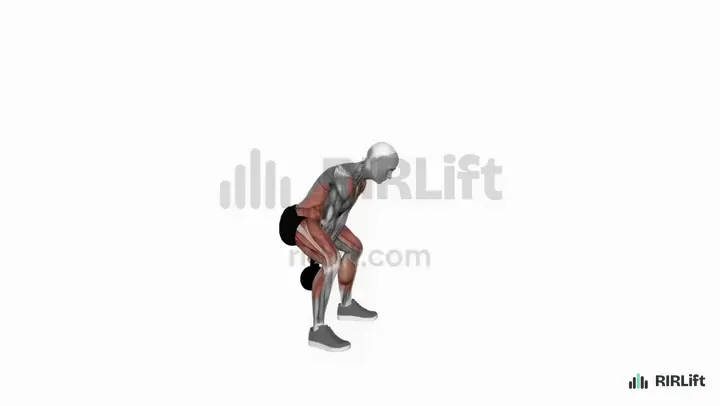
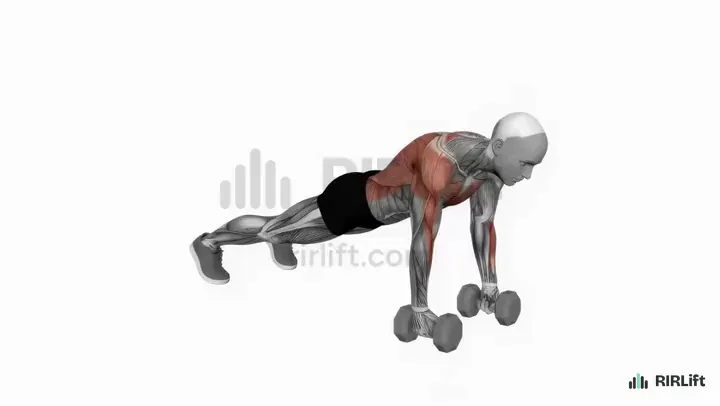
The best muffin top exercises are the side plank hip dip, suitcase carry and cable woodchop for the sides of your waist, the reverse crunch and mountain climber for your lower belly, and the goblet squat, kettlebell swing and renegade row, the full-body lifts that use the most muscle per session. The roll above your waistband shrinks with overall fat loss, not with crunches aimed at it; these exercises build the muscle underneath so the area looks firmer as it goes. Lift 3 days a week, 2 to 4 sets per exercise.
- Dumbbell Side Plank Hip Dip Abs
- Dumbbell Suitcase Carry Abs, Quads
- Cable Woodchop Abs
- Reverse Crunch Abs
- Mountain Climber Abs
- Goblet Squat Quads, Glutes
- Kettlebell Swing Glutes, Hamstrings
- Renegade Row Lats, Upper Back
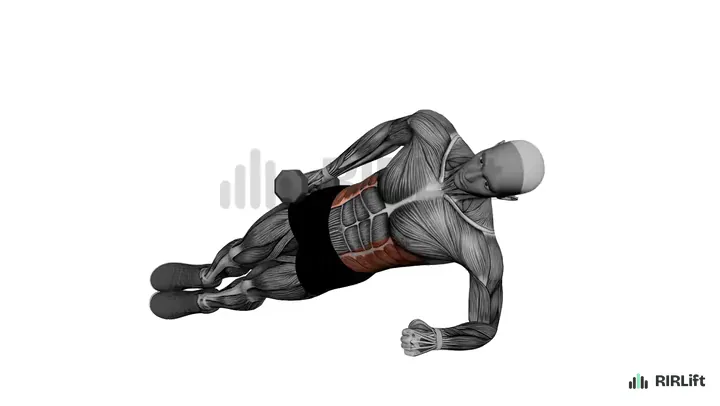
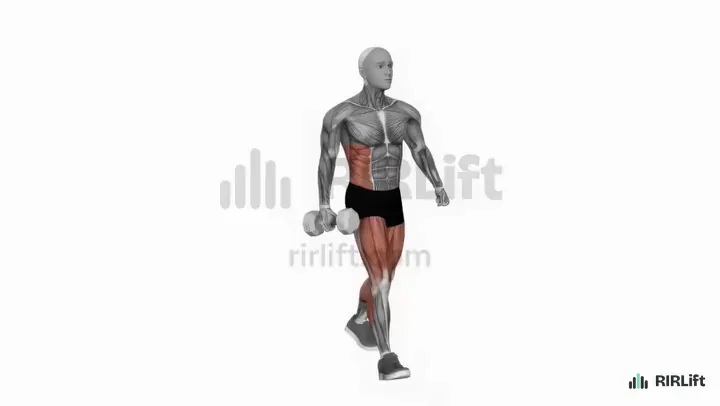
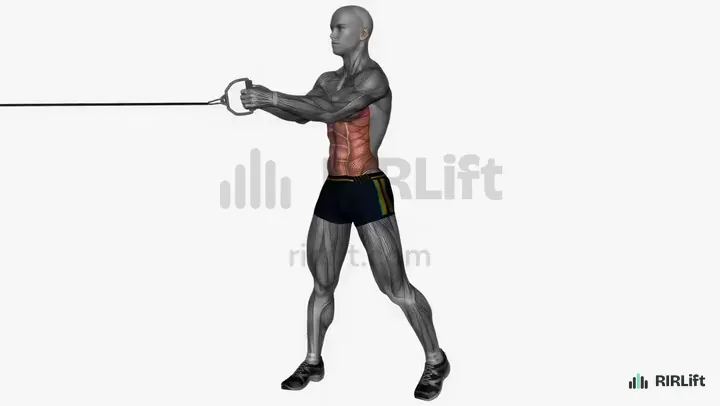
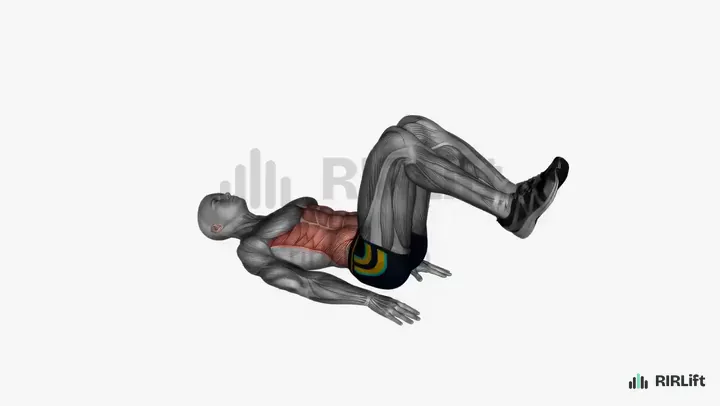
Put them together: example sessions
Each session below picks from the exercises above for one situation, with the sets, reps, rest and RIR filled in.
-
Session 1
At home, one dumbbell or kettlebell, three short sessions
You work out at home with a dumbbell or two, or a kettlebell, plus a mat, and you can fit three sessions of about 25 minutes into your week.
3× a week · 35 sets a week · ~30 min
-
Session 2
In the gym while eating less, three days
You have a gym membership, you are eating in a calorie deficit to lose fat, and you want to keep and build muscle while the scale goes down.
3× a week · 37 sets a week · ~30 min
-
Session 3
Getting down to the floor is hard right now
You have plenty of weight to lose or simply find floor work uncomfortable, you can use a gym with a cable station, and you would rather do everything standing.
2× a week · 18 sets a week · ~25 min
Session 1
At home, one dumbbell or kettlebell, three short sessions
- Workouts3× a week
- Working sets35 a week
- Per workout~30 min
- EquipmentDumbbells
You work out at home with a dumbbell or two, or a kettlebell, plus a mat, and you can fit three sessions of about 25 minutes into your week.
Each session opens with 3 sets of a full-body lift and then gives 8 or 9 sets to the abs and obliques, about 35 sets over a three-session week. Core muscles recover fast, so training them every session is fine as long as the sets stay short of failure.
| Exercise | Sets × reps | RIR | Rest |
|---|---|---|---|
| Goblet Squat1 warm-up set first | 3 × 10–15 | 2 | 90 s |
| Dumbbell Side Plank Hip DipPer side. | 3 × 8–15 | 2 | 1 min |
| Reverse Crunch | 3 × 10–15 | 2 | 1 min |
| Mountain ClimberSeconds per round. | 3 × 20–40 | 2 | 45 s |
| Exercise | Sets × reps | RIR | Rest |
|---|---|---|---|
| Renegade Row1 warm-up set firstPer arm. Feet wide. | 3 × 6–10 | 2 | 90 s |
| Dumbbell WoodchopPer side. | 3 × 10–12 | 2 | 1 min |
| Spider PlankPer side. | 3 × 6–10 | 2 | 1 min |
| Side PlankSeconds per side. | 2 × 20–45 | 2 | 45 s |
- How to run it
- Alternate Session A and Session B on three non-consecutive days, so one week is A, B, A and the next is B, A, B. Walk on the days in between if you can.
- How to progress
- Grow reps or seconds within each range, and once you sit at the top with the planned reps in reserve, step up: a heavier dumbbell on hip dips, a slower lowering on reverse crunches, longer mountain climber rounds.
Session 2
In the gym while eating less, three days
- Workouts3× a week
- Working sets37 a week
- Per workout~30 min
- EquipmentDumbbells, Kettlebells, Adjustable Cable
You have a gym membership, you are eating in a calorie deficit to lose fat, and you want to keep and build muscle while the scale goes down.
In a deficit the lifts that keep muscle on are the heavy full-body ones, so each day starts with two of the squat, swing and row before two waist exercises. Over the week that is 19 sets of full-body lifting and 18 sets of oblique and lower-ab work, 12 or 13 sets per session, which is enough to recover from on fewer calories.
| Exercise | Sets × reps | RIR | Rest |
|---|---|---|---|
| Goblet Squat2 warm-up sets first | 3 × 8–12 | 2 | 2 min |
| Kettlebell Swing | 3 × 12–15 | 2 | 90 s |
| Cable WoodchopPer side. | 3 × 10–12 | 1 | 1 min |
| Reverse Crunch | 3 × 10–15 | 1 | 1 min |
| Exercise | Sets × reps | RIR | Rest |
|---|---|---|---|
| Renegade Row1 warm-up set firstPer arm. | 3 × 6–10 | 2 | 90 s |
| Goblet Squat | 3 × 10–15 | 2 | 90 s |
| Dumbbell Suitcase CarrySteps per hand. | 3 × 20–30 | 2 | 90 s |
| Dumbbell Side Plank Hip DipPer side. | 3 × 10–15 | 1 | 1 min |
| Exercise | Sets × reps | RIR | Rest |
|---|---|---|---|
| Kettlebell Swing1 warm-up set first | 4 × 10–15 | 2 | 90 s |
| Renegade RowPer arm. | 3 × 8–10 | 2 | 90 s |
| Cable WoodchopPer side. | 3 × 10–12 | 1 | 1 min |
| Mountain ClimberSeconds per round. | 3 × 30–45 | 2 | 45 s |
- How to run it
- Run Days 1, 2 and 3 on three non-consecutive days. Keep the full-body lift first, when you are freshest.
- How to progress
- On every lift, hold a weight until all sets are full at the top of the range with the target reps in reserve, then load more. While dieting, matching last month's numbers counts as progress.
Session 3
Getting down to the floor is hard right now
- Workouts2× a week
- Working sets18 a week
- Per workout~25 min
- EquipmentDumbbells, Adjustable Cable, Kettlebells
You have plenty of weight to lose or simply find floor work uncomfortable, you can use a gym with a cable station, and you would rather do everything standing.
Every exercise here is done on your feet, so there is no getting up and down between sets. Two days of 9 sets each give your obliques 12 sets a week and your legs and hips 6, a manageable start that you can build on.
| Exercise | Sets × reps | RIR | Rest |
|---|---|---|---|
| Goblet Squat1 warm-up set firstSit to a bench at first. | 3 × 8–12 | 3 | 2 min |
| Cable WoodchopPer side. | 3 × 10–12 | 2 | 1 min |
| Dumbbell Suitcase CarrySteps per hand. | 3 × 20–30 | 2 | 90 s |
| Exercise | Sets × reps | RIR | Rest |
|---|---|---|---|
| Kettlebell Swing1 warm-up set firstLearn the hinge with a light bell. | 3 × 10–15 | 3 | 90 s |
| Dumbbell Suitcase CarrySteps per hand. | 3 × 20–30 | 2 | 90 s |
| Cable WoodchopPer side. High to low. | 3 × 10–12 | 2 | 1 min |
- How to run it
- Space Standing A and Standing B through the week, say Monday and Thursday. Add a third day of walking or cycling if you have the time.
- How to progress
- Add reps first, then weight. On the goblet squat, squat to a bench and lower the bench as you get stronger. On carries, add steps, then pick up a heavier dumbbell.
Make it fit you
-
More time for cardio
Add 20 to 30 minutes of walking, cycling or rowing after the lifting or on the days in between. Cardio adds to the energy you burn; the lifting keeps the muscle you have while you lose fat.
-
Your lower back aches on floor work
Swap Russian twists and reverse crunches for cable woodchops and suitcase carries, which train the same muscles standing, and keep the side plank on your knees until it feels steady.
-
Only bodyweight
Replace the goblet squat with slow bodyweight squats, the renegade row with a plank shoulder tap, and the hip dip with a plain side plank held for longer. Take every set close to failure.
-
Two days a week is all you have
Run the gym plan's Days 1 and 2 and drop Day 3. Add one set to each full-body lift so the week's leg and back work stays close.
Questions
What's the best exercise to get rid of a muffin top?
No single exercise removes it, because fat over the hips comes off with your overall fat. The most useful mix is a heavy full-body lift such as the goblet squat or kettlebell swing plus one side move, such as the side plank hip dip or suitcase carry, done three times a week while eating a little less than you burn.
Why is my stomach fat at the top of my jeans?
Where you store fat is set mostly by genes and hormones, and the lower belly and hips are common places. Tight or low-rise waistbands also push the soft tissue up and over. Training changes the muscle; fat loss changes the roll.
Can I reduce my tummy in 7 days?
Not in fat. A week can reduce bloating and water, which changes how your waistband fits, but losing fat that you can see takes several weeks of steady training and eating.
How many times a week should I do muffin top exercises?
Two or three sessions, with 12 to 25 hard sets for the abs and obliques across the week. More sessions of crunches do not speed up fat loss; more full-body lifting and walking do more.
Related templates
-
Love handle exercises: obliques plus the lifts that burn the most
The same area seen from the back and sides, with more oblique options.
-
Exercises for a flat stomach: crunches, leg raises and planks
When the front of your stomach is the bigger concern.
-
Oblique exercises for women: a strong, defined waist without guesswork
A wider list of oblique moves for women, at home and in the gym.
-
Strength training for fat loss: keep your strength while you get leaner
Full-body programs built around losing fat while lifting.
-
How to use reps in reserve (RIR)
What the 1 to 3 reps in reserve targets on this page mean in practice.