Exercises for posture: build the back, hips and trunk that hold you upright

The best exercises for posture strengthen the muscles that hold you upright: rows (seated cable, incline dumbbell and inverted) for the upper back; face pulls, band pull-aparts and chest-supported Y raises for the shoulder blades; Romanian deadlifts and hip thrusts for the hips and back of the legs; and dead bugs, farmer's walks and Turkish get-ups for the trunk. Train them two or three times a week, with at least as many pulling sets as pressing sets, and stop 1 to 3 reps short of failure.

  1. Seated Cable Row Upper Back, Lats
  2. Face Pull Shoulders, Upper Back
  3. Dumbbell Romanian Deadlift Hamstrings, Glutes
  4. Farmer's Walk Forearms, Traps, Shoulders
  5. Dead Bug Abs
  6. Band Pull-Apart Shoulders, Upper Back
  7. Hip Thrust Glutes

Rows for the upper back

Rows pull your shoulder blades back and together under load, which is the strength you need to sit and stand tall without effort. Most programs press more than they row; for posture, turn that around.

Upper back, horizontal pull

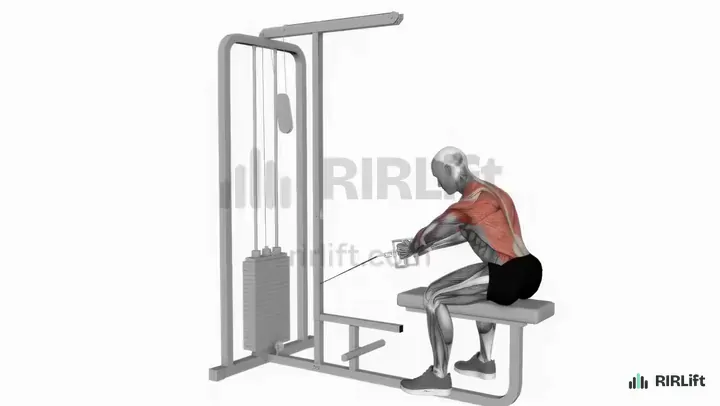
Seated Cable Row

Upper Back, Lats

Sitting tall while the cable pulls you forward trains the exact position good posture asks for, and the stack lets you add weight in small steps. A good main pull for any posture program.

How to do it

  1. Sit at the cable row with your feet on the platform and knees slightly bent, holding a close-grip handle with your arms straight.
  2. Sit tall with your chest up and let the cable pull your shoulder blades forward a little.
  3. Row the handle to your lower ribs, driving your elbows back past your torso.
  4. Return it under control until your arms are straight and your shoulders reach forward, then repeat.

Cues

  • Sit tall, no rocking
  • Handle to the belly button
  • Shoulders reach at the front

Common mistakes

  • Rocking back and forth to move the stack: your torso should stay close to upright throughout.
  • Shrugging the handle up toward your neck: pull your shoulders down before the elbows bend.

Swap for: Chest-Supported Row, Single-Arm Cable Row, Barbell Row

Upper back, chest-supported row

Incline Dumbbell Row

Upper Back, Lats

Lying chest-down on an incline bench removes the lower back from the lift, so the upper back does all the work. Squeeze the shoulder blades together at the top of every rep.

How to do it

  1. Set a bench to about 45 degrees and lie chest-down on it, a dumbbell in each hand, arms hanging straight toward the floor.
  2. Row the dumbbells up by driving your elbows back and slightly out, until your upper arms reach the line of your body.
  3. Squeeze your shoulder blades together for a second at the top with your chest still on the pad.
  4. Lower until your arms are straight and your shoulder blades slide forward, then repeat.

Cues

  • Chest glued to the pad
  • Elbows wide for upper back, tucked for lats
  • Full stretch between reps

Common mistakes

  • Lifting your chest off the pad to finish reps: that is your lower back joining in. Stop the set there.
  • Shrugging the dumbbells up instead of rowing them: pull the shoulder blades down and back before the elbows bend.

Swap for: Chest-Supported Row, One-Arm Dumbbell Row, Dumbbell Rear Delt Row

Upper back, body-weight row

Inverted Row

Upper Back, Lats

Holding a rigid plank while you row trains the upper back and trunk together. Bend your knees or raise the bar to make it easier, straighten your legs to make it harder.

How to do it

  1. Set a bar at about hip height, lie under it, and grip it with your hands a little wider than your shoulders.
  2. Straighten your body from heels to head, or bend your knees with feet flat for an easier version.
  3. Pull your chest up to the bar, leading with your elbows, and keep your hips in line.
  4. Lower until your arms are straight, then pull again.

Cues

  • Body stays a straight plank
  • Chest touches the bar
  • Bend your knees to make it easier

Common mistakes

  • Letting your hips sag so only your chest rises: squeeze your glutes and move as one piece.
  • Pulling the bar to your neck: aim for the bottom of your chest.

Swap for: TRX Row, Seated Cable Row, Band Bent-Over Row

Shoulder blade control

These are lighter and train the small muscles that tilt and rotate the shoulder blades and turn the arms out. They fit at the end of any session, or as a 10-minute block on their own.

Rear shoulders and upper back, cable pull

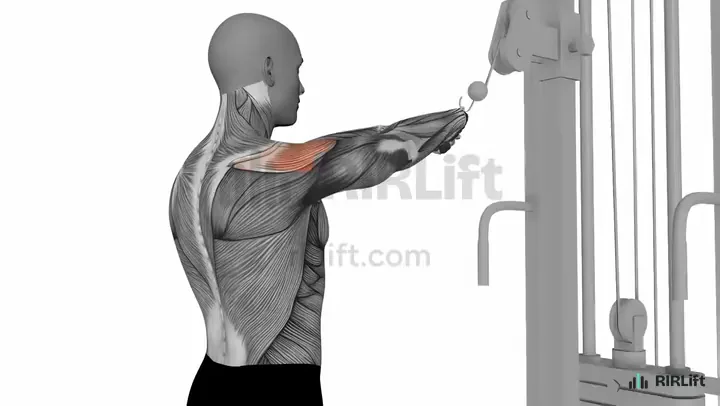
Face Pull

Shoulders, Upper Back

Pulling the rope toward your face while turning your hands back trains the rear shoulders and the muscles that turn the upper arm out, the opposite of a slumped position.

How to do it

  1. Set the pulley at or just above head height and attach a rope. Grab it with your thumbs pointing back toward you.
  2. Step back until your arms are straight and the stack lifts, then stagger your feet or sit on a bench so you can lean back slightly without swaying.
  3. Pull the middle of the rope toward your forehead by driving your elbows out and back, keeping them at shoulder height or higher.
  4. As the rope reaches your face, pull the ends apart and rotate your hands back until your fists sit beside your ears, like a double-biceps pose.
  5. Hold that position for a beat, then let your arms straighten under control until your shoulder blades slide forward again.

Cues

  • Elbows high, hands finish behind them
  • Pull the rope apart, not just back
  • Reach forward at the start of every rep

Common mistakes

  • Loading it like a row and leaning back to move the stack: drop the weight until you can hold the end position for a second without your torso rocking.
  • Letting the elbows drop below your shoulders: the pull turns into a row and your lats and biceps take the work. Raise the pulley or lighten the load.
  • Stopping when the rope touches your face: the outward rotation at the end is what the face pull adds, so finish with your fists beside your ears.

Swap for: Band Face Pull, Reverse Pec Deck, Band Pull-Apart

Rear shoulders and upper back, band

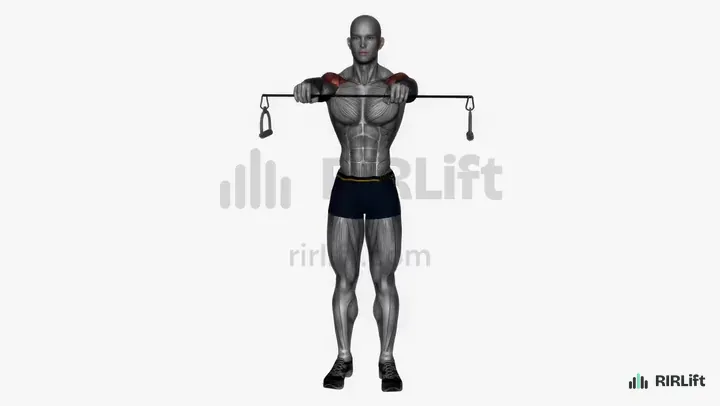
Band Pull-Apart

Shoulders, Upper Back

A light band and 30 seconds is all it takes, so it is the easiest posture exercise to do often. Do a set between pressing sets or at your desk.

How to do it

  1. Hold a light band at shoulder height with straight arms and hands about shoulder width.
  2. Pull your hands apart until the band touches your chest.
  3. Let the band bring your hands back slowly.

Cues

  • Squeeze the shoulder blades together at the end.
  • Keep your ribs down.

Common mistakes

  • Bending the elbows to make it easier.

Swap for: Band Face Pull, Band Scapular Retraction

Lower traps, chest-supported raise

Dumbbell Chest-Supported Y Raise

Shoulders

Raising the arms into a Y with your chest on an incline bench trains the lower traps, which pull the shoulder blades down and back. Use very light dumbbells; this muscle is small.

How to do it

  1. Set a bench to about 45 degrees and lie chest-down on it with a very light dumbbell in each hand, arms hanging and thumbs pointing forward.
  2. Raise both arms up and out at about 30 degrees from your head, so your body makes a Y, until your arms reach the line of your body.
  3. Hold for a second at the top with your shoulder blades pulled down toward your back pockets.
  4. Lower slowly to a full hang and repeat.

Cues

  • Thumbs up the whole way
  • Shoulder blades down, not up
  • Lighter than you think

Common mistakes

  • Shrugging toward your ears as the arms rise: that moves the work to the upper traps. Lead with the shoulder blades sliding down.
  • Going heavy and swinging: this is a 5 to 10 pound exercise for most people, done for 12 to 20 reps.

Swap for: Incline Dumbbell Rear Delt Raise, Dumbbell Face Pull, Face Pull

Hips and the back of the legs

Standing tall starts at the hips. Romanian deadlifts and hip thrusts train the glutes and hamstrings to straighten you up from a bend with the hips, so the lower back holds its position instead of doing the lifting.

Hamstrings, glutes and back, hip hinge

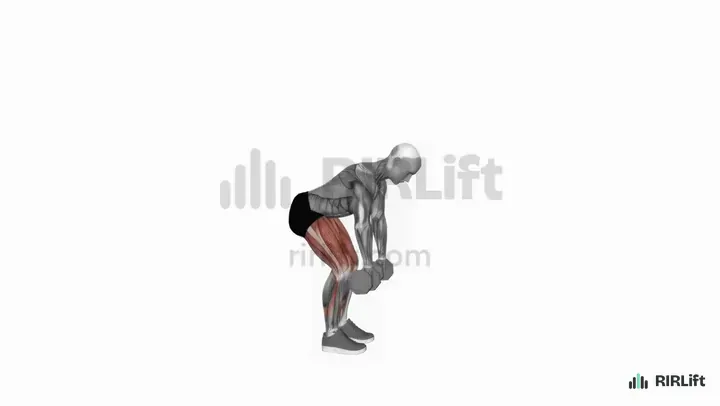
Dumbbell Romanian Deadlift

Hamstrings, Glutes

Bending at the hips with a flat back under load teaches the position you need for every lift off the floor and strengthens the whole back of the body in one move.

How to do it

  1. Stand hip-width apart with a dumbbell in each hand resting against the front of your thighs, palms facing you.
  2. Push your hips straight back and let your torso fold forward, knees softly bent, the dumbbells brushing your legs.
  3. Lower until the dumbbells pass your knees and you feel a strong stretch in your hamstrings, with your back still flat.
  4. Drive your hips forward to stand back up, squeezing your glutes at the top, and repeat.

Cues

  • Hips back, not down
  • Dumbbells slide down your legs
  • Flat back, chin tucked

Common mistakes

  • Bending the knees into a squat so the dumbbells go lower: the depth comes from the hips, and most people stop just past the knees.
  • Rounding the lower back at the bottom: end the rep where your back stays flat, and lighten the load if that is high.

Swap for: Single-Leg RDL, Dumbbell Good Morning, Kettlebell Deadlift

Glutes, loaded hip extension

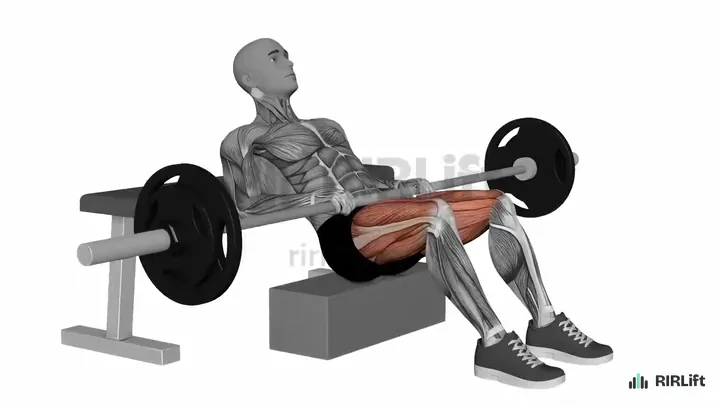
Hip Thrust

Glutes

Long hours sitting leave the glutes doing little. The hip thrust loads them heavily and trains you to finish standing with the hips, not by leaning back from the lower spine.

How to do it

  1. Sit with your shoulder blades against the long side of a flat bench and roll a padded bar over your hips.
  2. Plant your feet flat about hip width apart, close enough that your shins are vertical at the top.
  3. Drive through your heels and lift your hips until your torso and thighs form a straight line.
  4. Hold the top for a second with your chin tucked, then lower your hips most of the way down and repeat.

Cues

  • Chin tucked, ribs down
  • Shins vertical at the top
  • One-second squeeze

Common mistakes

  • Arching your lower back to get higher: stop when your hips are level with your knees and squeeze your glutes there.
  • Feet too far out, which turns it into a hamstring exercise: bring them in until your shins are vertical at lockout.

Swap for: Dumbbell Hip Thrust, Glute Bridge, Smith Machine Hip Thrust

Trunk control and carries

These train the trunk to stay still while your arms and legs move or carry weight, which is what holding a good position all day actually asks of it.

Deep abs, anti-extension

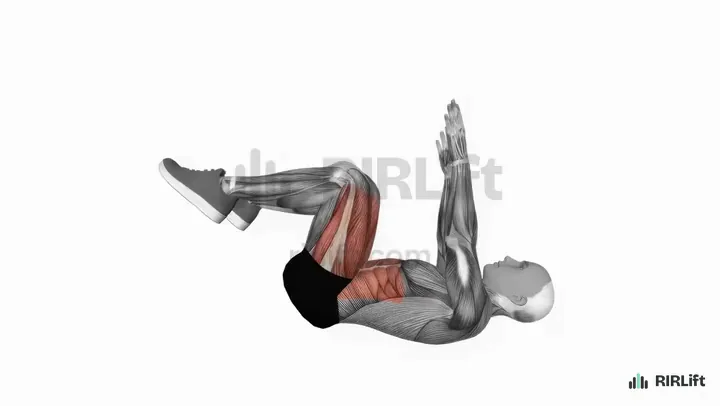
Dead Bug

Abs

Keeping your lower back on the floor while arms and legs move away trains the abs to hold your ribs down and your lower back still, the same job they do when you stand tall.

How to do it

  1. Lie face up, arms pointing up and knees bent at right angles over your hips.
  2. Press your lower back into the floor.
  3. Reach one arm overhead and the opposite leg out long, both hovering above the floor.
  4. Bring them back and repeat with the other pair.

Cues

  • Back glued down
  • Breathe out as you reach
  • Opposite arm and leg

Common mistakes

  • Letting the back arch when the leg goes long: reach less far.
  • Going fast: each rep should take about three seconds.

Swap for: Plank, Alternating Leg Raise

Upper back, trunk and grip, loaded carry

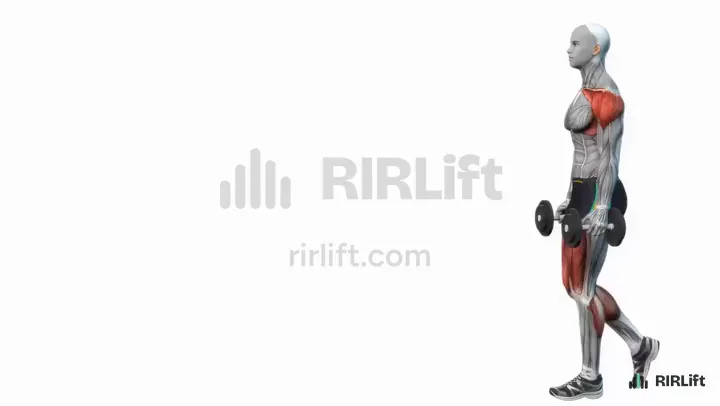
Farmer's Walk

Forearms, Traps, Shoulders

Walking tall with heavy dumbbells at your sides forces your upper back and trunk to hold you upright for 30 to 60 seconds at a time. It is posture work under real load.

How to do it

  1. Pick up two heavy dumbbells with your back flat.
  2. Stand tall with your ribs down and walk with short, quick steps.
  3. Set the weights down with a flat back when the time or distance is up.

Cues

  • Ribs down
  • Crush the handles
  • Quick steps

Common mistakes

  • Letting the shoulders round forward.
  • Walking so slowly the dumbbells start to swing.

Swap for: Dumbbell Suitcase Carry, Dumbbell Single-Arm Overhead Carry

Shoulder and trunk stability, get-up

Kettlebell Turkish Get-Up

Shoulders, Abs

Moving from lying to standing with a kettlebell held overhead trains the shoulder to stay stable while the rest of the body moves. Start with no weight or a shoe balanced on your fist.

How to do it

  1. Lie on your back with a kettlebell pressed up in one hand, the same-side knee bent.
  2. Roll onto the opposite elbow, then the hand, keeping the bell locked out above you.
  3. Lift your hips, sweep the straight leg back to a kneel, and stand up.
  4. Reverse each step back down to the floor.

Cues

  • Eyes on the bell
  • Arm locked
  • One step at a time

Common mistakes

  • Rushing the steps and losing the vertical arm.
  • Using a heavy bell before the sequence is smooth.

Swap for: Dumbbell Single-Arm Overhead Carry, Kettlebell Windmill

Put them together: example sessions

Each session below picks from the exercises above for one situation, with the sets, reps, rest and RIR filled in.

Session 1

Desk job, two full-body gym sessions

  • Workouts2× a week
  • Working sets25 a week
  • Per workout~30 min
  • EquipmentCable Row, Dumbbells, Adjustable Cable, Barbells +2

You sit most of the day, you feel stiff and slumped by the evening, and you can get to a gym twice a week.

Each session covers a row, a hinge or hip lift, shoulder blade work and a trunk exercise, 12 or 13 hard sets. Over the week that is 13 sets for the upper back and shoulder blades and 6 for the hips, with no pressing, so you can add it next to any existing chest or shoulder work without tipping the balance.

Day A
ExerciseSets × repsRIRRest
Seated Cable Row1 warm-up set first 4 × 8–12 2 2 min
Dumbbell Romanian Deadlift 3 × 8–10 2 2 min
Face Pull 3 × 12–15 1 1 min
Dead BugPer side. 3 × 8–12 2 1 min
Day B
ExerciseSets × repsRIRRest
Hip Thrust2 warm-up sets first 3 × 8–12 2 2 min
Incline Dumbbell Row 3 × 8–12 2 90 s
Dumbbell Chest-Supported Y Raise 3 × 10–15 2 1 min
Farmer's WalkSeconds per walk. 3 × 30–60 2 90 s
How to run it
Two sessions a week, with at least two days between them. If you also press, keep at least one pulling set for every pressing set across the week.
How to progress
Double progression: when every set hits the top of the rep range at the target reps in reserve, add the smallest weight step. For the farmer's walk, add 10 seconds per set up to 60, then heavier dumbbells.

Session 2

At home, 20 minutes, three times a week

  • Workouts3× a week
  • Working sets24 a week
  • Per workout~20 min
  • EquipmentDumbbells, Incline Bench, Resistance Bands, Kettlebells

You train at home with dumbbells, a band and a bench, and you would rather do short sessions more often than long ones.

Three short sessions with about 8 hard sets each spread the upper back and trunk work across the week, which suits muscles you want to use well every day. Total weekly volume is close to the gym plan.

Session 1: Row and hinge
ExerciseSets × repsRIRRest
Incline Dumbbell Row1 warm-up set first 3 × 10–12 2 90 s
Dumbbell Romanian Deadlift 3 × 8–12 2 90 s
Band Pull-Apart 2 × 15–20 1 1 min
Session 2: Blades and trunk
ExerciseSets × repsRIRRest
Dumbbell Chest-Supported Y Raise 3 × 10–15 2 1 min
Dead BugPer side. 3 × 8–12 2 1 min
Farmer's WalkSeconds per walk. 2 × 30–60 2 90 s
Session 3: Get-up and row
ExerciseSets × repsRIRRest
Kettlebell Turkish Get-UpPer side. 3 × 2–3 3 90 s
Incline Dumbbell Row 3 × 10–12 2 90 s
Band Pull-Apart 2 × 15–20 1 1 min
How to run it
Monday, Wednesday and Friday, or any three non-consecutive days. Rotate the three sessions in order, and do a set of band pull-aparts any time you have been sitting for an hour.
How to progress
Add reps to the top of the range at 1 to 2 reps in reserve, then move to heavier dumbbells or a stiffer band. On the get-up, add weight only when all reps on both sides are smooth.

Session 3

You already lift; add a posture block

  • Workouts2× a week
  • Working sets10 a week
  • Per workout~10 min
  • EquipmentAdjustable Cable, Barbells, Resistance Bands

You already follow a program, it is heavy on bench press and pressing, and you want to balance it without starting a new routine.

Two 10-minute blocks add about 8 sets of upper back and shoulder blade work a week, enough to even out a press-heavy program without adding much fatigue to your main lifts.

Block 1
ExerciseSets × repsRIRRest
A1 Face Pull 3 × 12–15 1 1 min
A2 Dead BugPer side. 2 × 8–12 2 1 min
Block 2
ExerciseSets × repsRIRRest
A1 Inverted Row 3 × 8–12 2 1 min
A2 Band Pull-Apart 2 × 15–20 1 1 min
How to run it
Do Block 1 at the end of your first upper-body or push day and Block 2 at the end of the second. Superset the two exercises in each block to keep it short.
How to progress
Keep these at 1 to 2 reps in reserve. Add reps first, then weight, and expect slow jumps; these muscles are small.

Make it fit you

Questions

How do you improve posture?

Strengthen the upper back, glutes and trunk so holding an upright position takes less effort, and change position often during the day. Rows, face pulls, hip thrusts, dead bugs and carries cover the strength side.

What are good posture exercises with weights?

Seated cable rows, incline dumbbell rows, face pulls, chest-supported Y raises, Romanian deadlifts, hip thrusts and farmer's walks. Pick one row, one hip exercise and one shoulder blade exercise per session.

What exercises strengthen the lower back for posture?

Romanian deadlifts train the lower back to hold a flat position under load, and dead bugs and farmer's walks train the trunk around it. You rarely need a lower back exercise on its own.

How long does it take to improve posture with exercise?

Strength in these muscles goes up noticeably within 4 to 8 weeks of training two or three times a week. Holding an upright position for longer without effort usually follows that strength.

Can you do posture exercises every day?

Light band work like pull-aparts, yes. Keep the loaded rows, hinges and carries to two or three sessions a week so the muscles recover and get stronger.

Do posture exercises work if I sit all day?

They make sitting and standing tall easier, but the biggest change comes from combining them with getting up and moving every hour or so.