
Exercises for rounded shoulders: rows, rear delts and shoulder blade strength
Published October 29, 2026
The best exercises for rounded shoulders strengthen what pulls the shoulders back and turns the arms out: chest-supported and band rows for the mid back, the reverse pec deck, incline rear delt raises and band face pulls for the rear shoulders, cable Y raises, plank IYTWs and band retractions for the lower traps, and lying external rotations for the rotator cuff. Add push-up plus to keep the shoulder blades moving well. Do 16 to 24 of these sets a week across two or three sessions, more pulling than pressing, 1 to 2 reps short of failure.
- Chest-Supported Row Upper Back, Lats
- Reverse Pec Deck Shoulders
- Band Face Pull Shoulders, Upper Back
- Cable Y Raise Shoulders, Upper Back
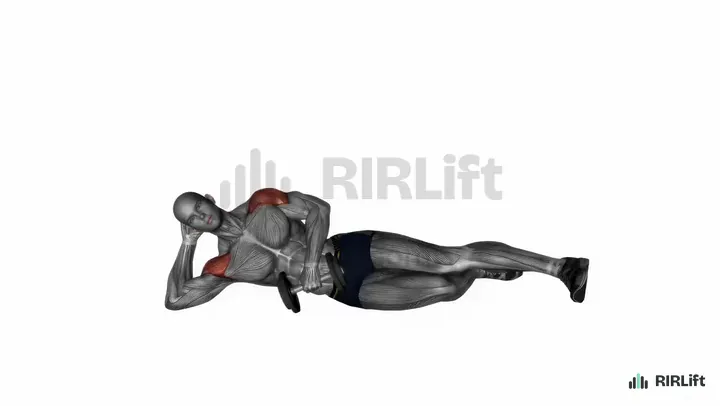
- Dumbbell Lying External Rotation Shoulders
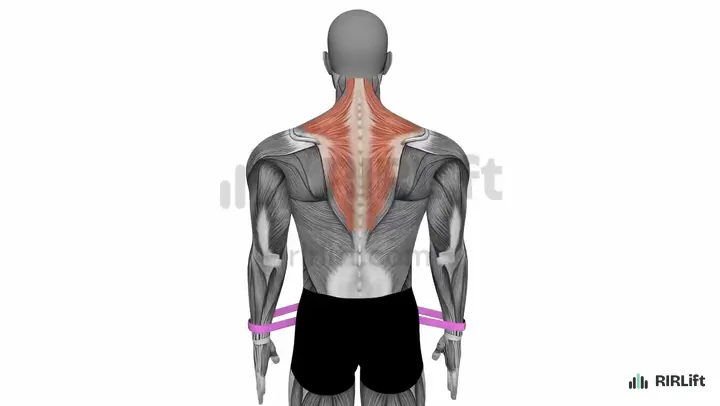
- Band Scapular Retraction Upper Back
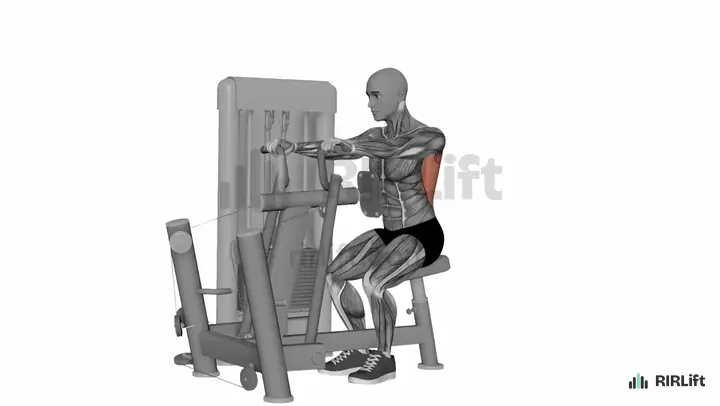
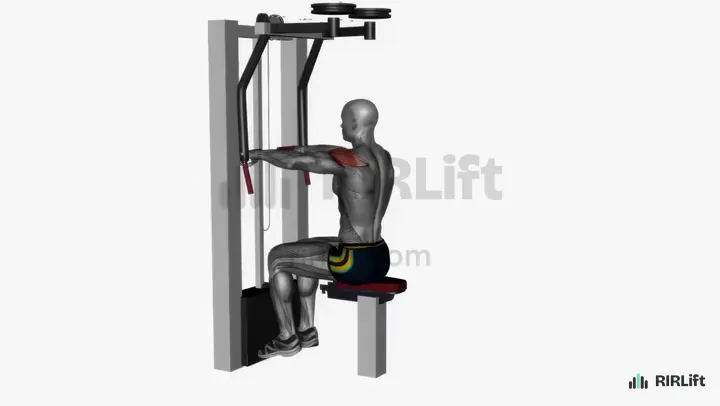
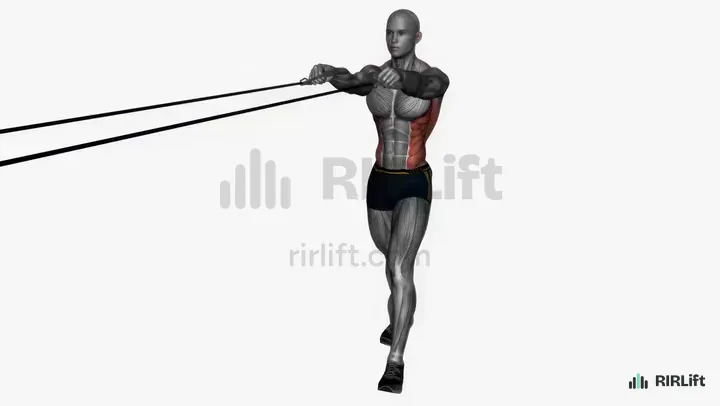
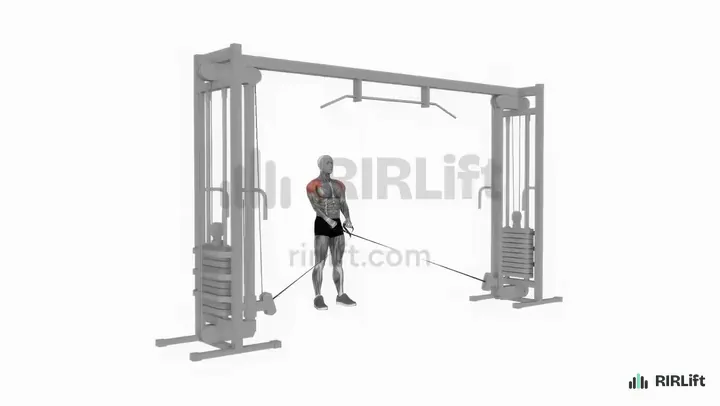
Put them together: example sessions
Each session below picks from the exercises above for one situation, with the sets, reps, rest and RIR filled in.
-
Session 1
You bench a lot and your shoulders roll forward
You train at a gym, your program leans on bench press and push-ups, and photos show your shoulders sitting forward of your ears.
2× a week · 19 sets a week · ~20 min
-
Session 2
At home with a band, short and frequent
You work at a desk, have a resistance band and a door anchor, and would rather do 15 minutes three times a week than go to a gym.
3× a week · 24 sets a week · ~15 min
-
Session 3
Over 50 and starting to stoop
You are over 50, you have noticed your upper back rounding, and you want to stay upright as you get older, starting with machines and light dumbbells.
2× a week · 16 sets a week · ~20 min
Session 1
You bench a lot and your shoulders roll forward
- Workouts2× a week
- Working sets19 a week
- Per workout~20 min
- EquipmentSeated Row Machine, Fly Machine, Dumbbells, Cable Crossover
You train at a gym, your program leans on bench press and push-ups, and photos show your shoulders sitting forward of your ears.
Two pull-focused blocks with about 9 to 10 sets each double your weekly pulling for the upper back and rear shoulders. Over the week that is about 19 sets of mid back, rear delt and lower trap work against your pressing.
| Exercise | Sets × reps | RIR | Rest |
|---|---|---|---|
| Chest-Supported Row1 warm-up set firstPause 1 s with the blades squeezed. | 4 × 8–12 | 1 | 90 s |
| Reverse Pec Deck | 3 × 12–20 | 1 | 1 min |
| Dumbbell Lying External RotationPer arm. | 2 × 12–15 | 2 | 1 min |
| Exercise | Sets × reps | RIR | Rest |
|---|---|---|---|
| Chest-Supported Row | 3 × 10–12 | 1 | 90 s |
| Cable Y Raise | 3 × 12–15 | 2 | 1 min |
| Reverse Pec Deck | 2 × 15–20 | 1 | 1 min |
| Push-Up Plus | 2 × 10–15 | 2 | 1 min |
- How to run it
- Add Session A after your first pressing day and Session B after your second, or run them as two short sessions on non-pressing days. Keep your pressing volume the same for now.
- How to progress
- Double progression. The row and reverse pec deck move up one plate on the stack when every set reaches the top of the range at 1 rep in reserve. The Y raise and external rotation move up only when the last rep is as slow and controlled as the first.
Session 2
At home with a band, short and frequent
- Workouts3× a week
- Working sets24 a week
- Per workout~15 min
- EquipmentResistance Bands
You work at a desk, have a resistance band and a door anchor, and would rather do 15 minutes three times a week than go to a gym.
Bands are light, so frequency does the work: three sessions of about 8 sets each give 24 sets a week, most of them for the rear shoulders and shoulder blades. Light sets recover quickly, so three a week is easy to sustain.
| Exercise | Sets × reps | RIR | Rest |
|---|---|---|---|
| Band Bent-Over Row | 3 × 12–15 | 1 | 1 min |
| Band Face Pull | 3 × 15–20 | 1 | 1 min |
| Band Scapular Retraction | 2 × 15–20 | 1 | 1 min |
| Exercise | Sets × reps | RIR | Rest |
|---|---|---|---|
| Plank IYTWOne rep is all four shapes per arm. | 3 × 3–5 | 2 | 1 min |
| Push-Up Plus | 3 × 8–12 | 2 | 1 min |
| Band Face Pull | 2 × 15–20 | 1 | 1 min |
| Exercise | Sets × reps | RIR | Rest |
|---|---|---|---|
| Band Bent-Over Row | 3 × 12–15 | 1 | 1 min |
| Band Scapular Retraction | 3 × 15–20 | 1 | 1 min |
| Plank IYTWOne rep is all four shapes per arm. | 2 × 3–5 | 2 | 1 min |
- How to run it
- Three days a week, such as Monday, Wednesday and Friday. Do them at your desk break or before work. Rotate the sessions in order.
- How to progress
- Add reps up to the top of the range, then step back from the anchor or use a heavier band. For the plank IYTW, add a 2-second hold in each shape before adding reps.
Session 3
Over 50 and starting to stoop
- Workouts2× a week
- Working sets16 a week
- Per workout~20 min
- EquipmentSeated Row Machine, Dumbbells, Incline Bench, Resistance Bands +1
You are over 50, you have noticed your upper back rounding, and you want to stay upright as you get older, starting with machines and light dumbbells.
Two sessions of about 8 sets, all supported or seated, train the upper back and rear shoulders without asking much balance. Effort stays at 2 to 3 reps in reserve so you can recover and keep going week after week.
| Exercise | Sets × reps | RIR | Rest |
|---|---|---|---|
| Chest-Supported Row1 warm-up set first | 3 × 10–12 | 3 | 90 s |
| Incline Dumbbell Rear Delt Raise | 3 × 12–15 | 2 | 1 min |
| Band Scapular Retraction | 2 × 12–15 | 2 | 1 min |
| Exercise | Sets × reps | RIR | Rest |
|---|---|---|---|
| Chest-Supported Row1 warm-up set first | 3 × 10–12 | 3 | 90 s |
| Reverse Pec Deck | 3 × 12–15 | 2 | 1 min |
| Dumbbell Lying External RotationPer arm. | 2 × 10–12 | 2 | 1 min |
- How to run it
- Twice a week at the gym, at least two days apart. Warm up with a few minutes on a rowing machine or bike first.
- How to progress
- Add reps to the top of the range for two weeks in a row before adding weight. Stay at 2 to 3 reps in reserve; there is no need to push close to failure for these muscles to get stronger.
Make it fit you
-
Add a chest stretch
A doorway stretch for the chest, 30 seconds per side after each session, pairs well with the strength work. The stretch helps you reach the position; the exercises help you hold it.
-
Shrugging on face pulls and Y raises
If your neck takes over, drop the weight and start each rep by pulling the shoulder blades down. Lower traps work with the shoulders away from the ears, never toward them.
-
No gym
The home band plan covers everything with a band and a door anchor. If you have dumbbells and a bench, swap in incline rear delt raises for one of the band face pull sets.
-
Keep pressing
Rounded shoulders are not a reason to stop bench pressing. Keep at least as many pulling sets as pressing sets each week and press with your shoulder blades set back on the bench.
-
Track the small lifts
Light rear delt and rotator cuff work stalls when it is done without a target. Log the reps you had left on each set, and RIRLift sets the next session's target so the small lifts keep moving.
Questions
How long does it take to fix rounded shoulders?
Holding your shoulders back gets easier within the first month or two of training two or three times a week. How you stand without thinking about it changes more slowly, over a few months.
What causes rounded shoulders?
Long hours with the arms forward at a desk, phone or steering wheel, plus training that presses much more than it pulls. Over time the front of the shoulder gets used to that position and the upper back gets less work.
How do you prevent stooping in old age?
Keep the upper back and rear shoulders strong with rows and rear delt work, keep training the hips and legs, and stay active. Two short strength sessions a week are enough to start.
What are the best dumbbell exercises for rounded shoulders?
Incline dumbbell rear delt raises, lying external rotations and chest-supported dumbbell rows. All three work with light dumbbells and a bench.
Can anterior pelvic tilt cause rounded shoulders?
Not directly, but the two often show up in the same person. Training the glutes and abs alongside the rows and raises on this page covers both.
Should I stop bench pressing if I have rounded shoulders?
No. Keep pressing, but match it with at least as many pulling sets each week, and add rear delt and lower trap work like the plans on this page.
Related templates
-
Exercises for posture: build the back, hips and trunk that hold you upright
Adds hips, trunk and carries for whole-body posture.
-
Rear delt exercises at home: dumbbells, bands, a kettlebell or a suspension trainer
More rear shoulder options without a gym.
-
Dumbbell upper back exercises: rows, rear delts and rotator cuff
Rows and raises for the upper back with dumbbells.
-
Reverse pec deck alternatives for your rear delts
What to use when the machine is taken.
-
Shoulder external rotation
How and why to train the muscles that turn the arm out.