Exercises for a wider back: train the lats and teres major from every angle

Back width comes from the lats and the teres major, the muscles that pull your upper arm down to your side. The best exercises for a wider back are the pull-up, the lat pulldown and its one-arm version, one-arm rows that drive the elbow to the hip, such as the single-arm high row, cable row and Meadows row, and straight-arm pulldowns and pullovers that train the lats with no biceps help. Add reverse flys and face pulls to fill out the upper back. Do 12 to 18 lat-focused sets a week over two sessions, stretch fully at the top of each rep and end each set with 1 or 2 reps left.

  1. Pull-Up Lats
  2. Lat Pulldown Lats
  3. Single-Arm Lat Pulldown Lats
  4. Single-Arm High Row Upper Back, Lats
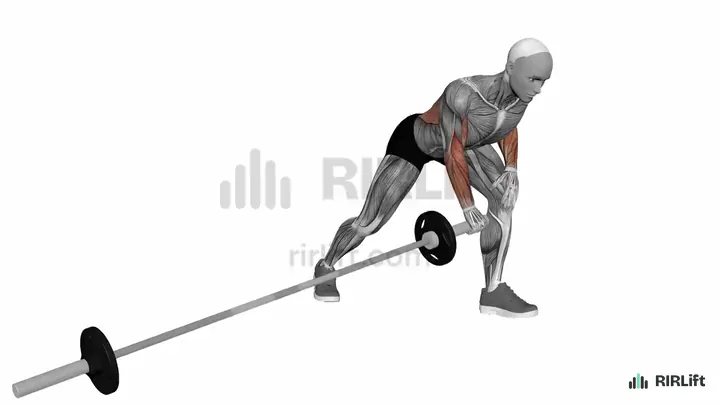
  5. Meadows Row Upper Back, Lats
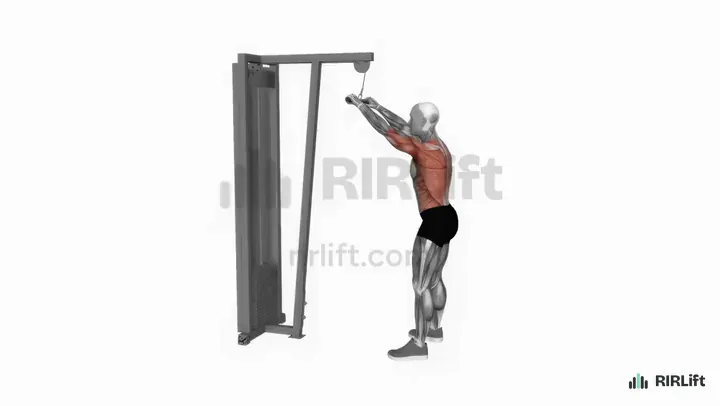
  6. Straight-Arm Pulldown Lats
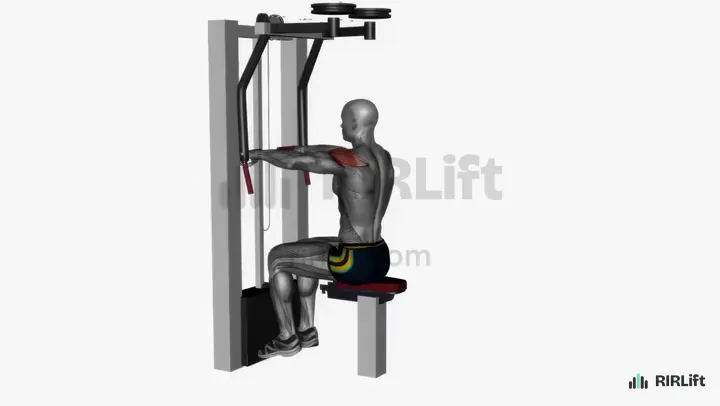
  7. Reverse Pec Deck Shoulders

Pull-ups and pulldowns

Pulling your elbows down from overhead is the lats' main job, and it takes the arm through the longest range they have. Every width plan starts with one of these. A shoulder-width grip lets your elbows travel further than a very wide one, so do not chase grip width.

Lats, vertical pull

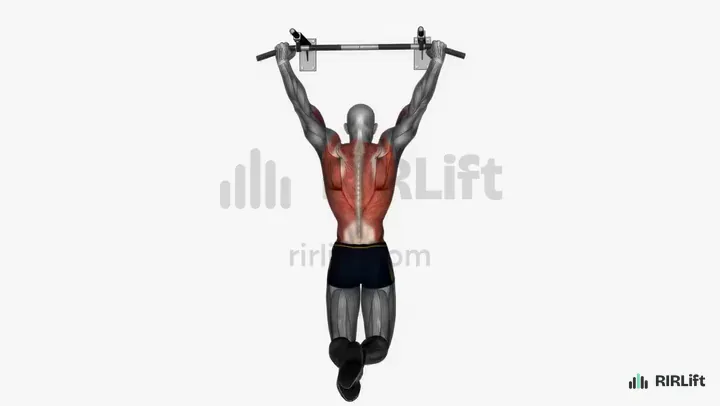
Pull-Up

Lats

Your whole body is the weight, and the lats have to pull it from a dead hang to the bar. Once you can do 8 clean reps, a belt or a dumbbell between the feet keeps it the best width builder you have.

How to do it

  1. Grab the bar overhand, hands a little wider than your shoulders, and hang from fully straight arms.
  2. Pull your shoulders down away from your ears before your elbows start to bend.
  3. Drive the elbows toward your ribs until your chin passes over the bar.
  4. Lower slowly to a dead hang and pull again.

Cues

  • Shoulders down, then pull
  • Legs still and together
  • Two seconds on the way down

Common mistakes

  • Swinging the legs to cheat reps: cross your ankles and brace the abs.
  • Half reps from a bent-arm start: finish each rep at a full hang.

Swap for: Band-Assisted Pull-Up, Lat Pulldown, Neutral-Grip Pull-Up

Lats, cable vertical pull

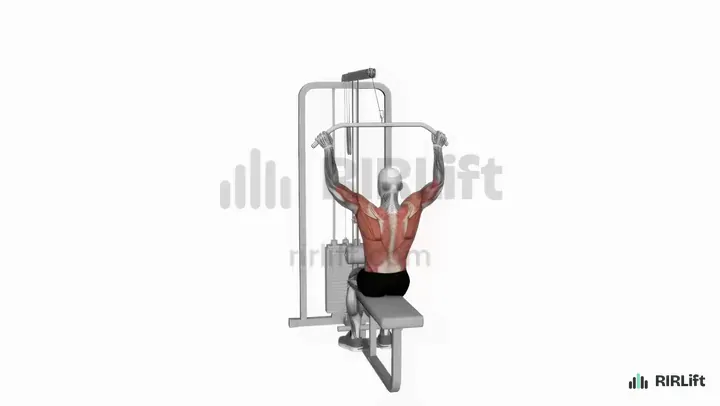
Lat Pulldown

Lats

A pulldown copies the pull-up's path but lets you pick the load, so you can stay in sets of 8 to 15 instead of being capped by your bodyweight. Lean back a few degrees and pull the bar to your upper chest.

How to do it

  1. Set the thigh pad so your legs are locked under it, then stand up and take the bar a little wider than your shoulders, palms forward.
  2. Sit down with your arms fully stretched overhead and lean back only slightly.
  3. Pull the bar to your upper chest by driving your elbows down toward your hips.
  4. Let the bar rise until your arms are straight and your shoulders lift toward your ears, then pull again.

Cues

  • Elbows to your back pockets
  • Bar to the top of the chest
  • Let the stack lift you at the top

Common mistakes

  • Leaning far back and rowing the bar to your stomach: stay nearly upright so it remains a vertical pull.
  • Stopping with the arms still bent at the top: the stretch overhead is half of what makes the pulldown work.

Swap for: Pull-Up, Neutral-Grip Lat Pulldown, Assisted Pull-Up

Lats, one-arm vertical pull

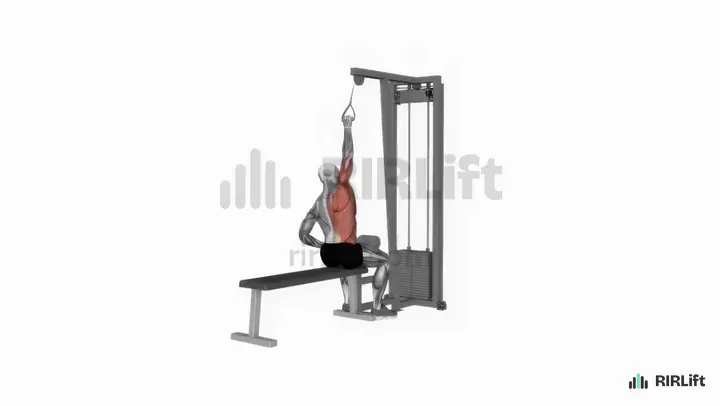
Single-Arm Lat Pulldown

Lats

Pulling with one arm lets the shoulder rise higher at the top and the elbow drive further past your side at the bottom. That extra range at both ends is what a width-focused lifter is after.

How to do it

  1. Attach a single handle to the high pulley, sit with your thighs locked under the pads, and hold the handle overhead with one hand.
  2. Let the cable pull your arm up and slightly in front of you until your lat is fully stretched.
  3. Drive your elbow down toward your hip, finishing with the handle beside your shoulder.
  4. Let the handle rise back to the stretch slowly, finish your reps, and switch sides.

Cues

  • Reach long at the top
  • Elbow to the hip
  • Torso stays square

Common mistakes

  • Rotating your torso to finish the rep: keep your chest facing the stack.
  • Rushing the lowering: the stretched top is where this exercise earns its place.

Swap for: Lat Pulldown, Single-Arm High Row, Single-Arm Cable Row

Lats, assisted vertical pull

Band-Assisted Pull-Up

Lats

A band under your foot takes off the hardest part of the rep so you can do sets of 6 to 10 with a full range. Use it at home until you can do 8 strict pull-ups.

How to do it

  1. Loop a strong resistance band over the bar and pull it through itself so it hangs down tight.
  2. Grip the bar a little wider than your shoulders and step one knee or foot into the loop at the bottom.
  3. Pull your elbows down toward your hips until your chin clears the bar.
  4. Lower under control to straight arms, letting the band stretch back out, and repeat.

Cues

  • Thinnest band you can do 8 reps with
  • Full range every rep
  • Stay vertical, no swing

Common mistakes

  • Using a band so thick that the set never gets hard: move down a band once you pass 12 reps at the target reps in reserve.
  • Bouncing out of the bottom off the band: pause for a moment at the hang before each pull.

Swap for: Assisted Pull-Up, Lat Pulldown, Inverted Row

One-arm rows that finish at the hip

A row works the lats hardest when the elbow stays close to your side and finishes by your hip instead of flaring toward your chest. Rowing one arm at a time lets that shoulder reach forward at the start, so the lat starts each rep from a long stretch. The high row pulls from above shoulder height, the cable row from chest height and the Meadows row from the floor.

Lats and teres major, high-to-low row

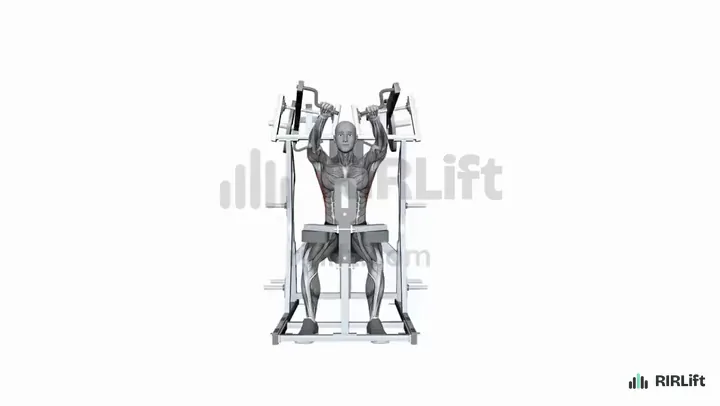
Single-Arm High Row

Upper Back, Lats

The machine handle starts high and in front of you, so each rep pulls the elbow down and back in the direction the lats run. Your chest stays on the pad, which keeps the work in the back instead of the hips.

How to do it

  1. Sit facing the chest pad with your feet flat and your chest pressed against it.
  2. Take both handles, then pull one handle down and back toward your ribs while the other arm stays reaching forward.
  3. Squeeze your back at the bottom, then let the handle return slowly until your arm is straight.
  4. Finish all reps on one side, then switch arms.

Cues

  • Chest stays on the pad
  • Elbow to your back pocket
  • Reach long at the top

Common mistakes

  • Twisting off the pad to move more weight: keep both shoulders against it.
  • Stopping short at the top: let the shoulder reach forward on every rep.

Swap for: Single-Arm Lat Pulldown, Single-Arm Cable Row, One-Arm Dumbbell Row

Lats, standing one-arm row

Single-Arm Cable Row

Upper Back, Lats

Standing lets your shoulder reach toward the stack at the start, which stretches the lat further than a seated row. Pull the handle to your hip, not your chest, to keep the work in the lat.

How to do it

  1. Set a single handle at about chest height, stand facing the stack with your feet shoulder-width apart, and hold the handle in one hand, arm extended and palm facing in.
  2. Soften your knees, lean forward slightly from the hips, and let your shoulder reach toward the stack with a slight turn of the torso.
  3. Row the handle toward your hip as you square your chest, elbow tight to your side.
  4. Return slowly to the reach, finish the set, then switch hands.

Cues

  • Reach, then pull
  • Elbow tight to the side
  • Finish square

Common mistakes

  • Twisting far back at the finish to move more weight: the rotation stays small.
  • Letting the stack yank your arm forward: control the return.

Swap for: Seated Cable Row, Single-Arm Lat Pulldown, One-Arm Dumbbell Row

Lats and upper back, landmine row

Meadows Row

Upper Back, Lats

The fixed bar end puts your arm at an angle out to the side, which brings in the teres major along with the lats. It loads heavy, so it is the row to use for sets of 8 to 10.

How to do it

  1. Wedge one end of the bar into a corner or landmine and load the other end.
  2. Stand side on to the loaded end in a staggered stance, front knee bent, and rest your free forearm on that knee.
  3. Grip the sleeve end overhand and pull it up toward your hip, driving your elbow back and slightly out.
  4. Lower until your arm is fully straight and your shoulder dips toward the floor, then row again. Finish the set and switch sides.

Cues

  • Elbow back and slightly out
  • Let the shoulder drop at the bottom
  • Hips stay square

Common mistakes

  • Rotating your torso to heave the bar: keep your shoulders level and lighten the load.
  • Gripping the thick sleeve too far from the end: hold just behind the collar so your hand does not slip.

Swap for: Underhand Barbell Row, Seal Row, Barbell Row

Straight-arm pulldowns and pullovers

With straight arms, the biceps cannot help, so all the work falls on the lats and teres major. Use these as the second or third lat exercise of a session, for 10 to 15 reps.

Lats, straight-arm isolation

Straight-Arm Pulldown

Lats

This is the lats working alone: arms straight, the bar sweeps from eye level to your thighs. It is the best way to feel the muscle you are trying to widen.

How to do it

  1. Attach a straight bar to a high pulley, take it palms down about shoulder width, and step back a couple of feet.
  2. Hinge forward slightly and hold the bar at about shoulder height with your arms long, a small fixed bend in your elbows, and brace your abs.
  3. Sweep the bar down in an arc until it reaches your thighs, squeezing your lats at the bottom.
  4. Let it rise back up under control until your arms are at shoulder height again, then repeat.

Cues

  • Arms long, elbows fixed
  • Bar to the thighs
  • Torso angle never changes

Common mistakes

  • Bending the elbows and turning it into a triceps pushdown: lighten the stack and keep the arms long.
  • Bobbing the torso up and down to move the weight: lock your hinge and move only the arms.

Swap for: Single-Arm Lat Pulldown, Dumbbell Lat Pullover, Lat Pulldown

Lats, dumbbell straight-arm pull

Dumbbell Lat Pullover

Lats

The pullover works the lats in the overhead stretch with a single dumbbell. It is the straight-arm option for training at home.

How to do it

  1. Lie on a flat bench with your head near one end and your feet flat on the floor.
  2. Hold one dumbbell with both hands under the top plate, arms straight above your chest.
  3. Keep your elbows softly bent and fixed, and let the dumbbell travel back behind your head in an arc. Stop once your upper arms reach the line of your body.
  4. Pull it back over your chest along the same arc, feeling the pull come from your armpits, and repeat.

Cues

  • Ribs down, no arching
  • Pull with your armpits
  • Stop when upper arms line up with your torso

Common mistakes

  • Bending the elbows more as the dumbbell goes back, which turns it into a triceps extension: fix the elbow angle and lighten the load.
  • Letting your ribcage flare to go deeper: brace your abs and stop at the point where your back wants to arch.

Swap for: Kettlebell Pullover, Straight-Arm Pulldown, One-Arm Dumbbell Row

Rear delts and upper back

From behind, the outline of a wide back runs up into the rear shoulders. Light, high-rep reverse flys and face pulls fill that corner and finish a back session in five minutes; at home, the band row and band pull-apart stand in for the machines.

Rear delts, machine reverse fly

Reverse Pec Deck

Shoulders

The machine keeps the arms on a fixed arc, so you can push the rear delts close to failure without your lower back joining in. Two or three sets at the end of a back day is enough.

How to do it

  1. Set the handles to the rear position, sit facing the pad, and adjust the seat so the handles are at shoulder height.
  2. Hold the handles with arms straight in front of you, palms down or facing in.
  3. Sweep your arms out and back in a wide arc until they are in line with your body.
  4. Return slowly, stopping just before the weight touches the stack, and repeat.

Cues

  • Wide arc, not a row
  • Arms almost straight
  • Keep the stack off the rest

Common mistakes

  • Pulling the elbows back like a row: the arms move out to the side.
  • Too much weight with jerky reps: these grow on 12 to 20 controlled reps.

Swap for: Face Pull, Rear Delt Cable Fly, Dumbbell Rear Delt Fly

Rear delts and upper back, rope pull

Face Pull

Shoulders, Upper Back

Pulling the rope to your face works the rear delts and the small muscles that turn the shoulder out. It rounds off the back of the shoulder so the top of the V looks wider.

How to do it

  1. Set the pulley at or just above head height and attach a rope. Grab it with your thumbs pointing back toward you.
  2. Step back until your arms are straight and the stack lifts, then stagger your feet or sit on a bench so you can lean back slightly without swaying.
  3. Pull the middle of the rope toward your forehead by driving your elbows out and back, keeping them at shoulder height or higher.
  4. As the rope reaches your face, pull the ends apart and rotate your hands back until your fists sit beside your ears, like a double-biceps pose.
  5. Hold that position for a beat, then let your arms straighten under control until your shoulder blades slide forward again.

Cues

  • Elbows high, hands finish behind them
  • Pull the rope apart, not just back
  • Reach forward at the start of every rep

Common mistakes

  • Loading it like a row and leaning back to move the stack: drop the weight until you can hold the end position for a second without your torso rocking.
  • Letting the elbows drop below your shoulders: the pull turns into a row and your lats and biceps take the work. Raise the pulley or lighten the load.
  • Stopping when the rope touches your face: the outward rotation at the end is what the face pull adds, so finish with your fists beside your ears.

Swap for: Band Face Pull, Reverse Pec Deck, Dumbbell Rear Delt Fly

Lats, band row

Band Bent-Over Row

Lats, Upper Back

Standing on a band and rowing to your hips trains the lats with no gear but the band. It is the row for the home plan, done for higher reps.

How to do it

  1. Stand on the middle of a band, hold an end in each hand, and hinge forward with a flat back.
  2. Row your hands to your lower ribs with the elbows tucked near your body.
  3. Straighten the arms slowly and keep the hinge.

Cues

  • Elbows to your hips
  • Hold the hinge

Common mistakes

  • Standing up as you row: keep the same torso angle every rep.

Swap for: Dumbbell Bent-Over Row, Inverted Row, Seated Cable Row

Rear delts, band pull

Band Pull-Apart

Shoulders, Upper Back

Pulling a band apart at shoulder height covers the rear delts and upper back at home. Do it for 15 to 25 reps at the end of the session, or between pull-up sets to save time.

How to do it

  1. Hold a light band at shoulder height with straight arms and hands about shoulder width.
  2. Pull your hands apart until the band touches your chest.
  3. Let the band bring your hands back slowly.

Cues

  • Squeeze the shoulder blades together at the end.
  • Keep your ribs down.

Common mistakes

  • Bending the elbows to make it easier.

Swap for: Band Face Pull, Band Scapular Retraction

Put them together: example sessions

Each session below picks from the exercises above for one situation, with the sets, reps, rest and RIR filled in.

Session 1

Gym, two back days built for width

  • Workouts2× a week
  • Working sets24 a week
  • Per workout~30 min
  • EquipmentPull-Up Bar, Seated Row Machine, Lat Pulldown, Fly Machine +2

You train in a gym, your back has some thickness from rows, and you want it wider seen from the front and from behind.

Each day opens with a vertical pull and follows with a one-arm row and a straight-arm lift, giving the lats 9 sets a session and 18 a week. Rear delts get 3 sets each day, enough for a small muscle that rows already work a little.

Day 1: Pull-ups and high rows
ExerciseSets × repsRIRRest
Pull-Up1 warm-up set first 3 × 6–10 2 2:30 min
Single-Arm High RowPer arm. 3 × 8–12 1 90 s
Straight-Arm Pulldown 3 × 10–15 1 1 min
Reverse Pec Deck 3 × 12–20 0 1 min
Day 2: Pulldowns and landmine rows
ExerciseSets × repsRIRRest
Lat Pulldown 3 × 8–12 1 2 min
Meadows Row1 warm-up set firstPer arm. 3 × 8–10 2 2 min
Single-Arm Lat PulldownPer arm. 3 × 10–15 1 75 s
Face Pull 3 × 12–20 1 1 min
How to run it
Train Day 1 on Monday and Day 2 on Thursday, or any pair with a few days between, coming off a rest day or a leg day.
How to progress
On pull-ups, add reps up to 10, then add weight and drop back to 6. On the machines and cables, climb the rep range first and move the pin down one plate once all three sets top out with the planned reps in reserve.

Session 2

Home with a pull-up bar and a resistance band

  • Workouts2× a week
  • Working sets24 a week
  • Per workout~25 min
  • EquipmentPull-Up Bar, Resistance Bands

You train at home with a doorway pull-up bar and a set of bands, and you can do at least a few pull-ups.

Bodyweight pulls cannot be made lighter mid-session, so the band-assisted sets let you keep doing full reps after the strict pull-ups run out. That gives the lats 9 sets a session and 18 a week, the top of the 12 to 18 range, because more sets is the lever you have when the load is hard to raise.

Bar and band back
ExerciseSets × repsRIRRest
Pull-Up 3 × 4–10 2 2:30 min
Band-Assisted Pull-Up 3 × 8–12 1 90 s
Band Bent-Over Row 3 × 15–20 1 1 min
Band Pull-Apart 3 × 15–25 1 45 s
How to run it
Do it twice a week with two or three days between, for example Monday and Thursday. It takes about 30 minutes.
How to progress
Add one rep to your first pull-up set each week. When the strict sets reach 10 reps, move to a lighter band for the assisted sets, and when that is easy, replace them with a fourth strict set.

Session 3

Thick back, narrow from the front: a lat focus block

  • Workouts3× a week
  • Working sets18 a week
  • Per workout~15 min
  • EquipmentLat Pulldown, Seated Row Machine, Dumbbells, Cable Row

You already row heavy and your mid back is thick, but your back does not look wide from the front. You have 15 minutes to add to three training days.

Rows have built the middle back, so this block adds only lat-specific work: 6 sets three times a week, 18 extra lat sets in total. Run it for 6 to 8 weeks, and drop rows from your main program so your weekly lat total stays near 20.

Lats A: One-arm pulldown and straight-arm
ExerciseSets × repsRIRRest
Single-Arm Lat PulldownPer arm. 3 × 10–12 1 75 s
Straight-Arm Pulldown 3 × 12–15 1 1 min
Lats B: High row and pullover
ExerciseSets × repsRIRRest
Single-Arm High RowPer arm. 3 × 10–12 1 75 s
Dumbbell Lat Pullover 3 × 12–15 1 1 min
Lats C: Cable row and pulldown
ExerciseSets × repsRIRRest
Single-Arm Cable RowPer arm. 3 × 10–12 1 75 s
Lat Pulldown 3 × 12–15 1 75 s
How to run it
Add one short routine to the end of three existing sessions, for example after your upper body or pull days, at least a day apart.
How to progress
These are lighter lifts where one plate is a big jump, so earn it with reps: top out every set, then take the smallest step up and rebuild from the low end.

Make it fit you

Questions

How do I make my back wider?

Train the lats and teres major directly at least twice a week: a vertical pull and a one-arm row to the hip each session, plus a straight-arm exercise. Keep adding weight or reps over months, and eat enough to gain muscle. Losing fat around the waist also makes the back look wider.

Which exercise is best for a wide back?

The pull-up, or the lat pulldown if you cannot yet do sets of 6. It loads the lats through their longest range with the most weight. Pair it with a one-arm row to the hip for a second angle.

Do wide-grip pull-ups make your back wider?

Not more than a normal grip. A very wide grip shortens how far your elbows travel, so you get less range for the lats. Use a grip a little outside shoulder width and focus on pulling the elbows to your sides.

How do I get a V-shaped back?

Combine back width with wider shoulders and a smaller waist. The exercises here build the lats; lateral raises build the side delts at the top of the V, and keeping body fat in check shows the taper.

How many sets for a wider back?

Around 12 to 18 hard sets a week for the lats, split across two or three days. Past about 20, extra sets tend to add more fatigue than growth.