Explosive exercises: jumps, cleans, swings, throws and sled pushes

The best explosive exercises are box jumps, jump squats and frog jumps for the legs; power cleans, hang cleans, kettlebell swings and dumbbell snatches for hip power; med ball chest throws, rotational throws, slams and clap push-ups for the upper body; and sled pushes and push presses for driving force into the ground. Do 3 to 5 sets of 2 to 5 fast reps at the start of a session, rest 1 to 3 minutes, and stop each set while every rep is still as fast as the first.

  1. Box Jump Quads, Glutes, Hamstrings
  2. Power Clean Glutes, Hamstrings, Traps
  3. Kettlebell Swing Glutes, Hamstrings
  4. Jump Squat Quads, Glutes
  5. Med Ball Chest Throw Abs
  6. Medicine Ball Slam Lats, Abs
  7. Sled Push Quads, Glutes
  8. Dumbbell Push Press Shoulders

Jumps: explosive leg power

Jumps are the simplest explosive training: your body is the load and the height or distance is the score. Start with box jumps, which cut the landing short, before jumps that land back on the floor.

Legs, jump to a box

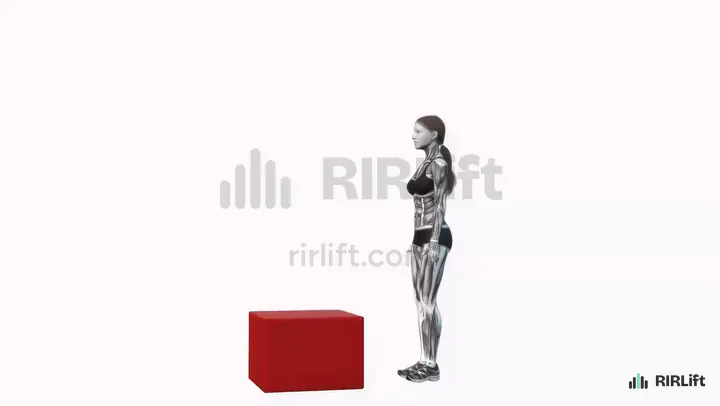
Box Jump

Quads, Glutes, Hamstrings

Landing on a box means you only absorb a short drop, so you can put full effort into the takeoff on every rep. Measure the box, not the reps: a higher box you land on quietly is the progress.

How to do it

  1. Stand a short step from a sturdy box.
  2. Dip into a quarter squat and swing the arms back.
  3. Spring onto the box and absorb the landing quietly.
  4. Straighten up on top, then step back down.

Cues

  • Quick dip
  • Soft landing
  • Step down

Common mistakes

  • Using a box so tall you land in a deep squat: lower the box.
  • Jumping tired: keep sets short.

Swap for: Jump Squat, Lateral Box Jump, Single-Leg Box Jump

Legs, bodyweight jump

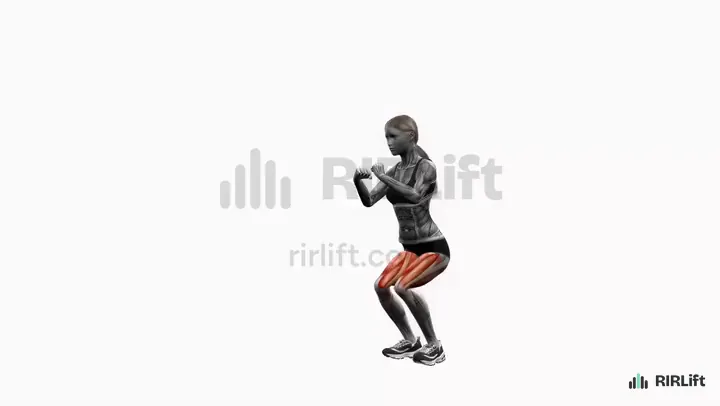
Jump Squat

Quads, Glutes

The jump squat trains the same takeoff as the box jump plus a full landing, which teaches the legs to stop and reload. Do single reps with a reset when you want power, and continuous reps when you want stiffness in the bounce.

How to do it

  1. Stand with your feet about shoulder width and your arms ready.
  2. Dip into a quarter to half squat, then jump straight up, swinging your arms.
  3. Land softly with bent knees and reset before the next jump.

Cues

  • Soft, quiet landing
  • Reset between reps

Common mistakes

  • Landing stiff-legged: let the hips and knees bend to absorb the landing.

Swap for: Box Jump, Bodyweight Squat

Legs and hips, jump from a deep squat

Frog Jump

Quads, Glutes, Calves

Starting each jump from a deep squat with a pause removes the bounce, so the legs must create force from a dead stop. It is a useful contrast to the fast dip of the box jump.

How to do it

  1. Stand with feet wider than your hips and squat until your hands come near the floor.
  2. Jump straight up, driving your arms.
  3. Land softly back in the low squat with your hands reaching toward the floor, pause, and repeat.

Cues

  • Deep load, big jump
  • Land low
  • Reset each rep

Common mistakes

  • Landing with straight legs: sink back into the squat on each landing.
  • Rounding the back at the bottom: chest up.

Swap for: Box Jump, Med Ball Jump, Star Jump

Olympic lifts and hip drive

These turn a fast hip extension into a moving weight. Cleans give the highest power output but take practice; the swing and the dumbbell snatch train the same snap with a far shorter learning curve.

Full body, Olympic lift

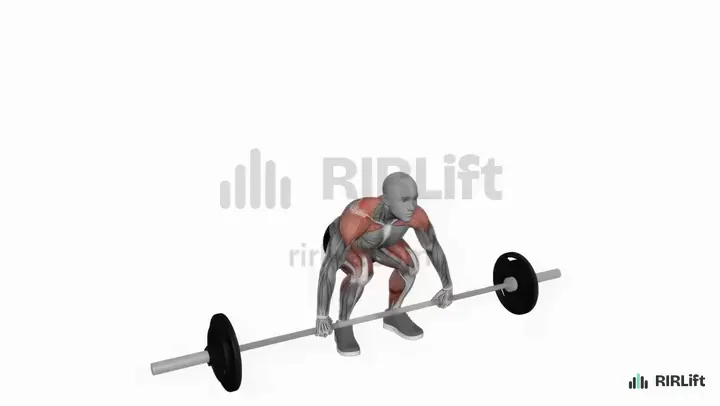
Power Clean

Glutes, Hamstrings, Traps

The power clean moves a barbell from the floor to your shoulders in one fast pull, which takes more power than nearly any other lift you can learn in a gym. Keep the weight light enough that the bar still snaps into the catch.

How to do it

  1. Set up like a deadlift with the bar over your midfoot and your hands just outside your legs.
  2. Lift the bar to your knees with your back flat, then drive hard through the floor as it passes your thighs.
  3. Shrug and pull yourself down under the bar, rotating your elbows forward fast.
  4. Catch it on your shoulders in a quarter squat, then stand up.

Cues

  • Slow off the floor, fast past the knees
  • Elbows fast
  • Catch high, then stand

Common mistakes

  • Pulling with the arms early: keep them long until the legs and hips finish.
  • Catching with low elbows: whip them forward so the bar sits on your shoulders.

Swap for: Hang Clean, Clean Pull, Kettlebell Clean & Press

Hips and upper back, clean from the knees

Hang Clean

Traps, Glutes, Hamstrings

Starting with the bar above the knees skips the slow pull off the floor and keeps only the explosive part. It is the easier clean to learn and to repeat for clean, fast sets.

How to do it

  1. Stand tall holding the bar at arm's length against your thighs, hands just outside your legs.
  2. Push your hips back and slide the bar down to just above your knees, back flat, shoulders over the bar.
  3. Jump: drive the hips forward, rise onto the balls of your feet and shrug, keeping your arms long until the bar is moving up.
  4. Pull your elbows around fast and receive the bar on the front of your shoulders in a quarter squat, then stand.

Cues

  • Hips back, then violent hips forward
  • Arms are ropes until the jump
  • Fast elbows

Common mistakes

  • Reverse-curling the bar up with the arms: the bar rises because your hips snap, so drill the jump with a light bar first.
  • Dropping into a deep squat to save heavy reps: pick a weight you can receive high and fast.

Swap for: Power Clean, Kettlebell Swing, Box Jump

Glutes and hamstrings, ballistic hinge

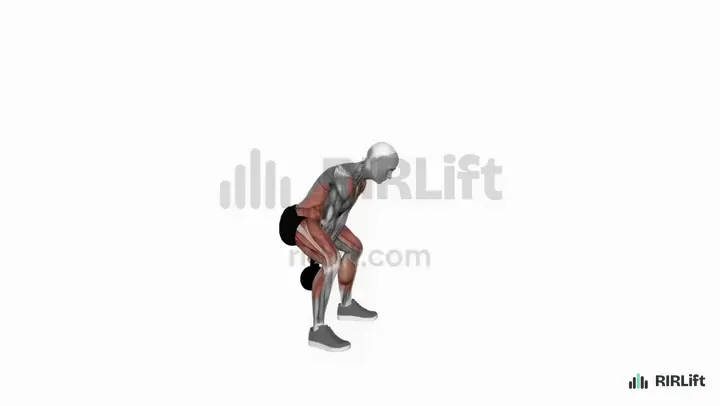
Kettlebell Swing

Glutes, Hamstrings

Each swing is a fast hip snap followed by a float, so a set of 5 to 10 is a string of explosive hip extensions with almost no learning curve. Heavier bells and crisper snaps progress it.

How to do it

  1. Stand with your feet a little wider than your hips, the bell set about a foot in front of you.
  2. Hinge down, grip the handle with both hands, and hike the bell back between your thighs.
  3. Snap your hips forward to stand tall, letting the bell float up to about shoulder height on straight arms.
  4. Let it fall back between your legs as you hinge again, and go straight into the next rep.

Cues

  • Hips snap, arms just hold on
  • Stand tall at the top
  • Bell passes high between the thighs

Common mistakes

  • Squatting the swing by bending the knees deeply: push your hips back and keep the shins nearly vertical.
  • Lifting the bell with your shoulders: if your arms are working, the hips are not driving it.

Swap for: Dumbbell Romanian Deadlift, Kettlebell Deadlift, Superman

Hips and shoulders, one-arm snatch

One-Arm Dumbbell Snatch

Shoulders, Glutes

The dumbbell snatch drives a weight from between the feet to overhead in one movement, using the hips to launch it and the shoulder to finish. It is the snatch for lifters without a barbell or a coach.

How to do it

  1. Stand over one dumbbell with feet a bit wider than your hips and grab it with one hand.
  2. Hinge with a flat back, then explode upward through the hips and knees.
  3. Pull the dumbbell up close to your body and punch it overhead as you stand tall, arm locked out.
  4. Lower it to your shoulder, then to the floor, and repeat.

Cues

  • Hips do the lifting
  • Keep it close to the body
  • Punch through at the top

Common mistakes

  • Pulling with the arm from the floor instead of exploding with the hips.
  • Swinging the dumbbell out in an arc away from the body.

Swap for: Dumbbell Swing, Dumbbell Push Press, Kettlebell Snatch

Upper-body power and throws

A medicine ball lets you accelerate all the way through the rep and let go, which a bench press or push-up cannot do. Throw forward, sideways and down, then add the clap push-up for bodyweight pressing power.

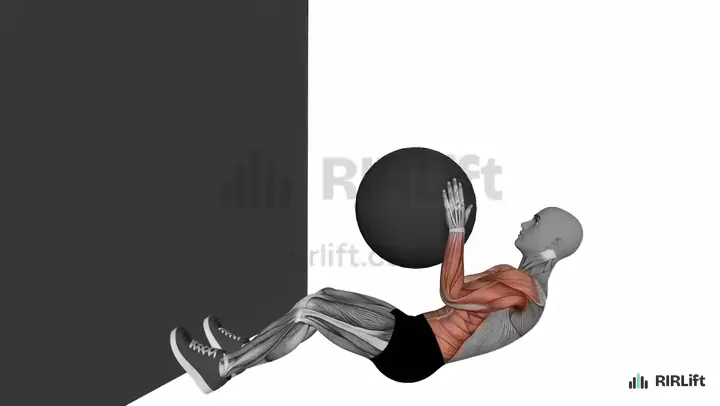
Chest and arms, lying throw

Med Ball Chest Throw

Abs

Lying on your back and throwing the ball off your chest takes the legs out, so the chest and triceps have to make the speed. You can throw harder than you can press, because nothing has to stop at the top.

How to do it

  1. Lie on your back near a wall, holding a medicine ball at your chest.
  2. Throw the ball hard against the wall with both hands.
  3. Catch it at your chest, reset, and throw again.

Cues

  • Throw from the chest
  • Reset each rep

Common mistakes

  • Using a ball too heavy to throw fast: speed is the point.

Swap for: Explosive Push-Up, Push-Up, Medicine Ball Slam

Hips and trunk, rotational throw

Med Ball Rotational Throw

Abs

Turning the hips and throwing sideways into a wall trains the rotational power behind swinging, throwing and punching. Throw from both sides so each direction gets the same work.

How to do it

  1. Stand side-on to a wall in your hitting stance, holding a medicine ball at your back hip.
  2. Load into the back leg as you would before a swing.
  3. Turn the hips hard and throw the ball into the wall.
  4. Catch, reset, and repeat. Train both sides.

Cues

  • Load, then turn
  • Hips lead the arms
  • Throw through the wall

Common mistakes

  • Throwing only with the arms: start with the back hip.
  • Training only your dominant side: do both directions.

Swap for: Med Ball Woodchop, Landmine Rotational Press, Cable Woodchop

Lats and abs, overhead slam

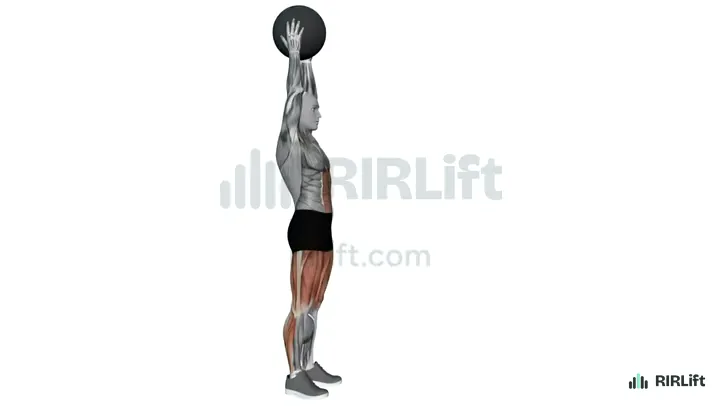
Medicine Ball Slam

Lats, Abs

The slam trains the downward half of explosive work: reaching tall and then driving a ball into the floor with the lats, abs and hips. It is forgiving to learn and hard to do slowly.

How to do it

  1. Stand with feet about shoulder-width holding a medicine ball.
  2. Reach the ball overhead and rise onto your toes.
  3. Slam it into the floor in front of you as hard as you can, bending the hips and knees.
  4. Pick it up and repeat.

Cues

  • Reach tall
  • Slam with the whole body
  • Exhale hard

Common mistakes

  • Slamming with the arms only: hinge the hips into it.
  • Using a bouncy ball: use a slam ball that stays down.

Swap for: Med Ball Rotational Throw, Battle Rope Slam, Kettlebell Swing

Chest and triceps, plyometric push-up

Clap Push-Up

Chest

Pushing hard enough to leave the floor and clap trains upper-body speed with body weight only. If you cannot clap yet, push until your hands leave the floor and land them in place.

How to do it

  1. Set up in a push-up position with hands a little wider than your shoulders and your body in one straight line.
  2. Lower your chest close to the floor under control.
  3. Push up explosively so your hands leave the floor, clap once, and catch with soft elbows.
  4. Reset for a breath at the top if needed so every rep is fast.

Cues

  • Push the floor away hard
  • Land soft, then go again
  • Body stays one plank

Common mistakes

  • Doing them tired and slow: stop the set as soon as the hands barely leave the floor.
  • Sagging at the hips on landing: tighten your glutes before each rep.

Swap for: Explosive Push-Up, Push-Up, Med Ball Chest Throw

Loaded drives

When jumping is off the table, push hard against a heavy load. The sled trains horizontal leg drive and the push press sends leg power up through the arms, both with almost no landing impact.

Legs and hips, loaded push

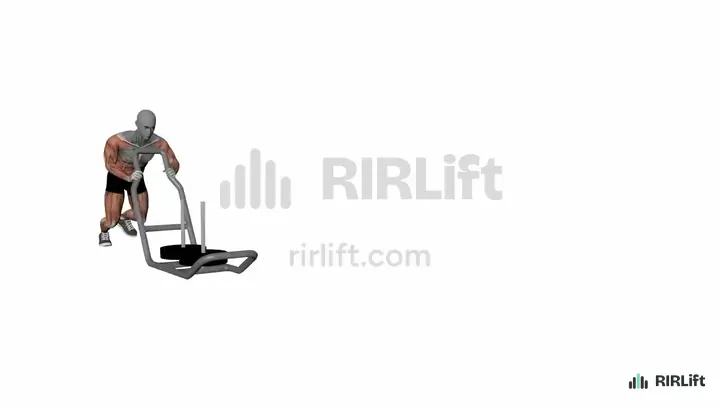
Sled Push

Quads, Glutes

A heavy sled push is all acceleration and no landing, which makes it explosive leg work for anyone whose knees or Achilles dislike jumping. Short pushes of 10 to 15 seconds keep it power, not conditioning.

How to do it

  1. Load the sled and grip the high or low handles with your arms extended.
  2. Lean in until your body forms a straight line from head to back foot.
  3. Drive the sled forward with short, powerful steps, pushing through the balls of your feet.
  4. Keep pushing for the target time, then rest fully.

Cues

  • Low body angle
  • Short, hard steps
  • Keep the arms locked

Common mistakes

  • Standing too upright so the sled stalls: lower the hips and lean in.
  • Long, loping strides: keep steps short and fast.

Swap for: Sled Pull, Air Bike, Barbell Back Squat

Shoulders and legs, push press

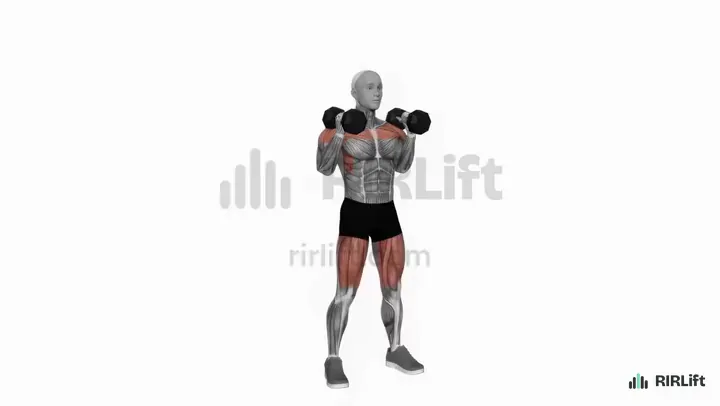
Dumbbell Push Press

Shoulders

A short dip and drive with the legs lets you move a heavier dumbbell overhead than you can strictly press. It teaches the timing of passing force from the ground through the trunk into the arms.

How to do it

  1. Stand with the dumbbells resting at your shoulders and feet about hip-width apart.
  2. Dip by bending your knees a few inches, keeping your torso upright.
  3. Straighten your legs explosively and use that drive to push the dumbbells overhead.
  4. Lower them under control back to your shoulders.

Cues

  • Short dip, straight down
  • Legs start it, arms finish it
  • Biceps by the ears at the top

Common mistakes

  • Dipping so deep it turns into a squat, which wastes the drive.
  • Leaning back to finish the press instead of pushing your head through.

Swap for: Dumbbell Shoulder Press, Alternating Dumbbell Shoulder Press, One-Arm Dumbbell Snatch

Put them together: example sessions

Each session below picks from the exercises above for one situation, with the sets, reps, rest and RIR filled in.

Session 1

Two power days in a gym

  • Workouts2× a week
  • Working sets30 a week
  • Per workout~40 min
  • EquipmentPlyo Box, Barbells, Kettlebells, Sled +2

You lift in a gym with a barbell and sled, you have been strength training for a while, and you want to be faster and more explosive for sport or general athleticism.

Power sets stay short: 30 explosive sets a week across two days, mostly 2 to 5 reps, so every rep can be fast. A lower-body day and an upper-body day let you go hard on each without fatigue from the other.

Day 1: Lower power
ExerciseSets × repsRIRRest
Box Jump 4 × 3–5 3 90 s
Power Clean3 warm-up sets first 5 × 2–3 3 2:30 min
Kettlebell Swing 3 × 6–10 3 90 s
Sled PushSeconds per push. Heavy sled, full rest. 4 × 10–15 2 2 min
Day 2: Upper power
ExerciseSets × repsRIRRest
Med Ball Chest Throw 4 × 4–6 3 90 s
Dumbbell Push Press2 warm-up sets first 4 × 3–5 2 2 min
Med Ball Rotational ThrowPer side. 3 × 4–6 3 75 s
Clap Push-Up 3 × 3–6 3 90 s
How to run it
Do Day 1 and Day 2 on separate days early in the week while you are fresh, and do your heavy strength work after the power work on the same day if you combine them.
How to progress
Add load only while the speed stays: a heavier clean or bell when every rep in a set looks the same as the first. Progress jumps by box height, not by more reps, and stop a set the moment a rep slows.

Session 2

At home with a kettlebell and a dumbbell

  • Workouts2× a week
  • Working sets32 a week
  • Per workout~35 min
  • EquipmentKettlebells, Dumbbells

You train at home or in a garage with a kettlebell, a dumbbell and some floor space, and no barbell or plyo box.

Jumps and ballistic hinges need no rack. Five exercises and 16 sets, about 35 minutes, give two sessions a week of 20 to 30 jumps and 50 to 80 swings and snatches, enough explosive work to progress without beating up your joints.

Home power
ExerciseSets × repsRIRRest
Jump Squat 3 × 4–6 3 75 s
Frog Jump 3 × 3–5 3 75 s
Kettlebell Swing 4 × 8–12 3 75 s
One-Arm Dumbbell Snatch1 warm-up set firstPer arm. 3 × 3–5 3 90 s
Clap Push-Up 3 × 3–6 3 75 s
How to run it
Do it twice a week on non-consecutive days, as the first thing after your warm-up. If you also lift for strength, put this session at the start of it.
How to progress
Jumps progress by height and a quieter landing. For swings and snatches, move to a heavier bell when every rep of every set floats to the same height.

Session 3

Explosive work without jumping

  • Workouts2× a week
  • Working sets32 a week
  • Per workout~35 min
  • EquipmentSled, Kettlebells, Medicine Ball, Dumbbells

Your knees, back or Achilles do not like landings, or you are over 40 and want to stay quick without a jump program.

Every exercise here produces force fast without a landing: you push, swing, throw or slam. Sixteen sets a session keeps the work short and sharp, and two sessions a week is enough to train speed without adding soreness.

Low-impact power
ExerciseSets × repsRIRRest
Sled PushSeconds per push. 4 × 10–15 2 2 min
Kettlebell Swing 3 × 8–10 3 75 s
Med Ball Chest Throw 3 × 5–6 3 1 min
Medicine Ball Slam 3 × 5–8 3 1 min
Dumbbell Push Press1 warm-up set first 3 × 4–6 2 90 s
How to run it
Do it twice a week at the start of your regular lifting sessions. Warm up with a few light swings and easy throws first.
How to progress
Add sled weight when every push covers the same distance in the time. Move to a heavier ball or bell only while the throws and swings stay fast; slow reps mean the load is too heavy.

Make it fit you

Questions

What is the most explosive exercise?

Among gym lifts, the Olympic lifts like the power clean and snatch produce the most power. Without a barbell, box jumps and kettlebell swings are the most explosive exercises most people can learn in a session.

How many reps should you do for explosive training?

Usually 2 to 5 reps per set for jumps and lifts, and up to 10 for swings and throws, over 3 to 5 sets. End the set as soon as a rep slows down.

Are explosive exercises the same as plyometrics?

Plyometrics are one kind of explosive exercise: jumps and bounds that use a quick stretch before the push. Olympic lifts, swings, throws and sled pushes are also explosive but are not plyometrics.

Can you do explosive exercises at home?

Yes. Jump squats, frog jumps, clap push-ups, and kettlebell swings and dumbbell snatches if you have the weights, are a complete home power session. The home plan above uses exactly those.

How often should you do explosive exercises?

Two sessions a week is enough for most people, with at least a day between them. The sets are short, so they fit at the start of strength sessions you already do.