Full body exercises for weight loss: train everything, every session

The best full body exercises for weight loss are the goblet squat, trap bar deadlift, reverse lunge, dumbbell glute bridge, kettlebell swing, push-up, one-arm dumbbell row and dumbbell shoulder press, with the rowing machine, burpees and bear crawls for conditioning. Train your whole body three times a week: one squat or lunge, one hinge, one push and one pull per session, 2 to 4 sets of 8 to 15 reps stopping 1 to 3 reps short of failure, then 5 to 10 minutes of conditioning. Fat comes off your whole body as you hold a calorie deficit; these moves keep the muscle underneath.

  1. Goblet Squat Quads, Glutes
  2. Trap Bar Deadlift Quads, Glutes
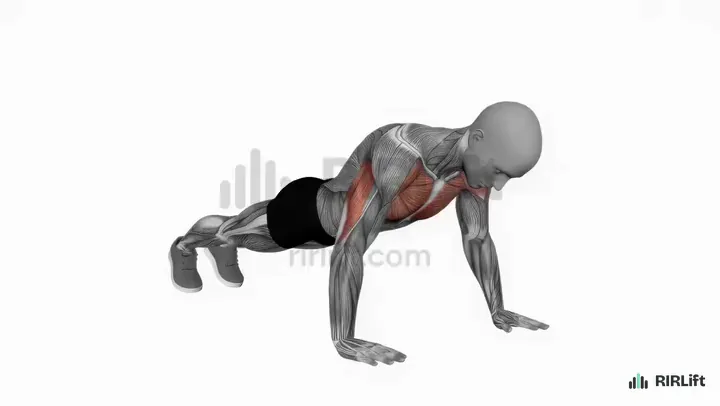
  3. Push-Up Chest
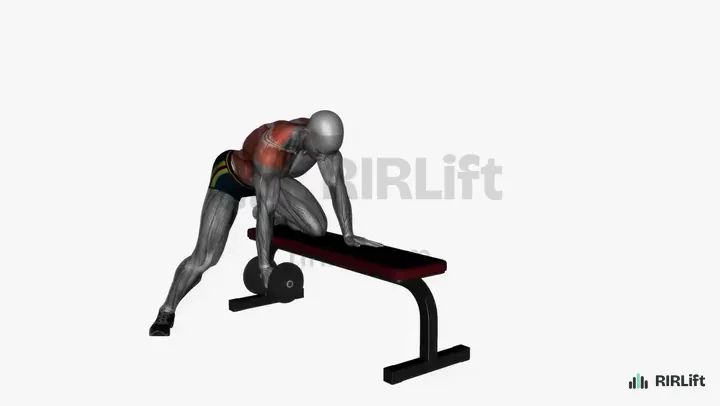
  4. One-Arm Dumbbell Row Lats, Upper Back
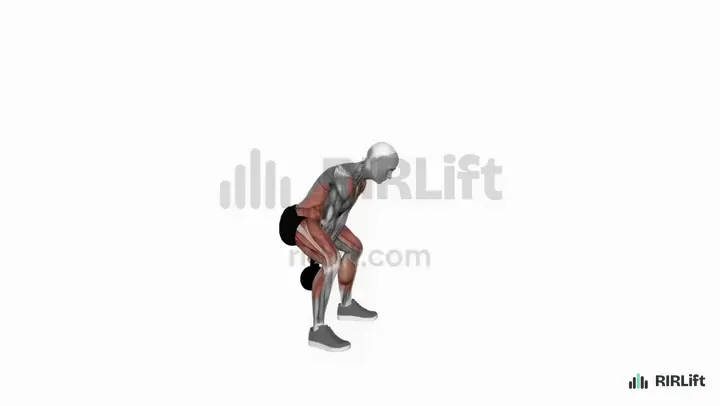
  5. Kettlebell Swing Glutes, Hamstrings
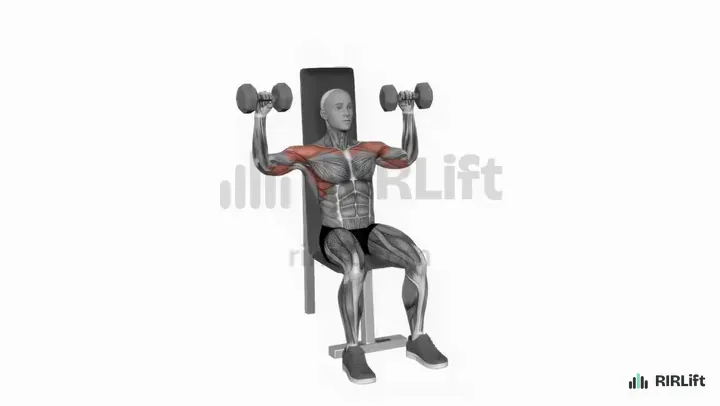
  6. Dumbbell Shoulder Press Shoulders
  7. Rowing Machine Quads, Hamstrings, Glutes, Lats
Squats, lunges and bridges

Every full-body session starts with the legs, because they are the biggest muscles and the most tiring to train later. Pick one of these per session and rotate them across the week.

Quads and glutes, front-loaded squat

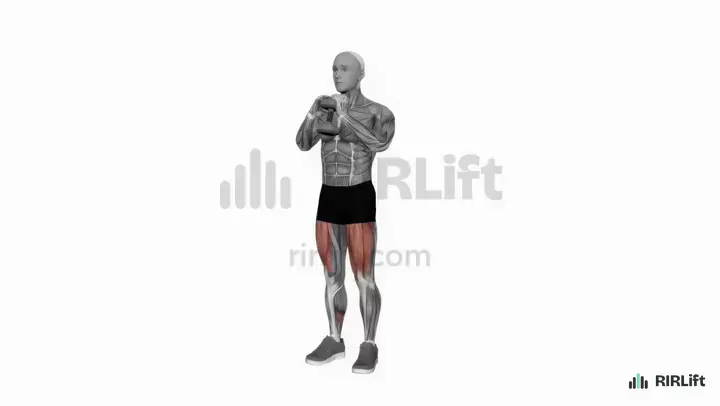
Goblet Squat

Quads, Glutes

It is the squat every plan here opens with: easy to learn, hard enough with a heavy dumbbell, and the bell at your chest makes your upper back and trunk work too.

How to do it

  1. Hold a dumbbell or kettlebell vertically against your chest.
  2. Sit down between your knees, elbows inside them at the bottom.
  3. Stand up tall.

Cues

  • Elbows nudge the knees out at the bottom.
  • Chest stays up behind the weight.

Common mistakes

  • Letting the weight pull you forward.

Swap for: Bodyweight Squat, Barbell Back Squat

Quads and glutes, one leg at a time

Dumbbell Reverse Lunge

Quads, Glutes

A lunge trains one leg while the other balances you, and your trunk keeps you upright. Rotate it in on the day after a squat-heavy session.

How to do it

  1. Start tall with a dumbbell hanging from each hand and your feet under your hips.
  2. Step one foot back and lower until your back knee is just above the floor and your front thigh is near parallel.
  3. Keep your front heel flat and your chest tall.
  4. Push through your front foot to bring the back foot forward to the start, then alternate or finish all reps on one side.

Cues

  • Front shin stays vertical
  • Back knee kisses the floor
  • Drive through the front heel

Common mistakes

  • Taking a short step so the front knee shoots forward and the heel lifts: step farther back.
  • Letting the torso twist or lean to the side as you tire; keep both dumbbells hanging straight down.

Swap for: Reverse Lunge, Step-Up, Dumbbell Split Squat

Glutes, loaded floor bridge

Dumbbell Glute Bridge

Glutes

A dumbbell across your hips loads your glutes without loading your back, and it needs only a mat. It is the lower-body move for days when your knees want a rest from squats.

How to do it

  1. Lie face up, knees bent, heels about a foot from your hips.
  2. Place a dumbbell across your hips and hold the ends.
  3. Press through your heels and lift your hips until your body makes a straight line from knees to shoulders.
  4. Hold the squeeze for a second at the top, lower until your glutes lightly reach the floor, and repeat.

Cues

  • Heels, not toes
  • Squeeze before you lower
  • Short range, hard squeeze

Common mistakes

  • Pushing off the toes so the thighs burn instead of the glutes: lift your toes slightly if it helps you feel the heels.
  • Bouncing off the floor between reps: let the hips touch down and pause.

Swap for: Dumbbell Hip Thrust, Single-Leg Glute Bridge, Dumbbell Staggered Hip Thrust

Deadlifts and swings

The hinge trains the whole back of your body in one move. The trap bar deadlift is the heavy option; the kettlebell swing is the fast one that doubles as conditioning.

Glutes, quads and back, loaded hinge

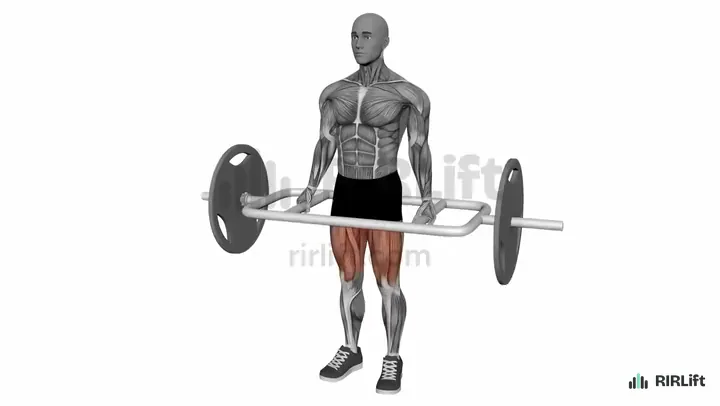
Trap Bar Deadlift

Quads, Glutes

Legs, hips, back and grip all lift at once, which makes it the most full-body lift in a gym. A neutral grip and a high handle setting make it easier to learn than a straight-bar deadlift.

How to do it

  1. Step inside the trap bar with the handles beside your feet.
  2. Push your hips back, bend your knees, and grip the handles.
  3. Flatten your back, take the slack out, and stand up by pushing the floor away.
  4. Lower under control. Each warm-up set adds weight toward your working sets.

Cues

  • Push the floor away
  • Flat back
  • Slack out before you pull

Common mistakes

  • Yanking the bar off the floor: pull the slack out first.
  • Rounding the back as the weight climbs: hold the ramp until the setup is solid.

Swap for: Barbell Deadlift, Romanian Deadlift, Kettlebell Deadlift

Glutes and hamstrings, explosive hinge

Kettlebell Swing

Glutes, Hamstrings

The swing is a hinge done fast enough to count as conditioning. Sets of 15 to 20 drive your heart rate up while your hips and back carry the work.

How to do it

  1. Stand with your feet a little wider than your hips, the bell set about a foot in front of you.
  2. Hinge down, grip the handle with both hands, and hike the bell back between your thighs.
  3. Snap your hips forward to stand tall, letting the bell float up to about shoulder height on straight arms.
  4. Let it fall back between your legs as you hinge again, and go straight into the next rep.

Cues

  • Hips snap, arms just hold on
  • Stand tall at the top
  • Bell passes high between the thighs

Common mistakes

  • Squatting the swing by bending the knees deeply: push your hips back and keep the shins nearly vertical.
  • Lifting the bell with your shoulders: if your arms are working, the hips are not driving it.

Swap for: Dumbbell Romanian Deadlift, Kettlebell Deadlift, Superman

Push-ups, rows and presses

One push and one pull per session keeps your chest and back balanced. Kneeling push-ups are the starting point for the push-up, and the dumbbell shoulder press covers what push-ups miss.

Chest, shoulders and triceps, floor push-up

Push-Up

Chest

A push-up is a moving plank, so it trains your trunk along with your chest and arms. Use it as the push in home sessions and as a fast superset partner in the gym.

How to do it

  1. Set your hands slightly wider than your shoulders with your body straight from head to heels.
  2. Lower until your chest nearly touches the floor, elbows at about 45 degrees.
  3. Press back up to straight arms.

Cues

  • One straight line
  • Elbows angled back

Common mistakes

  • Flaring the elbows straight out: tuck them toward your ribs.

Swap for: Kneeling Push-Up, Incline Push-Up, Push-Up Plus

Chest and triceps, push-up from the knees

Kneeling Push-Up

Chest

With your knees down, you press a smaller share of your body weight, so you can do full-range reps now and build toward the floor version.

How to do it

  1. Kneel on a mat with your hands on the floor slightly wider than your shoulders and walk them forward until your body is a straight line from knees to head.
  2. Brace your abs and tuck your hips so your back stays flat.
  3. Lower your chest toward the floor between your hands, elbows angled back.
  4. Push back up to straight arms and repeat.

Cues

  • Straight line from knees to head
  • Chest leads, hips follow
  • Full lockout at the top

Common mistakes

  • Bending at the hips so your bottom sticks up: that shortens the range. Keep the line from knees to shoulders.
  • Dropping the head toward the floor before the chest: look slightly ahead of your hands.

Swap for: Incline Push-Up, Close-Grip Push-Up, Band-Assisted Push-Up

Lats and upper back, supported row

One-Arm Dumbbell Row

Lats, Upper Back

One hand and knee on a bench support you while you row a heavy dumbbell, so the pull trains your back without tiring your lower back after deadlifts.

How to do it

  1. Put one hand and the same-side knee on a bench, or your hand on a chair seat with both feet on the floor, so your back is flat.
  2. Hold a dumbbell in the other hand with your arm hanging straight.
  3. Pull your elbow back toward your hip until the dumbbell reaches your ribs.
  4. Lower it until your arm is straight again, finish all reps, then switch sides.

Cues

  • Elbow to your hip
  • Back flat as a table
  • Full stretch at the bottom

Common mistakes

  • Twisting your chest open to lift the dumbbell higher: keep both shoulders level.
  • Shrugging the shoulder up toward your ear: pull the elbow back, not the shoulder up.

Swap for: Band Bent-Over Row, Dumbbell Bent-Over Row, Seated Cable Row

Shoulders and triceps, overhead press

Dumbbell Shoulder Press

Shoulders

Pressing overhead covers the shoulders that push-ups only partly train, and seated, it is easy to keep strict.

How to do it

  1. Set a bench upright or one notch back from vertical, sit with your feet flat, and rest a dumbbell on each thigh.
  2. Kick one knee up at a time to bring the dumbbells to shoulder height, then set your back against the pad.
  3. Turn your elbows slightly forward so they sit a little in front of your torso, palms facing forward or angled in.
  4. Drive both weights overhead on a slight inward arc until your elbows are straight, keeping your ribs down and your back on the pad.
  5. Lower slowly until the dumbbells are around ear height or a bit below, then press again.

Cues

  • Ribs down, back on the pad
  • Elbows a little forward
  • Press up and slightly in

Common mistakes

  • Arching your lower back off the pad to finish reps: that turns it into an incline press, so lighten the weight and keep your ribs stacked over your hips.
  • Flaring the elbows straight out at shoulder height: bring them a little forward so the shoulder joint stays comfortable at the bottom.
  • Stopping each rep well above your ears: lower to around ear height so the delts work through a full range.

Swap for: Machine Shoulder Press, Arnold Press, Landmine Press

Rowing, burpees and bear crawls to finish

These use your arms, legs and trunk at once, so they raise your heart rate fast. Five to ten minutes at the end of a session adds to your weekly burn without a separate cardio day.

Legs, back and arms, rowing machine

Rowing Machine

Quads, Hamstrings, Glutes, Lats
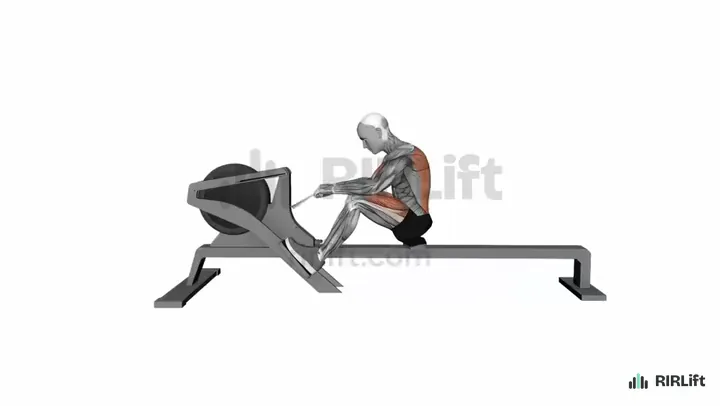
Each stroke is a leg drive, a hinge and a row, so the rower trains more of your body per minute than a bike or treadmill. Short hard pieces of 30 to 60 seconds make a good finisher.

How to do it

  1. Strap your feet in and hold the handle with straight arms.
  2. Push with your legs first, then lean back slightly and bring the handle to your lower ribs.
  3. Reverse the order on the way back: arms forward, body tips forward, knees bend.
  4. Keep the pace conversational, around 20 strokes a minute.

Cues

  • Legs, body, arms; arms, body, legs
  • Easy enough to talk

Common mistakes

  • Racing the first minute: this is a warm-up, so finish feeling fresher than you started.

Swap for: Stationary Bike, Air Bike, Jump Rope

Full body, bodyweight conditioning

Burpee

Quads, Glutes, Chest, Shoulders

Down to the floor and back up to a jump: few moves cost more effort per rep. Keep sets short, 6 to 10, so you keep moving well.

How to do it

  1. Stand tall, then squat down and plant your palms.
  2. Kick your feet back into a plank.
  3. Jump your feet back under you.
  4. Stand up and jump, reaching your arms overhead.

Cues

  • Fast down, fast up
  • Solid plank
  • Land soft

Common mistakes

  • Sagging hips in the plank: brace on every rep.
  • Slowing to a walk-out: keep it crisp or rest.

Swap for: Half Burpee, Mountain Climber, Dumbbell Burpee

Shoulders and trunk, crawling

Bear Crawl

Abs, Shoulders

Crawling on hands and feet with your knees just off the floor works your shoulders, trunk and legs together with no impact. It is the joint-friendly conditioning choice.

How to do it

  1. Start on hands and toes with knees bent and just off the floor.
  2. Move one hand and the opposite foot forward together, then the other pair.
  3. Keep the hips low and your back flat as you crawl forward and backward.

Cues

  • Knees hover low
  • Opposite hand and foot
  • Flat back

Common mistakes

  • Hips riding high: keep them at shoulder height.

Swap for: Gorilla Walk, Walkout, Plank Shoulder Tap

Put them together: example sessions

Each session below picks from the exercises above for one situation, with the sets, reps, rest and RIR filled in.

Session 1

Three full-body days in a gym

  • Workouts3× a week
  • Working sets41 a week
  • Per workout~35 min
  • EquipmentTrap Bar, Dumbbells, Rowing Machine, Kettlebells

You train in a gym with a trap bar, dumbbells, kettlebells and a rowing machine, three times a week.

Three full-body sessions give each major muscle three short exposures and about 9 to 12 hard sets a week, a frequency that suits a calorie deficit because no single session has to be long. Each day ends with a short finisher: rowing intervals, swings or burpees.

Day 1
ExerciseSets × repsRIRRest
Trap Bar Deadlift2 warm-up sets first 3 × 5–8 2 3 min
Push-Up 3 × 8–15 1 90 s
One-Arm Dumbbell RowPer arm. 3 × 8–12 1 90 s
Rowing MachineSeconds per piece. Hard pace, easy row in the rest. 5 × 40 2 1 min
Day 2
ExerciseSets × repsRIRRest
Goblet Squat1 warm-up set first 3 × 8–12 2 2 min
Dumbbell Shoulder Press 3 × 8–12 2 90 s
One-Arm Dumbbell RowPer arm. 3 × 10–12 1 90 s
Kettlebell Swing 4 × 15–20 2 1 min
Day 3
ExerciseSets × repsRIRRest
Dumbbell Reverse Lunge1 warm-up set firstPer leg. 3 × 8–12 2 90 s
Dumbbell Glute Bridge 3 × 10–15 1 90 s
Push-Up 3 × 8–15 1 90 s
Dumbbell Shoulder Press 2 × 10–12 2 90 s
Burpee 3 × 6–10 2 1 min
How to run it
Run Day 1, Day 2 and Day 3 on nonconsecutive days, for example Monday, Wednesday and Friday.
How to progress
Double progression on the lifts: reach the top of the range on all sets, then add weight. On the rower, keep the 40-second pieces and try to cover more distance each week.

Session 2

At home with dumbbells, three days

  • Workouts3× a week
  • Working sets39 a week
  • Per workout~30 min
  • EquipmentDumbbells

You train at home with a pair of dumbbells and a mat, three times a week, and push-ups from the floor are still a work in progress.

Two alternating home routines cover legs, glutes, chest, back and shoulders every session, about 13 sets each, so every muscle gets 8 to 10 hard sets a week. Kneeling push-ups build toward the floor version, and bear crawls replace a cardio machine.

Home A
ExerciseSets × repsRIRRest
Goblet Squat1 warm-up set first 3 × 10–15 2 90 s
Kneeling Push-Up 3 × 8–15 1 75 s
One-Arm Dumbbell RowPer arm. Hand on a chair. 3 × 10–15 1 75 s
Dumbbell Glute Bridge 2 × 12–20 1 1 min
Bear CrawlSteps forward, then back. 2 × 10–20 2 1 min
Home B
ExerciseSets × repsRIRRest
Dumbbell Reverse LungePer leg. 3 × 8–12 2 90 s
Dumbbell Shoulder PressSeated on a chair. 3 × 8–12 2 75 s
One-Arm Dumbbell RowPer arm. 3 × 10–15 1 75 s
Kneeling Push-Up 2 × 8–15 1 75 s
Burpee 2 × 6–10 2 1 min
How to run it
Alternate Home A and Home B three times a week with a day off between.
How to progress
Add reps first, then weight. Move one set of kneeling push-ups to the floor once you can do 15 from the knees, and add a set of bear crawl each month.

Session 3

Only two days a week

  • Workouts2× a week
  • Working sets37 a week
  • Per workout~50 min
  • EquipmentTrap Bar, Dumbbells, Rowing Machine, Kettlebells

Work or family limits you to two longer sessions a week, about 45 minutes each, in a gym.

With two days, each session has to cover every muscle with more lifting sets, about 14 to 17, so each major muscle still reaches 6 to 8 hard sets a week. That holds muscle through a diet; walking on the other days does the extra burning.

Session 1
ExerciseSets × repsRIRRest
Trap Bar Deadlift2 warm-up sets first 4 × 5–8 2 3 min
Dumbbell Shoulder Press 3 × 8–12 2 90 s
One-Arm Dumbbell RowPer arm. 4 × 8–12 1 90 s
Dumbbell Reverse LungePer leg. 3 × 8–12 2 90 s
Rowing MachineSeconds per piece. Hard strokes, easy row in the rest. 6 × 30 2 1 min
Session 2
ExerciseSets × repsRIRRest
Goblet Squat2 warm-up sets first 4 × 8–12 2 2 min
Push-Up 4 × 8–15 1 90 s
One-Arm Dumbbell RowPer arm. 3 × 10–12 1 90 s
Dumbbell Glute Bridge 3 × 10–15 1 75 s
Kettlebell Swing 3 × 15–20 2 1 min
How to run it
Train on two days with at least two days between them, such as Monday and Thursday. Walk 30 minutes on most other days.
How to progress
Push the first lift of each day hardest and add weight there first. When a session runs long, cut the conditioning, not the lifts.

Make it fit you

Questions

What is the best exercise to lose weight all over the body?

No exercise takes fat from one place; you lose it all over as your overall body fat drops. The most useful exercises are the ones that train a lot of muscle at once, like squats, deadlifts, swings, push-ups and rows, plus rowing or walking for extra burn.

Does strength training burn belly fat?

It burns calories and keeps muscle, and belly fat comes down with the rest of your body fat when you are in a calorie deficit. Lifting while you diet also keeps the muscle you have, so more of what you lose is fat.

How many times a week should I do a full body workout to lose weight?

Three is ideal for most people, with a day between sessions. Two still works if each session is a little longer, and walking fills the other days.

What is the 3-3-3 rule for workouts?

It usually means three exercises for three sets, three times a week. A full-body version would be a squat, a push and a pull. The plans here add a hinge and a finisher, which covers more muscle in about the same time.

How many exercises should a full body workout have?

Four to six: one squat or lunge, one hinge, one push, one pull, and a conditioning or core move if time allows.