
Isometric core exercises: planks, side holds and anti-rotation work
Published October 29, 2026
The best isometric core exercises are the plank, long-lever plank and hollow hold for the front of your trunk, the side plank, dumbbell side plank and Copenhagen plank for the sides, and the Pallof press and suitcase carry, where your trunk holds still while your arms or legs move. Train each direction once or twice a week: 2 to 3 holds of 20 to 45 seconds per exercise, stopping while your position is still clean. When a hold passes 45 seconds, switch to the harder version instead of holding longer.
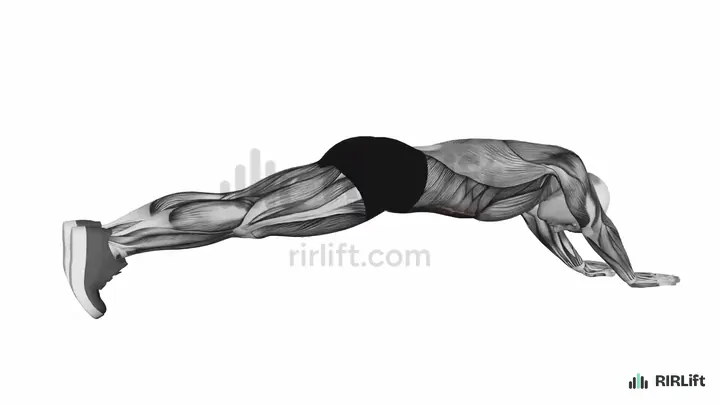
- Plank Abs
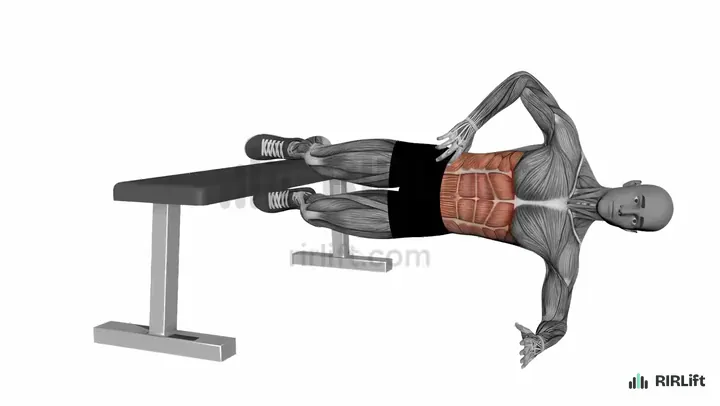
- Side Plank Abs
- Plate Hollow Hold Abs
- Pallof Press Abs
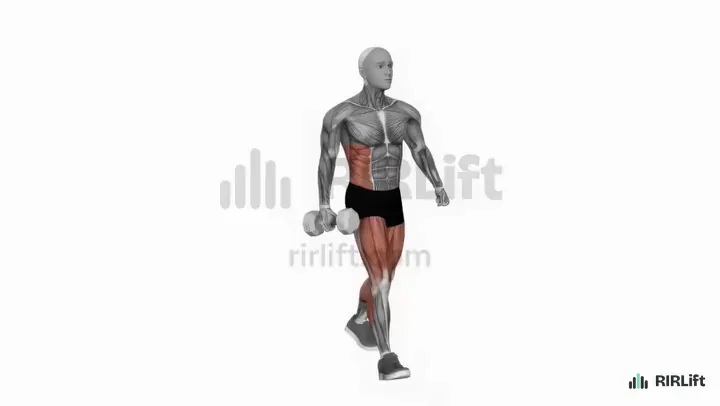
- Dumbbell Suitcase Carry Abs, Quads
- Long Lever Plank Abs
- Copenhagen Plank Adductors, Abs
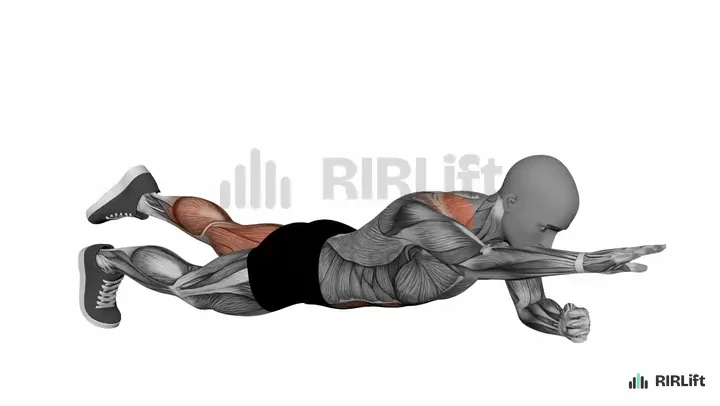
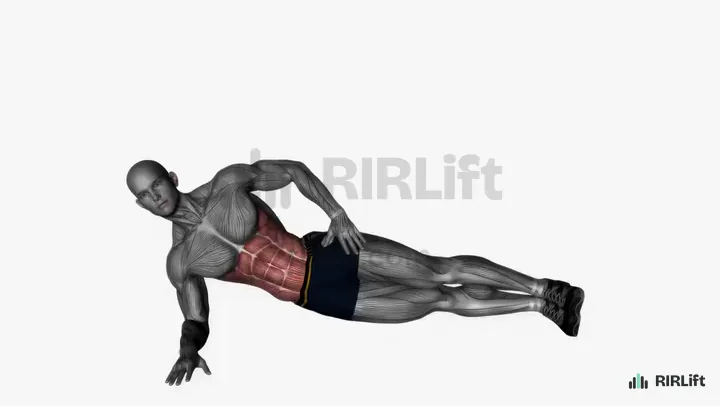
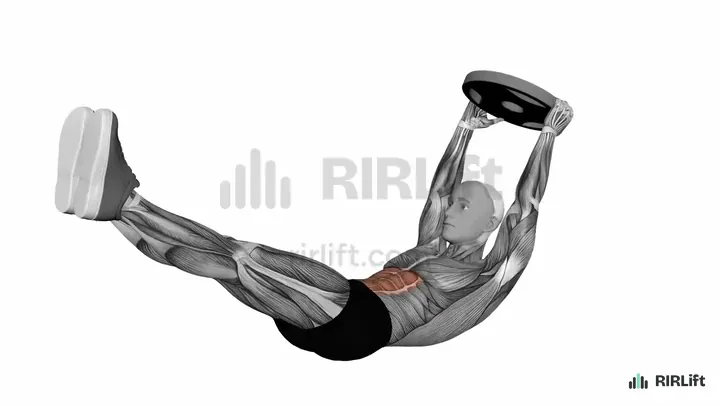
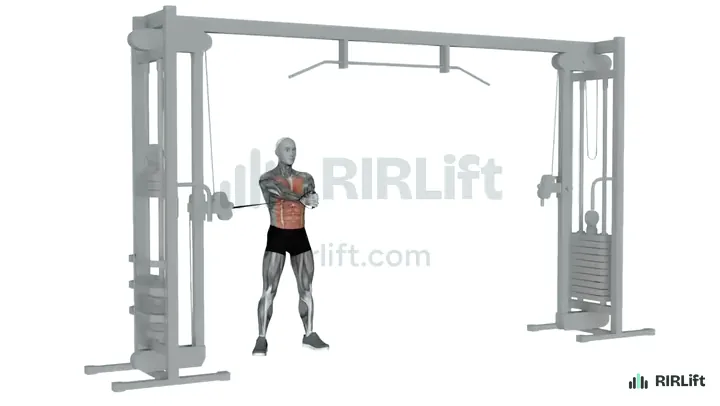
Put them together: example sessions
Each session below picks from the exercises above for one situation, with the sets, reps, rest and RIR filled in.
-
Session 1
First core routine, floor and a chair
Planks feel hard or new, you train at home, and you want a core routine you can repeat three times a week.
3× a week · 30 sets a week · ~20 min
-
Session 2
A stronger brace for squats and deadlifts
You lift in a gym, your trunk is what gives out first on heavy squats, deadlifts or one-arm rows, and you have a cable station and dumbbells.
2× a week · 16 sets a week · ~20 min
-
Session 3
A one-minute plank is already easy
You can hold a plank and side plank for a minute or more and want core holds that are hard again in 20 to 30 seconds.
2× a week · 17 sets a week · ~20 min
Session 1
First core routine, floor and a chair
- Workouts3× a week
- Working sets30 a week
- Per workout~20 min
- EquipmentBarbells
Planks feel hard or new, you train at home, and you want a core routine you can repeat three times a week.
Three trunk directions get 2 to 3 holds each, 10 holds in about 15 minutes. Holds this short recover quickly, so three sessions a week give you plenty of practice without leaving you sore.
| Exercise | Sets × reps | RIR | Rest |
|---|---|---|---|
| PlankSeconds per hold. | 3 × 20–45 | 2 | 1 min |
| Side PlankSeconds per side. Weaker side first. | 2 × 15–30 | 2 | 1 min |
| Plate Hollow HoldSeconds per hold. No plate, knees bent. | 3 × 15–30 | 2 | 1 min |
| Copenhagen PlankSeconds per side. Knee on the chair. | 2 × 10–20 | 2 | 1 min |
- How to run it
- Do the routine three times a week on any non-consecutive days, alone or after a walk. Rest as long as you need between holds so each one starts fresh.
- How to progress
- Add 5 seconds to a hold when every set reaches the top of the range with your hips still level. Then move up a version: plank to long-lever plank, knees bent to legs straight in the hollow hold, knee to ankle in the Copenhagen plank.
Session 2
A stronger brace for squats and deadlifts
- Workouts2× a week
- Working sets16 a week
- Per workout~20 min
- EquipmentAdjustable Cable, Dumbbells, Barbells
You lift in a gym, your trunk is what gives out first on heavy squats, deadlifts or one-arm rows, and you have a cable station and dumbbells.
Heavy lifts already load your trunk, so this plan adds the directions they miss: twisting and side bending. Each day is 8 sets after your main lifts, 16 a week, enough to progress without tiring you for the next session.
| Exercise | Sets × reps | RIR | Rest |
|---|---|---|---|
| Pallof PressPer side, 2 s hold. | 3 × 8–12 | 2 | 1 min |
| Dumbbell Suitcase CarrySteps per hand. | 3 × 20–40 | 2 | 90 s |
| Long Lever PlankSeconds per hold. | 2 × 15–30 | 2 | 1 min |
| Exercise | Sets × reps | RIR | Rest |
|---|---|---|---|
| Dumbbell Side PlankSeconds per side. | 3 × 20–40 | 2 | 1 min |
| Pallof PressPer side, 2 s hold. | 2 × 8–12 | 2 | 1 min |
| Plate Hollow HoldSeconds per hold. Add the plate when 40 s is easy. | 3 × 20–40 | 2 | 1 min |
- How to run it
- Add Day A to the end of your lower-body day and Day B to your upper-body day. Keep at least two reps or a few seconds in reserve so your trunk is not exhausted before your next heavy session.
- How to progress
- On the Pallof press, add one plate when all sets reach 12 reps with a clean two-second hold. On the carry, add 5 pounds when every set reaches 40 steps without leaning. Grow the plank holds by 5 seconds until the top of the range, then add a dumbbell to the side plank.
Session 3
A one-minute plank is already easy
- Workouts2× a week
- Working sets17 a week
- Per workout~20 min
- EquipmentBarbells, Dumbbells
You can hold a plank and side plank for a minute or more and want core holds that are hard again in 20 to 30 seconds.
Longer holds at the same difficulty mostly build endurance, so this plan uses harder levers and loads at short times. Day 1 has 9 sets and Day 2 has 8, about 20 minutes each.
| Exercise | Sets × reps | RIR | Rest |
|---|---|---|---|
| L-Sit HoldSeconds per hold. | 3 × 10–25 | 2 | 2 min |
| Plate Hollow HoldSeconds per hold. With a plate. | 3 × 20–30 | 1 | 90 s |
| Long Lever PlankSeconds per hold. | 3 × 20–30 | 1 | 1 min |
| Exercise | Sets × reps | RIR | Rest |
|---|---|---|---|
| Dumbbell Side PlankSeconds per side. | 3 × 20–30 | 1 | 1 min |
| Copenhagen PlankSeconds per side. Ankle on the bench. | 3 × 15–30 | 2 | 1 min |
| Dumbbell Suitcase CarrySteps per hand. Heaviest dumbbell you can keep level. | 2 × 30–40 | 1 | 90 s |
- How to run it
- Do the two days on non-consecutive days, either on their own or after other training. Start each day with the hardest hold while you are fresh.
- How to progress
- Add 5 seconds per hold until every set reaches the top of the range, then make it harder: straighter legs in the L-sit, a heavier plate on the hollow hold, a heavier dumbbell on the side plank, and the ankle instead of the knee on the Copenhagen plank.
Make it fit you
-
Lower back gets tired before your abs
Shorten the lever. Go back to a regular plank or bend your knees in the hollow hold, and squeeze your glutes harder. If your lower back is doing the work, the hold is past what your abs can control yet.
-
No cable machine
Loop a long band around a post at chest height and do the Pallof press the same way, or replace it with a second round of suitcase carries on Day A.
-
Core work and heavy lifting in one week
Put core holds at the end of a session or on a light day, never right before heavy squats or deadlifts. A tired trunk is what you brace with on those lifts.
-
Log the seconds and the reserve
Record each hold's time and how many seconds you had left in RIRLift. Steady numbers show you when a version has stopped being hard enough, which is the signal to move up a step.
-
Breathe behind the brace
Take short breaths into your belly and sides without letting your ribs flare. If you can only hold the position by holding your breath, end the hold.
Questions
Are isometric core exercises good for you?
Yes. They train the core's main job, which is keeping your spine still while your arms and legs produce force. That is what you need for lifting, carrying and most sports. Combine holds for the front, sides and rotation for a complete core.
What are the top 3 isometric core exercises?
The plank, the side plank and the Pallof press. Together they cover the three directions your trunk resists: arching, bending sideways and twisting. Add the suitcase carry when you want to load all three while standing.
What are signs of a weak core?
In training, the common signs are a lower back that arches on overhead presses, hips that sag in a plank within 20 seconds, leaning away from a heavy dumbbell held on one side, and a big strength gap between your left and right side plank.
Can isometric exercises give you visible abs?
Holds build the muscle under the fat, but whether it shows depends on your body fat, which comes down through overall weight loss. The hollow hold and L-sit are the holds that challenge your abs the most.
How long should I hold a plank?
Aim for 20 to 45 seconds with good form, for 2 to 3 sets. Past a minute, a plank mostly trains endurance. Switch to a long-lever plank or a hollow hold rather than chasing longer times.
Are there isometric core exercises with weights?
Yes: the hollow hold with a plate, the side plank with a dumbbell on your hip, the Pallof press on a cable, and the suitcase carry. Weights let you keep the holds short and hard instead of longer and easier.
Related templates
-
Isometric exercises: 12 holds that build real strength
Holds for legs, shoulders and grip to round out the core work.
-
Exercises for core strength, from first dead bug to ab wheel
Moving core exercises like dead bugs and rollouts to pair with these holds.
-
Core exercises with weights, grouped by how they train your trunk
More loaded core options when the holds stop being hard.
-
How to brace your core
The bracing technique these holds train, applied to heavy lifts.