
Love handle exercises: obliques plus the lifts that burn the most
Published October 29, 2026
Love handles are fat on the sides of your waist, and it comes off through overall fat loss, not by training that spot. What exercise adds is muscle: side planks, side plank hip dips, woodchops, Pallof presses, side bends, Russian twists and suitcase carries build the obliques under the fat, and goblet squats, Romanian deadlifts, rows, push-ups and kettlebell swings use the most muscle to support the fat loss itself. Lift 3 days a week, put 2 or 3 oblique exercises at the end of each session, and eat a little less than you burn.
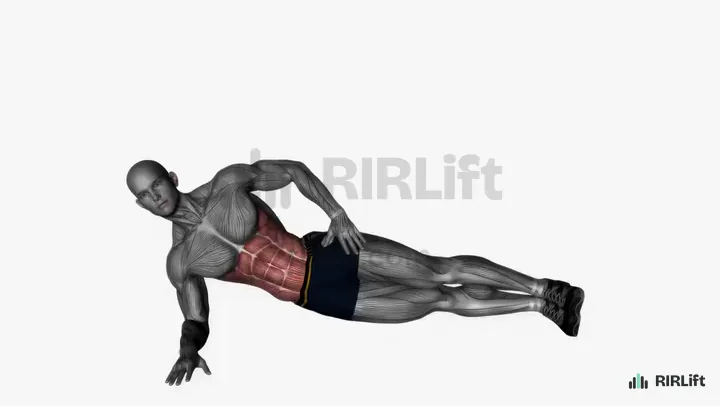
- Side Plank Abs
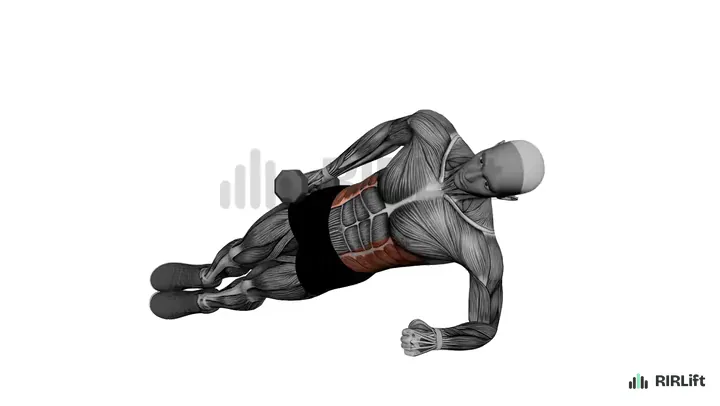
- Dumbbell Side Plank Hip Dip Abs
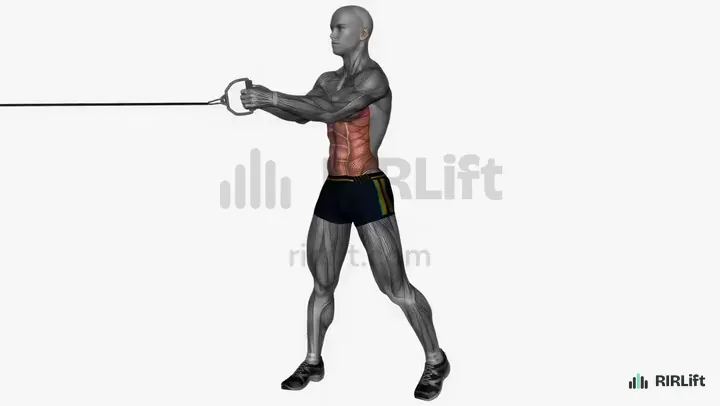
- Cable Woodchop Abs
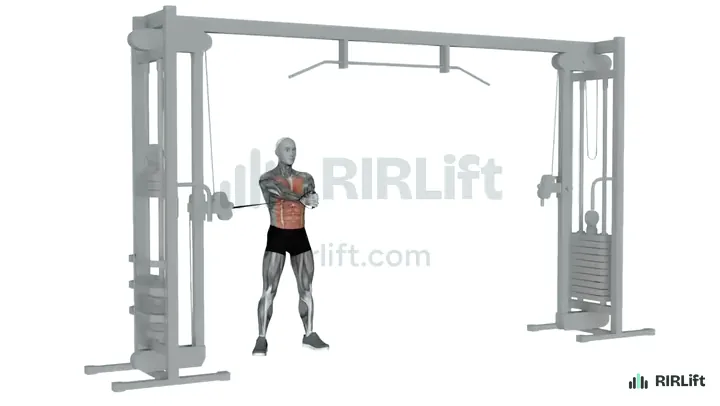
- Pallof Press Abs
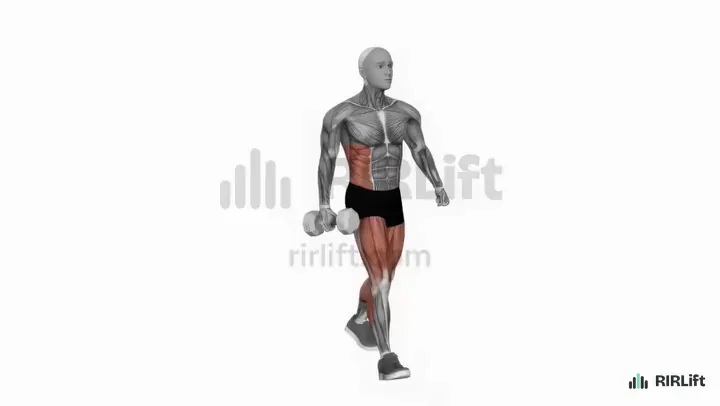
- Dumbbell Suitcase Carry Abs, Quads
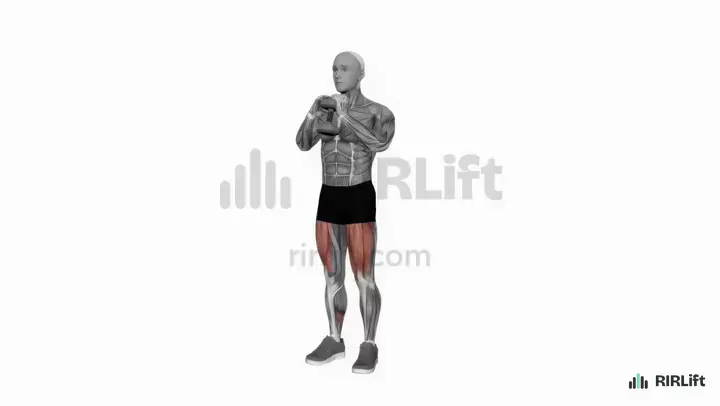
- Goblet Squat Quads, Glutes
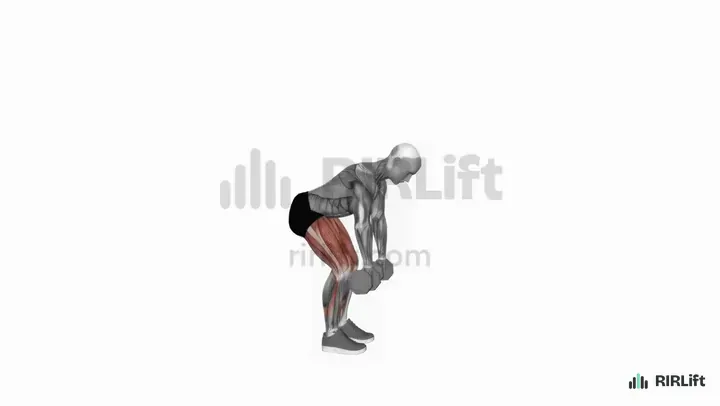
- Dumbbell Romanian Deadlift Hamstrings, Glutes
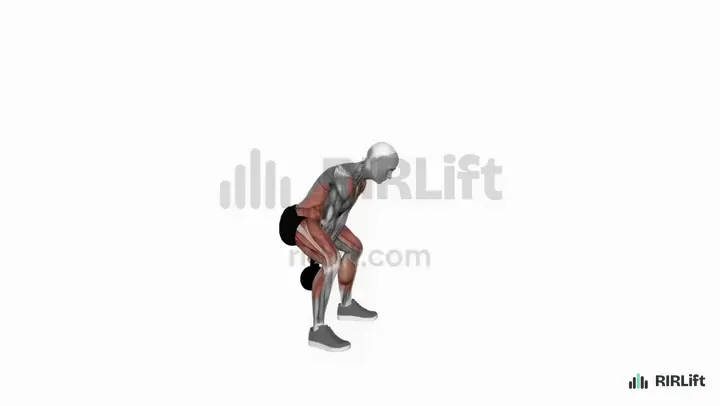
- Kettlebell Swing Glutes, Hamstrings
Put them together: example sessions
Each session below picks from the exercises above for one situation, with the sets, reps, rest and RIR filled in.
-
Session 1
Lifting while dieting, three gym days
You are eating in a calorie deficit to lose fat around your waist and can get to a gym three times a week.
3× a week · 42 sets a week · ~35 min
-
Session 2
Home, two dumbbells, 30 minutes
You have a pair of dumbbells and a mat at home, and 30 minutes three times a week.
3× a week · 48 sets a week · ~25 min
-
Session 3
Already lifting, adding oblique work
You already follow a strength program and your main question is how much direct work the sides of your waist need.
2× a week · 16 sets a week · ~20 min
Session 1
Lifting while dieting, three gym days
- Workouts3× a week
- Working sets42 a week
- Per workout~35 min
- EquipmentDumbbells, Adjustable Cable, Kettlebells
You are eating in a calorie deficit to lose fat around your waist and can get to a gym three times a week.
In a deficit, the job of lifting is to keep your muscle, so each big lift gets 3 sets at 2 reps in reserve, 4 to 6 sets a week as the days alternate. The obliques get 7 to 8 sets per session on top, about 22 a week. Each day has 14 working sets and takes about 50 minutes.
| Exercise | Sets × reps | RIR | Rest |
|---|---|---|---|
| Goblet Squat1 warm-up set first | 3 × 8–12 | 2 | 2 min |
| One-Arm Dumbbell RowPer arm. | 3 × 8–12 | 2 | 90 s |
| Cable WoodchopPer side. | 3 × 10–15 | 2 | 1 min |
| Dumbbell Side Plank Hip DipPer side. | 3 × 8–15 | 2 | 1 min |
| Dumbbell Suitcase CarrySeconds of walking per side. | 2 × 30–45 | 2 | 1 min |
| Exercise | Sets × reps | RIR | Rest |
|---|---|---|---|
| Dumbbell Romanian Deadlift1 warm-up set first | 3 × 8–12 | 2 | 2 min |
| Push-Up | 3 × 6–15 | 2 | 90 s |
| Pallof PressPer side. | 3 × 10–12 | 2 | 1 min |
| Dumbbell Side BendPer side. | 3 × 12–15 | 1 | 1 min |
| Kettlebell Swing | 2 × 15–20 | 3 | 1 min |
- How to run it
- Run A, B, A one week and B, A, B the next, with a rest day after each session. Walk on the days between; steps add up to more fat loss than extra ab work.
- How to progress
- Use double progression on the big lifts: add weight when every set reaches the top of the range at 2 reps in reserve. If a lift drops for two sessions running, hold the weight and look at your sleep and calories before you push.
Session 2
Home, two dumbbells, 30 minutes
- Workouts3× a week
- Working sets48 a week
- Per workout~25 min
- EquipmentDumbbells
You have a pair of dumbbells and a mat at home, and 30 minutes three times a week.
One full-body circuit covers legs, hinge, push and pull with 2 to 3 sets each, then three oblique moves finish it, 16 working sets per session. Pairing exercises keeps rest short so the session fits the time and keeps your heart rate up.
| Exercise | Sets × reps | RIR | Rest |
|---|---|---|---|
| A1 Goblet Squat | 3 × 10–15 | 2 | 1 min |
| A2 Push-Up | 3 × 6–15 | 2 | 1 min |
| B1 Dumbbell Romanian Deadlift | 3 × 10–15 | 2 | 1 min |
| B2 One-Arm Dumbbell RowPer arm. | 3 × 10–12 | 2 | 1 min |
| Side PlankSeconds per side. | 2 × 20–45 | 2 | 45 s |
| Russian TwistPer side. | 2 × 10–15 | 2 | 45 s |
- How to run it
- Train Monday, Wednesday and Friday, or any three days with a day off between. Move from the first exercise of each pair to the second, then rest 60 seconds.
- How to progress
- When you reach the top of the range on every set at 2 reps in reserve, add reps on the next harder variation or heavier dumbbells. For side planks, add 10 seconds before moving to the hip dip version.
Session 3
Already lifting, adding oblique work
- Workouts2× a week
- Working sets16 a week
- Per workout~20 min
- EquipmentAdjustable Cable, Dumbbells
You already follow a strength program and your main question is how much direct work the sides of your waist need.
Two short blocks of 8 sets each give the obliques 16 hard sets a week from side bending, rotation and anti-rotation, plenty for them to grow. They take about 15 minutes, so they fit after any session without cutting your main lifts.
| Exercise | Sets × reps | RIR | Rest |
|---|---|---|---|
| Cable WoodchopPer side. | 3 × 10–15 | 1 | 1 min |
| Dumbbell Side BendPer side. | 3 × 10–15 | 1 | 1 min |
| Dumbbell Suitcase CarrySeconds of walking per side. | 2 × 30–45 | 2 | 1 min |
| Exercise | Sets × reps | RIR | Rest |
|---|---|---|---|
| Pallof PressPer side. | 3 × 10–12 | 1 | 1 min |
| Dumbbell Side Plank Hip DipPer side. | 3 × 10–15 | 1 | 1 min |
| Russian TwistPer side. | 2 × 12–20 | 2 | 45 s |
- How to run it
- Add Block 1 to the end of one training day and Block 2 to another, at least two days apart.
- How to progress
- Add weight to side bends, hip dips and woodchops when every set reaches the top of the range at 1 rep in reserve. Carries progress by adding 5 seconds per set, then a heavier dumbbell.
Make it fit you
-
No cable machine
Anchor a long band at shoulder height in a door for woodchops and Pallof presses, or do kneeling dumbbell woodchops. The rest of the plans need only dumbbells.
-
Lower back that dislikes twisting
Drop the Russian twist and use the Pallof press and suitcase carry instead. They train the obliques by resisting rotation, so your spine stays still.
-
Measure the right thing
Track your waist with a tape at the navel every two weeks rather than weighing yourself daily. It shows fat loss around the middle more directly than the scale.
-
Let the logs set the pace
Strength usually holds steady or rises slowly while you diet. Logging reps in reserve in RIRLift keeps the weights matched to how you are recovering, so a low-energy day does not turn into a missed session.
Questions
How long does it take to get rid of love handles?
It depends on how much fat there is to lose. At a steady loss of about half a pound to a pound a week, expect a few months before the change around your waist is obvious, and longer if you have a lot to lose.
What is the hardest area for a woman to lose fat?
It varies from person to person. Many women store fat first around the hips, thighs and lower belly, and the places you store fat first tend to be the last to lean out.
What are the best exercises to lose belly fat?
The same as for love handles: full-body strength training three days a week plus daily walking, with a calorie deficit doing most of the work.
Do oblique exercises make your waist wider?
Not in a way you would notice at normal training volumes. The obliques are thin muscles, and losing the fat over them makes the waist look narrower even as they get stronger.
What flattens your stomach the fastest?
Losing body fat through a calorie deficit, plus strong abs and obliques to hold your middle in. Sleep and less bloating help the look day to day, but fat loss is what changes it for good.
Related templates
-
Oblique exercises for women: a strong, defined waist without guesswork
More side waist exercises with plans built only around the obliques.
-
Muffin top exercises for your sides, lower belly and whole body
The same goal seen from the front and sides of the lower waist.
-
Dumbbell oblique exercises: bend, chop, plank and carry
Oblique work you can do with only dumbbells.
-
Strength training for fat loss: keep your strength while you get leaner
Full plans for keeping muscle while you lose fat everywhere.
-
Calories burned lifting weights calculator
Estimate what these sessions add to your daily energy use.