
Machine exercises for arms: curls, extensions, dips and pressdowns
Published October 29, 2026
The best machine exercises for arms are the preacher curl, cable curl, overhead cable curl and twisting cable curl for your biceps; the triceps extension machine, triceps dip machine, cable pressdown, overhead cable extension and cable kickback for your triceps; and the cable wrist extension for your forearms. Pick two biceps and two triceps exercises, do 3 sets of 8 to 15 reps each at 0 to 2 reps in reserve, and train arms twice a week. Include one curl and one extension done with your arms overhead or in front of your body, so each muscle also works from its stretched position.
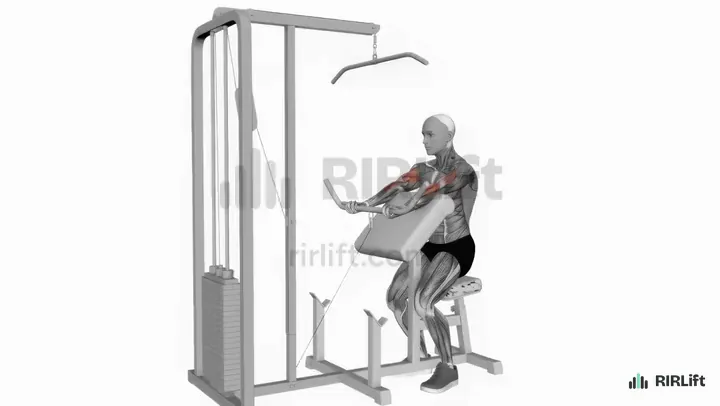
- Machine Preacher Curl Biceps
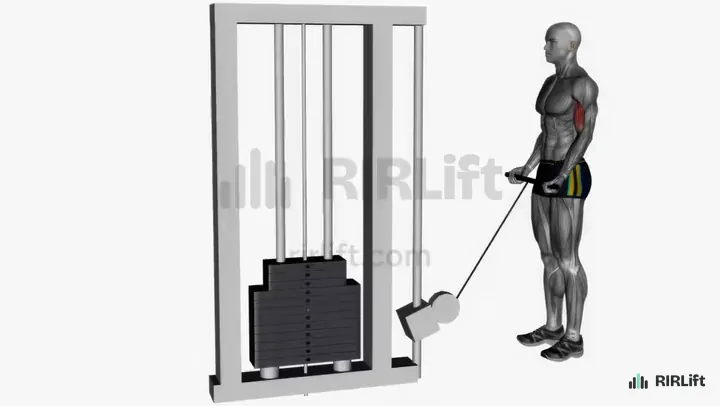
- Cable Curl Biceps
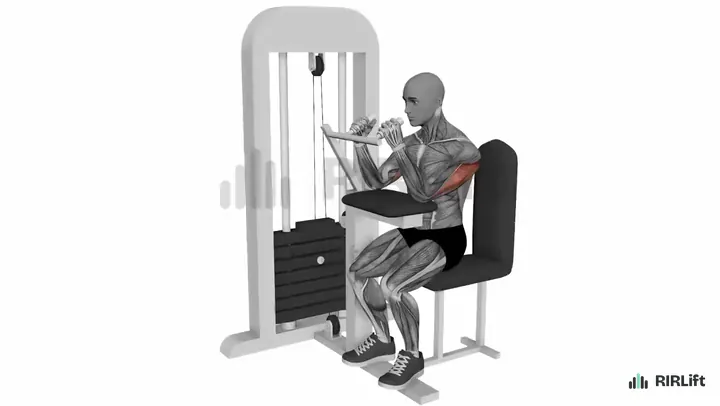
- Machine Triceps Extension Triceps
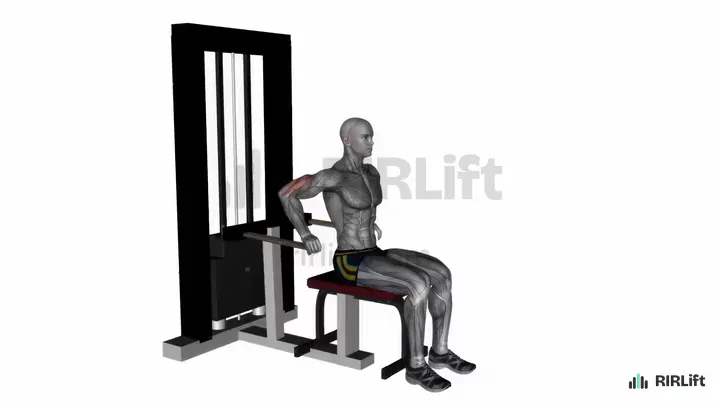
- Machine Triceps Dip Triceps
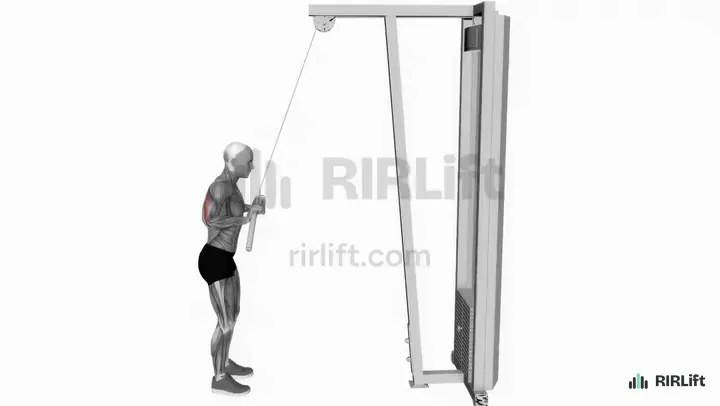
- Cable Triceps Pressdown Triceps
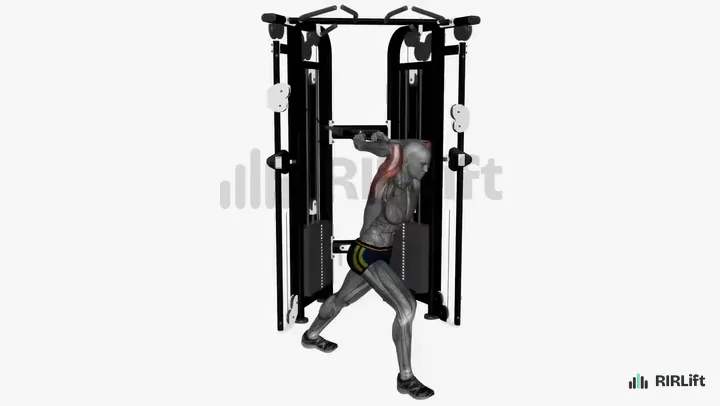
- Overhead Cable Triceps Extension Triceps
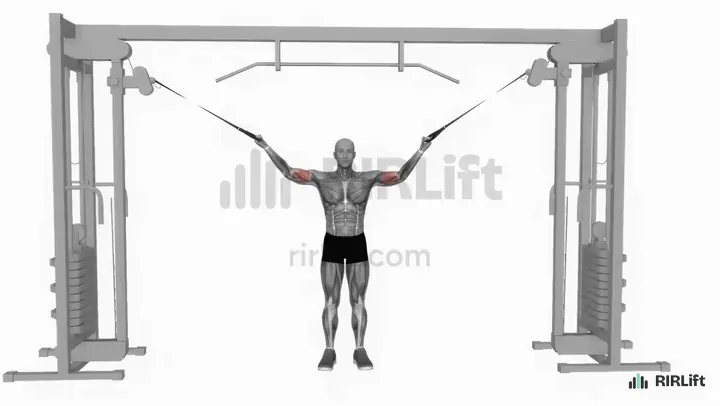
- Overhead Cable Curl Biceps
Put them together: example sessions
Each session below picks from the exercises above for one situation, with the sets, reps, rest and RIR filled in.
-
Session 1
Starting out, arms after your main workout
You are in your first months in the gym, you do full-body or upper-body sessions, and you want to add arm machines at the end without making the session much longer.
2× a week · 12 sets a week · ~10 min
-
Session 2
Bigger arms, a dedicated arm day plus a second dose
You have trained for a while, your arms lag behind your chest and back, and you are willing to give them their own day plus a short second session.
2× a week · 25 sets a week · ~25 min
-
Session 3
Elbows that ache on heavy curls and extensions
Heavy curls, skull crushers or dips leave your elbows sore, and you still want to train your arms twice a week.
2× a week · 18 sets a week · ~20 min
Session 1
Starting out, arms after your main workout
- Workouts2× a week
- Working sets12 a week
- Per workout~10 min
- EquipmentPreacher Curl Machine, Triceps Machine, Adjustable Cable
You are in your first months in the gym, you do full-body or upper-body sessions, and you want to add arm machines at the end without making the session much longer.
Two exercises per day, 6 sets in about 12 minutes, adds 6 direct biceps and 6 direct triceps sets a week on top of the rows and presses you already do. At 2 reps in reserve you learn each machine with full, controlled reps.
| Exercise | Sets × reps | RIR | Rest |
|---|---|---|---|
| Machine Preacher Curl | 3 × 10–12 | 2 | 75 s |
| Machine Triceps Extension | 3 × 10–12 | 2 | 75 s |
| Exercise | Sets × reps | RIR | Rest |
|---|---|---|---|
| Cable Curl | 3 × 10–12 | 2 | 75 s |
| Cable Triceps Pressdown | 3 × 10–12 | 2 | 75 s |
- How to run it
- Add Finisher A at the end of your first session of the week and Finisher B at the end of your second. Rest 60 to 90 seconds between sets so you stay on schedule.
- How to progress
- Once all three sets of a machine hit 12 reps with 2 still in the tank, put the pin one plate lower next session. Expect slow jumps on arm machines; a single plate is often a big step, so add reps for longer before moving up.
Session 2
Bigger arms, a dedicated arm day plus a second dose
- Workouts2× a week
- Working sets25 a week
- Per workout~25 min
- EquipmentDip Machine, Preacher Curl Machine, Adjustable Cable, Cable Crossover +1
You have trained for a while, your arms lag behind your chest and back, and you are willing to give them their own day plus a short second session.
The arm day is 17 sets and the second session 8, so the biceps get 10 direct sets a week and the triceps 13, on top of your pulling and pressing. Each muscle is trained once with the arm overhead or in front of the body for the stretch and once with heavier loads, and the paired supersets keep the long day near 50 minutes.
| Exercise | Sets × reps | RIR | Rest |
|---|---|---|---|
| Machine Triceps Dip1 warm-up set first | 4 × 6–10 | 1 | 2 min |
| Machine Preacher Curl | 4 × 8–12 | 1 | 90 s |
| A1 Overhead Cable Triceps Extension | 3 × 10–15 | 1 | 1 min |
| A2 Overhead Cable Curl | 3 × 10–15 | 1 | 1 min |
| Cable Triceps KickbackPer arm. | 3 × 12–15 | 0 | 1 min |
| Exercise | Sets × reps | RIR | Rest |
|---|---|---|---|
| A1 Cable Twisting CurlPer arm. | 3 × 10–12 | 0 | 1 min |
| A2 Machine Triceps Extension | 3 × 10–12 | 0 | 1 min |
| Cable Wrist Extension | 2 × 15–20 | 1 | 1 min |
- How to run it
- Do the arm day on its own day, or after a light leg session. Add the second session to the end of an upper-body or pull day three or four days later.
- How to progress
- Double progression with the supersets: when both exercises in a pair reach the top of the range at the target reps in reserve, add weight to both next time. If the dip machine stalls, add one set rather than more weight for two weeks.
Session 3
Elbows that ache on heavy curls and extensions
- Workouts2× a week
- Working sets18 a week
- Per workout~20 min
- EquipmentAdjustable Cable
Heavy curls, skull crushers or dips leave your elbows sore, and you still want to train your arms twice a week.
Every exercise here is a cable or a selectorized machine on a smooth path, loaded for 12 to 20 reps at 2 reps in reserve, so the elbow never takes a grinding heavy rep. Nine sets per session, twice a week, still gives the biceps 10 direct sets and the triceps 8.
| Exercise | Sets × reps | RIR | Rest |
|---|---|---|---|
| Cable Curl | 3 × 12–20 | 2 | 1 min |
| Cable Triceps Pressdown | 3 × 12–20 | 2 | 1 min |
| Cable Twisting CurlPer arm. | 2 × 12–15 | 2 | 1 min |
| Cable Triceps KickbackPer arm. | 1 × 15–20 | 2 | 1 min |
- How to run it
- Do the session twice a week after your upper-body work, with at least two days between. Use a rope or a slightly angled bar on the pressdown, whichever your elbows like better, and keep it the same each week.
- How to progress
- Add reps before weight. When all sets reach 20 at 2 reps in reserve, add the smallest weight step and drop back to 12 to 15 reps. If one exercise still aches, swap it for its partner on this page rather than pushing through.
Make it fit you
-
Your gym has no preacher or triceps machines
Everything on this page can be done on one adjustable cable: replace the preacher curl with the cable curl leaning your upper arms on an incline bench, and the triceps machines with an extra set each of pressdowns and overhead extensions.
-
Biceps matter more to you than triceps
Add a third biceps exercise to the arm day, such as the twisting curl, and cut the kickback. Keep at least two triceps exercises a week, because the triceps are the bigger muscle of the upper arm.
-
Short on time
Superset every biceps exercise with a triceps exercise and rest only after the pair. Three pairs of 3 sets is a full arm session in about 20 minutes.
-
Women training arms for shape
Use the plans as written. Arm muscle builds slowly for everyone, and the firm look most people want comes from some muscle under less fat, which these sets build. Stay in the 10 to 20 rep range if heavy sets feel awkward.
-
Keep score of reps in reserve
After each arm set, enter how many more clean reps you could have done. RIRLift sets the next session's weight from that number, which matters on arm machines where one plate can be a big jump.
Questions
What are the arm machines at the gym?
The preacher curl machine and the biceps curl machine for biceps, the triceps extension machine and the seated dip machine for triceps, and the cable machine, which does curls, pressdowns, overhead extensions and kickbacks. The assisted dip and chin-up machine also works your arms along with your chest and back.
Are 4 exercises enough for arm day?
Yes. Two biceps and two triceps exercises at 3 to 4 sets each is 12 to 16 sets, enough for an arm day. Choose one exercise per muscle that trains it stretched, like the overhead extension, and one you can load heavy, like the dip machine.
What is the 7 7 7 bicep exercise?
It is the curl method usually called 21s: 7 reps through the bottom half of the curl, 7 through the top half, then 7 full reps, with no rest between. It suits the cable or preacher curl here. Count it as one set and use less weight than your normal 10-rep load.
Can you build big arms using only machines?
Yes. Your arms grow from hard sets close to failure with more weight or reps over time, and machines and cables make that easy to track. Many lifters with big arms rely on cables and machines for most of their arm work.
How many sets per week should I do for arms?
About 8 to 15 direct sets per week each for biceps and triceps, on top of your rows and presses. Beginners grow well at 6 to 8; if your arms lag, aim for the higher end split across two sessions.
How much rest between arm sets?
60 to 90 seconds for curls, pressdowns and extensions, and up to 2 minutes for the dip machine. If you superset biceps with triceps, rest after each pair rather than after each exercise.
Related templates
-
Cable arm exercises for biceps, triceps and forearms
More cable curls and extensions when the cable tower is all you need.
-
Arm exercises at the gym, station by station
Barbells and dumbbells added to the machines on this page.
-
Machine exercises for back: pulldowns, rows and the Roman chair
Pulldowns and rows that also work your biceps on pull days.
-
Exercises for bigger arms: triceps, biceps and the brachialis
Higher-volume plans when arm size is the main goal.
-
How to use reps in reserve (RIR)
How to judge the 0 to 2 reps in reserve targets on arm machines.