
Machine exercises for back: pulldowns, rows and the Roman chair
Published October 29, 2026
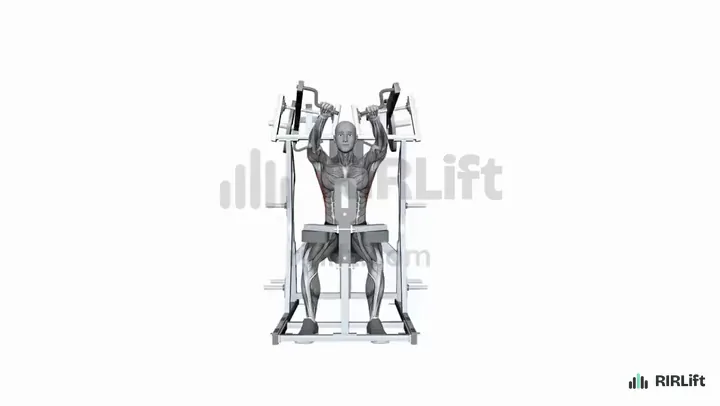
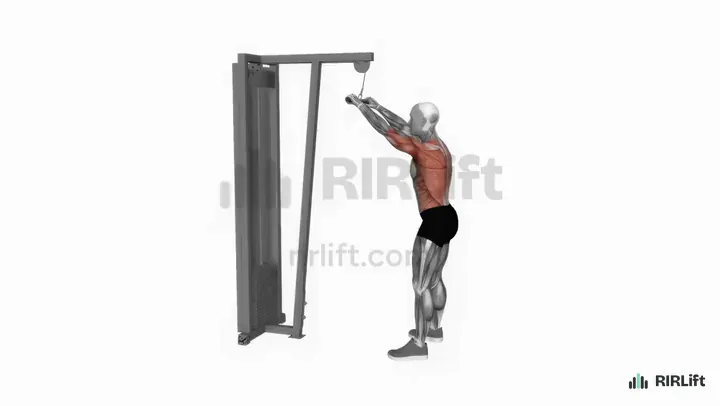
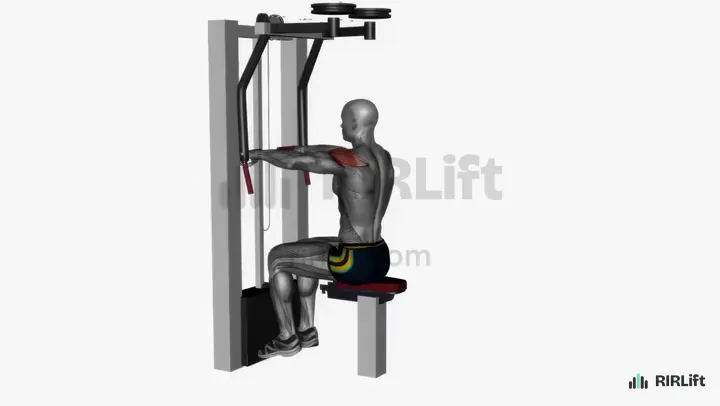
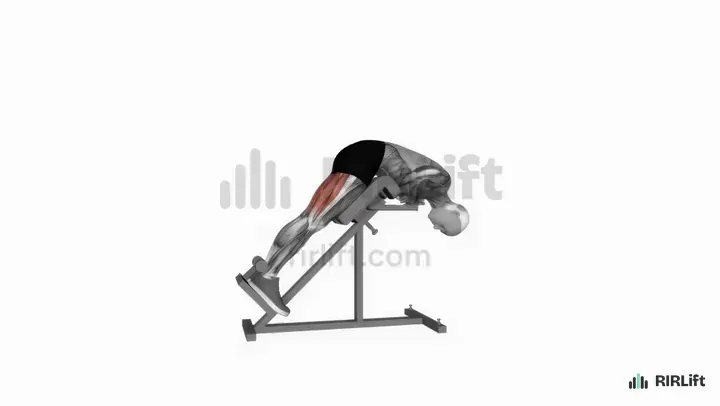
The best machine exercises for back are the lat pulldown, assisted pull-up and straight-arm pulldown for width through your lats; the machine row, seated cable row and single-arm high row for thickness through your mid back; the reverse pec deck for your rear delts and upper back; and the 45-degree back extension on a Roman chair for your lower back. Each back session needs one vertical pull and one row, 3 to 4 sets each of 8 to 15 reps, stopping 0 to 2 reps short of failure. Machines hold your body in place, so the set ends when your back is done, not your balance.
- Lat Pulldown Lats
- Machine Row Upper Back, Lats
- Seated Cable Row Upper Back, Lats
- Assisted Pull-Up Lats
- Single-Arm High Row Upper Back, Lats
- Straight-Arm Pulldown Lats
- Reverse Pec Deck Shoulders
- 45-Degree Back Extension Glutes, Hamstrings
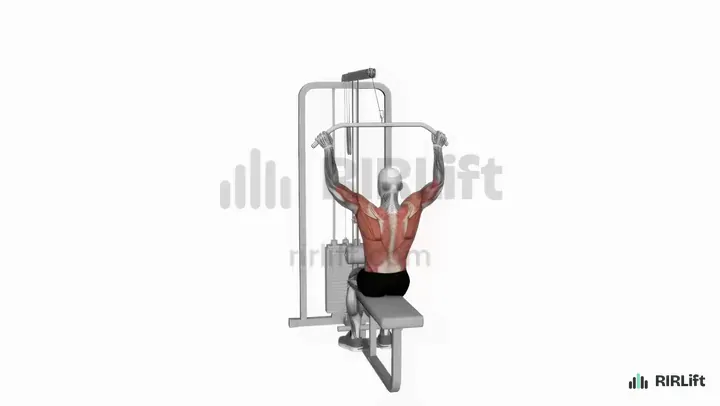
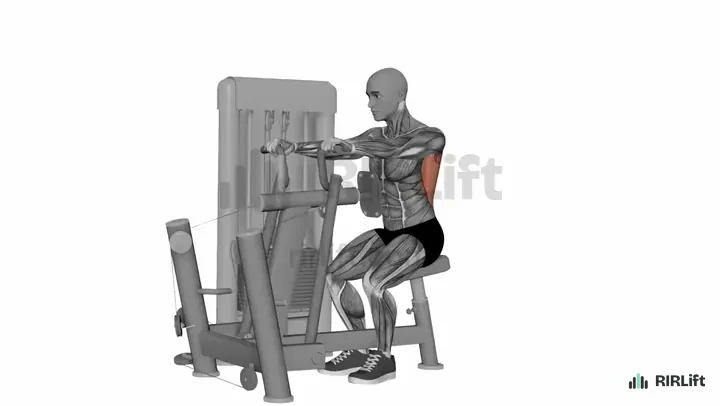
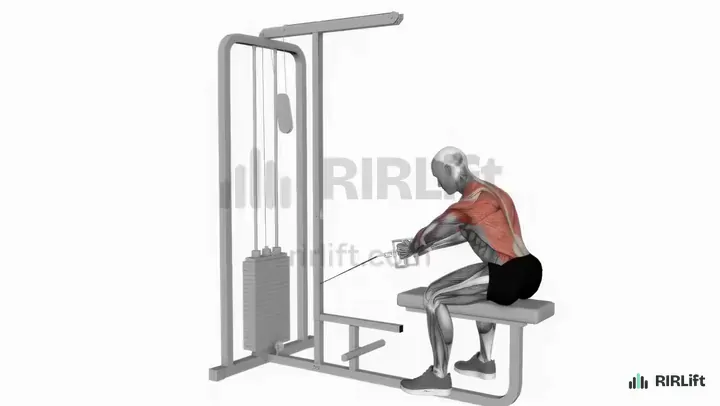
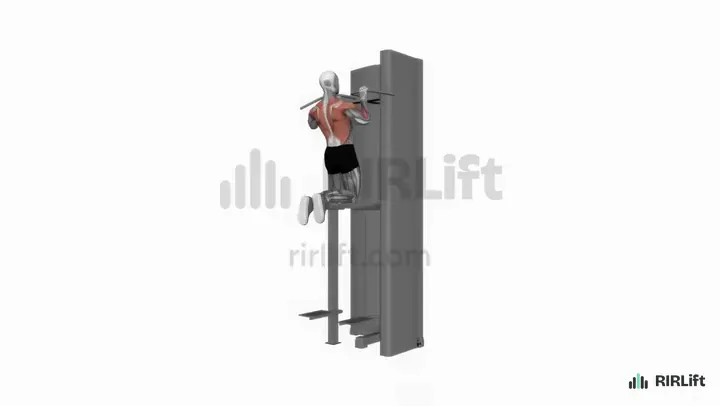
Put them together: example sessions
Each session below picks from the exercises above for one situation, with the sets, reps, rest and RIR filled in.
-
Session 1
New to the gym, learning the back machines
You are in your first months of lifting, the free-weight area feels like a lot, and you want a back routine you can do on machines with confidence.
2× a week · 18 sets a week · ~20 min
-
Session 2
Building a bigger back on a split, two back days
You have lifted for a year or more, you run a push, pull, legs or upper-lower split, and your back is the body part you most want to grow.
2× a week · 27 sets a week · ~40 min
-
Session 3
Your lower back gets tired or tight on rows
Bent-over rows and deadlifts leave your lower back tired or tight, and you want to train your back hard without loading your spine in a hinge.
1× a week · 16 sets a week · ~40 min
Session 1
New to the gym, learning the back machines
- Workouts2× a week
- Working sets18 a week
- Per workout~20 min
- EquipmentLat Pulldown, Seated Row Machine, Fly Machine, Assisted Machine +2
You are in your first months of lifting, the free-weight area feels like a lot, and you want a back routine you can do on machines with confidence.
Two short back sessions a week of 9 sets each, 18 in total, is plenty while you learn the movements. Every exercise sits at 2 reps in reserve so you finish each set with clean form, and each day uses one pulldown, one row and one finisher.
| Exercise | Sets × reps | RIR | Rest |
|---|---|---|---|
| Lat Pulldown | 3 × 10–12 | 2 | 90 s |
| Machine Row | 3 × 10–12 | 2 | 90 s |
| Reverse Pec Deck | 3 × 12–15 | 2 | 1 min |
| Exercise | Sets × reps | RIR | Rest |
|---|---|---|---|
| Assisted Pull-Up | 3 × 8–10 | 2 | 90 s |
| Seated Cable Row | 3 × 10–12 | 2 | 90 s |
| 45-Degree Back Extension | 3 × 10–15 | 2 | 1 min |
- How to run it
- Do Day A and Day B on two non-consecutive days, for example Monday and Thursday. Add them after your leg or chest work, or run them as their own short session.
- How to progress
- Double progression: keep the weight until every set reaches the top of its rep range with 2 reps in reserve, then move the pin down one plate and work back up. On the assisted pull-up, reduce the counterweight by one plate instead.
Session 2
Building a bigger back on a split, two back days
- Workouts2× a week
- Working sets27 a week
- Per workout~40 min
- EquipmentLat Pulldown, Seated Row Machine, Cable Row, Fly Machine
You have lifted for a year or more, you run a push, pull, legs or upper-lower split, and your back is the body part you most want to grow.
Two pull days of 14 and 13 sets put your lats and mid back at about 20 hard sets a week, near the top of what most people grow from. Day 1 leads with heavy vertical pulls for width and Day 2 with rows for thickness, and the machines let the last sets go to 0 to 1 reps in reserve safely.
| Exercise | Sets × reps | RIR | Rest |
|---|---|---|---|
| Neutral-Grip Lat Pulldown2 warm-up sets first | 4 × 6–10 | 1 | 2:30 min |
| Single-Arm Lat PulldownPer arm. | 3 × 10–12 | 1 | 90 s |
| Single-Arm High RowPer arm. | 3 × 8–12 | 1 | 90 s |
| Straight-Arm Pulldown | 4 × 12–15 | 0 | 1 min |
| Exercise | Sets × reps | RIR | Rest |
|---|---|---|---|
| Machine Row2 warm-up sets first | 4 × 6–10 | 1 | 2:30 min |
| Single-Arm Cable RowPer arm. | 3 × 10–12 | 1 | 90 s |
| Lat Pulldown | 3 × 10–12 | 1 | 90 s |
| Reverse Pec Deck | 3 × 15–20 | 0 | 1 min |
- How to run it
- Run Width on your first pull day and Thickness on the second, with two or three days between them. Keep your arm training on other days or after these, so tired biceps do not cut your back sets short.
- How to progress
- Add one rep per set each week until every set hits the top of the range at the target reps in reserve, then add the smallest weight step. If the first exercise stalls for three sessions in a row, take a lighter week at 3 reps in reserve before pushing again.
Session 3
Your lower back gets tired or tight on rows
- Workouts1× a week
- Working sets16 a week
- Per workout~40 min
- EquipmentLat Pulldown, Seated Row Machine, Fly Machine, Hyperextension
Bent-over rows and deadlifts leave your lower back tired or tight, and you want to train your back hard without loading your spine in a hinge.
Every row here is chest-supported or seated with a pad, and every pull is from a seat with your thighs locked in, so your lower back never holds a bent-over position. The Roman chair stays in at bodyweight and 2 to 3 reps in reserve so the lower back is trained gently and directly. 16 sets in one session, done once or twice a week.
| Exercise | Sets × reps | RIR | Rest |
|---|---|---|---|
| Lat Pulldown | 4 × 8–12 | 1 | 2 min |
| Machine Row | 4 × 8–12 | 1 | 2 min |
| Single-Arm High RowPer arm. | 3 × 10–12 | 1 | 90 s |
| Reverse Pec Deck | 3 × 12–15 | 1 | 1 min |
| 45-Degree Back Extension | 2 × 10–15 | 3 | 90 s |
- How to run it
- Do the session once a week, or twice with at least two days between when back is a priority. Keep the back extension last, after your upper back is already trained.
- How to progress
- Add reps first, then weight, on every machine. On the Roman chair, add reps until 3 sets of 15 feel smooth, then slow the lowering to three seconds before holding a light plate.
Make it fit you
-
Your gym has only a cable stack
A single cable tower covers almost all of this page: use the lat pulldown, seated cable row, straight-arm pulldown and the one-arm versions, and replace the reverse pec deck with face pulls on the same cable. Swap the machine row for an extra set of seated cable rows.
-
You want pull-ups, not just pulldowns
Start every back day with the assisted pull-up for 3 sets of 5 to 8, and lower the counterweight by one plate whenever all sets reach 8. When the assistance is down to the lightest plate, try sets of strict bodyweight pull-ups instead.
-
Grip gives out before your back
Use lifting straps on the heavy pulldowns and rows, or switch to the neutral grip, which most people hold longer. Keep one or two sets without straps each week so your grip still gets trained.
-
Short on time
Pair a pulldown with a row as a superset: one set of each, then rest 90 seconds. Four rounds of that plus two sets of the reverse pec deck is a full back session in about 25 minutes.
-
Log the reps you had left
Write down how many more reps you could have done after each set, not just the weight. RIRLift sets the next session's weight from the reps in reserve you log, so the pin moves when your sets say it should, not when you guess.
Questions
What exercise machine works your back?
The lat pulldown and assisted pull-up machine work your lats, the seated row machine and cable row work your mid back, the reverse pec deck works your rear delts and upper traps, and the Roman chair works your lower back. One pulldown and one row each session covers most of your back.
What gym machines should I use for back day?
Start with the lat pulldown for 3 to 4 sets, then a seated row machine or cable row for 3 to 4 sets. If you have time, add the reverse pec deck and the straight-arm pulldown. That is 10 to 14 hard sets, enough for one back day.
What are the big 3 exercises for back?
On machines, the lat pulldown, a chest-supported machine row and the seated cable row. Together they train your lats from overhead and from the front, and your mid back through a full squeeze. With free weights, people usually name the pull-up, barbell row and deadlift.
Are machines as good as free weights for building your back?
For muscle growth, yes. Your back grows from hard sets close to failure, and machines make that easier because your balance and lower back are not the limit. Free weights add more work for your grip and trunk, which matters more if you want a bigger deadlift.
How many sets of back exercises should I do per week?
Around 10 to 20 hard sets a week across pulldowns and rows. Beginners grow on the lower end; trained lifters who want a bigger back usually need the top of the range, split over two sessions.
Related templates
-
Back exercises at the gym: machines, cables and barbells
Machines plus barbell and dumbbell rows and deadlifts in one gym list.
-
Machine exercises for every muscle, with sessions for where you are
Full-body machine plans that fit these back days into a week.
-
Machine shoulder exercises: presses, lateral raises and rear delt work
Presses and raises on machines for the push side of the same split.
-
Exercises for a bigger back: width, thickness and upper back density
More volume and free-weight rows when size is the only goal.
-
Machines vs free weights
When machines build as much muscle as barbells, and when they do not.