
Full body exercises without equipment: one squat, push, pull and core move at a time
Published October 29, 2026
The best full body exercises without equipment are bodyweight and skater squats for the legs, push-ups and pike push-ups for the chest and shoulders, doorway curls and supermans for the back and arms, planks, side planks, bear crawls and walkouts for the trunk, and burpees, jump squats and mountain climbers for conditioning. Build each session from one exercise per pattern: a squat, a push, a pull and a core move. Three sessions a week of 3 sets each, stopping 1 to 3 reps short of failure, is enough to get stronger with only your body weight.
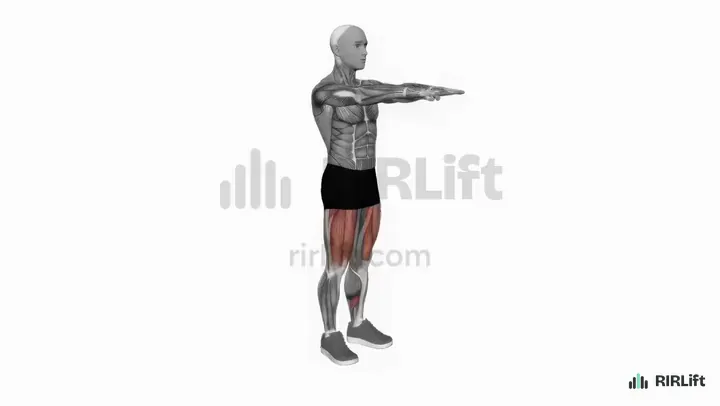
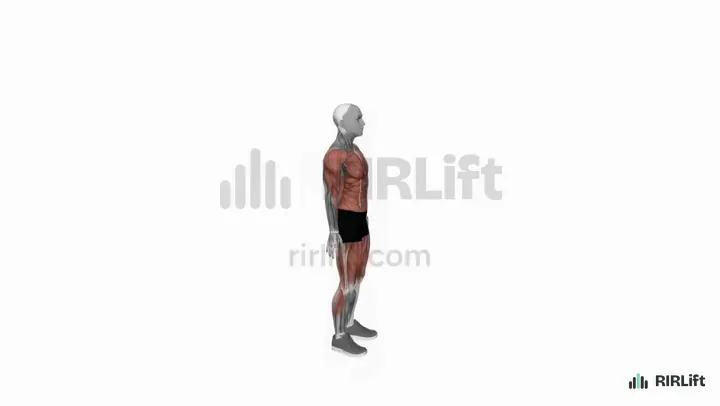
- Bodyweight Squat Quads
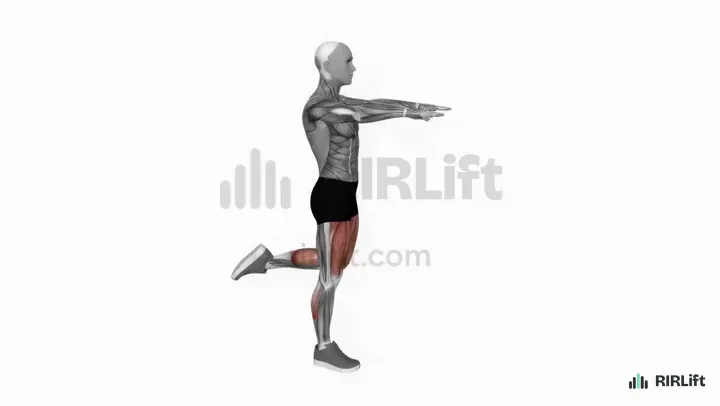
- Skater Squat Quads, Glutes
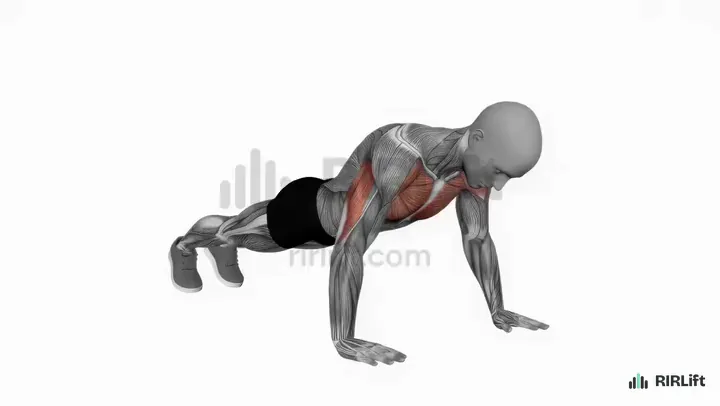
- Push-Up Chest
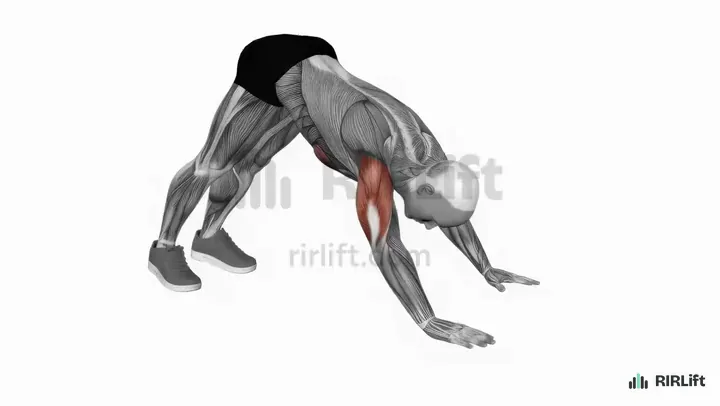
- Pike Push-Up Shoulders
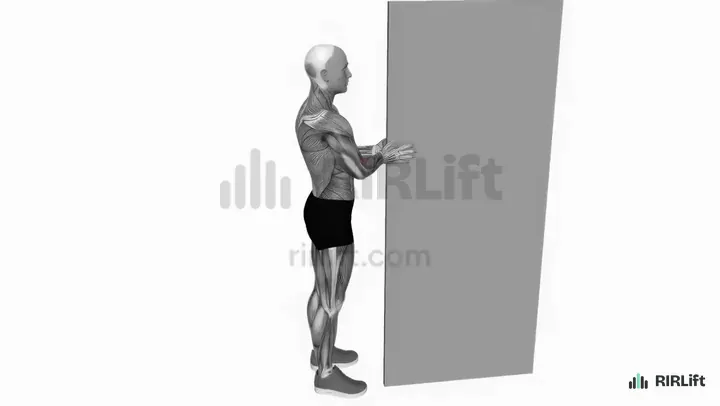
- Bodyweight Bicep Curl Biceps
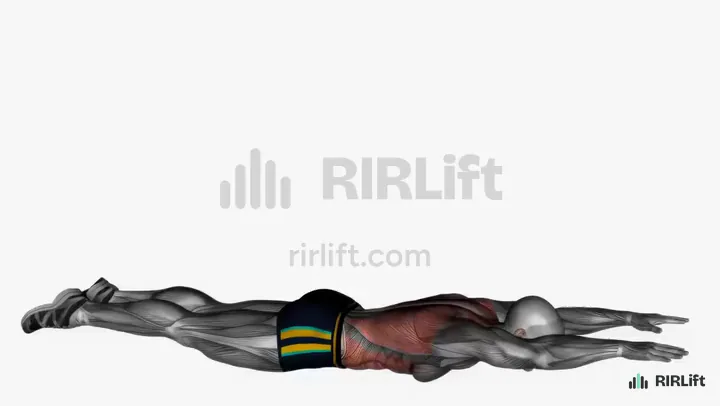
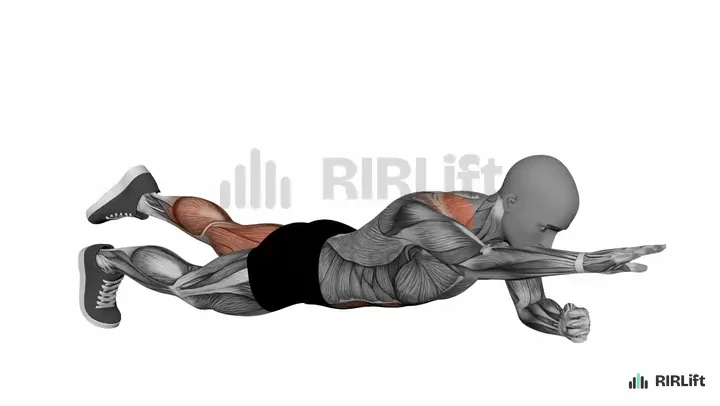
- Superman Lower Back
- Plank Abs
- Burpee Quads, Glutes, Chest, Shoulders
Put them together: example sessions
Each session below picks from the exercises above for one situation, with the sets, reps, rest and RIR filled in.
-
Session 1
Beginner, three short sessions a week
You are starting from scratch or returning after a long break, and you want one routine to repeat at home.
3× a week · 39 sets a week · ~25 min
-
Session 2
Building muscle with no equipment
Push-ups and squats are easy for 15 to 20 reps, and you want to keep building muscle at home.
4× a week · 54 sets a week · ~30 min
-
Session 3
Fitness and fat loss in 25 minutes
You want a sweaty session that also keeps muscle, for example while losing weight, with no equipment and little space.
3× a week · 54 sets a week · ~25 min
Session 1
Beginner, three short sessions a week
- Workouts3× a week
- Working sets39 a week
- Per workout~25 min
- EquipmentBodyweight
You are starting from scratch or returning after a long break, and you want one routine to repeat at home.
Three sessions of one exercise per pattern gives every major muscle about 6 to 9 hard sets a week, more than enough to get stronger for the first few months. Everything stays 2 to 3 reps short of failure so you recover between sessions.
| Exercise | Sets × reps | RIR | Rest |
|---|---|---|---|
| Bodyweight Squat | 3 × 10–20 | 3 | 75 s |
| Push-UpFrom the knees if needed. | 3 × 5–12 | 2 | 90 s |
| Bodyweight Bicep Curl | 3 × 8–12 | 2 | 75 s |
| SupermanHold 2 s at the top. | 2 × 10–15 | 2 | 1 min |
| PlankSeconds per hold. | 2 × 20–40 | 2 | 1 min |
- How to run it
- Do it three times a week with a rest day in between each session. It takes about 25 minutes.
- How to progress
- Use double progression: when every set reaches the top of the rep range at the target reps in reserve, slow the reps down or move to the harder variation (squat to skater squat, knee push-up to floor push-up). Log your reps in reserve in RIRLift and it picks the next target for you.
Session 2
Building muscle with no equipment
- Workouts4× a week
- Working sets54 a week
- Per workout~30 min
- EquipmentBodyweight
Push-ups and squats are easy for 15 to 20 reps, and you want to keep building muscle at home.
Two different sessions, each done twice a week, give the legs about 14 hard sets a week, pushing about 16 across push-ups and pike push-ups, and the back about 12, the range that builds muscle. The harder variations keep most sets between 6 and 15 reps, taken to 1 to 2 reps in reserve.
| Exercise | Sets × reps | RIR | Rest |
|---|---|---|---|
| Skater Squat1 warm-up set firstPer leg. | 4 × 6–10 | 2 | 2 min |
| Push-Up | 4 × 10–20 | 1 | 90 s |
| Bodyweight Bicep Curl | 3 × 8–12 | 1 | 75 s |
| Side PlankSeconds per side. | 3 × 30–45 | 2 | 1 min |
| Exercise | Sets × reps | RIR | Rest |
|---|---|---|---|
| Bodyweight Squat3 s down. | 3 × 15–25 | 2 | 75 s |
| Pike Push-Up | 4 × 6–12 | 2 | 90 s |
| SupermanHold 2 s at the top. | 3 × 12–15 | 1 | 1 min |
| Walkout | 3 × 6–8 | 2 | 1 min |
- How to run it
- Alternate Day A and Day B four times a week, for example Monday A, Tuesday B, Thursday A, Friday B. About 35 minutes each.
- How to progress
- Add reps up to the top of each range at the target reps in reserve, then make the rep harder with a slower lowering, a pause, or feet raised for the push-ups and pike push-ups.
Session 3
Fitness and fat loss in 25 minutes
- Workouts3× a week
- Working sets54 a week
- Per workout~25 min
- EquipmentBodyweight
You want a sweaty session that also keeps muscle, for example while losing weight, with no equipment and little space.
Paired exercises with short rest keep your heart rate up for the whole session while each muscle still gets 3 to 4 working sets. The fat comes off through overall loss; the strength sets are what keep the muscle under it.
| Exercise | Sets × reps | RIR | Rest |
|---|---|---|---|
| A1 Jump Squat | 3 × 10–15 | 3 | 1 min |
| A2 Push-Up | 3 × 8–15 | 2 | 1 min |
| B1 Burpee | 3 × 6–10 | 3 | 1 min |
| B2 Bodyweight Bicep Curl | 3 × 8–12 | 2 | 1 min |
| C1 Mountain ClimberSeconds. | 3 × 30–40 | 2 | 1 min |
| C2 Bear CrawlSteps forward and back. | 3 × 10–16 | 2 | 1 min |
- How to run it
- Do it two or three times a week, on days apart from any harder strength sessions. Go straight from the first exercise of each pair to the second.
- How to progress
- Add a rep per set or a few seconds to the timed exercises each week while keeping 2 to 3 reps in reserve on the strength moves. When the circuit fits in under 25 minutes, add a fourth round to the first pair.
Make it fit you
-
Neighbors downstairs
Swap jump squats for slow bodyweight squats, and burpees for walkouts. Bear crawls and mountain climbers stay as they are if you land softly.
-
A larger body or sore knees
Do push-ups with hands on a couch, squat to a chair and stand back up, and replace burpees with walkouts. Keep 2 to 3 reps in reserve and build reps before moving to harder versions.
-
Adding one piece of gear
A doorway pull-up bar adds chin-ups and rows, the pattern body weight is weakest at. A pair of dumbbells is the next step for the legs.
-
Log reps in reserve
Write down the reps of every set and how close you were to failing the next one. RIRLift turns that number into the next session's target, so you know when a variation is ready to move up.
-
Training every day
Rotate the three plans instead of repeating one: beginner routine, conditioning circuit, then a rest or walking day. Hard sets for the same muscle on back-to-back days stop paying off.
Questions
Can I do only full-body workouts?
Yes. Three full-body sessions a week train every muscle often enough to grow, and they suit busy schedules because a missed day does not leave a muscle untrained for a week.
Do 10-minute workouts actually work?
They work better than nothing and keep a habit going. To build strength, aim for about 20 to 30 minutes, which fits 3 sets of a squat, a push, a pull and a core move.
What is the 3-3-3 rule for workouts?
The name gets used loosely, but the usual meaning is three exercises for three sets, three days a week. Without equipment, a squat, a push-up and a doorway curl make a good three, with a plank added if you have 5 more minutes.
How many full body exercises should I do in one session?
Four to six: one squat, one push, one pull and one core exercise, plus a conditioning move if the session is for fitness. More exercises means fewer quality sets each.
Can you build muscle with full body bodyweight workouts?
Yes, as long as the exercises are hard enough that sets end within about 6 to 15 reps. That means progressing to single-leg squats, decline and pike push-ups, and slow tempos.
Related templates
-
Bodyweight full body exercises: legs, push, pull and core
Adds pull-ups and hanging core work once you have a bar.
-
Full body exercises at home, with or without equipment
Home plans that add a pull-up bar, straps and dumbbells.
-
Upper body exercises without equipment: push, press and pull with only the floor and a door
More push and pull variations for the upper half.
-
Leg exercises without equipment: squats, single-leg work and hamstrings with body weight
More single-leg and hamstring options for the lower half.
-
Full body workout split
Picking between full-body, upper-lower and split weeks once three sessions feel easy.