Pendlay row alternatives: same back work, easier on your hinge

The best Pendlay row alternative is the barbell row, because it uses the same bar and muscles with each rep starting from a hang instead of the floor. If your lower back is the limit, the seal row keeps the dead-stop start with your chest on a bench. With dumbbells only, the dumbbell Pendlay row copies the flat-back, floor-to-ribs pull; with no weights, do inverted rows.

What a Pendlay row alternative has to replace

The Pendlay row trains your lats, mid-back and rear shoulders, with your lower back and hamstrings holding a flat, near-horizontal torso. Every rep starts from a dead stop on the floor, so you pull fast and cannot use momentum from the last rep.

The usual reasons to swap it are a lower back that tires first, hamstrings too tight to get flat, or no barbell. A replacement should keep a full stretch at the bottom and a hard pull to your ribs; the best ones also keep a still start to each rep.

How to do the Pendlay row

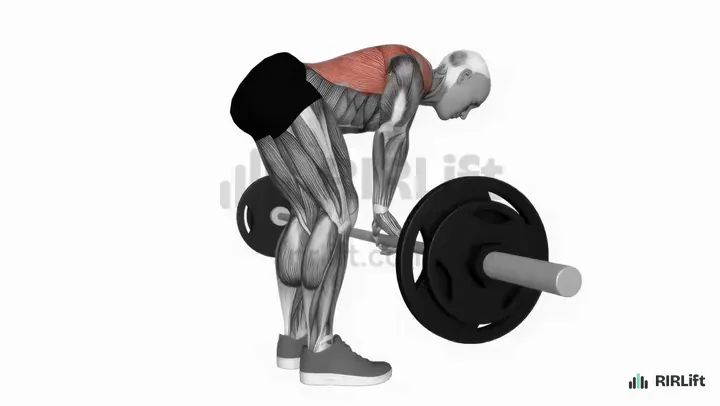
Barbell rows

Still have a bar: change where each rep starts or how you hold it, and the same back muscles do the work.

Closest barbell swap

Barbell Row

Upper Back, Lats

The same bar, grip and muscles, but each rep starts from a hang below your knees instead of the floor. Your torso sits a little higher and you keep tension the whole set, which suits muscle building better than strength off the floor.

How to do it

  1. Stand with your feet roughly hip width and hold the bar with an overhand grip just outside your thighs.
  2. Soften your knees and push your hips back until your torso is around 45 degrees or lower, with the bar hanging at arm's length below your knees.
  3. Pull the bar into your lower ribs, driving your elbows back past your torso.
  4. Lower the bar until your arms are straight again, holding the same torso angle for every rep.

Cues

  • Chest proud, back flat
  • Elbows past the ribs
  • Same angle top to bottom

Common mistakes

  • Standing taller with each rep until the row becomes a shrug: pick a load you can row at a fixed angle for every rep of the set.
  • Bouncing the bar off your thighs with a hip thrust: if you need the hip drive, the weight is too heavy for the rep range.

Barbell swap with more lats

Underhand Barbell Row

Upper Back, Lats

Palms up pulls your elbows close to your sides, which shifts more of the work to your lats and biceps while you keep the same flat-backed, near-parallel hinge as the Pendlay row.

How to do it

  1. Grip the bar palms up with your hands a little wider than your shoulders and hinge forward, knees soft, until your torso is nearly parallel to the floor.
  2. Let the bar hang below your shoulders with your back flat.
  3. Pull it toward your lower ribs, elbows travelling close to your sides.
  4. Lower it to straight arms without letting your back round.

Cues

  • Flat back, fixed angle
  • Bar to the lower ribs
  • Elbows brush the ribs

Common mistakes

  • Standing up taller as the set gets hard: keep the same torso angle every rep.
  • Curling the bar with the arms instead of driving the elbows back: think of the hands as hooks.

Best swap for a tired lower back

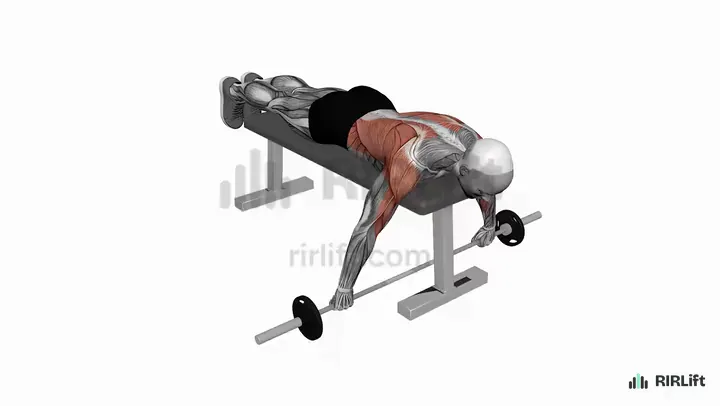
Seal Row

Upper Back, Lats

Lying face down on a raised bench, you row the bar from a dead hang like a Pendlay row, but your chest is supported. Pause at the bottom so every rep starts still, and your lower back does nothing.

How to do it

  1. Raise a flat bench on boxes or plates high enough that your arms can hang straight without the bar touching the floor.
  2. Lie face down with your chest at the top edge and grab the bar below you with an overhand grip a little wider than your shoulders.
  3. Row the bar up to the underside of the bench, pinching your shoulder blades at the top.
  4. Lower until your arms are straight and your shoulder blades spread apart, then repeat.

Cues

  • Chest glued to the bench
  • Pinch the blades at the top
  • Full hang at the bottom

Common mistakes

  • Lifting your chest off the bench to finish the rep: stop the set when the bar no longer reaches the bench.
  • Using a bench too low for a full stretch: raise it until your arms are straight with the bar off the floor.
Build a session with Seal Row

Landmine and machine rows

A landmine or a chest pad takes some or all of the hinge off your lower back, so the set ends when your back muscles give out.

Landmine swap, heavier

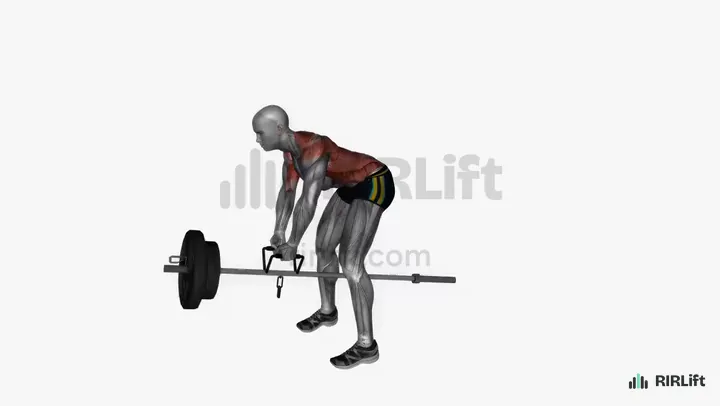
T-Bar Row

Upper Back, Lats

A loaded bar in a landmine lets you row heavy with both hands and a fixed path. Set the plates down between reps to keep the dead stop.

How to do it

  1. Stand over the bar facing away from the anchor, plates in front of you.
  2. Put a V-handle under the sleeve or grip the bar with both hands.
  3. Hinge until your chest is at about 45 degrees and your back is flat.
  4. Pull the plates toward your lower chest, elbows close.
  5. Lower until your arms are straight and your shoulders stretch forward.

Cues

  • Chest stays over the plates
  • Elbows to your hips
  • Full stretch at the bottom

Common mistakes

  • Standing up as you pull: the angle you start at is the angle you finish at.
  • Shortening the bottom: let your shoulder blades spread before the next rep.
Build a session with T-Bar Row

One arm with a barbell

Meadows Row

Upper Back, Lats

Rowing the end of a landmine bar one arm at a time gives a deeper stretch and evens out sides, with your free arm braced on your knee.

How to do it

  1. Wedge one end of the bar into a corner or landmine and load the other end.
  2. Stand side on to the loaded end in a staggered stance, front knee bent, and rest your free forearm on that knee.
  3. Grip the sleeve end overhand and pull it up toward your hip, driving your elbow back and slightly out.
  4. Lower until your arm is fully straight and your shoulder dips toward the floor, then row again. Finish the set and switch sides.

Cues

  • Elbow back and slightly out
  • Let the shoulder drop at the bottom
  • Hips stay square

Common mistakes

  • Rotating your torso to heave the bar: keep your shoulders level and lighten the load.
  • Gripping the thick sleeve too far from the end: hold just behind the collar so your hand does not slip.

Machine swap, no hinge

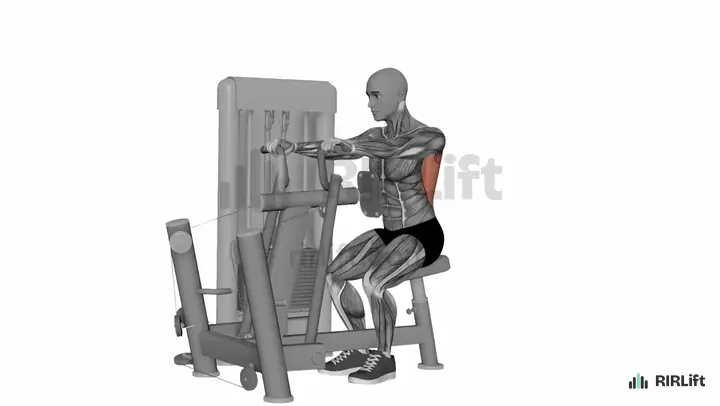
Chest-Supported Row

Upper Back, Lats

If your hamstrings will not let you get your torso flat, a chest pad removes the hinge entirely. Pull explosively and lower slowly to keep the Pendlay feel.

How to do it

  1. Set the seat so the handles are at chest height and the pad sits against your upper chest.
  2. Grab the handles with arms straight and your shoulders stretched forward.
  3. Pull the handles back by driving your elbows behind you until your hands reach your torso.
  4. Return slowly to straight arms and repeat without lifting off the pad.

Cues

  • Chest stays on the pad
  • Wide elbows for upper back, tucked for lats
  • Full stretch each rep

Common mistakes

  • Pulling your chest off the pad to finish reps: the set is over when you cannot finish with the chest down.
  • Setting the seat too low so you pull toward your neck: handles should line up with your mid-chest.

Dumbbells and kettlebells

Without a barbell, set the weights on the floor and keep the dead stop.

Closest swap with dumbbells

Dumbbell Pendlay Row

Lats, Upper Back

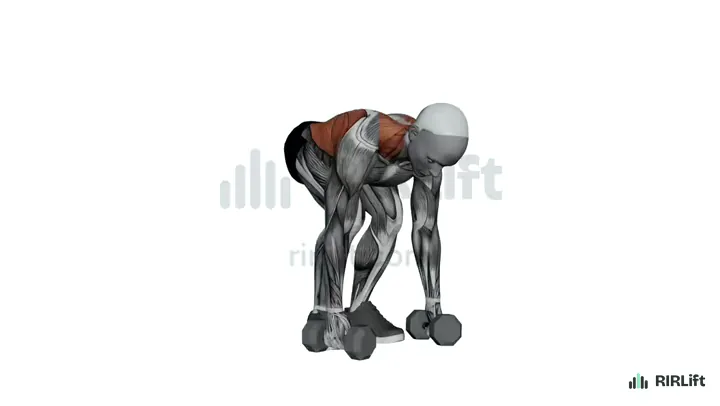
The same flat torso and dead stop on the floor, with a dumbbell in each hand. It is the best Pendlay row swap for a home gym without a barbell.

How to do it

  1. Place two dumbbells on the floor just in front of your feet and hinge down until your torso is level with the floor, back flat.
  2. Grip both dumbbells, take the slack out of your arms, and brace your trunk.
  3. Row both dumbbells to your lower ribs in one strong pull, elbows close to your sides.
  4. Lower them all the way back to the floor, let them settle, and reset your back before the next rep.

Cues

  • Dead stop on the floor every rep
  • Flat back before you pull
  • Explode up, control down

Common mistakes

  • Tapping the dumbbells and bouncing them back up: let them come to rest, then pull again.
  • Raising your torso as you row: the chest stays at the same height from the first rep to the last.

Braced one-arm dumbbell row

One-Arm Dumbbell Row

Lats, Upper Back

A hand on the bench takes the hinge off your lower back, so you can row heavy for higher reps. Use it as the second row after a heavier two-arm swap.

How to do it

  1. Put one hand and the same-side knee on a bench, or your hand on a chair seat with both feet on the floor, so your back is flat.
  2. Hold a dumbbell in the other hand with your arm hanging straight.
  3. Pull your elbow back toward your hip until the dumbbell reaches your ribs.
  4. Lower it until your arm is straight again, finish all reps, then switch sides.

Cues

  • Elbow to your hip
  • Back flat as a table
  • Full stretch at the bottom

Common mistakes

  • Twisting your chest open to lift the dumbbell higher: keep both shoulders level.
  • Shrugging the shoulder up toward your ear: pull the elbow back, not the shoulder up.

Kettlebell dead-stop rows

Kettlebell Gorilla Row

Lats, Upper Back

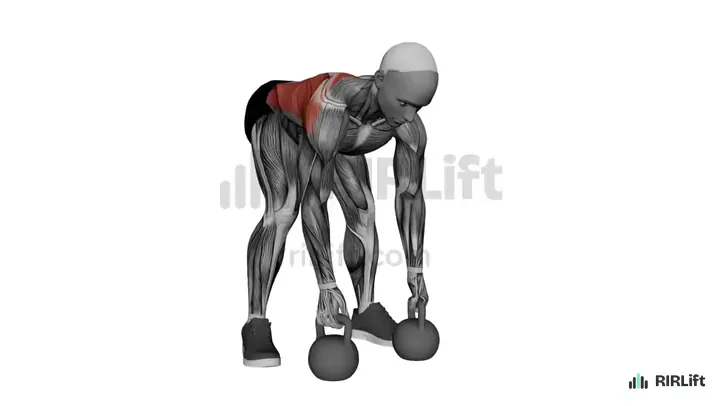
You alternate arms, rowing one bell while the other rests on the floor, so each rep starts from a stop. A wide stance makes the hinge easier than a barbell.

How to do it

  1. Stand with your feet wider than shoulder-width, two kettlebells on the floor between them, and hinge down to grip both handles with a flat back.
  2. Press one kettlebell into the floor to brace your trunk.
  3. Row the other kettlebell up to your hip, elbow close to your side, without twisting.
  4. Set it back down with control and row the other side. Alternate until the set is done.

Cues

  • Wide stance, low hips
  • Push down with the planted hand
  • Square shoulders

Common mistakes

  • Rotating your torso to lift the bell higher: the row ends at your hip with both shoulders level.
  • Standing up between reps: stay in the hinge from the first rep to the last.

Bodyweight and bands

No weights at all: your bodyweight under a bar or on a pull-up bar, or a band for high reps.

No weights, a bar in a rack

Inverted Row

Upper Back, Lats

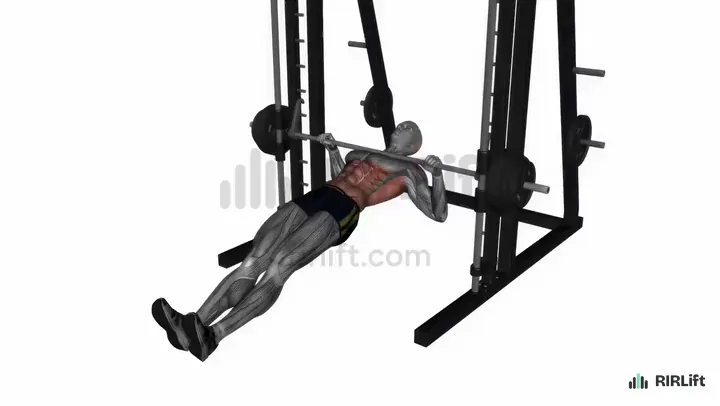
Your bodyweight is the load, and you can make every rep start from a dead hang at the bottom. It trains the same back with no stress on your lower back.

How to do it

  1. Set a bar at about hip height, lie under it, and grip it with your hands a little wider than your shoulders.
  2. Straighten your body from heels to head, or bend your knees with feet flat for an easier version.
  3. Pull your chest up to the bar, leading with your elbows, and keep your hips in line.
  4. Lower until your arms are straight, then pull again.

Cues

  • Body stays a straight plank
  • Chest touches the bar
  • Bend your knees to make it easier

Common mistakes

  • Letting your hips sag so only your chest rises: squeeze your glutes and move as one piece.
  • Pulling the bar to your neck: aim for the bottom of your chest.

Bands only

Band Bent-Over Row

Lats, Upper Back

Stand on a band and row from the same hinge. Pull fast and pause at the top, where the band is hardest.

How to do it

  1. Stand on the middle of a long band with your feet hip-width apart and hold an end in each hand.
  2. Hinge forward from the hips with soft knees until your torso is at about 45 degrees, back flat.
  3. Row both handles toward your lower ribs, elbows close, and pause with your shoulder blades pulled together.
  4. Let the band pull your arms back to straight slowly and repeat.

Cues

  • Hold the squeeze for a second
  • Slow on the way back
  • Shorten your grip to add tension

Common mistakes

  • Letting the band snap your arms back down: resist it all the way, because the lowering counts.
  • Using a band so light the set never gets close to failure: choke up on the band or switch to a heavier one.

Bodyweight back work on a bar

Archer Pull-Up

Lats, Upper Back

A one-sided pull-up loads your back hard with no barbell.

How to do it

  1. Take an overhand grip about twice your shoulder width and hang with your arms straight.
  2. Pull your body toward your right hand, letting your left arm straighten along the bar.
  3. Get your chin near your right hand at the top, then lower back to the middle.
  4. Alternate sides each rep, or do all reps on one side and switch.

Cues

  • Pull toward one hand
  • Other arm straight
  • Lower to center

Common mistakes

  • Bending the assisting arm so both share the work: straighten it as much as you can.
  • Rushing back through the middle: control the lowering on each side.

Example sessions without the Pendlay row

Session 1

Gym, lower back is the limit

Open in the session builder
  • Workouts2× a week
  • Working sets20 a week
  • Per workout~30 min
  • EquipmentBarbells, Seated Row Machine, Landmine

You train in a gym and your lower back tires on Pendlay rows before your back muscles do.

The seal row keeps the dead-hang start with your chest supported and takes the heavy slot. The chest-supported row adds volume with no hinge, and the Meadows row trains one side at a time with a hand braced on your knee. 10 working sets.

Back
ExerciseSets × repsRIRRest
Seal Row1 warm-up set first 4 × 6–10 2 2:30 min
Chest-Supported Row 3 × 10–12 2 90 s
Meadows RowSets are per arm. 3 × 8–12 2 75 s
How to run it
Run it as your back day once or twice a week. Put it on a different day from deadlifts or squats if you can.
How to progress
When every set of a row hits the top of its range at the RIR shown, add the smallest plate jump next session and start back at the bottom of the range.

Session 2

Home gym, barbell and a rack

Open in the session builder
  • Workouts2× a week
  • Working sets20 a week
  • Per workout~35 min
  • EquipmentBarbells

You have a barbell, plates and a rack, and want a change from Pendlay rows or a version that is easier to set up.

The barbell row takes the heavy slot in low reps with long rests, the underhand row adds lat work at a more upright angle, and the inverted row finishes with your bodyweight in the same rack. 10 working sets.

Back
ExerciseSets × repsRIRRest
Barbell Row2 warm-up sets first 4 × 5–8 2 3 min
Underhand Barbell Row 3 × 8–12 2 2 min
Inverted Row 3 × 8–12 1 90 s
How to run it
Once or twice a week. Rest the full time between barbell row sets so each one is strong.
How to progress
Add 5 pounds to the barbell row when all four sets reach 8 reps at the RIR shown. Add reps on the inverted row, then lower the bar a notch.

Session 3

Home, dumbbells only

Open in the session builder
  • Workouts2× a week
  • Working sets20 a week
  • Per workout~25 min
  • EquipmentDumbbells, Resistance Bands

You train at home with dumbbells and no barbell.

The dumbbell Pendlay row keeps the flat back and dead stop, the one-arm row adds heavier single-side work braced on a bench, and band rows finish with high reps. Lighter weights mean more reps and shorter rests than the barbell session. 10 working sets.

Back
ExerciseSets × repsRIRRest
Dumbbell Pendlay Row1 warm-up set first 4 × 6–10 2 2 min
One-Arm Dumbbell RowSets are per arm. 3 × 10–15 1 75 s
Band Bent-Over Row 3 × 15–25 1 45 s
How to run it
Twice a week on non-consecutive days.
How to progress
Add reps until every set reaches the top of the range, then move up a dumbbell. At your heaviest pair, pause one second at the top of every rep.

Make it fit you

Questions

What can I do instead of Pendlay rows?

The barbell row is the closest. If your lower back is the problem, use seal rows or chest-supported rows; with dumbbells, do dumbbell Pendlay rows.

Are Pendlay rows or barbell rows better?

Neither is better overall. The Pendlay row starts each rep from the floor, which suits strength and explosive pulling; the barbell row keeps tension the whole set, which suits building muscle.

What is the difference between a Pendlay row and a barbell row?

A Pendlay row returns the bar to the floor every rep with your torso close to flat. A barbell row starts from a hang below your knees, usually with your torso a little more upright.

Is the T-bar row a good alternative to the Pendlay row?

Yes. It trains the same back muscles heavy, with a fixed path that many people find easier to hold. Set the plates down between reps to keep a dead stop.

What is a Pendlay row alternative with dumbbells?

The dumbbell Pendlay row: set two dumbbells on the floor, hinge until your back is flat and row them to your ribs, letting them settle between reps.