
Walking lunge: how to do it with dumbbells, what it works, and how to program it
Published October 19, 2026
A walking lunge is a lunge where you step forward into each rep and keep traveling, alternating legs, instead of stepping back to where you started. Take a step long enough that both knees bend to about a right angle, lower your back knee to just above the floor, then push through your front foot and bring the back leg straight through into the next step. You can do it with bodyweight, dumbbells at your sides or a weight plate held overhead; it trains your quads and glutes one leg at a time and challenges your balance more than a lunge in place.
- WorksQuads, Glutes
- AlsoAdductors, Abductors
- EquipmentDumbbells
- Start with3 × 10–15, 2 in reserve, 2:30 min rest
How to do the walking lunge
Every step is a full single-leg rep, so each leg does its own work and a weaker side can't hide. Moving forward continuously makes it harder on your balance and breathing than a stationary lunge. Holding a plate overhead keeps your torso upright and adds shoulder and core work; dumbbells at your sides are the way to load it heavier.
Steps
- Hold a weight plate overhead with straight arms, or one dumbbell per hand at your sides, and stand tall with your feet about hip-width apart in a clear lane.
- Step forward with one foot, far enough that your front shin stays roughly vertical when you lower.
- Drop straight down until your back knee is an inch or two above the floor, keeping your torso upright and the weight steady.
- Push through the whole front foot to stand up, and bring the back foot forward past the front one into your next step.
- Keep alternating legs until you have done the planned number of steps on each side.
Cues
- Down like an elevator, not forward like a skier
- Two train tracks, not a tightrope
- Let the back knee kiss, not crash
Common mistakes
- Stepping in a straight line, one foot in front of the other: keep your feet about hip-width apart side to side so you have a stable base.
- Taking short, choppy steps: lengthen your stride until your front knee stops traveling far past your toes and your back knee can reach the floor.
- Pausing upright between steps to rebalance: if you need to stop, the weight is too heavy for now; take a lighter pair and keep moving.
Swap for: Dumbbell Reverse Lunge, Bulgarian Split Squat, Step-Up
Muscles the walking lunge works
Walking lunges mainly work your quads and glutes. Your hamstrings, adductors and calves help, and your core works to keep you upright as you travel. Holding the weight overhead adds work for the shoulders and upper back; holding dumbbells at your sides adds grip work. A longer step with a slight forward lean puts more of the work on the glutes; a shorter step with an upright torso puts more on the quads.
Sets, reps and reps in reserve for the walking lunge
| Goal | Sets × reps | RIR | Rest |
|---|---|---|---|
| Build muscle | 3 × 8–12 steps per leg | 1–2 | 2 min |
| Keep the dumbbells heavy enough that the last few steps are a real fight. | |||
| Conditioning finisher | 2–3 × 15–20 steps per leg | 2–3 | 90 s |
| Lighter dumbbells or bodyweight; walk a set distance and keep the pace steady. | |||
| Learning the movement | 2 × 8 steps per leg | 3 | 90 s |
| Bodyweight only, hands on hips, until your steps land in the same place every time. | |||
Walking lunge variations
-
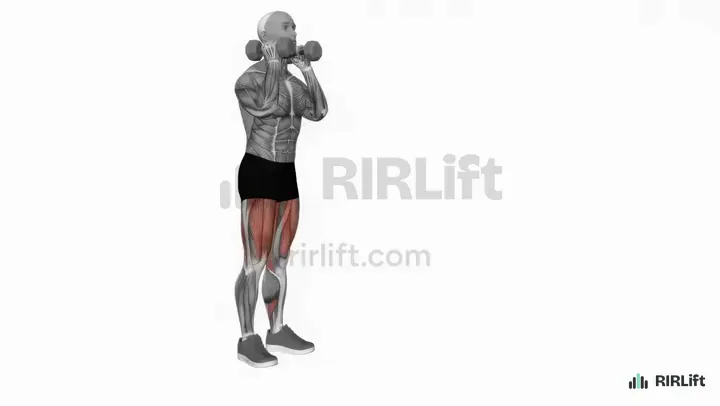
Dumbbell Front Rack Lunge
Hold the dumbbells at your shoulders when you want the torso upright with more weight than you can hold overhead.
Build a session with it -
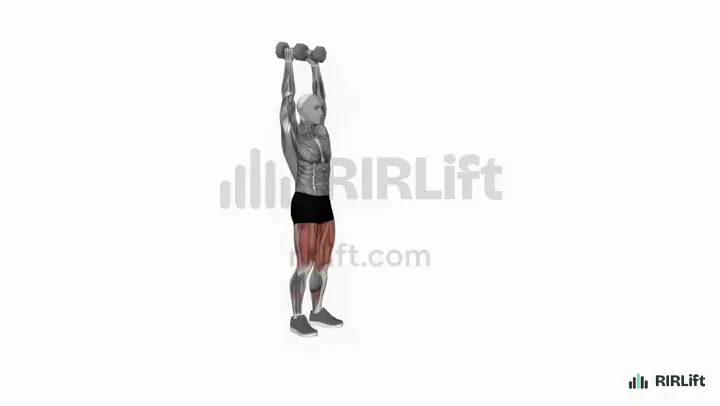
Dumbbell Overhead Lunge
Press two dumbbells overhead and lunge when you have no plate but want the same balance and shoulder challenge.
Build a session with it -
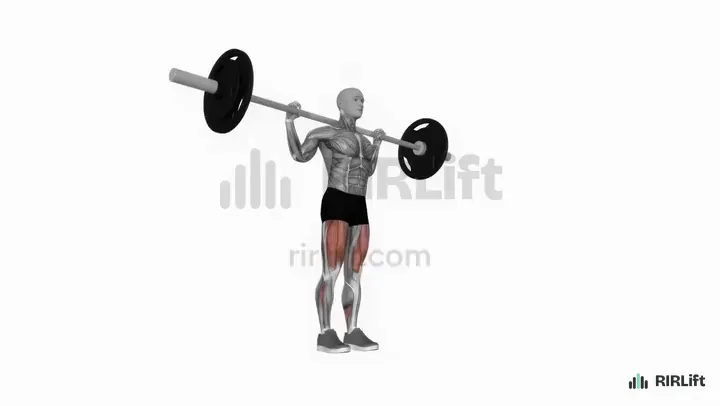
Barbell Forward Lunge
Put a barbell on your back when you have outgrown the dumbbells or your grip quits before your legs.
Build a session with it
Walking lunge alternatives
Lunges in place
-
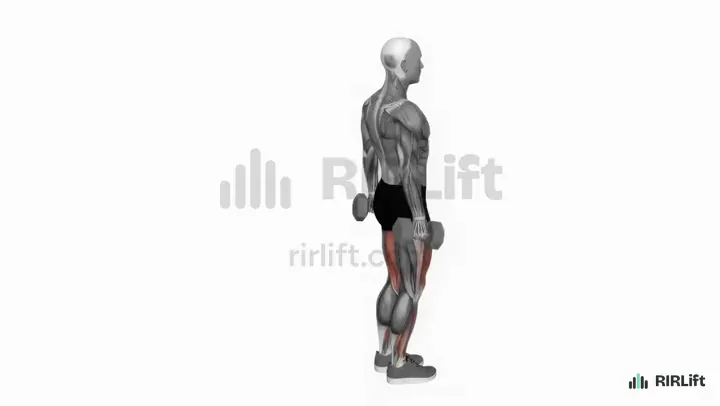
Dumbbell Reverse Lunge
Step backward instead when you have no room to walk or your knees prefer it; it is easier to balance.
Build a session with it -
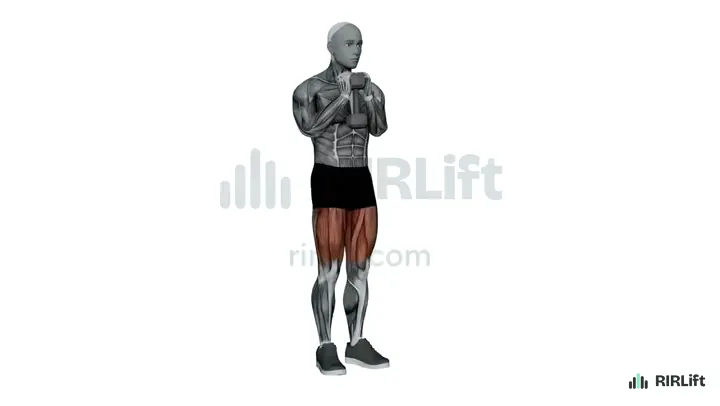
Dumbbell Forward Lunge
Step forward and push back to the start when you want the same front-foot braking without needing a long lane.
Build a session with it
Split squats
-
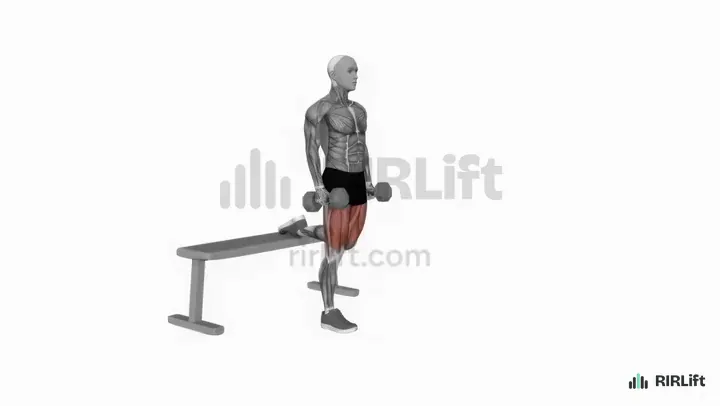
Bulgarian Split Squat
Elevate your back foot on a bench when you want to load one leg harder with less balance demand.
Build a session with it -
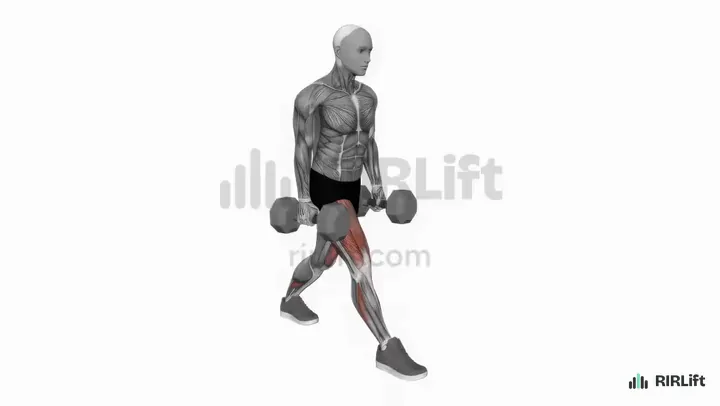
Dumbbell Split Squat
Keep both feet planted when you want to learn the bottom position before adding the walk.
Build a session with it
Step-ups
-
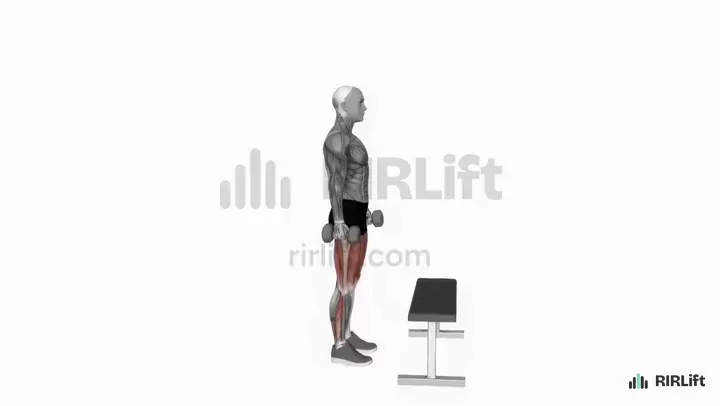
Step-Up
Step up onto a bench when you want single-leg glute and quad work with less stress on the front knee.
Build a session with it
Walking lunges vs squats
A squat loads both legs at once and lets you lift more total weight, which makes it the better choice for building raw leg strength. A walking lunge trains each leg on its own through a long range, adds a balance and coordination demand, and gets your heart rate up faster.
You don't have to choose. Most leg days work well with a squat or leg press first for heavy work and walking lunges after it, when lighter loads already feel hard.
How many steps and how long
Count steps per leg rather than time: 8 to 12 steps per leg covers most muscle-building sets, and 15 to 20 per leg turns it into conditioning. If your gym floor is short, turn around and keep counting. Set your weight so you finish the set with one or two good steps left in you.
Questions
What muscles do walking lunges work?
They work the quads and glutes most, with help from the hamstrings, adductors and calves. Your core and grip work to hold the dumbbells and keep you upright.
How many walking lunges should I do?
For muscle, 3 sets of 8 to 12 steps per leg, stopping one or two steps before you would lose form. For conditioning, use lighter weight and 15 to 20 steps per leg.
Are walking lunges better than squats?
Neither is better overall. Squats let you lift more and build strength; walking lunges train each leg alone and challenge balance. Doing both on the same day covers more.
What are the benefits of walking lunges?
They build the quads and glutes one leg at a time, expose and even out a weaker side, improve balance, and raise your heart rate more than most leg lifts.
Do lunges help with lower back pain?
Lunges keep the load on your legs with an upright torso, so many people with a touchy lower back find them easier than heavy squats or deadlifts. Use a weight you can carry without leaning, and stop if it aggravates your back.
What can I do instead of walking lunges?
Reverse lunges, split squats, Bulgarian split squats and step-ups train the same muscles one leg at a time without needing space to walk.
Should my back knee touch the floor?
Lower until it hovers just off the floor or lightly touching. Dropping it hard onto the floor takes tension off the front leg and can bruise the knee.
Related templates
-
Reverse lunge: how to do it, what it works, and how to load it
The lunge to use when you have no room to walk.
-
Bulgarian split squat: form, foot position and alternatives
A harder single-leg option with the back foot on a bench.
-
Curtsy lunge: how to do it, what it works, and how it differs from a lunge
A crossing lunge that puts more work on the side of the glutes.
-
Leg exercises with dumbbells: quads, hamstrings, glutes and calves
More dumbbell lifts to build a leg day around lunges.
-
How to use RIR
How to judge how many good steps you have left in a set.