Trap bar deadlift alternatives: what to do with no trap bar

The best trap bar deadlift alternative with a barbell is the sumo deadlift, because the wide stance lets you start with your hips low and your chest up, much like standing inside the trap bar. With dumbbells, a dumbbell squat with the weights at your sides is the same lift in dumbbell form. With one kettlebell, do kettlebell deadlifts; if your lower back is the limit or your gym bans deadlifts, use the leg press.

What a trap bar deadlift alternative has to replace

The trap bar deadlift trains your glutes, quads, hamstrings and back in one lift. Standing inside the bar keeps the load in line with your body, so you start with your hips lower and your chest higher than in a regular deadlift. That puts more of the work on your quads and less on your lower back.

It sits between a squat and a deadlift, so no single swap matches it exactly. Use a lift that holds the load at your sides or between your feet, or pair a squat-type lift with a hinge.

How to do the trap bar deadlift

Barbell, no trap bar

The sumo deadlift is the closest stance. The regular deadlift is heavier on your back, and the Romanian deadlift trains only the hinge half.

Closest barbell swap

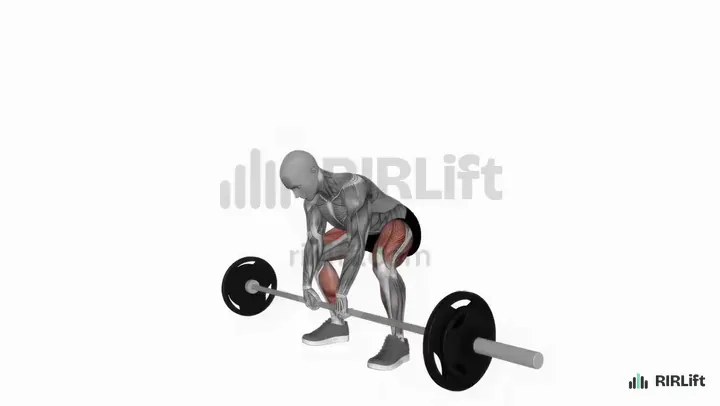
Sumo Deadlift

Glutes, Hamstrings, Quads

The wide stance lets you start with your hips low and your chest up, much like standing inside a trap bar, so your quads and glutes share the pull. Pick it when you have a barbell but no trap bar.

How to do it

  1. Stand at the bar with your feet set well wider than your shoulders, toes angled out about 30 to 45 degrees, bar above your midfoot.
  2. Bend your knees and push them out until they sit over your toes, then reach straight down and grip the bar about shoulder width apart, hands inside your legs.
  3. Lift your chest, pull your shoulders back and down, and tug the bar up until it clicks against the plates without leaving the floor.
  4. Push your feet down and out into the floor and stand up, keeping the bar touching your legs and your knees pressed out.
  5. Finish tall with your hips through and your glutes squeezed, then lower the bar to the floor along your legs, hips moving back first.

Cues

  • Spread the floor with your feet
  • Knees stay over your toes
  • Chest and hips rise together

Common mistakes

  • Hips rising before the bar moves: if your chest drops as the bar breaks the floor, the pull becomes a stiff-leg lift. Set your hips a little lower and hold your chest up until the bar clears your knees.
  • Knees caving in: once your knees drift inward your hips move away from the bar. Keep pushing them out over your toes the whole rep, and narrow your stance if you cannot.
  • Going wider than you can hold: a stance so wide your shins tilt inward makes the start harder, not easier. Set your feet where your shins stay close to vertical from the side.

Heaviest swap

Barbell Deadlift

Glutes, Lower Back

The conventional deadlift trains the same glutes, hamstrings and back with the bar in front of your shins. Expect more work for your lower back and hamstrings and a little less for your quads.

How to do it

  1. Stand with your feet about hip-width apart and the bar over the middle of your feet, close to your shins.
  2. Hinge at the hips and bend your knees just enough to grip the bar with your hands right outside your legs.
  3. Bring your shins to the bar, lift your chest until your back is flat, and squeeze your armpits down as if bending the bar around your legs.
  4. Take a big breath into your belly, brace, and pull until the bar is tight against the plates without lifting it yet.
  5. Push the floor away with your legs and keep the bar against your body; once it passes your knees, drive your hips forward to stand tall.
  6. Lower by pushing your hips back first, then bend your knees once the bar passes them, and set it down under control.

Cues

  • Bar over midfoot
  • Pull the slack out first
  • Push the floor away

Common mistakes

  • Letting the bar drift away from your legs: it makes the lift much harder on your lower back, so keep the bar brushing your shins and thighs the whole way.
  • Yanking the bar off the floor: build tension first by pulling the slack out, then push; jerking it loose is when backs round.
  • Shooting the hips up first so it becomes a stiff-legged pull: keep your chest and hips rising together off the floor, and lighten the bar if you cannot.

Hamstring-heavy barbell swap

Romanian Deadlift

Hamstrings, Glutes

Starting from standing and hinging down puts the load on your hamstrings and glutes with almost no knee bend. Use it next to a squat-type lift, since it trains the other half of what the trap bar did.

How to do it

  1. Set the bar in a rack at mid-thigh height, take it with a double overhand grip just outside your thighs and step back with your feet about hip width.
  2. Stand tall with the bar against your thighs, unlock your knees slightly and keep that bend fixed for the whole set.
  3. Push your hips straight back and let the bar slide down your thighs, chest coming forward as your hips go back.
  4. Stop when your hips stop moving backward and you feel a hard stretch in your hamstrings, usually somewhere between your knees and mid-shin.
  5. Push your feet into the floor and drive your hips forward until you stand tall, without leaning back at the top.

Cues

  • Hips back, not chest down
  • Bar stays on your legs
  • Knees soft and still

Common mistakes

  • Chasing the floor: if your back rounds to reach lower, your hamstrings have already run out. End the rep where your hips stop going back.
  • Squatting the weight down: if your knees keep bending as you lower, the stretch leaves your hamstrings. Lock in the knee angle at the top and only move at the hips.
  • Letting the bar drift forward: a bar a few inches off your legs pulls on your lower back. Drag it down your thighs, and use straps if your grip is what makes it swing.

Machines, if deadlifts are out

If your back is the limit or your gym does not allow deadlifts, train the leg drive on a machine and the hinge with lighter weights.

Swap that spares your lower back

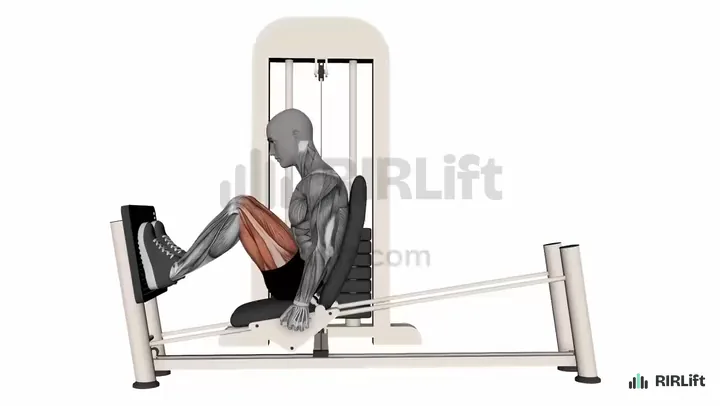
Leg Press

Quads, Glutes

Your legs drive the load while your back rests on the pad. Use it when your lower back is the limit, or in a gym that does not allow deadlifts.

How to do it

  1. Sit on the machine with your back against the pad and your feet hip-width on the foot plate, toes turned out a little.
  2. Hold the handles beside the seat and set the seat so your knees start bent close to your chest.
  3. Press through your whole foot so the seat slides back, until your legs are nearly straight without locking the knees.
  4. Let the seat roll forward under control until your knees are near your chest again, with your lower back still on the pad, and repeat.

Cues

  • Lower back stays on the pad
  • Knees track over the toes
  • Stop just short of lockout

Common mistakes

  • Lowering so far that your hips curl off the seat: the depth ends where your back stays flat.
  • Snapping the knees straight at the top: keep a slight bend so the legs, not the joints, hold the weight.
Build a session with Leg Press

Dumbbells

Dumbbells at your sides copy the trap bar grip. They run out of weight before a loaded bar does, so use higher reps and one leg at a time.

Best dumbbell swap

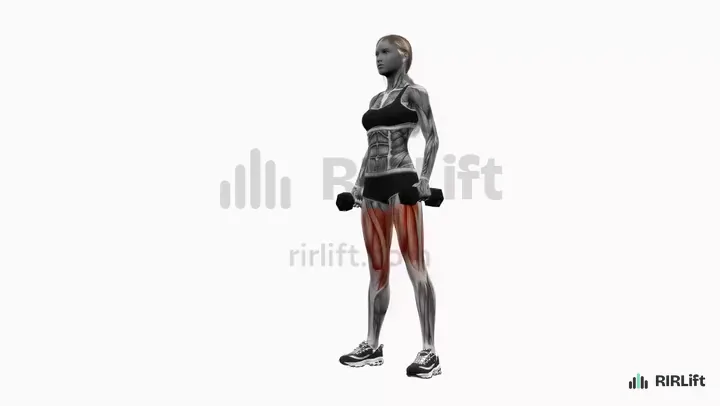
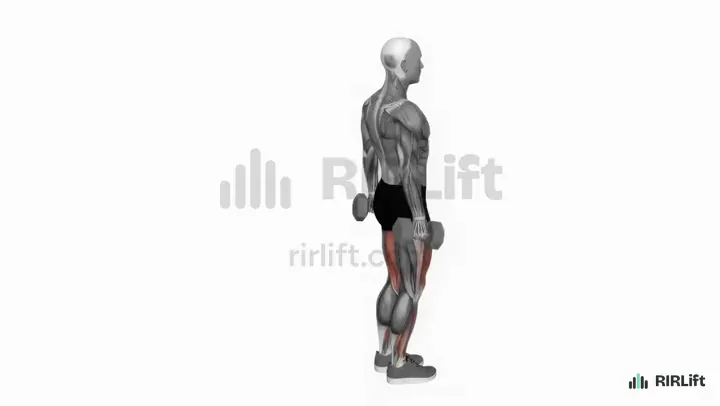
Dumbbell Squat

Quads, Glutes

Holding dumbbells at your sides puts the load where the trap bar handles are, so this is the trap bar lift in dumbbell form. Dumbbells run out of weight sooner, so use higher reps.

How to do it

  1. Pick up two dumbbells and let them hang beside your thighs, palms facing in, feet about shoulder-width with toes turned out a little.
  2. Take a breath, brace your stomach and lift your chest so your back stays flat.
  3. Bend your knees and send your hips back and down, letting the dumbbells travel straight down beside your legs.
  4. Go down until your thighs are about level with the floor, or as deep as you can while your heels stay down and your back stays flat.
  5. Push through your whole foot to stand up, knees tracking over your toes, and finish tall with your glutes tight.

Cues

  • Dumbbells drop straight down
  • Knees follow the toes
  • Whole foot stays on the floor

Common mistakes

  • Knees caving in on the way up: push them out over your toes and lighten the dumbbells if they still collapse.
  • Heels lifting at the bottom: stop a little higher, or stand on small plates under your heels until your ankles loosen up.
  • Folding forward as the set gets hard: hold your chest high and stop the set when you can no longer hold that position.

Hinge with dumbbells

Dumbbell Romanian Deadlift

Hamstrings, Glutes

The hip hinge half of the trap bar lift, done with dumbbells. Pair it with the dumbbell squat or lunge.

How to do it

  1. Stand with your feet about hip-width apart, one dumbbell per hand resting against the front of your thighs, palms facing you.
  2. Unlock your knees slightly, pull your shoulders down and back, and take a breath into your stomach.
  3. Push your hips straight back and let your chest tip forward, sliding the dumbbells down the front of your legs with your back flat and knees barely changing angle.
  4. Stop when your hamstrings are fully stretched and your hips will not travel back any farther, typically with the dumbbells somewhere between the knee and mid-shin.
  5. Drive your hips forward and squeeze your glutes to stand tall, finishing upright without leaning back.

Cues

  • Hips back, not down
  • Dumbbells skim your legs
  • Stand tall, don't lean back

Common mistakes

  • Bending the knees more as you go down: that turns the hinge into a squat; keep the knee bend you started with and let the hips do the moving.
  • Rounding the back to reach lower: end the rep where your hips stop going back, even if the dumbbells are only at your knees.
  • Letting the dumbbells drift forward: keep them brushing your thighs and shins so the load stays over your feet and off your lower back.

One-leg swap that spares your back

Dumbbell Reverse Lunge

Quads, Glutes

Your torso stays upright and one leg at a time makes light dumbbells hard for your quads and glutes, so you train the legs without a heavy hinge. Pick it when your lower back needs a break, or when your dumbbells are too light for squats.

How to do it

  1. Start tall with a dumbbell hanging from each hand and your feet under your hips.
  2. Step one foot back and lower until your back knee is just above the floor and your front thigh is near parallel.
  3. Keep your front heel flat and your chest tall.
  4. Push through your front foot to bring the back foot forward to the start, then alternate or finish all reps on one side.

Cues

  • Front shin stays vertical
  • Back knee kisses the floor
  • Drive through the front heel

Common mistakes

  • Taking a short step so the front knee shoots forward and the heel lifts: step farther back.
  • Letting the torso twist or lean to the side as you tire; keep both dumbbells hanging straight down.

Kettlebells and bands

One bell in one hand, a bell between your feet or a band under them, for home training with almost no gear.

Simplest swap with one kettlebell

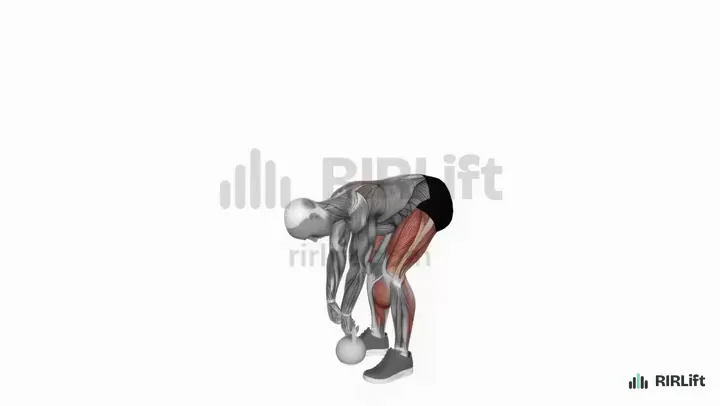
Kettlebell Deadlift

Glutes, Hamstrings, Lower Back

Holding one bell at your side puts the load where a trap bar handle would be, and your trunk has to stop you leaning toward it. It is the easiest deadlift to learn and works with a single bell; do every rep on one side, then switch hands.

How to do it

  1. Stand with your feet about hip-width apart and hold one kettlebell in one hand beside that thigh, arm long.
  2. Pull your shoulders down and back, take a breath and brace your stomach so your torso stays square.
  3. Push your hips back and let your knees bend a little, lowering the bell straight down beside your leg with a flat back.
  4. Stop when the bell is near your shin or your hips will not go back any farther.
  5. Push the floor away and drive your hips forward to stand tall, then finish your reps and switch hands.

Cues

  • Hips back, not down
  • Shoulders level, no lean
  • Stand tall, don't lean back

Common mistakes

  • Leaning or twisting toward the bell: keep both shoulders level and pick a bell you can hold without tilting.
  • Rounding your back to reach lower: end the rep where your hips stop going back.
  • Leaning back at the top: finish by squeezing your glutes with your ribs down, standing straight rather than bending backward.

Kettlebell swap with more legs

Kettlebell Sumo Deadlift

Glutes, Hamstrings

A wider stance lets you sit lower and use more quads and glutes than the regular kettlebell deadlift. Use high reps, since one bell is light.

How to do it

  1. Stand wide with toes turned out and the bell resting below you, between the heels.
  2. Push your hips back and bend the knees until you can grip the handle, chest up.
  3. Drive through your heels and squeeze your glutes to stand all the way up.
  4. Lower the bell back to the floor along the same path.

Cues

  • Knees out
  • Chest up
  • Finish tall

Common mistakes

  • Rounding to reach the bell: put it on a book or step if you cannot reach it flat-backed.
  • Bouncing the bell off the floor: settle it on every rep.

Swap with just a band

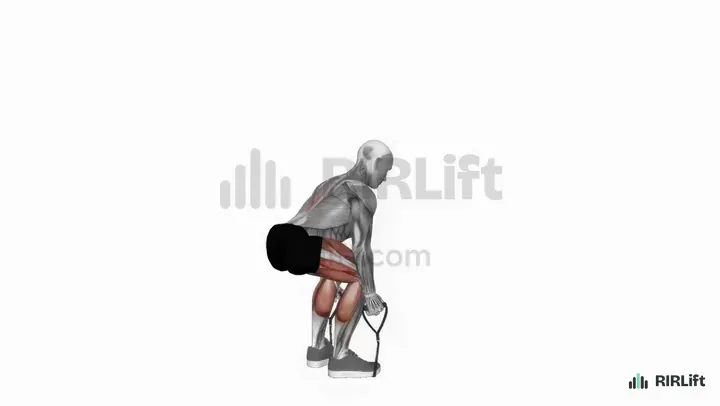
Band Deadlift

Glutes, Hamstrings, Lower Back

Standing on a band and standing up trains the same hinge. The band gets harder as you stand, so squeeze hard at the top.

How to do it

  1. Step onto the center of a handled band feet hip-width, a handle in each hand.
  2. Push your hips back and bend your knees until the handles are near your shins, with your back flat.
  3. Drive your hips forward and stand up tall, keeping the handles close to your legs.
  4. Lock out with a glute squeeze, then lower back down the same way.

Cues

  • Hips back, chest forward
  • Flat back
  • Lock out with your glutes

Common mistakes

  • Rounding your back to reach the bottom: bend your knees more and stop higher.
  • Leaning back at the top: stand tall and stop.

Bodyweight

No load at all: one leg at a time makes it hard enough.

Best swap with no equipment

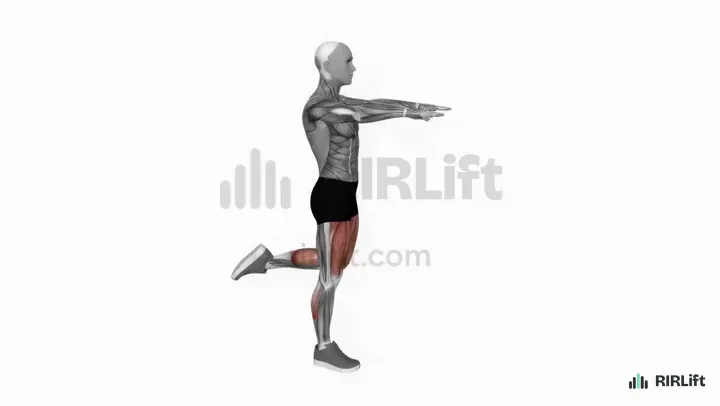
Skater Squat

Quads, Glutes

A one-leg squat to a knee touch trains your quads and glutes hard with bodyweight only. It covers the leg drive of the trap bar lift, not the hinge, so it is the pick when you have no weight at all.

How to do it

  1. Stand on one foot and bend the other knee so that foot is behind you, arms straight out in front as a counterweight.
  2. Push your hips back and lean your chest forward as you bend the standing knee.
  3. Lower until the back knee is just above the floor.
  4. Drive through your standing foot to stand tall; sets are per leg.

Cues

  • Arms forward as the counterweight
  • Chest leans, back stays flat
  • Back knee to a folded towel

Common mistakes

  • Only going down a few inches: put a folded towel or cushion where your knee should land and touch it every rep.
  • Letting the standing knee collapse inward: track it over your toes, and slow the lowering if it wobbles.

To pair with them

The gym session adds a leg curl for your hamstrings.

Hamstrings, to pair with the gym session

Lying Leg Curl

Hamstrings

A curl adds hamstring work to the gym session without more strain on your lower back.

How to do it

  1. Set the machine so your knees line up with the pivot point when you lie face down, and move the ankle pad to sit on your lower calves, just above your heels.
  2. Lie flat with your kneecaps hanging just past the end of the bench, hold the handles and press your hips into the pad.
  3. Bend your knees and pull the pad up in a smooth arc until your heels are as close to your glutes as the machine allows.
  4. Pause for a moment at the top without letting your hips lift off the bench.
  5. Lower the pad over about two seconds until your legs are almost straight, and start the next rep before the stack touches down.

Cues

  • Hips glued to the pad
  • Heels to glutes
  • Slow on the way down

Common mistakes

  • Lifting your hips as the weight gets heavy: your lower back takes over and the hamstrings do less. Drop the load until your hips stay down on every rep.
  • Stopping short at the bottom: that cuts out the part of the rep where your hamstrings are longest. Let your legs come back to almost straight before you curl again.
  • Swinging the pad up: a kick from the bottom hands the hardest part of the rep to momentum. Count two seconds down and start each rep from a dead stop.

Example sessions without the trap bar deadlift

Session 1

Gym with a barbell, no trap bar

Open in the session builder
  • Workouts2× a week
  • Working sets20 a week
  • Per workout~35 min
  • EquipmentBarbells, Leg Press, Lying Leg Curl

You train in a gym with barbells, plates and machines, but no trap bar.

The sumo deadlift takes the trap bar's place as the heavy lift, at low reps with long rest. The leg press adds quad volume with your back supported, and a leg curl trains your hamstrings without more strain on your lower back. 10 working sets.

Legs
ExerciseSets × repsRIRRest
Sumo Deadlift2 warm-up sets first 4 × 3–6 2 3:30 min
Leg PressFeet hip-width, mid-platform. 3 × 10–12 2 2 min
Lying Leg Curl 3 × 10–15 1 1 min
How to run it
Once or twice a week. Rest the full time on the deadlift, since its last reps need it.
How to progress
Add the smallest jump your plates allow when every deadlift set reaches 6 reps at the RIR shown. On the other two lifts, reach the top of the range first, then add weight.

Session 2

Home, a pair of dumbbells

Open in the session builder
  • Workouts2× a week
  • Working sets20 a week
  • Per workout~30 min
  • EquipmentDumbbells

You have adjustable dumbbells at home and no barbell.

The dumbbell squat with the weights at your sides is the trap bar lift in dumbbell form. The Romanian deadlift adds the hinge, and the reverse lunge makes the dumbbells harder by working one leg at a time. 10 working sets.

Legs
ExerciseSets × repsRIRRest
Dumbbell Squat1 warm-up set first 4 × 8–12 2 2 min
Dumbbell Romanian Deadlift 3 × 10–12 2 90 s
Dumbbell Reverse LungeSets are per leg. 3 × 10–12 2 90 s
How to run it
Twice a week on non-consecutive days. Use straps if your grip gives out before your legs.
How to progress
Add reps until every set reaches the top of its range, then move up a dumbbell. At your heaviest, slow the lowering to three seconds.

Session 3

One kettlebell and a band

Open in the session builder
  • Workouts3× a week
  • Working sets30 a week
  • Per workout~20 min
  • EquipmentKettlebells, Resistance Bands

You train at home with a single kettlebell, a band with handles and nothing else.

One bell is light, so the session uses high reps, short rest and sets close to failure. The kettlebell sumo deadlift trains your legs and hips, the band deadlift adds the hinge, and the skater squat works one leg at a time. 10 working sets.

Legs
ExerciseSets × repsRIRRest
Kettlebell Sumo Deadlift 4 × 12–20 1 75 s
Band Deadlift 3 × 15–25 1 1 min
Skater SquatSets are per leg. 3 × 6–10 1 90 s
How to run it
Two or three times a week. Take each set within one rep of failure.
How to progress
Add reps to the top of each range, then slow every lowering to three seconds, then use a heavier bell or a stronger band.

Make it fit you

Questions

What can I do if I don't have a trap bar?

With a barbell, do sumo deadlifts. With dumbbells, hold them at your sides and squat; with one kettlebell, do kettlebell deadlifts.

What is the closest alternative to a trap bar deadlift?

The sumo deadlift is the closest barbell swap because it starts with your hips low and your chest up. The dumbbell squat with the weights at your sides is the closest without a barbell.

Is the trap bar deadlift the same as an RDL?

No. The trap bar deadlift starts from the floor with your knees bent and trains your quads too. The Romanian deadlift starts standing, keeps your knees almost straight, and trains mostly your hamstrings and glutes.

Are trap bar deadlifts worth doing?

Yes. They let you lift heavy with less strain on your lower back than a regular deadlift and train most of your lower body in one lift.

What can I do if my gym doesn't allow deadlifts?

Use the leg press for the leg drive and a dumbbell Romanian deadlift for the hinge. Together they cover what the trap bar deadlift trains.

Which exercise can replace a deadlift?

The sumo deadlift or a kettlebell deadlift if you want the same lift, or a Romanian deadlift plus a squat-type lift if you want to split it in two. The leg press covers the leg drive if deadlifts are not allowed.

What is a trap bar deadlift alternative at home?

A dumbbell squat with the weights at your sides, a kettlebell deadlift, or a band deadlift. With no equipment, skater squats train the same legs hard.