
Deep core exercises for women: holds, slow lower-ab work and anti-rotation
Published October 29, 2026
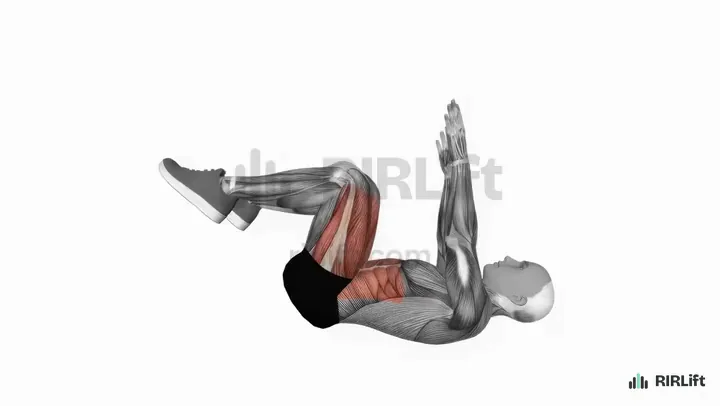
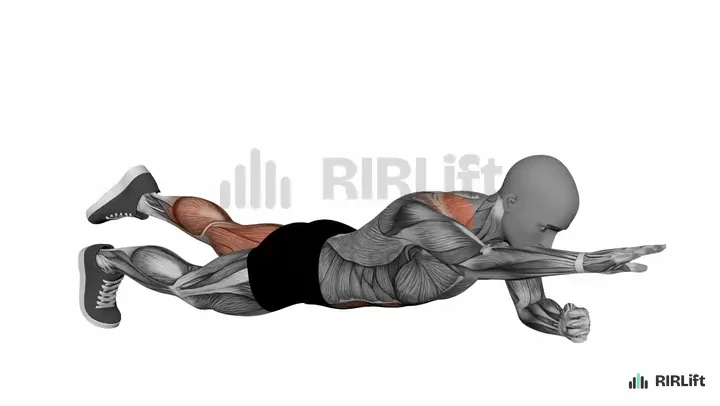
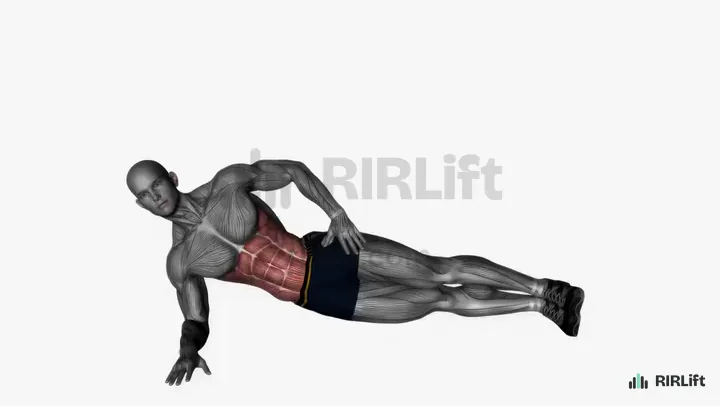
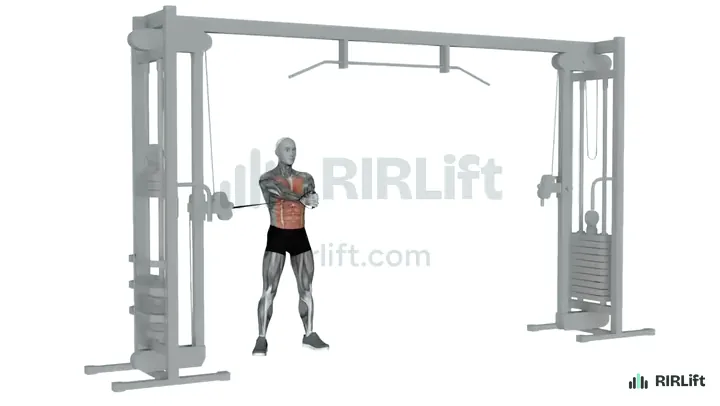
The best deep core exercises for women are the dead bug, lying knee raise, reverse crunch and hollow hold, which train your abs while your lower back stays pressed to the floor; the plank, side plank and long-lever plank, which hold your trunk still against gravity; the bear crawl and plank shoulder tap, which keep you braced while your limbs move; and the Pallof press and suitcase carry, which resist twisting and leaning. Do 3 or 4 of them, 2 to 3 sets each, two or three times a week, breathing out as you move, and make them harder by slowing down or lengthening the lever before adding reps.
- Dead Bug Abs
- Plank Abs
- Side Plank Abs
- Pallof Press Abs
- Bear Crawl Abs, Shoulders
- Dumbbell Suitcase Carry Abs, Quads
- Reverse Crunch Abs
- Plate Hollow Hold Abs
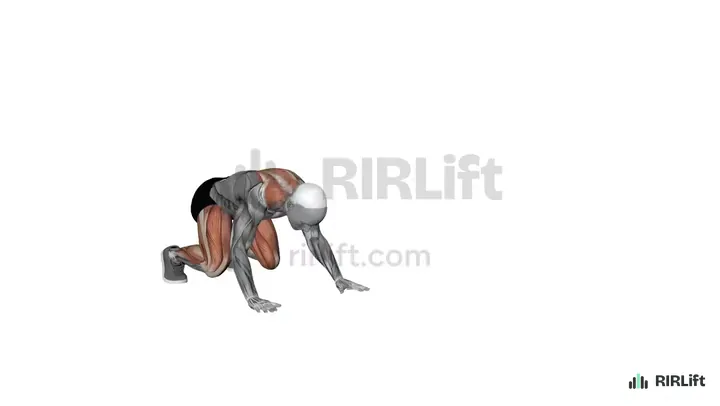
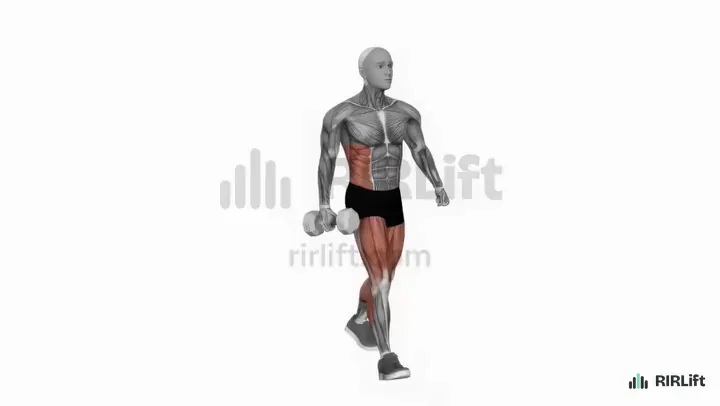
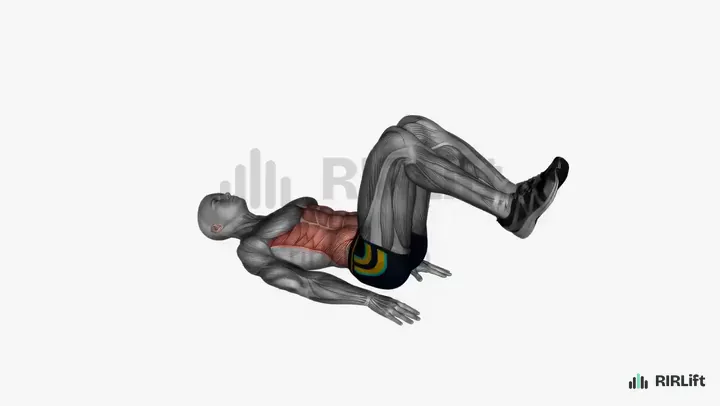
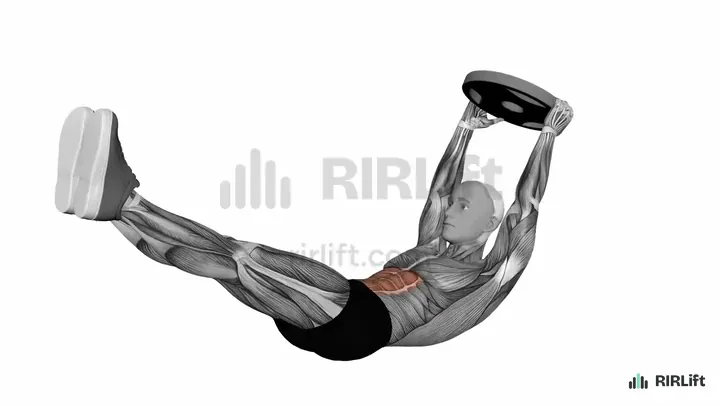
Put them together: example sessions
Each session below picks from the exercises above for one situation, with the sets, reps, rest and RIR filled in.
-
Session 1
At home, no equipment, ten minutes
You want to strengthen your deep core at home with no equipment, you are new to core training or coming back to it, and ten minutes fits in your day.
3× a week · 24 sets a week · ~15 min
-
Session 2
You lift weights in a gym and want core work that carries over
You already strength train two or three times a week, and you want core work that helps your squats and deadlifts instead of more crunches.
2× a week · 16 sets a week · ~20 min
-
Session 3
Planks feel easy and you want harder core work at home
You can hold a plank for a minute and do dead bugs without your back lifting, and you want the next step at home without buying equipment.
2× a week · 22 sets a week · ~20 min
Session 1
At home, no equipment, ten minutes
- Workouts3× a week
- Working sets24 a week
- Per workout~15 min
- EquipmentBodyweight
You want to strengthen your deep core at home with no equipment, you are new to core training or coming back to it, and ten minutes fits in your day.
Four exercises of 2 sets each, three times a week, gives your abs 24 short sets a week, enough to get stronger without leaving you sore. Every set stops 2 to 3 reps or a few seconds short of losing your form, because the point of every rep is keeping your back flat.
| Exercise | Sets × reps | RIR | Rest |
|---|---|---|---|
| Dead BugPer side. | 2 × 6–10 | 3 | 45 s |
| Lying Knee Raise | 2 × 8–12 | 3 | 45 s |
| Side PlankSeconds per side. | 2 × 15–30 | 2 | 45 s |
| PlankSeconds per hold. | 2 × 20–40 | 2 | 45 s |
- How to run it
- Do the same session three days a week, for example Monday, Wednesday and Friday. It works on its own or straight after a walk.
- How to progress
- Add 2 reps or 5 seconds per set each week. When you reach the top of every range, make each exercise harder instead of longer: slow the dead bug to a three-second reach, straighten your legs in the knee raise, and lift your knees off the floor in the side plank.
Session 2
You lift weights in a gym and want core work that carries over
- Workouts2× a week
- Working sets16 a week
- Per workout~20 min
- EquipmentAdjustable Cable, Dumbbells, Barbells, Ab Wheel
You already strength train two or three times a week, and you want core work that helps your squats and deadlifts instead of more crunches.
Each block is three exercises, 8 sets, done at the end of your lifting sessions, so the week adds 16 core sets without a separate trip. Day A resists twisting and leaning with loads you can increase, Day B resists your back arching, which together cover what heavy lifts ask of your trunk.
| Exercise | Sets × reps | RIR | Rest |
|---|---|---|---|
| Pallof PressPer side. | 3 × 8–12 | 2 | 1 min |
| Dumbbell Suitcase CarrySeconds per side. | 3 × 30–45 | 2 | 90 s |
| Plate Hollow HoldSeconds per hold. | 2 × 15–30 | 2 | 1 min |
| Exercise | Sets × reps | RIR | Rest |
|---|---|---|---|
| Ab Wheel Rollout | 3 × 6–10 | 2 | 90 s |
| Side PlankSeconds per side. | 3 × 30–45 | 2 | 1 min |
| Bear CrawlSteps, counting each hand. | 2 × 16–24 | 2 | 1 min |
- How to run it
- Add Core A after your first lifting session of the week and Core B after the second. Keep the suitcase carry heavy enough that the last steps are hard.
- How to progress
- On the Pallof press and suitcase carry, add weight when every set reaches the top of the range at 2 reps or seconds in reserve. On the ab wheel, roll a few inches further before adding reps. On the hollow hold, add 5 seconds, then move to a heavier plate.
Session 3
Planks feel easy and you want harder core work at home
- Workouts2× a week
- Working sets22 a week
- Per workout~20 min
- EquipmentBodyweight
You can hold a plank for a minute and do dead bugs without your back lifting, and you want the next step at home without buying equipment.
Holding longer adds little once a plank is easy, so this plan makes each exercise harder instead: longer levers, slower lowering and one-handed planks. Two sessions of 11 sets each, at 1 to 2 reps or seconds in reserve, give a strong week of core work in about 15 minutes per session.
| Exercise | Sets × reps | RIR | Rest |
|---|---|---|---|
| Long Lever PlankSeconds per hold. | 3 × 15–30 | 2 | 1 min |
| Reverse CrunchThree-second lowering. | 3 × 8–12 | 1 | 1 min |
| Plank Shoulder TapTotal taps. | 3 × 16–24 | 2 | 1 min |
| Dead BugPer side. Arms and legs fully straight. | 2 × 8–12 | 1 | 45 s |
- How to run it
- Do the session twice a week with at least two days between, on its own or after another workout.
- How to progress
- Add reps or seconds until you reach the top of each range, then make the exercise harder: lower your legs further on the reverse crunch, move your elbows further forward on the long-lever plank, and bring your feet together on the shoulder taps.
Make it fit you
-
After pregnancy
Start with the dead bug, lying knee raise and side plank from your knees, and watch your belly as you move. If a ridge or dome appears down the middle, shorten the movement until it stays flat. Move on to planks and the ab wheel only once those are easy and flat for full sets.
-
Your lower back aches on floor exercises
Keep your knees bent on the dead bug and knee raise, and stop each rep before your back starts to lift. Use the Pallof press and suitcase carry, which are done standing, as your main exercises until the floor work feels fine.
-
Over 50 or getting up from the floor is hard
Do the standing exercises, the Pallof press with a band or cable and the suitcase carry, for most of your sets, and add a plank with your hands on a bench or kitchen counter. Lower the surface over the weeks as it gets easier.
-
You also want visible abs
These exercises build the muscle under your stomach, but whether it shows depends on your overall body fat, which comes down through diet and total activity. Add one crunch-style exercise, like the reverse crunch, for the front abs.
-
Track reps and seconds
Log the reps or seconds of each set and how many you had left. RIRLift tracks that over the weeks, so you can see the dead bug get slower and the plank get harder instead of guessing.
Questions
What are deep core exercises?
Exercises that make your abs hold your trunk and pelvis still while your arms or legs move or a weight pulls on you: the dead bug, plank, side plank, hollow hold, Pallof press and suitcase carry. They train the transverse abdominis along with the rest of the core, rather than curling your spine like a crunch.
What are signs of a weak core?
Your lower back lifting off the floor as you lower your legs, your hips sagging in a plank within 20 seconds, leaning to one side when you carry a bag, or your back arching as you press a weight overhead. Each of the exercises on this page trains one of those directly.
How often should women do deep core exercises?
Two or three times a week, 6 to 12 sets per session. The core recovers quickly, but more sessions only help if each one has fewer sets and good form. The home plan on this page is three short sessions; the gym plan is two.
Are planks enough for the deep core?
They are a good start but not enough on their own. Add a floor exercise like the dead bug, a side plank, and an anti-rotation exercise like the Pallof press or suitcase carry, so your core is trained to resist arching, leaning and twisting.
Do deep core exercises flatten your stomach?
They strengthen the muscles that hold your stomach in, which can make your waist look tighter, but they do not burn the fat over it. Fat comes off through overall weight loss, and the muscle these exercises build is what shows once it does.
Related templates
-
Core exercises for women: front, sides, lower back and full body
A wider core list that adds crunches, oblique work and weighted exercises.
-
Isometric core exercises: planks, side holds and anti-rotation work
More planks and holds when you prefer to train without moving.
-
Core activation exercises: switch on the brace before you lift
A short set to switch on your core before lifting.
-
Exercises for core strength, from first dead bug to ab wheel
Heavier core training once these exercises feel easy.
-
How to brace your core
How to breathe and brace on every exercise on this page.