Dumbbell push exercises: chest, shoulders and triceps for push day

The best dumbbell push exercises are the flat and incline dumbbell press for your chest, the seated dumbbell shoulder press for your front delts, the lateral raise for your side delts, and the overhead triceps extension and skullcrusher for your triceps. A complete dumbbell push day is one chest press, one shoulder press, one fly or second press, one lateral raise and one triceps extension, about 15 to 18 hard sets. Without a bench, swap the presses for the floor press and the standing push press.

  1. Flat Dumbbell Press Chest
  2. Incline Dumbbell Press Chest
  3. Dumbbell Shoulder Press Shoulders
  4. Dumbbell Lateral Raise Shoulders
  5. Seated Dumbbell Overhead Triceps Extension Triceps
  6. Dumbbell Floor Press Chest, Triceps
  7. Dumbbell Skullcrusher Triceps
  8. Dumbbell Chest Fly Chest

Dumbbell push exercises for chest

Open push day with a chest press while you are fresh, because it is the heaviest lift of the day. Dumbbells let each arm travel lower than a barbell would, for a deeper stretch across the chest. The flat press builds the whole chest, the incline press shifts work to the upper chest, and the flies add stretch without more pressing for your triceps.

Chest, flat press

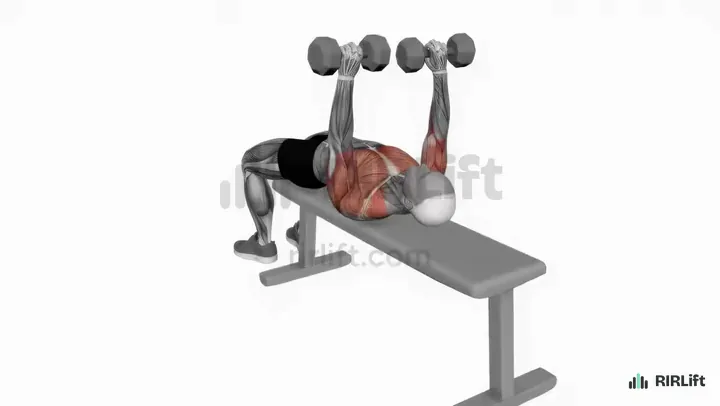
Flat Dumbbell Press

Chest

The flat dumbbell press is the main chest builder with dumbbells: it loads the whole chest, front delts and triceps, and lets you go heavy. It is the first exercise of most push days on this page.

How to do it

  1. Sit on the end of a flat bench with the dumbbells on your thighs, then lie back and bring them to the sides of your chest.
  2. Set your feet flat, squeeze your shoulder blades back, and press the dumbbells up over your chest until your arms are straight.
  3. Lower them to the sides of your chest, elbows about 45 to 60 degrees from your body, until you feel a stretch across your chest.
  4. Press back up so the dumbbells come close together over your chest, and repeat.

Cues

  • Shoulder blades pinned back
  • Elbows under your wrists
  • Deep stretch at the bottom

Common mistakes

  • Flaring the elbows straight out to the sides: tuck them in a bit to spare the shoulders.
  • Stopping high to move more weight: lower until the dumbbells reach chest level.

Swap for: Dumbbell Floor Press, Incline Dumbbell Press, Alternating Dumbbell Bench Press

Upper chest and front delts, incline press

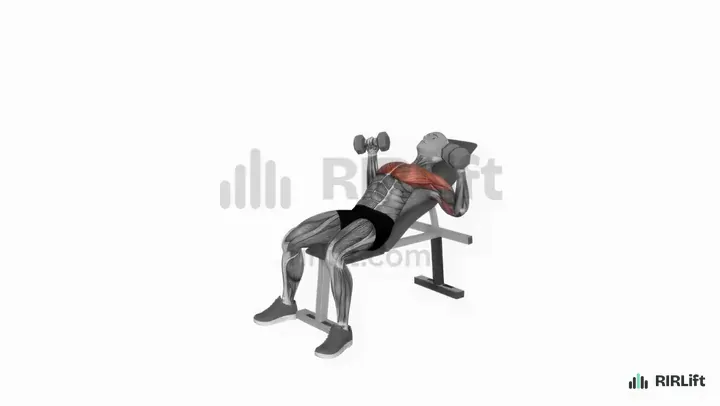
Incline Dumbbell Press

Chest

Setting the bench to about 30 degrees moves the work up toward your collarbones, the part of the chest flat presses build least. Many push days use it as the first press, with the flat press second, or rotate the two between sessions.

How to do it

  1. Set a bench to about 30 degrees, sit back with the dumbbells on your thighs, and kick them up to your shoulders as you lie back.
  2. Press them up over your upper chest until your arms are straight.
  3. Lower them slowly to the sides of your upper chest, elbows a little below the bench line.
  4. Press back up and repeat.

Cues

  • Low incline, about 30 degrees
  • Press over your upper chest
  • Back flat on the pad

Common mistakes

  • Setting the bench so steep that it turns into a shoulder press: keep it at one or two notches.
  • Arching your lower back off the pad to press more: keep your hips down and lighten the load.

Swap for: Flat Dumbbell Press, Incline Dumbbell Squeeze Press, Single-Arm Incline Dumbbell Press

Chest and triceps, no-bench press

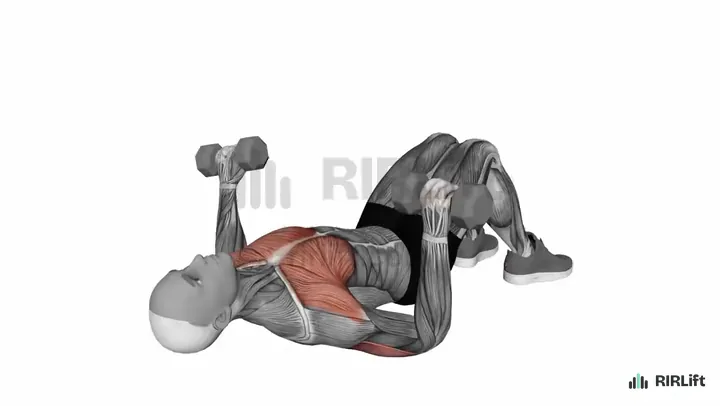
Dumbbell Floor Press

Chest, Triceps

Lying on the floor turns any room into a bench. Your elbows touch the floor before the chest is fully stretched, which shortens the range but makes the lockout and the triceps work harder, so it is a strong press for a home push day.

How to do it

  1. Lie on your back on the floor knees bent, holding the pair up over your chest.
  2. Lower the dumbbells until the backs of your upper arms rest on the floor, elbows about 45 degrees from your body.
  3. Pause for a second with your arms on the floor.
  4. Press the pair back up to straight arms and repeat.

Cues

  • Pause with elbows on the floor
  • No bounce
  • Press up and slightly in

Common mistakes

  • Bouncing your elbows off the floor: let them settle and press from a dead stop.
  • Elbows flared straight out: tuck them to about 45 degrees so they land softly.

Swap for: Single-Arm Dumbbell Floor Press, Flat Dumbbell Press, Dumbbell Floor Fly

Chest, flat fly

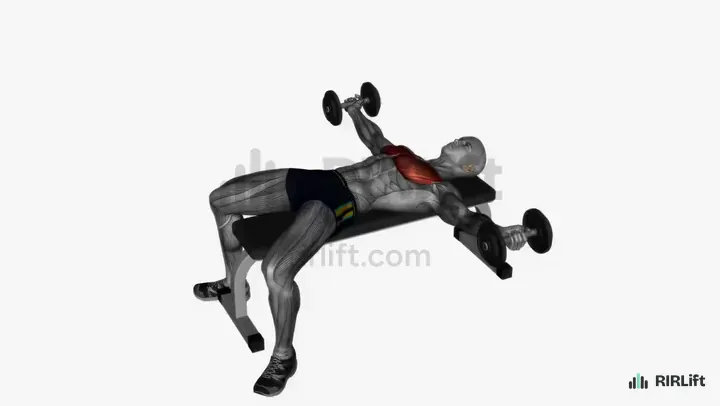
Dumbbell Chest Fly

Chest

A fly stretches the chest wide with straight-ish arms and no triceps involvement, so it adds chest work without tiring the arms you still need for shoulder presses and extensions. Go light and focus on the stretch.

How to do it

  1. Lie back on a flat bench and hold the dumbbells over your chest, palms turned in and elbows softly bent.
  2. Open your arms in a wide arc, keeping the elbow bend fixed, until your hands are level with your chest and you feel a strong stretch.
  3. Bring the dumbbells back together over your chest in the same arc, as if hugging a large tree.
  4. Stop just before they touch and repeat.

Cues

  • Fixed elbow angle
  • Wide arc, not a press
  • Stretch at the bottom

Common mistakes

  • Bending the elbows more as you lower, which turns it into a press: keep them fixed.
  • Going too heavy and lowering below the bench: stop at chest level.

Swap for: Incline Dumbbell Fly, Dumbbell Floor Fly, Decline Dumbbell Fly

Upper chest, incline fly

Incline Dumbbell Fly

Chest

The incline version of the fly puts the stretch on the upper chest. It is a good second chest move on a day that already opened with a flat press.

How to do it

  1. Set a bench to about 30 degrees and lie back with the dumbbells over your upper chest, palms in and elbows slightly bent.
  2. Open your arms in a wide arc until the upper arms sit level with your torso.
  3. Hold the stretch for a moment without letting the elbows bend further.
  4. Sweep the dumbbells back up over your upper chest and repeat.

Cues

  • Elbows soft and fixed
  • Stretch, do not drop
  • Squeeze at the top

Common mistakes

  • Letting the dumbbells drop quickly into the bottom: lower over two or three seconds.
  • Pressing them up instead of sweeping: if the elbows bend, the weight is too heavy.

Swap for: Dumbbell Chest Fly, Stability Ball Incline Dumbbell Fly, Incline Dumbbell Squeeze Press

Dumbbell push exercises for shoulders

Pressing overhead trains the front delts, which already work during chest presses, so one overhead press per push day is enough. The side delts are what make shoulders look wide, and presses barely reach them, so every push day also needs a lateral raise.

Front delts and triceps, seated overhead press

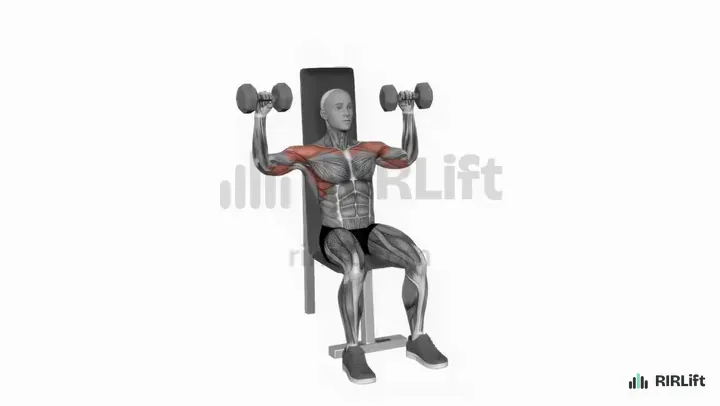
Dumbbell Shoulder Press

Shoulders

With your back against an upright bench, you can press overhead heavily without your legs or lower back helping, which makes it the main shoulder press for a push day. Dumbbells let your wrists rotate to a comfortable position.

How to do it

  1. Sit on a bench set upright with a dumbbell at each shoulder, palms facing forward and elbows below your wrists.
  2. Press the dumbbells up until your arms are straight overhead, bringing them close together at the top.
  3. Lower them back to shoulder height under control.
  4. Repeat without letting the dumbbells rest on your shoulders.

Cues

  • Back against the pad
  • Elbows under the wrists
  • Lower to ear level

Common mistakes

  • Arching your back to press more: keep your ribs down and your back on the pad.
  • Cutting the range at the bottom: lower until the dumbbells are about at your ears.

Swap for: Arnold Press, Neutral-Grip Dumbbell Shoulder Press, Dumbbell Push Press

Front and side delts, rotating press

Arnold Press

Shoulders

Starting with your palms facing you and turning them out as you press makes each rep longer and brings in more of the side delts than a straight press. It suits a second push day where you want a lighter, harder-working press.

How to do it

  1. Sit upright with the dumbbells at chin height, palms facing you and elbows in front of your body.
  2. As you start to press, spread your elbows to the sides and turn your palms forward.
  3. Finish with your arms straight overhead and palms facing forward.
  4. Reverse the turn on the way down, ending with palms facing you, and repeat.

Cues

  • Rotate as you press
  • Elbows open out to the sides
  • Slow on the way down

Common mistakes

  • Turning the palms at the top instead of during the press: rotate through the whole rep.
  • Using the same weight as your regular press: start lighter, because the range is longer.

Swap for: Dumbbell Shoulder Press, Alternating Dumbbell Shoulder Press, Dumbbell Lateral Raise

Shoulders and triceps, leg-assisted press

Dumbbell Push Press

Shoulders

A short knee dip drives the dumbbells off your shoulders, so you can press more than you could strictly and work on the slower lowering. It is the overhead press for a no-bench push day and adds some power work.

How to do it

  1. Stand with your feet hip-width apart and the dumbbells at your shoulders, palms facing in.
  2. Bend your knees a few inches, keeping your torso upright.
  3. Drive up through your legs and use that momentum to send the pair overhead to straight arms.
  4. Bring the pair back down to your shoulders over two or three seconds, then repeat.

Cues

  • Short dip, quick drive
  • Torso stays upright
  • Slow lowering

Common mistakes

  • Dipping too deep, which turns it into a squat: a few inches is all you need.
  • Leaning back to finish the press: squeeze your glutes and keep your ribs down.

Swap for: Dumbbell Shoulder Press, Alternating Dumbbell Shoulder Press, Arnold Press

Side delts, standing raise

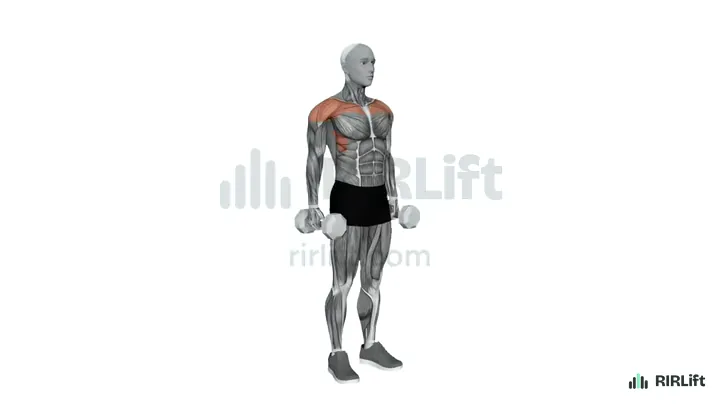
Dumbbell Lateral Raise

Shoulders

Raising your arms out wide is the main exercise for the side delts, the part of the shoulder that makes you look wider. Presses do little for it, so a lateral raise belongs on every push day.

How to do it

  1. Stand tall holding a light pair by your thighs, palms in.
  2. With your elbows slightly bent, raise your arms out wide until they are about level with your shoulders.
  3. Hold a beat at the top with your elbows a little higher than your hands.
  4. Lower slowly and repeat.

Cues

  • Lead with the elbows
  • Stop at shoulder height
  • Slow on the way down

Common mistakes

  • Swinging the weight up with your body: if your torso rocks, use lighter dumbbells.
  • Shrugging your shoulders up: keep them low and think about pushing the dumbbells out, not up.

Swap for: Leaning Dumbbell Lateral Raise, Seated Dumbbell Lateral Raise, Single-Arm Dumbbell Lateral Raise

Side delts, one-arm leaning raise

Leaning Dumbbell Lateral Raise

Shoulders

Holding a post or doorframe and leaning away from it makes the lateral raise harder at the bottom, where the standing version is easiest. It is a good second lateral raise on a heavier shoulder day.

How to do it

  1. Hold a sturdy post or rack with your left hand, take the dumbbell in your right, and lean away from the support.
  2. Let the dumbbell hang in front of your hip with a slight bend in the elbow.
  3. Raise your right arm out to the side until it reaches shoulder level.
  4. Lower slowly, finish the set, and switch sides.

Cues

  • Lean away from the support
  • Raise to shoulder level
  • Control the bottom

Common mistakes

  • Pulling with your free hand to swing the body: the lean stays still through the set.
  • Raising too high above shoulder height: stop at shoulder level.

Swap for: Dumbbell Lateral Raise, Single-Arm Dumbbell Lateral Raise, Incline Dumbbell Lateral Raise

Dumbbell push exercises for triceps

Your triceps work on every press, so by the end of push day they only need one or two direct exercises. Pick one with your arms overhead, which stretches the long head, and one with your arms at your sides or in front, which loads the other two heads.

Triceps long head, overhead extension

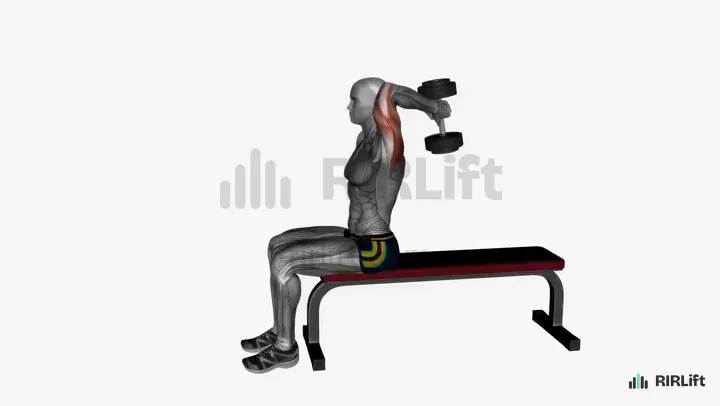
Seated Dumbbell Overhead Triceps Extension

Triceps

With the weight lowered behind you, your triceps are stretched at the bottom of each rep, which puts the most work on the long head, the biggest part of the muscle. It is the triceps exercise to keep if you only have time for one.

How to do it

  1. Sit on a bench or chair and hold one dumbbell with both hands under the top plate, arms straight overhead.
  2. Keep your upper arms close to your head and bend your elbows to let the weight drop behind your neck.
  3. Go down until you feel a strong stretch in the back of your arms.
  4. Straighten your elbows to raise the dumbbell back overhead and repeat.

Cues

  • Elbows point forward
  • Deep stretch behind the head
  • Only the forearms move

Common mistakes

  • Letting your elbows flare wide: keep them pointing forward and close.
  • Arching your back as the dumbbell goes overhead: keep your ribs down.

Swap for: Dumbbell Skullcrusher, Triceps Kickback, Scott Press

Triceps, lying extension

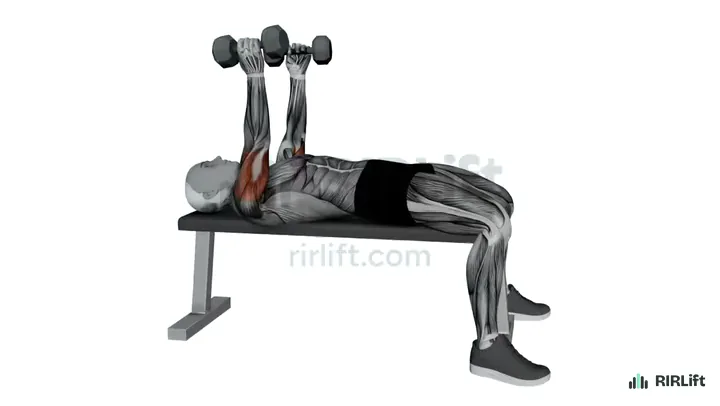
Dumbbell Skullcrusher

Triceps

Lying on a bench and lowering the dumbbells beside your head loads the triceps through a long range with no help from the chest or shoulders. Using two dumbbells lets your wrists turn to a neutral position, which many people find easier on the elbows than a bar.

How to do it

  1. Lie back on a flat bench and hold the pair straight up over your chest, palms turned in.
  2. Keep your upper arms still and bend your elbows to lower the dumbbells beside your head.
  3. Stop when your forearms are just below parallel to the floor.
  4. Straighten your elbows to press the dumbbells back up and repeat.

Cues

  • Upper arms stay still
  • Dumbbells beside your ears
  • Full lockout

Common mistakes

  • Letting your elbows drift back toward your head as you press: that makes it a pullover.
  • Going heavy and lowering fast: control the bottom, where the elbows are most stressed.

Swap for: Seated Dumbbell Overhead Triceps Extension, Triceps Kickback, Dumbbell Floor Press

Triceps, bent-over extension

Triceps Kickback

Triceps

Kickbacks are hardest when your arm is straight, which is where the triceps are fully contracted, so they pair well with an overhead extension that works the stretch. They need only a light pair and no bench.

How to do it

  1. Hinge forward with a dumbbell in one or both hands, torso nearly level with the floor and upper arms tight to your sides.
  2. Start with the elbows bent at about 90 degrees.
  3. Straighten your elbows to drive the pair back to a full lockout.
  4. Hold a moment, lower back to 90 degrees, and repeat.

Cues

  • Upper arms glued to your sides
  • Squeeze at full extension
  • Light weight, strict reps

Common mistakes

  • Swinging the dumbbells back with momentum: slow down and pause at the top.
  • Letting the upper arms drop: keep them parallel to the floor the whole set.

Swap for: Seated Dumbbell Overhead Triceps Extension, Dumbbell Skullcrusher, Single-Arm Dumbbell Floor Press

Put them together: example sessions

Each session below picks from the exercises above for one situation, with the sets, reps, rest and RIR filled in. Open one in the session builder to change a pick, price it from a recent set, and add it to RIRLift.

Session 1

Adjustable bench and dumbbells, push/pull/legs

Open in the session builder
  • Workouts2× a week
  • Working sets34 a week
  • Per workout~45 min
  • EquipmentDumbbells, Flat Bench, Incline Bench

You run a push/pull/legs split twice a week with adjustable dumbbells and an incline bench, at home or at the gym, and want two different push days.

Two push days a week means each one can lead with a different chest press: flat in A and incline in B, so both parts of the chest get a heavy start. Shoulders get a straight press in A and the Arnold press in B, side delts get a raise every day, and triceps alternate between the overhead extension and the skullcrusher. Presses stop 1 to 2 reps short of failure, raises and extensions go to 0 to 1. Each day is 17 working sets.

Push A
ExerciseSets × repsRIRRest
Flat Dumbbell Press2 warm-up sets firstDeep stretch at the bottom. 4 × 6–10 2 2:30 min
Dumbbell Shoulder PressBench upright. Lower to ear level. 3 × 8–12 1 2 min
Incline Dumbbell FlyLight. 2 s into the stretch. 3 × 10–15 1 90 s
Dumbbell Lateral RaiseLead with the elbows. 4 × 12–20 0 1 min
Seated Dumbbell Overhead Triceps ExtensionOne dumbbell, both hands. 3 × 10–15 1 75 s

Open Push A in the session builder

Push B
ExerciseSets × repsRIRRest
Incline Dumbbell Press2 warm-up sets firstBench at about 30 degrees. 4 × 6–10 2 2:30 min
Arnold PressRotate through the whole rep. 3 × 8–12 1 2 min
Dumbbell Chest FlyFlat bench. Fixed elbow angle. 3 × 10–15 1 90 s
Leaning Dumbbell Lateral RaisePer arm. Hold a post. 4 × 12–20 0 45 s
Dumbbell SkullcrusherPalms in. Control the bottom. 3 × 10–15 1 75 s

Open Push B in the session builder

How to run it
Do Push A and Push B in a six-day push/pull/legs week: push, pull, legs, push, pull, legs. Your pull and leg days come from their own pages.
How to progress
Double progression: when every set of an exercise reaches the top of its range at the target reps in reserve, move to the next dumbbell and work back up.

Session 2

One pair of dumbbells, no bench

Open in the session builder
  • Workouts2× a week
  • Working sets30 a week
  • Per workout~35 min
  • EquipmentDumbbells

You train at home with one fixed or limited pair of dumbbells, floor space and a chair, and no bench.

Without a bench, the floor press replaces the bench press and the standing push press replaces the seated shoulder press, using your legs to move a pair that would be too heavy to press strictly overhead. The triceps get one overhead and one kickback move, both seated or standing. A fixed pair stops getting heavier, so the rep ranges run higher and most sets end 0 to 1 reps short of failure. It is 15 working sets per session.

Push at Home
ExerciseSets × repsRIRRest
Dumbbell Floor PressPause 1 s with elbows on the floor. 4 × 10–20 1 2 min
Dumbbell Push PressShort dip. 3 s down. 3 × 8–15 2 2 min
Dumbbell Lateral RaiseOne arm at a time if the pair is heavy. 3 × 12–25 0 1 min
Seated Dumbbell Overhead Triceps ExtensionOn a chair. 3 × 10–20 1 75 s
Triceps KickbackPause at full extension. 2 × 12–20 0 1 min
How to run it
Do the session twice a week, two to three days apart, between your pull and leg days.
How to progress
Add reps until every set reaches the top of its range, then slow the lowering to three seconds and pause at the bottom of each press. Move to the next dumbbell when you can get one.

Session 3

One push day in 30 minutes

Open in the session builder
  • Workouts1× a week
  • Working sets15 a week
  • Per workout~30 min
  • EquipmentDumbbells, Incline Bench, Flat Bench

You have a bench and dumbbells but only 30 minutes for push day, once a week, in an upper/lower or body-part split.

Two straight presses come first, then the smaller moves are paired as supersets so you rest one muscle while working another: the fly with the lateral raise and the two triceps moves back to back. That fits 15 working sets into about 30 minutes. Presses stop 1 to 2 reps short of failure and the superset pairs go to 0 to 1.

Quick Push
ExerciseSets × repsRIRRest
Incline Dumbbell Press1 warm-up set firstBench at about 30 degrees. 3 × 8–12 1 2 min
Dumbbell Shoulder PressSeated, back supported. 3 × 8–12 2 2 min
A1 Dumbbell Chest FlySuperset with the lateral raise. 2 × 12–15 1 1 min
A2 Dumbbell Lateral RaiseLead with the elbows. 3 × 12–20 0 1 min
B1 Dumbbell SkullcrusherSuperset with the kickback. 2 × 10–15 1 1 min
B2 Triceps KickbackSame dumbbells as the skullcrusher. 2 × 12–20 0 1 min
How to run it
Run it once a week on push or upper day. In each superset, do one set of the first exercise, rest 30 seconds, do the second, then rest the full time listed before the next round.
How to progress
Add reps up to the top of each range, then go up one dumbbell step. Keep the rest periods the same so the session stays at 30 minutes.

Make it fit you

Questions

What exercises are push day?

Push day is every exercise where you push weight away from your body: chest presses and flies, overhead shoulder presses, lateral raises and triceps extensions. With dumbbells that means the flat or incline press, a shoulder press, a lateral raise and an overhead triceps extension, plus a fly if you have time.

What are the top 5 dumbbell push exercises?

The flat dumbbell press, the incline dumbbell press, the seated dumbbell shoulder press, the lateral raise and the overhead triceps extension. Those five cover the chest, front delts, side delts and triceps, and most push days on this page are built from them.

Are 4 exercises enough for push day?

Yes: one chest press, one shoulder press, one lateral raise and one triceps extension, done for 3 to 4 hard sets each, covers every push muscle in 12 to 16 sets. Add a fly as a fifth exercise if your chest needs more work.

What are 6 good exercises for push day?

Incline dumbbell press, flat dumbbell press or fly, seated shoulder press, lateral raise, overhead triceps extension and skullcrusher or kickback. Six exercises works if you keep each to 2 to 4 sets so the day stays around 15 to 20 sets.

Is the dumbbell push press good?

Yes, especially at home without a bench. Your legs help you lift heavier dumbbells overhead than you could press strictly, so your shoulders and triceps get a heavy lowering on each rep. Use a short knee dip and lower slowly. If you have a bench, the seated press is the better choice for pure shoulder growth.

How many sets should a dumbbell push day have?

About 15 to 18 hard sets is enough for most people, split across chest, shoulders and triceps. If you do push day twice a week, that totals 30 to 36 sets, which covers each push muscle well.