Single dumbbell exercises for a full body, with plans for a light bell, a heavy one or a short session

One dumbbell is enough for a full-body workout if you choose exercises that use it with both hands or one side at a time: the goblet squat and split squat for your legs, the hip thrust and single-leg Romanian deadlift for glutes and hamstrings, the one-arm row and pullover for your back, the single-arm floor press and shoulder press for pushing, and the suitcase carry for your core. A light dumbbell works best with one-leg and one-arm moves; a heavy one with goblet squats, swings and hip thrusts.

  1. Goblet Squat Quads, Glutes
  2. Dumbbell Goblet Split Squat Quads, Glutes
  3. Single-Leg RDL Hamstrings, Glutes
  4. Dumbbell Hip Thrust Glutes
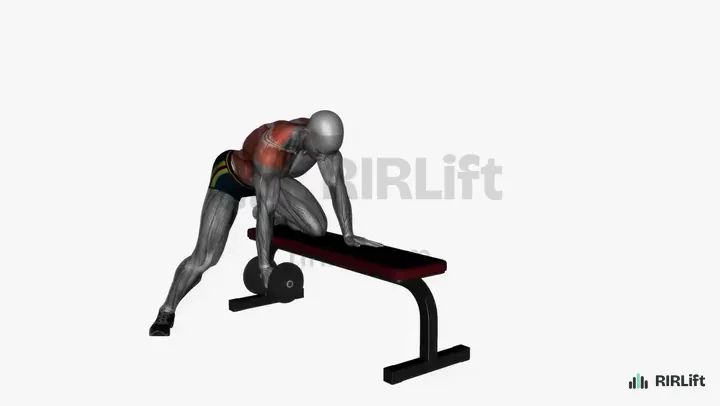
  5. One-Arm Dumbbell Row Lats, Upper Back
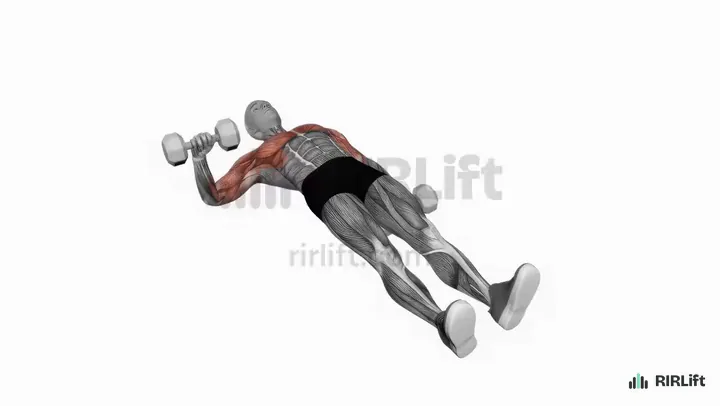
  6. Single-Arm Dumbbell Floor Press Chest
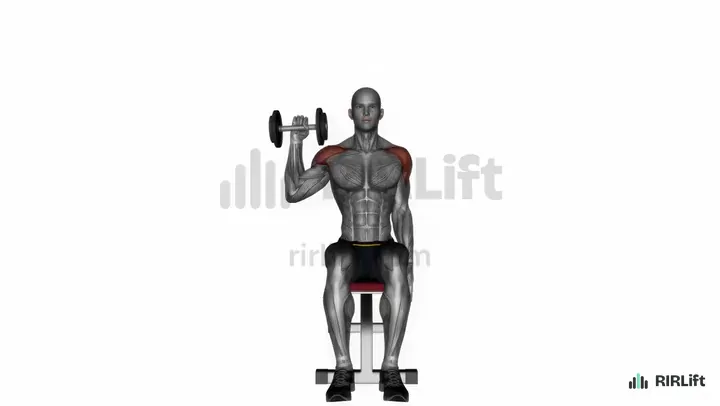
  7. Single-Arm Dumbbell Shoulder Press Shoulders
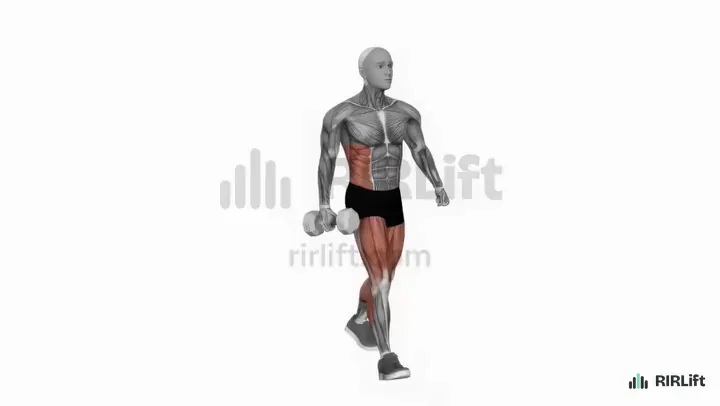
  8. Dumbbell Suitcase Carry Abs, Quads
Leg and glute exercises with one dumbbell

Holding the dumbbell at your chest keeps squats balanced, and splitting your stance or standing on one leg makes a light bell feel twice as heavy. The hip thrust and swing need one dumbbell held in both hands, and both load the glutes harder than most squats you can do with a single bell.

Quads and glutes, two hands on one bell

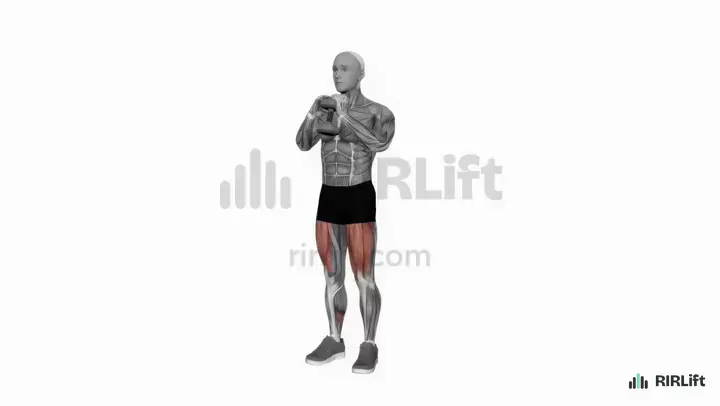
Goblet Squat

Quads, Glutes

Holding one dumbbell upright at your chest counterbalances you as you sit down, so most people squat deeper and more upright with a goblet hold than with nothing. It is the squat you can load with a single dumbbell up to the point where carrying it to your chest becomes the hard part.

How to do it

  1. Hold the dumbbell upright by one end, palms cupped under the top plate, tight to your sternum.
  2. Take a stance a little wider than your hips, toes turned out slightly.
  3. Sit down between your heels, elbows travelling inside your knees.
  4. Go as deep as you can with a flat back, then stand up through the whole foot.

Cues

  • Dumbbell glued to your chest
  • Elbows inside your knees
  • Chest tall the whole way

Common mistakes

  • Letting the dumbbell drift away from your chest: it pulls you forward and rounds your back. Keep it touching your sternum.
  • Heels lifting at the bottom: widen your stance a little or put a thin plate under your heels.

Swap for: Heels-Elevated Goblet Squat, Dumbbell Goblet Split Squat, Dumbbell Front Squat

Quads and glutes, one leg

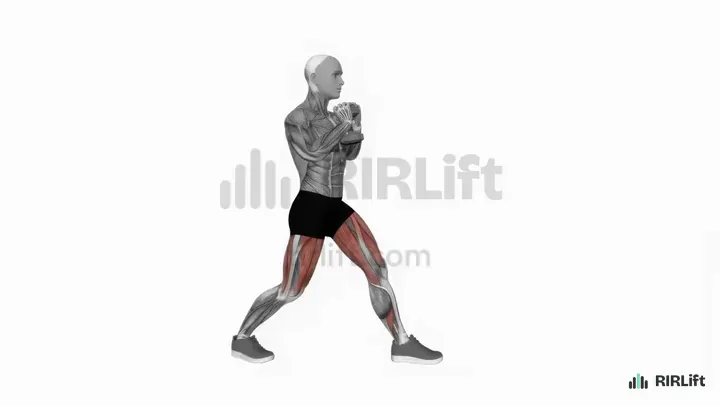
Dumbbell Goblet Split Squat

Quads, Glutes

When one dumbbell is too light for a two-leg squat, splitting your stance puts most of your weight on one leg and doubles the effort. The goblet hold keeps it balanced, unlike holding one bell at your side.

How to do it

  1. Cup the dumbbell upright at your sternum.
  2. Take a long step so one foot is well in front of the other, back heel lifted.
  3. Drop your back knee straight down toward the floor.
  4. Push through the front foot to rise, finish your reps, then switch legs.

Cues

  • Straight down, like an elevator
  • Front foot does the work
  • Torso tall

Common mistakes

  • A short stance that forces your front knee far forward: lengthen the step until both knees bend to about 90 degrees at the bottom.
  • Back knee crashing into the floor: stop an inch above it.

Swap for: Goblet Squat, Bulgarian Split Squat, Dumbbell Reverse Lunge

Hamstrings and glutes, one leg

Single-Leg RDL

Hamstrings, Glutes

Balancing on one leg makes a light dumbbell feel heavy, which is exactly what you need when you own only one. It loads the hamstrings through a long stretch and trains hip control on every rep.

How to do it

  1. Stand on one leg with a soft knee, holding the dumbbell in one hand.
  2. Hinge forward at the hip as the free leg reaches straight behind you.
  3. Lower until your torso is close to parallel or you feel a strong stretch in the standing hamstring.
  4. Drive the standing hip forward to come back up, then finish the side before switching.

Cues

  • Hips stay square to the floor
  • Reach back with the free heel
  • Soft knee, not a squat

Common mistakes

  • Opening your hips toward the ceiling as you lower: the free leg's toes should point at the floor the whole time.
  • Rounding your back to reach lower: stop at the point your back starts to curl.

Swap for: Dumbbell Romanian Deadlift, Dumbbell B-Stance RDL, Dumbbell Good Morning

Glutes, shortened position

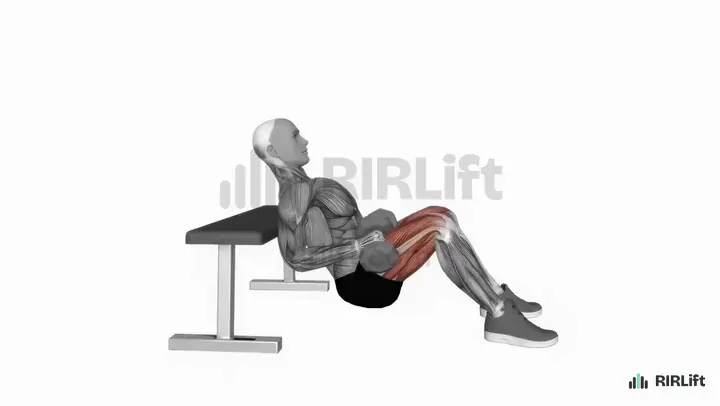
Dumbbell Hip Thrust

Glutes

Glutes respond to being loaded at full hip extension, and a hip thrust needs only one dumbbell across your hips and a bench or couch for your back. It is the leg exercise that gets the most out of a single bell.

How to do it

  1. Sit down, shoulder blades against a bench edge, knees bent.
  2. Lay the dumbbell across your hips and steady it with both hands.
  3. Plant your feet so your shins end vertical at the top.
  4. Drive your hips up until your knees, hips and shoulders form a line, pause, then lower.

Cues

  • Chin tucked, eyes forward
  • Squeeze for a second at the top
  • Shins vertical

Common mistakes

  • Arching your back to finish: stop where your hips line up with your knees.
  • Feet too close to your hips: your quads take over. Walk them out an inch or two.

Swap for: Single-Leg Hip Thrust, Dumbbell Glute Bridge, Dumbbell Staggered Hip Thrust

Glutes and hamstrings, explosive hinge

Dumbbell Swing

Glutes, Hamstrings

A single dumbbell held by one end swings like a kettlebell. It turns a modest weight into a hard set because the speed loads your hips more than the weight alone would.

How to do it

  1. Hold the dumbbell vertically by one end with both hands, feet a bit wider than your hips.
  2. Hinge and let the dumbbell travel back between your thighs.
  3. Drive your hips forward hard to swing it up to chest height, arms straight.
  4. Let it fall back between your legs, hinging as it passes your knees, and repeat.

Cues

  • Hinge, do not squat
  • Hips snap, arms stay long
  • Stand tall at the top

Common mistakes

  • Lifting with your arms: the swing should float up from hip drive. If your shoulders burn, your arms are lifting.
  • Letting the dumbbell drop below your knees: keep it high between your thighs on the backswing.

Swap for: Kettlebell Swing, One-Arm Dumbbell Snatch, Dumbbell Romanian Deadlift

Chest and shoulder exercises with one dumbbell

One arm at a time is how a single dumbbell presses. Your free side braces, and your trunk works to keep you from rolling or leaning, which is extra work you would not get pressing a pair.

Chest and triceps, one arm

Single-Arm Dumbbell Floor Press

Chest

Without a bench, the floor stops your elbow at the bottom and protects your shoulder. Pressing one arm at a time also makes your trunk resist rolling, so one dumbbell gives you both a chest and core exercise.

How to do it

  1. Lie face up, knees bent, one dumbbell held above your chest.
  2. Rest the other arm out to the side for balance.
  3. Lower until the back of your upper arm meets the ground at about 45 degrees from your side.
  4. Pause briefly, then press straight back up over your shoulder.

Cues

  • Elbow at 45 degrees
  • Pause on the floor
  • Do not let your body roll

Common mistakes

  • Elbow flaring straight out to the side: your shoulder takes the strain. Tuck it to about 45 degrees.
  • Bouncing your elbow off the floor: rest it for a beat and press from still.

Swap for: Dumbbell Floor Press, Push-Up, Single-Arm Dumbbell Shoulder Press

Shoulders, one arm overhead

Single-Arm Dumbbell Shoulder Press

Shoulders

Pressing one dumbbell overhead loads your shoulder and makes your trunk hold you straight against the off-center weight. It is the main pressing lift for a single-dumbbell full body.

How to do it

  1. Stand or sit tall with the bell at shoulder level, palm turned forward or toward your head.
  2. Brace your stomach and squeeze your glutes.
  3. Press the bell straight up to a locked elbow.
  4. Lower it back to your shoulder under control, finish the side, then switch.

Cues

  • Ribs down
  • Biceps by your ear at the top
  • Do not lean away

Common mistakes

  • Leaning to the opposite side to finish the rep: it moves the work to your lower back. Use a lighter bell or sit.
  • Pressing forward instead of up: the dumbbell should end over your shoulder, not in front of it.

Swap for: Dumbbell Shoulder Press, Arnold Press, Dumbbell Push Press

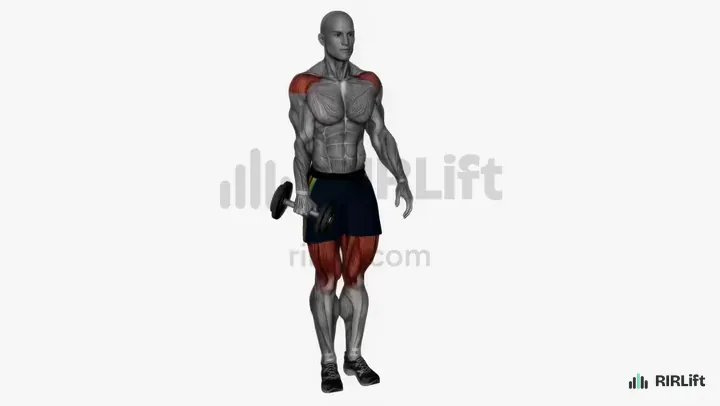
Side delts

Single-Arm Dumbbell Lateral Raise

Shoulders

Doing one side at a time lets you hold something with your free hand and lean slightly away, so the side delt works through a longer range. It is the shoulder width move for a single dumbbell.

How to do it

  1. Stand next to a sturdy post or rack, hold it with your free hand and the dumbbell at your side with the other.
  2. Raise the bell out sideways with your elbow softly bent.
  3. Stop at shoulder height, with your elbow leading.
  4. Lower over two to three seconds and repeat, then switch arms.

Cues

  • Elbow leads
  • Stop at shoulder height
  • Slow on the way down

Common mistakes

  • Shrugging your shoulder up to start the rep: push the shoulder down and let the arm do the lifting.
  • Swinging from your hips: use a lighter dumbbell.

Swap for: Dumbbell Lateral Raise, Leaning Dumbbell Lateral Raise, Seated Dumbbell Lateral Raise

Back exercises with one dumbbell

The one-arm row is the main back lift and the one to give your heaviest effort. The pullover adds a long lat stretch with both hands on the bell, and the snatch trains the whole back side of your body with speed.

Lats and upper back

One-Arm Dumbbell Row

Lats, Upper Back

Rows with one dumbbell are not a compromise, they are the standard. Bracing your free hand gives you a stable base so you can row heavier than you can press, which is why the row deserves the heaviest bell you own.

How to do it

  1. Put one hand and the same-side knee on a bench, or brace your hand on a chair with a staggered stance.
  2. Hold the dumbbell in the free hand with your arm hanging straight.
  3. Pull the dumbbell toward your hip, elbow close to your side.
  4. Lower until your arm is straight and you feel your shoulder blade stretch forward.

Cues

  • Pull to your hip, not your chest
  • Full stretch at the bottom
  • Torso stays flat

Common mistakes

  • Twisting your torso to lift: keep your shoulders square to the floor.
  • Cutting the stretch short: let the shoulder blade reach forward at the bottom of every rep.

Swap for: Dumbbell Lawnmower Row, Incline Dumbbell Row, Renegade Row

Lats and chest, long stretch

Dumbbell Chest Pullover

Chest

One dumbbell held in both hands is exactly what a pullover needs. It takes your lats through a long overhead stretch, covering the back-of-the-body gap that floor presses leave.

How to do it

  1. Lie across or along a bench, holding the dumbbell by one end with both hands above your chest.
  2. Lock in a soft elbow angle and lower the dumbbell back behind your head.
  3. Go until you feel a strong stretch through your lats and chest.
  4. Bring the weight back above your sternum using your lats, without bending your elbows further.

Cues

  • Elbows stay slightly bent
  • Ribs stay down
  • Stretch, then pull

Common mistakes

  • Bending and straightening your elbows: that turns it into a triceps extension. Fix the elbow angle.
  • Arching your back to get a deeper stretch: stop where your ribs start to lift.

Swap for: Dumbbell Lat Pullover, Straight-Arm Pulldown, One-Arm Dumbbell Row

Full body, explosive

One-Arm Dumbbell Snatch

Shoulders, Glutes

The snatch takes the dumbbell from the floor to overhead in one move, driven by your hips and legs. With one dumbbell it is the fastest way to raise your heart rate and train power in the same set.

How to do it

  1. Set the dumbbell between your feet, stance about shoulder width.
  2. Squat down and grab it with one hand, chest up, back flat.
  3. Jump the weight up by extending your hips and knees hard, keeping the bell tight to you.
  4. As it rises past your chest, punch your hand under it and lock it out overhead.
  5. Lower it to your shoulder, then to the floor, and switch hands.

Cues

  • Legs drive, arm guides
  • Keep it close
  • Punch through at the top

Common mistakes

  • Pulling with the arm from the start: the hips launch it. If your biceps tire, you are curling it.
  • Letting the dumbbell arc away from you: it should stay tight to you.

Swap for: Dumbbell Swing, Dumbbell Push Press, Single-Arm Dumbbell Shoulder Press

Arm exercises with one dumbbell

Arms are the easiest part to train with a single dumbbell because most arm work is one arm at a time anyway. Use the concentration curl for biceps and the seated overhead extension, with both hands on one bell, for triceps.

Biceps, braced

Concentration Curl

Biceps

Bracing your elbow against your thigh removes momentum, so a light dumbbell is hard enough. It is the one curl that needs only a single bell and a seat.

How to do it

  1. Take a seat on a bench, feet wide and the dumbbell in one hand.
  2. Brace the back of your upper arm against your inner thigh, arm straight.
  3. Curl the dumbbell toward your shoulder, turning your little finger up at the top.
  4. Lower all the way until your arm is straight, finish the side, then switch.

Cues

  • Elbow pinned to your thigh
  • Squeeze at the top
  • Straight arm at the bottom

Common mistakes

  • Lifting your elbow off your leg to finish: the shoulder joins in. Stop when the elbow wants to move.
  • Stopping the lowering halfway: go to a straight arm every time.

Swap for: Dumbbell Curl, Hammer Curl, Spider Curl

Triceps, long head

Seated Dumbbell Overhead Triceps Extension

Triceps

One dumbbell held with both hands behind your head loads the triceps in a long stretch. It is the triceps lift built for a single bell.

How to do it

  1. Sit upright on a bench or chair with the dumbbell held by one end with both hands overhead.
  2. Bend your elbows and let the bell sink behind your head.
  3. Go until your forearms are below parallel and the backs of your arms stretch.
  4. Straighten your elbows to press back overhead, upper arms still.

Cues

  • Elbows stay pointing up
  • Deep stretch
  • Ribs down

Common mistakes

  • Elbows flaring wide: pull them in toward your head.
  • Arching your lower back as the bell goes back: sit against a backrest or brace harder.

Swap for: Triceps Kickback, Dumbbell Skullcrusher, Plate Overhead Triceps Extension

Core exercises with one dumbbell

One dumbbell on one side is a core exercise by itself. The suitcase carry makes your obliques stop you from leaning, and the kneeling woodchop trains rotation with your hips taken out of it.

Obliques and grip, loaded walking

Dumbbell Suitcase Carry

Abs, Quads
Carrying one dumbbell on one side forces your obliques to stop you leaning over. It is one of the few exercises where owning only one dumbbell is the point.

How to do it

  1. Pick the dumbbell up from the floor with one hand, standing tall.
  2. Pull your shoulders level and brace your stomach.
  3. Walk forward with short, even steps, not leaning toward or away from the bell.
  4. Walk your distance, set it down, then carry with the other hand.

Cues

  • Shoulders level
  • Stand tall
  • Bell brushes your leg

Common mistakes

  • Leaning toward the weight: it means the bell is too heavy or your trunk is loose. Brace and level your shoulders.
  • Taking long strides: short steps keep you upright.

Swap for: Farmer's Walk, Dumbbell Side Bend, Dumbbell Single-Arm Overhead Carry

Obliques, kneeling rotation

Dumbbell Woodchop

Abs

On your knees, your hips cannot help, so the trunk does the rotating. One dumbbell held in both hands is all you need to load it.

How to do it

  1. Kneel on one knee, holding the dumbbell by its ends with both hands beside your outer hip.
  2. Turn your shoulders and bring the dumbbell up and across your body toward the opposite shoulder.
  3. Finish with your arms high and your chest turned to that side.
  4. Reverse the path to the start under control, finish the reps, then switch sides.

Cues

  • Hips stay square
  • Turn your ribs, not just your arms
  • Control the return

Common mistakes

  • Moving the dumbbell with your arms only: your chest should turn with it.
  • Leaning backward at the top: stay upright on the knee.

Swap for: Plate Woodchop, Cable Woodchop, Russian Twist

Put them together: example sessions

Each session below picks from the exercises above for one situation, with the sets, reps, rest and RIR filled in. Open one in the session builder to change a pick, price it from a recent set, and add it to RIRLift.

Session 1

One light dumbbell at home

Open in the session builder
  • Workouts3× a week
  • Working sets48 a week
  • Per workout~45 min
  • EquipmentDumbbells

You own one dumbbell of 10 to 25 pounds, a chair or couch, and want a full-body session from it.

A light bell only builds muscle when the exercise makes it feel heavy, so every lift here is one leg or one arm at a time: split squats, single-leg RDLs, one-arm rows and presses. Sets run 10 to 20 reps at 1 to 2 reps in reserve because light loads need to end close to failure. The overhead triceps extension uses both hands on one bell because that is its natural setup.

Full Body
ExerciseSets × repsRIRRest
Dumbbell Goblet Split Squat1 warm-up set firstPer leg. 3 × 10–20 2 90 s
Single-Leg RDLPer leg. Hips square. 3 × 10–15 2 90 s
One-Arm Dumbbell RowPer arm. Hand on a chair. 3 × 12–20 1 1 min
Single-Arm Dumbbell Floor PressPer arm. 3 × 12–20 1 1 min
Single-Arm Dumbbell Lateral RaisePer arm. Hold a post. 2 × 12–20 1 1 min
Seated Dumbbell Overhead Triceps Extension 2 × 12–20 1 1 min
How to run it
Run it three times a week on alternating days. Take each side to its RIR target, then switch; start with your weaker side and match its reps on the other. A chair works as the bench for rows.
How to progress
Add reps until you reach 20 at 1 RIR, then slow the lowering to three seconds or add a one-second pause at the bottom. When even that is easy, a heavier dumbbell is the next step.

Session 2

One heavy dumbbell, two days a week

Open in the session builder
  • Workouts2× a week
  • Working sets26 a week
  • Per workout~35 min
  • EquipmentDumbbells

You have one dumbbell of 35 to 60 pounds, too heavy to press for many reps, and two sessions a week.

A heavy bell suits two-handed lower-body lifts: goblet squats, swings and hip thrusts. Day A builds legs and back, Day B leans on the hip and the press. Compound sets stop at 2 reps in reserve because good form matters more when the bell is heavy; the carry and curl go to 1 RIR since the risk is low.

Day A
ExerciseSets × repsRIRRest
Goblet Squat1 warm-up set firstElbows inside knees. 4 × 8–15 2 2 min
One-Arm Dumbbell RowPer arm. Heaviest set first. 4 × 8–12 2 90 s
Dumbbell Chest PulloverElbows slightly bent. 3 × 10–15 2 90 s
Dumbbell Suitcase CarryReps are steps per hand. 3 × 20–40 1 1 min

Open Day A in the session builder

Day B
ExerciseSets × repsRIRRest
Dumbbell SwingHips drive, arms stay long. 4 × 10–15 2 90 s
Dumbbell Hip Thrust1 warm-up set firstPause one second at the top. 3 × 10–15 1 90 s
Single-Arm Dumbbell Shoulder PressPer arm. 3 × 6–10 2 90 s
Concentration CurlPer arm. 2 × 8–12 1 1 min

Open Day B in the session builder

How to run it
Do Day A and Day B with at least two days between. If the shoulder press is too heavy for 6 reps, press from a seated position or swap it for the push press from the swaps list.
How to progress
Add reps until every set reaches the top of its range at its RIR, then slow the lowering. Move the goblet squat to the split squat once squats pass 15 reps.

Session 3

Twenty minutes and one dumbbell

Open in the session builder
  • Workouts3× a week
  • Working sets45 a week
  • Per workout~30 min
  • EquipmentDumbbells

You have a medium dumbbell, around 20 to 35 pounds, and twenty minutes, and want a session that works everything at once.

The snatch goes first while you are fresh because it is the most technical. After that, exercises are paired so one muscle rests while another works: squats with rows, presses with woodchops. Rests are short and the RIR stays at 2 because fatigue piles up in circuits and form slips first.

Circuit
ExerciseSets × repsRIRRest
One-Arm Dumbbell SnatchPer arm. Legs drive. 3 × 5–8 2 1 min
A1 Goblet Squat 3 × 10–15 2 30 s
A2 One-Arm Dumbbell RowPer arm. 3 × 10–15 2 1 min
B1 Single-Arm Dumbbell Floor PressPer arm. 3 × 10–15 2 30 s
B2 Dumbbell WoodchopPer side. 3 × 8–12 2 1 min
How to run it
Do the snatch sets on their own, then run each pair back to back with rest only after the second exercise. Do it two or three times a week on days you have little time.
How to progress
Add a rep per set each session; when you hit the top of every range, cut 15 seconds of rest before moving to a heavier dumbbell.

Make it fit you

Questions

Can you get a full workout with one dumbbell?

Yes. Goblet squats, split squats, hip thrusts and single-leg RDLs cover your legs, one-arm rows and pullovers your back, floor presses and one-arm overhead presses your chest and shoulders, and carries your core. Each plan above uses one bell for everything.

What leg exercises can I do with only one dumbbell?

The goblet squat, goblet split squat, single-leg Romanian deadlift, dumbbell hip thrust and dumbbell swing. With a light bell, choose the split squat and single-leg RDL; one leg at a time makes a small weight hard.

What exercises can I do with one hand?

The one-arm row, single-arm floor press, single-arm shoulder press, single-arm lateral raise, concentration curl, one-arm snatch and suitcase carry all use one hand at a time.

What weight dumbbell should I get if I can only have one?

Heavy enough that a goblet squat or one-arm row ends within 2 reps of failure in 15 to 20 reps. For most beginners that lands between 20 and 35 pounds. An adjustable dumbbell covers both the light and heavy exercises.

Is one dumbbell enough to build muscle?

Yes, if every set ends close to failure. Light loads and higher reps build muscle about as well as heavy ones when the last reps are hard, so the rep ranges here run up to 20.

How many times a week should I do a one dumbbell workout?

Two to three full-body sessions, with a rest day between. The heavy-bell plan runs two different days, while the light-bell and circuit plans repeat one session.